
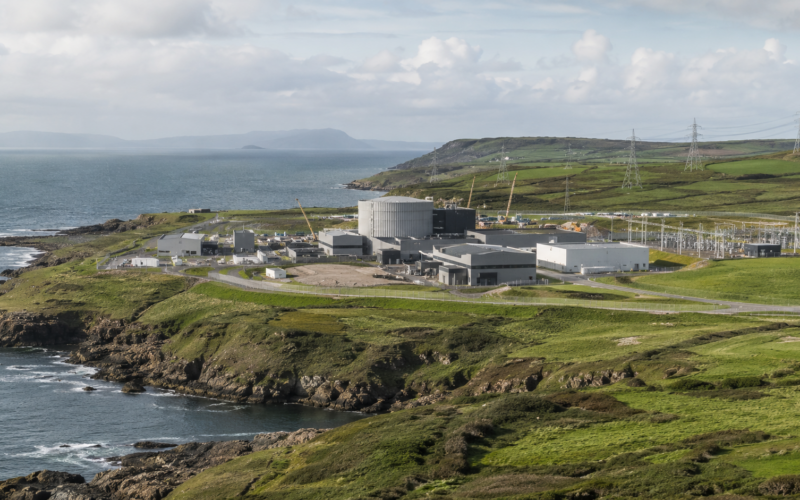
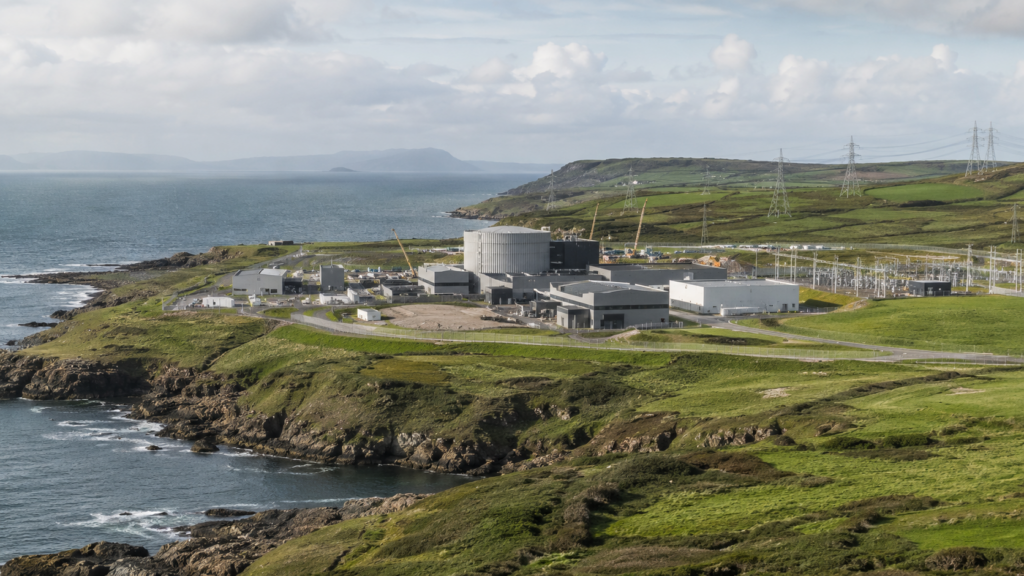
The Wylfa SMR Project is strategically important because it is the United Kingdom’s first planned small modular reactor deployment and one of the country’s most important tests of whether nuclear power can be delivered through a more repeatable, factory-led model. The project is planned for Wylfa on the north coast of Anglesey, also known as Ynys Môn, in North Wales, with up to three Rolls-Royce SMRs proposed for the initial deployment. Each Rolls-Royce SMR is designed to generate 470MWe, giving the first Wylfa SMR phase planned capacity of around 1.4GWe of firm low-carbon electricity.
The project matters in 2026 because it has moved from policy selection into a formal contract phase. Great British Energy – Nuclear signed a contract with Rolls-Royce SMR in April 2026, formally starting technology design activities and site-specific work required to enable delivery of the United Kingdom’s first small modular reactors. The contract does not represent a final investment decision for full construction, but it is a major step because it allows the programme to move into more detailed design, regulatory engagement, planning and supply-chain preparation.
The Wylfa SMR Project also sits at the centre of the United Kingdom’s energy-security debate. Britain is trying to reduce exposure to fossil fuel markets, replace ageing nuclear capacity, support industrial electrification and maintain reliable low-carbon power as wind and solar capacity increase. Nuclear projects are long, expensive and heavily regulated, but they provide firm electricity that can operate regardless of weather conditions.
This makes Wylfa more than a local power project. It is a national test of whether small modular reactors can improve the delivery model for nuclear energy. If Wylfa succeeds, it could support a broader fleet approach in which standardised reactor designs are deployed repeatedly across the United Kingdom and potentially exported to other markets. If it struggles with cost, regulation, supply-chain readiness or public acceptance, it will reinforce the same delivery concerns that have challenged large nuclear megaprojects.
Where is the Wylfa SMR Project located and why was this site selected?
The Wylfa SMR Project is located at Wylfa on the north coast of Anglesey in North Wales. The site has a long nuclear history and was previously home to Wylfa A, a nuclear power station that operated for decades before its reactors were permanently shut down. That legacy gives Wylfa a distinctive status among potential nuclear locations because it combines an existing nuclear identity with grid, community and industrial familiarity.
The United Kingdom government confirmed in November 2025 that Wylfa would host the country’s first small modular reactors. The site was selected by Great British Energy – Nuclear after a process that assessed locations suitable for new nuclear deployment. Wylfa was identified as capable of hosting the initial three Rolls-Royce SMR units and as having potential for up to eight units in total, subject to future policy and funding decisions.
The location matters because North Wales already has nuclear-sector experience, industrial land and a workforce base familiar with large energy infrastructure. The project could therefore support local employment, supply-chain growth and regional economic development. Rolls-Royce SMR has said the Wylfa programme could support thousands of jobs across the United Kingdom supply chain during the build programme.
Wylfa’s site selection also reflects a broader policy reality. Nuclear projects are easier to advance where there is already a history of nuclear use, community familiarity and a pathway for site licensing and environmental assessment. That does not eliminate opposition or regulatory risk, but it gives the project a more credible starting point than a completely new nuclear site.
Who operates the Wylfa SMR Project and how is ownership structured?
The Wylfa SMR Project is being led by Great British Energy – Nuclear, the government body responsible for supporting the development and deployment of new nuclear technologies in the United Kingdom. Rolls-Royce SMR is the selected technology partner for the first small modular reactor deployment at Wylfa.
The ownership and investment structure is still developing because the project has not yet reached final investment decision. Great British Energy – Nuclear is responsible for advancing the programme, while Rolls-Royce SMR is responsible for developing the reactor technology and working with the delivery body on site-specific design, regulatory engagement and supply-chain activity.
This makes the Wylfa SMR Project different from a conventional privately sponsored power plant. The project is being shaped by state-backed delivery, public funding, regulatory oversight and technology-development support. The United Kingdom government allocated £2.6 billion in the 2025 Spending Review to enable the Rolls-Royce SMR contract and wider programme delivery.
The National Wealth Fund is also committing up to £599 million to Rolls-Royce SMR to support development of the technology, including finalisation of its generic design. This funding is designed to reduce early-stage risk and support investor confidence in a technology that has not yet been commercially deployed.
The future project-company structure, final ownership model, construction financing and revenue mechanism are not yet fully settled in public disclosures. A durable project profile should therefore avoid presenting Wylfa as a fully financed construction project. It is more accurate to describe it as a contracted, government-backed, pre-FID nuclear development programme moving through site-specific design and regulatory preparation.
What is the planned capacity of the Wylfa SMR Project?
The initial Wylfa SMR Project is planned to include up to three Rolls-Royce small modular reactors. Each Rolls-Royce SMR design is commonly described as a 470 megawatt electric pressurised water reactor. Three units would therefore provide around 1.4 gigawatts of firm low-carbon electricity.
The United Kingdom government has said the three-unit project will generate at least 1.4 gigawatts electric and supply enough stable clean electricity for the equivalent of around three million homes for more than 60 years. This makes Wylfa a large power project despite the use of the term small modular reactor.
The word “small” in small modular reactor can be misleading for general readers. The Rolls-Royce SMR is smaller than a conventional large nuclear reactor such as those being built at Hinkley Point C, but a three-unit Wylfa deployment would still be a nationally significant power station. Its value lies not in being small in absolute electricity terms, but in using a repeatable reactor design and a higher level of factory-built modular construction.
The longer-term site potential is also important. Great British Energy – Nuclear has assessed Wylfa as having capacity for up to eight units, although any expansion beyond the initial three would require future policy decisions, funding approvals, regulatory progress and project-level justification. The project should therefore be described as an initial three-unit deployment with possible future expansion, not as an eight-unit project already approved.
How will the Wylfa SMR Project generate and deliver electricity?
The Wylfa SMR Project will use nuclear fission to generate heat, produce steam and drive turbines that generate electricity. Rolls-Royce SMR uses pressurised water reactor technology, a well-established reactor type globally, but the company’s commercial proposition is built around standardisation, modularisation and repeatable deployment.
The project is intended to deliver firm electricity to the United Kingdom grid. Unlike wind and solar generation, nuclear power is not dependent on weather conditions. That makes it valuable in a power system where renewable capacity is growing but dispatchable low-carbon generation remains limited.
Electricity from Wylfa would support national grid reliability, industrial electrification and long-term decarbonisation. The project’s output could also become increasingly important as older nuclear plants retire and electricity demand rises from transport, heating, data centres and industry.
The logistics behind the project are different from those of a conventional large nuclear plant. Rolls-Royce SMR’s model is based on producing standardised components in factory settings and assembling them on site. The goal is to reduce construction complexity, shorten schedules and improve cost certainty through repetition. The first deployment at Wylfa will be crucial because the claimed benefits of modular construction can only be proven through actual delivery.
Which companies won contracts for the Wylfa SMR Project?
The most important 2026 contract is the agreement between Great British Energy – Nuclear and Rolls-Royce SMR. This contract enables work to begin immediately on site-specific design, supply-chain engagement, regulatory work and long-lead preparation for three Rolls-Royce small modular reactors at Wylfa.
The contract is not the same as a full construction notice to proceed after final investment decision. It is a pre-FID delivery and design contract that gives the programme enough certainty to begin detailed project activity, recruitment and procurement preparation. That distinction is important because Wylfa is progressing, but the final construction investment decision remains ahead.
Great British Energy – Nuclear has also awarded a major owner’s engineer contract to Litmus Nuclear, a joint venture between Amentum and Cavendish Nuclear. The contract is valued at up to £300 million and supports the Wylfa SMR programme through independent assurance and technical guidance across design, safety, engineering, construction and commissioning.
The owner’s engineer role is important in a first-of-a-kind project because the delivery body needs independent technical oversight of the vendor’s design, programme schedule, safety case, construction approach and commissioning pathway. This helps reduce the risk that optimism in a new technology deployment overwhelms project discipline.
Great British Energy – Nuclear has also awarded environmental services and permitting contracts for Wylfa to WSP and Mott MacDonald, with values of up to £25 million and £6.6 million respectively. These contracts support environmental assessment, permitting work and the preparation needed for future planning and regulatory submissions.
Together, these awards show that Wylfa is not only a reactor-vendor project. It is a multi-contractor nuclear development programme involving technology design, independent technical assurance, environmental assessment, planning, supply-chain mobilisation and regulatory preparation.
How did the Wylfa SMR Project evolve before the 2026 contract?
The Wylfa SMR Project builds on both the nuclear history of Anglesey and the United Kingdom’s more recent effort to restart new nuclear development. Wylfa A previously operated as a nuclear power station before its two gas-cooled reactor units were shut down. The site later became linked with the Horizon Nuclear Power project, which had proposed a large new nuclear plant before that plan was cancelled after financing difficulties.
The failure of the previous large-reactor proposal made Wylfa a symbol of both nuclear opportunity and nuclear delivery risk. The site remained strategically attractive, but the commercial model for building a new nuclear plant had to change. Small modular reactors created a new possible route because they promised a more standardised, repeatable and potentially lower-risk construction approach than very large bespoke reactor projects.
The United Kingdom government launched an SMR technology-selection process through Great British Energy – Nuclear. Rolls-Royce SMR was selected as the preferred technology partner in June 2025. In November 2025, the government selected Wylfa as the location for the United Kingdom’s first SMR project.
The April 2026 contract between Great British Energy – Nuclear and Rolls-Royce SMR then unlocked the next phase. It allowed detailed site-specific design, supply-chain activity and planning processes to begin ahead of a future final investment decision.
What are the latest Wylfa SMR Project developments in 2026?
The key 2026 development is the April contract between Great British Energy – Nuclear and Rolls-Royce SMR. The agreement formally commenced the work needed to deliver the United Kingdom’s first small modular reactors and allowed the project to move into site-specific design, regulatory engagement, planning preparation and supply-chain activity.
The government has described the project as supporting around 3,000 jobs at peak construction and thousands more across the United Kingdom supply chain. Rolls-Royce SMR has said its programme at Wylfa could support 3,000 local jobs and 5,000 additional jobs nationally, while earlier site-selection material referred to an average of almost 8,000 highly skilled jobs across the United Kingdom per year during the build programme.
The National Wealth Fund’s commitment of up to £599 million to Rolls-Royce SMR is another 2026 milestone because it supports continued development of the reactor design. That funding is relevant to Wylfa because the first project depends on the successful completion of the generic design process, regulatory review and site-specific deployment case.
The regulatory process is still active. The Rolls-Royce SMR design has completed Step 2 of the United Kingdom’s Generic Design Assessment and entered Step 3 in July 2024. As of 2026, the assessment of the reactor design is ongoing. Step 3 is a detailed regulatory assessment covering safety, security, safeguards and environmental protection.
This means Wylfa is advancing but has not yet cleared every regulatory and investment hurdle. The project still requires successful completion of design assessment, site licensing, environmental permitting, planning processes, commercial structuring and final investment decision before full construction can proceed.
What regulatory and environmental approvals does the Wylfa SMR Project need?
The Wylfa SMR Project must pass through both reactor-design regulation and site-specific approval processes. The Rolls-Royce SMR design is being assessed through the Generic Design Assessment process carried out by the Office for Nuclear Regulation, the Environment Agency and Natural Resources Wales.
The Generic Design Assessment is not a site construction approval. It reviews the reactor design at a generic level to determine whether the technology can meet the United Kingdom’s expectations for nuclear safety, security, safeguards and environmental protection. Site-specific approvals still remain necessary even if the design assessment progresses successfully.
For Wylfa itself, Great British Energy – Nuclear and Rolls-Royce SMR must address planning, environmental assessment, nuclear site licensing, grid connection, marine or coastal considerations, construction impacts and community engagement. Because Wylfa is located on the coast of Anglesey, environmental and planning work must account for land use, ecology, water, transport, heritage, construction traffic and local economic effects.
The project also sits in a politically sensitive energy environment. Supporters see Wylfa as a chance to revive nuclear skills, strengthen energy security and create long-term jobs in North Wales. Critics of nuclear projects often raise concerns about cost, construction risk, radioactive waste, public subsidy, environmental impact and the time required before power is delivered.
A credible project-page profile should treat those concerns as part of the development environment. The Wylfa SMR Project has strategic support from government, but it still needs regulatory approval, public engagement and evidence that the SMR delivery model can control cost and schedule risk.
How does the Wylfa SMR Project affect the UK nuclear supply chain?
The Wylfa SMR Project is intended to support a domestic nuclear supply chain built around repeatable reactor deployment. Rolls-Royce SMR’s model depends on factory-built modules, standardised components and the ability to deploy multiple units using the same design and supply-chain configuration.
This fleet approach is central to the project’s economics. A one-off small modular reactor would struggle to justify the full cost of design, licensing, factory preparation and supply-chain mobilisation. The commercial logic improves if the same design can be deployed repeatedly at Wylfa, at other United Kingdom sites and potentially in export markets such as Czechia.
The Wylfa project therefore affects more than the local construction site. It can influence demand for nuclear-grade manufacturing, pressure vessels, turbines, electrical systems, control systems, civil engineering, safety systems, environmental services, project management, transport, installation and commissioning capability.
The owner’s engineer contract awarded to Litmus Nuclear and the environmental services contracts awarded to WSP and Mott MacDonald show that the supply chain is already expanding beyond Rolls-Royce SMR itself. As the project advances, further procurement is expected across engineering, civil construction, manufacturing, logistics, grid connection and site preparation.
The main risk is whether the supply chain can scale quickly enough while maintaining nuclear quality standards. Nuclear projects require rigorous documentation, inspection, quality assurance and regulatory compliance. A factory-led approach may reduce some site risks, but it does not remove the need for nuclear-grade execution.
Why does the Wylfa SMR Project matter to national energy strategy?
The Wylfa SMR Project matters to national energy strategy because the United Kingdom needs reliable low-carbon electricity while demand grows and older generating assets retire. Wind and solar will supply a larger share of electricity, but the power system still needs firm capacity that can operate when renewable output is low.
Nuclear power is one of the few low-carbon technologies capable of providing large-scale firm generation. Large reactors such as Hinkley Point C and Sizewell C are part of this strategy, but their long construction schedules and high capital cost have increased interest in smaller, repeatable reactors.
Wylfa is therefore a test of whether the United Kingdom can combine nuclear reliability with a delivery model that is more repeatable than traditional megaproject construction. The initial three units would provide at least 1.4 gigawatts of electricity, which is meaningful for grid planning even if it is smaller than a large two-reactor nuclear station.
The project also has implications for energy sovereignty. A British-designed reactor deployed on a government-backed site could reduce reliance on imported fossil fuels and support domestic nuclear technology capabilities. It also gives the United Kingdom an industrial platform that could be exported if the technology proves commercially and regulatorily viable.
What could materially change the Wylfa SMR Project’s trajectory?
The biggest factor that could change the Wylfa SMR Project’s trajectory is the final investment decision. The April 2026 contract is important, but it is not the same as full financial approval for construction. The future FID will determine whether the project moves from design and preparation into a fully committed build programme.
Regulatory progress is another critical factor. Completion of the Generic Design Assessment, site licensing and environmental permitting will be necessary before the project can proceed to major construction. Delays in any of these processes could affect the schedule.
Financing and cost certainty will also matter. Small modular reactors are promoted as a way to reduce delivery risk through standardisation, but the first deployment still carries first-of-a-kind risk. The project must prove that factory-built modules, repeatable design and supply-chain planning can deliver better cost and schedule performance than previous nuclear megaprojects.
Local community support could also affect the project. Wylfa has nuclear history and local economic interest, but large infrastructure projects still require careful consultation and credible commitments on jobs, skills, environment, transport and long-term community benefit.
Finally, the United Kingdom’s wider energy policy could influence the scale of deployment. Wylfa has potential for more units than the initial three, but expansion to a larger fleet would depend on future government policy, funding, power-market design, supply-chain readiness and lessons from the initial deployment.
What is the future outlook for the Wylfa SMR Project?
The future outlook for the Wylfa SMR Project is positive but still pre-FID and execution-sensitive. The site has been selected, Rolls-Royce SMR has been contracted for the next phase, the owner’s engineer has been appointed, environmental and permitting support contracts are in place, and government funding has been committed to move the programme forward.
The project’s strongest advantage is its alignment with national energy policy. The United Kingdom government wants more nuclear capacity, more domestic clean power and a stronger nuclear industrial base. Wylfa supports all three objectives.
The project’s biggest challenge is proving that the SMR model can work in practice. No Rolls-Royce SMR has yet been commercially built and operated. The first Wylfa units will therefore carry technology delivery, licensing, supply-chain and construction risks that later units may not face to the same degree.
If the Wylfa SMR Project reaches final investment decision and proceeds into construction, it could become the foundation for a fleet-based nuclear programme in the United Kingdom. If the first three units are delivered with credible cost and schedule control, Wylfa could support further units on Anglesey and strengthen the case for other SMR sites.
If approval, financing or execution delays emerge, the project will become another reminder that nuclear technology selection is only the beginning. The harder test is converting policy support, contracts and design promises into operating low-carbon power.
In 2026, Wylfa stands at that threshold. It is no longer just a nuclear site with a past or a government ambition for the future. It is now the United Kingdom’s first contracted SMR deployment pathway, and its progress will help determine whether small modular reactors become a practical part of Britain’s energy system or remain a promising technology still waiting for proof.
Discover more from Business-News-Today.com
Subscribe to get the latest posts sent to your email.