



Membrane Technology & Research, Inc. has secured a $27 million equity investment led by Climate Investment, with participation from Hartree Partners, as the private industrial technology company moves to speed up global deployment of its membrane-based separation systems. The financing comes alongside a leadership reset, with John Gatlin appointed chief executive officer and Brett Andrews named chief commercial officer, signaling that the company is entering a more aggressive commercialization phase. For a business with more than four decades of technical development behind it and over 450 commercial systems deployed worldwide, the announcement matters because it suggests the next chapter is less about proving the science and more about scaling market adoption. In plain English, the membranes may already work, and now the real question is whether Membrane Technology & Research can convert technical credibility into broader industrial market share.
Why does Membrane Technology & Research’s new funding round matter for carbon capture and industrial separation markets right now?
The timing of this investment says almost as much as the amount itself. Carbon capture has reached an awkward stage in global industrial strategy where enthusiasm is still high, but patience for science-project economics is thinning. Capital is increasingly flowing toward technologies that can claim deployability, modularity, and lower infrastructure complexity relative to conventional capture approaches. Membrane Technology & Research is clearly positioning itself inside that lane.
That matters because industrial decarbonization is moving away from one-size-fits-all narratives. Heavy industry, refining, petrochemicals, gas processing, and power generation all have different process conditions, emissions profiles, and cost tolerances. A membrane platform that can serve both carbon capture and broader gas separation applications gives Membrane Technology & Research a more diversified commercial story than a pure-play carbon capture venture. Investors are not just backing an emissions narrative here. They are backing a process technology company with exposure to multiple industrial pain points.
The capital raise also reflects a broader shift in climate and industrial technology financing. Investors have become far more selective about backing businesses that already sit near commercial throughput rather than those still living on pilot data and conference slides. Membrane Technology & Research appears to be arguing that its technology is already past the lab-coated optimism stage and into the part where orders, installations, and repeat customers matter more than concept validation.
How does the appointment of John Gatlin change Membrane Technology & Research’s commercial trajectory?
Leadership changes are often framed as routine upgrades. In this case, they look more like a deliberate commercial pivot. John Gatlin’s background across energy operations and industrial leadership suggests Membrane Technology & Research wants someone who understands how to move technologies through real-world adoption cycles, not just through technical milestones. His previous experience at Flowco Holdings and Estis Compression points toward field execution, customer interface, and operational scaling, all of which become more important when a company is trying to turn niche technical wins into repeatable market penetration.
That shift is reinforced by the appointment of Brett Andrews as chief commercial officer. Bringing in a dedicated commercial leader alongside a new chief executive officer usually means the board and investors want go-to-market focus, stronger sales discipline, and clearer customer conversion pathways. This is especially relevant in industrial markets, where long sales cycles, engineering integration requirements, and procurement conservatism can slow adoption even when the technology case is strong.
In other words, Membrane Technology & Research is not merely refreshing the management page on its website. It is building a leadership structure suited to a scaling company. The technology may still be the star, but commercialization now has top billing too.
Can Membrane Technology & Research turn its Polaris membrane platform into a broader carbon capture growth engine?
The Polaris membrane platform is central to the company’s carbon capture narrative, and the company is leaning on a long development arc that includes collaboration with the United States Department of Energy. That history matters because industrial buyers tend to trust technologies that have survived years of engineering refinement more than those that arrive with loud claims and light operating data.
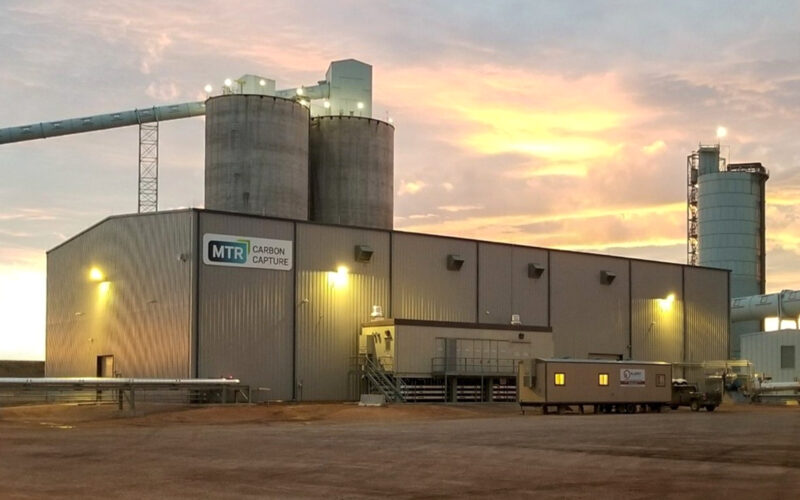
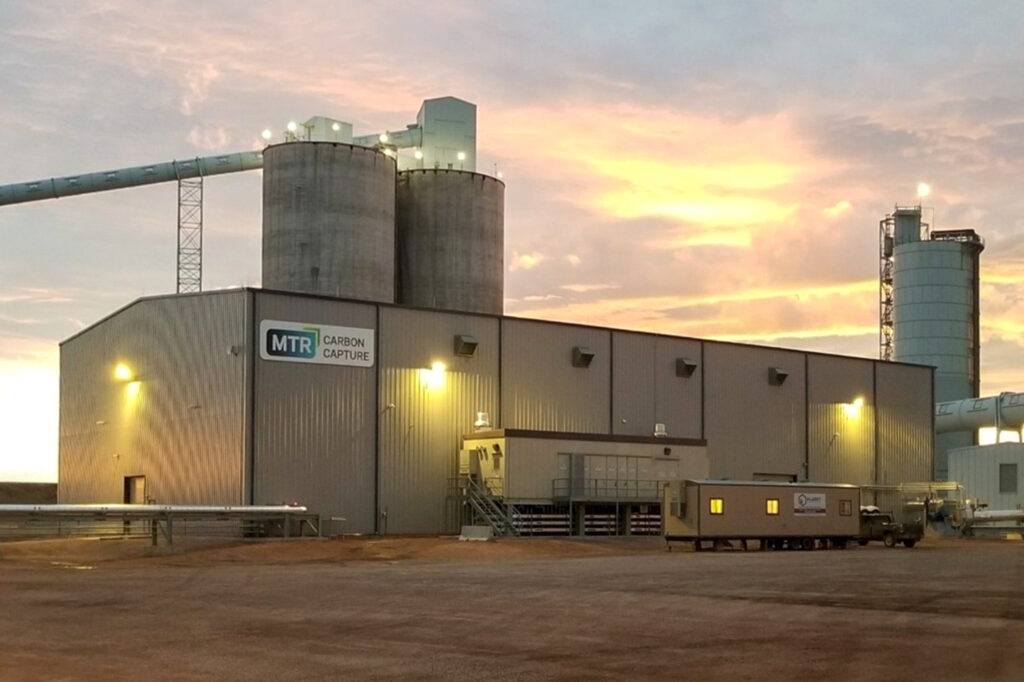
The Dry Fork Station project in Wyoming gives Membrane Technology & Research something many climate technology companies still lack: an operating flagship asset that can be pointed to as evidence of scale. Even if one project does not guarantee mass adoption, it helps answer the first commercial question every industrial customer asks, which is whether the thing has actually worked outside a slide deck.
Still, the real growth question is not whether Polaris can function. It is whether Membrane Technology & Research can make the economics and deployment profile attractive enough across different customer segments. Carbon capture buyers care about capital intensity, energy penalty, retrofit complexity, uptime, and maintenance requirements. Membrane-based systems potentially offer a more modular route than some solvent-based alternatives, but customers will still demand strong economics at plant level.
That is where the financing matters. New capital can help expand project execution capacity, strengthen customer support, and shorten commercialization bottlenecks. It can also help Membrane Technology & Research avoid a trap that has caught many industrial technology firms: having a credible product but not enough organizational muscle to deliver it repeatedly across geographies and sectors.
Why could industrial separations prove just as important as carbon capture in Membrane Technology & Research’s next phase?
Carbon capture may grab the headlines, but the quieter industrial separations business could be just as strategically important. Membrane Technology & Research operates across two divisions, with industrial separations serving petrochemical, natural gas, and refining customers. That gives the company a built-in hedge against the policy volatility and project-cycle uncertainty that can affect carbon capture.
This matters because industrial buyers often prefer technologies that solve multiple economic problems at once. A membrane solution that improves process efficiency, recovers valuable compounds, reduces energy use, or cuts emissions can fit more easily into capital allocation decisions than one sold purely as an ESG tool. The mention of BTX aromatics recovery and acid gas enrichment for Claus plants is a signal that Membrane Technology & Research is not betting the company solely on carbon policy momentum. It is also targeting applications where customers may adopt based on productivity and margin logic.
That is a smart positioning move. Industrial decarbonization markets tend to reward companies whose offerings sit at the intersection of compliance, efficiency, and operational practicality. If Membrane Technology & Research can deepen its foothold in those high-value applications, it may build a sturdier revenue base than a carbon-capture-only identity would allow.
There is also a credibility advantage here. Industrial customers are often more willing to buy from suppliers that already understand process industries broadly rather than vendors perceived as single-theme climate specialists. Membrane Technology & Research’s longer operating history and industrial application spread help it look more like an engineering business with climate relevance than a climate startup trying to learn industrial logic on the fly.
What execution risks could still limit Membrane Technology & Research’s growth despite the new capital?
None of this means scale is guaranteed. Industrial technology commercialization is notorious for looking smoother in press releases than in procurement meetings. Membrane Technology & Research still faces the classic challenges of industrial adoption: long sales cycles, customer-specific engineering requirements, project financing hurdles, and the need to prove reliable performance across varied environments.
Competition is another factor. Carbon capture is crowded with alternative approaches, including amine-based systems, adsorption technologies, cryogenic methods, and hybrid process solutions. In industrial separations, membrane technologies must also compete against established incumbents and existing process designs that customers already understand. Being commercially proven helps, but it does not eliminate the burden of proving superior value at scale.
There is also the question of execution bandwidth. Expanding globally sounds impressive, but geographic reach in industrial markets is not just about selling. It is about installation support, service capability, project management, supply-chain resilience, and regional customer trust. Scaling too quickly without sufficient field infrastructure can turn a promising technology company into a cautionary tale with a busy calendar and a stressed delivery team.
Then there is the broader market environment. Industrial customers are still navigating uncertain capital spending cycles, energy price swings, and policy complexity around emissions reduction investments. Even technologies with solid long-term logic can face near-term delays when customers hesitate on project timing. The membrane does not control the macro backdrop, annoying as that may be for everyone involved.
What does this investment signal about where industrial climate technology capital is flowing in 2026?
The financing suggests investors remain interested in climate-aligned industrial technologies, but with a sharper preference for businesses that can bridge engineering credibility and commercial execution. Membrane Technology & Research fits that profile better than many earlier-stage ventures because it can point to deployed systems, long development history, and active industrial use cases beyond a single decarbonization theme.
That makes this announcement useful as a market signal. Investors are still willing to fund industrial climate technology, but they want clearer pathways to revenue, scalability, and customer relevance. Membrane Technology & Research is being backed not simply because carbon capture is fashionable, but because membrane-based separation can be framed as practical industrial infrastructure.
For Climate Investment and Hartree Partners, the bet appears to be that industrial customers increasingly need solutions that are modular enough to deploy now and versatile enough to address several separation challenges over time. If that thesis holds, Membrane Technology & Research could benefit from a market that is becoming more pragmatic and less dazzled by theoretical scale alone.
What do the key takeaways from Membrane Technology & Research’s $27 million raise mean for industrial technology investors and competitors?
- The $27 million raise is less a rescue financing and more a scale-up signal that Membrane Technology & Research is moving from technical validation toward broader commercial execution.
- The simultaneous appointment of a new chief executive officer and chief commercial officer suggests investors want stronger market conversion, not just more engineering progress.
- Membrane Technology & Research’s dual exposure to carbon capture and industrial separations gives it a more diversified growth profile than many single-theme climate technology businesses.
- The Polaris platform’s operating history, including the Dry Fork Station project, gives the company a credibility advantage in a market where customers increasingly want proof over promises.
- Industrial separations may become a major value driver because customers often adopt faster when technologies improve both economics and emissions performance.
- The company’s long operating history and installed base could help it compete as a process technology provider rather than being seen only as a carbon capture niche player.
- Commercial execution remains the main risk, particularly around sales cycles, installation capacity, regional support, and repeat deployment across sectors.
- Competition from alternative carbon capture and separation technologies means Membrane Technology & Research still needs to prove customer-level cost and performance advantages consistently.
- The deal reflects a broader 2026 investment preference for industrial climate technologies with real assets, commercial traction, and multi-market relevance.
- If Membrane Technology & Research executes well, it could strengthen the case that membrane-based systems deserve a larger role in industrial decarbonization and process optimization worldwide.
Discover more from Business-News-Today.com
Subscribe to get the latest posts sent to your email.