




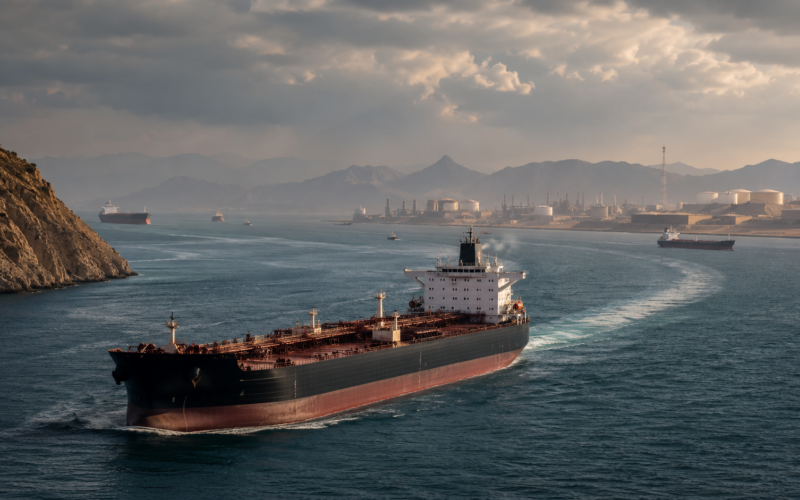
The United States reimposed a naval blockade covering Iranian ports, oil terminals and coastal areas on July 14, 2026, as fresh American strikes and Iranian retaliatory attacks pushed the conflict back towards a wider regional war.
U.S. Central Command said the blockade took effect at 4 p.m. Eastern Time, or 2000 GMT, and applied to vessels entering or leaving Iranian ports and coastal areas. The United States maintained that ships travelling through the Strait of Hormuz to non-Iranian destinations could continue using the international waterway.
The blockade was accompanied by another wave of United States strikes against Iranian coastal defence systems, missile and drone sites, and maritime capabilities. Iranian forces subsequently claimed attacks against United States positions in Jordan and military facilities or weapons sites in Bahrain and Kuwait. Immediate independent confirmation of several Iranian claims remained limited.
U.S. President Donald Trump also withdrew a proposal to charge a 20% fee on cargo passing through the Strait of Hormuz. Donald Trump said Gulf governments had instead offered investment and trade commitments involving the United States, although no specific participating countries, investment values, projects or implementation timetable were disclosed.
The escalation has placed the June ceasefire memorandum between the United States and Iran under severe pressure. The memorandum was intended to restore commercial passage through the Strait of Hormuz and create a 60-day negotiating period, but renewed attacks on shipping, disputes over control of the waterway and the restoration of the United States blockade have left the framework close to collapse.
What changed when the United States restored its blockade of Iranian ports on July 14, 2026?
The immediate change was the restoration of United States military restrictions on traffic entering or leaving Iranian ports, oil terminals and coastal areas. The blockade applies regardless of the vessel’s national flag and gives United States forces authority to intercept, divert or capture ships suspected of entering or departing the restricted zone without authorisation.
The measure does not formally block every vessel passing through the Strait of Hormuz. The United States has said neutral ships travelling to or from destinations outside Iran will not be impeded, while humanitarian cargo may be permitted after inspection. The distinction is central because Washington is presenting the operation as a blockade of Iran rather than a general closure of the international strait.
Iran rejects the United States position and maintains that Washington has no authority to determine how the Strait of Hormuz is managed. Iranian institutions have argued that Tehran retains a role in regulating passage through waters adjoining its territory and have accused the United States of encouraging ships to use routes that Iran considers unauthorised.
The result is a competing enforcement structure in one of the world’s busiest energy corridors. Commercial vessels must now assess United States military instructions, Iranian warnings, coastal state regulations and rapidly changing security conditions before entering the area.
Why is the distinction between blockading Iran and controlling the Strait of Hormuz important?
The Strait of Hormuz is an international waterway bordered by Iran and Oman, with established shipping lanes intended to separate eastbound and westbound traffic. The traffic separation arrangement was proposed by Iran and Oman and adopted through the International Maritime Organization in 1968.
The United States position is that vessels should retain free passage through the strait when they are not entering or leaving Iranian territory. Washington has therefore framed the blockade as a targeted military measure against Iran rather than an attempt to impose restrictions on all international shipping.
Iran has taken a different position during the conflict. Tehran has asserted authority over shipping routes, warned vessels against using passage arrangements that it considers unlawful and claimed attacks on tankers that allegedly ignored Iranian instructions.
These competing positions create serious operational risks even when both sides say they support some form of commercial passage. A ship considered neutral and compliant by the United States may still be viewed as violating Iranian regulations. A vessel following Iranian instructions could also face scrutiny if its destination involves an Iranian port or oil terminal.
The dispute therefore extends beyond physical control of the waterway. It concerns which institution can set navigation rules, escort commercial vessels, authorise routes and determine whether a ship is complying with international passage requirements.
How did renewed attacks on commercial vessels lead to the latest United States military escalation?
The United States restored the blockade after a series of attacks on commercial vessels operating in and around the Strait of Hormuz. U.S. Central Command said Iran had attacked seven commercial ships during the preceding week, leaving nearly a dozen crew members killed, injured or missing.
The International Maritime Organization had confirmed 56 maritime incidents connected to the Middle East conflict by July 14, with 17 confirmed seafarer deaths. These figures cover the wider period of hostilities and demonstrate that civilian shipping has repeatedly been exposed to missiles, drones, projectiles and military interception.
Two Emirati oil tankers were struck while travelling through waters near Oman. One Indian crew member was killed and eight other sailors were wounded. Iran’s Islamic Revolutionary Guard Corps said it had disabled two supertankers after the vessels allegedly ignored warnings, although the Iranian statement did not clearly identify the ships.
U.S. Central Command presented its renewed strikes as an effort to reduce Iran’s ability to attack commercial shipping. The targets included coastal defence infrastructure, missile systems, drone facilities and maritime capabilities associated with operations around the strait.
Iran characterised the United States action as aggression and argued that military pressure would not force Tehran to resume negotiations. This leaves commercial shipping at the centre of both the military confrontation and the diplomatic dispute.
Why did Donald Trump abandon the proposed 20% Strait of Hormuz shipping fee?
Donald Trump initially proposed charging a fee equal to 20% of cargo value in return for United States protection of shipping through the Strait of Hormuz. The proposal would have represented a major departure from the traditional United States position that international navigation through the strait should remain free from compulsory tolls.
The International Maritime Organization opposed mandatory charges for passage through straits used for international navigation and maintained that there was no legal basis for a compulsory transit fee of the kind proposed.
Donald Trump withdrew the fee proposal on July 14 after discussions with Gulf leaders. Donald Trump said Gulf governments preferred to make investments and trade agreements with the United States rather than support a direct cargo charge.
No detailed package was immediately announced. The United States did not identify which governments had made commitments, whether the investments were new, what industries would receive capital or how the arrangements would relate to the cost of protecting shipping.
The reversal removed an immediate source of legal and commercial uncertainty, but it did not resolve the larger conflict. Shipping companies still face military risks, higher insurance costs, uncertain routing instructions and the possibility of interception or attack.
The episode also demonstrated how quickly policy around the Strait of Hormuz can change. A fee proposed as part of a new security model was withdrawn within a day, leaving maritime operators dependent on operational notices rather than a stable long-term framework.
How has the June United States-Iran memorandum unravelled around the Strait of Hormuz?
The June memorandum was designed to pause the war, reopen the Strait of Hormuz and establish a period for further negotiations. Iran agreed to use its best efforts to facilitate commercial passage without charges for 60 days, while the United States lifted its earlier blockade.
The agreement did not settle the underlying dispute over authority in the strait. Iran interpreted the memorandum as recognising a role for Tehran in managing shipping traffic. The United States and Gulf governments viewed it as an obligation on Iran to permit free passage without imposing military restrictions.
Other elements of the memorandum also became contested. The United States later revoked an authorisation connected to Iranian oil sales, while Iran accused Washington of failing to meet economic commitments. Disagreement also continued over frozen Iranian assets and the conditions attached to their potential release.
The memorandum required negotiations towards a final agreement, but no new round of talks was formally established before the latest escalation. Renewed Iranian attacks on ships and United States strikes against Iran then weakened the ceasefire framework further.
The restored blockade effectively reverses one of the memorandum’s most important practical outcomes. The Strait of Hormuz may remain open to some neutral traffic, but the wider arrangement intended to reduce military confrontation has been replaced by parallel enforcement, retaliation and threats of additional attacks.
What do Iranian attacks on Jordan, Bahrain and Kuwait mean for regional security?
Iranian forces claimed new drone and missile operations against United States positions and military-related facilities in Jordan, Bahrain and Kuwait after the restoration of the blockade and fresh United States strikes.
Jordan, Bahrain and Kuwait host United States military personnel or facilities and have repeatedly faced the risk of being drawn into the confrontation. Iranian attacks on these countries expand the geographic cost of the conflict beyond Iran, Israel and the Strait of Hormuz.
Kuwait activated air defences against incoming drones, while Bahrain has faced repeated aerial alerts. Iran’s army also claimed an attack on United States positions at Jordan’s Azraq base, although there was no immediate confirmation from the Pentagon.
The regional governments involved have an interest in protecting their territory and security partnerships while avoiding a prolonged war that could damage trade, investment, aviation and energy infrastructure. Their position is complicated because United States forces operate from facilities in the region, while Iran views those facilities as part of the military pressure directed against Tehran.
Every additional attack increases the possibility of direct retaliation by a Gulf government, wider United States operations or accidental escalation caused by a failed interception. It also places civilian populations and commercial infrastructure inside an expanding zone of military risk.
Why could the restored Iran blockade affect global oil, gas, fertilizer and food markets?
The Strait of Hormuz carried more than one-quarter of global seaborne oil trade and around one-fifth of global liquefied natural gas trade before the 2026 conflict disrupted normal shipping patterns. Qatar, Saudi Arabia, the United Arab Emirates, Kuwait, Iraq and Iran all depend on the waterway for significant energy exports.
The strait is particularly important to Asian economies. China, India, Japan and South Korea receive large volumes of oil or liquefied natural gas originating in the Persian Gulf. Extended disruption can therefore increase energy costs for refiners, electricity producers, manufacturers and consumers across Asia.
Brent crude reached around $85 a barrel on July 14 after rising approximately 15% over seven days. Vessel traffic had also fallen sharply during the renewed confrontation, reflecting caution among shipowners and operators.
The economic consequences extend beyond crude oil. The region is a major supplier of liquefied natural gas, petrochemicals and fertilizer inputs. Higher energy, shipping and insurance costs can move through supply chains into electricity tariffs, industrial production, agricultural costs and food prices.
The United Nations has warned that disruptions to food, medicines and other essential goods could create humanitarian and socioeconomic consequences beyond the immediate conflict zone. Developing economies with high fuel-import dependence and limited financial reserves are particularly exposed to renewed price volatility.
Could Donald Trump’s threat against Iranian power plants and bridges widen the war further?
Donald Trump said the United States could target Iranian power plants and bridges in the following week unless Tehran returned to negotiations. The statement represented a potential expansion beyond the military and maritime targets emphasised during the latest round of strikes.
No confirmed decision to attack those sites had been announced at the time of the threat. The statement was framed as pressure intended to force Iran back to the negotiating table.
Iranian Deputy Foreign Minister Kazem Gharibabadi rejected the assumption that military action and economic pressure would produce renewed talks. Iran continued retaliatory operations after the United States announcement, indicating that the immediate response was escalation rather than compromise.
Any expansion towards electricity infrastructure or bridges would increase risks to civilian life, essential services, transport and humanitarian access. It would also raise further questions about distinction, proportionality and military necessity under international humanitarian law.
The threat narrows the available diplomatic space because negotiations would occur under the possibility of broader attacks, while Iran may seek to demonstrate that pressure cannot determine its position. Regional mediators must therefore restore communication before military planning moves into another phase.
What developments will determine whether the United States-Iran conflict returns to full-scale war?
The first indicator will be whether commercial shipping can continue using the neutral passage route without further attacks. A sustained reduction in incidents would create space for negotiations, while another tanker strike or military interception could trigger immediate escalation.
The second indicator will be the scale of Iranian retaliation against United States positions in Gulf countries. Confirmed casualties or significant damage at a United States base could increase pressure on Washington to widen its response.
The third indicator will be whether the United States carries out the threatened attacks on power plants or bridges. The transition from maritime and military targets to infrastructure supporting civilian life would mark a significant expansion of the conflict.
Diplomatic activity will also be decisive. Pakistan, Qatar and other regional intermediaries helped establish the June memorandum, but the agreement now requires more than a simple return to its original language. The parties would need to clarify navigation rights, sanctions relief, oil exports, frozen assets and the timetable for nuclear negotiations.
The blockade may temporarily reduce Iranian port traffic, but it cannot by itself resolve the political disputes that caused the ceasefire to fail. Without a revised negotiating structure, the United States and Iran remain locked in a cycle in which attacks on shipping produce military retaliation, which then produces further regional attacks.
What are the key takeaways from the renewed United States blockade of Iranian ports?
- The United States restored its blockade of Iranian ports, oil terminals and coastal areas at 2000 GMT on July 14, 2026, while maintaining that neutral vessels travelling to non-Iranian destinations could continue through the Strait of Hormuz.
- U.S. Central Command launched additional strikes against Iranian coastal defence systems, missiles, drones and maritime capabilities, presenting the operation as a response to attacks that threatened commercial vessels and civilian crews.
- Iran claimed retaliatory operations against United States positions and military-related facilities in Jordan, Bahrain and Kuwait, expanding the security risk for Gulf governments that host American forces or defence infrastructure.
- The International Maritime Organization had confirmed 56 conflict-related maritime incidents and 17 seafarer deaths by July 14, demonstrating that civilian shipping has become a central and increasingly dangerous front in the regional conflict.
- Donald Trump withdrew his proposal for a 20% cargo fee after saying Gulf governments preferred investment and trade arrangements, but no specific countries, values, projects or legally binding commitments were immediately identified.
- The restored blockade has further weakened the June United States-Iran memorandum, which was intended to reopen the Strait of Hormuz, permit toll-free commercial passage and support negotiations towards a permanent settlement.
- The Strait of Hormuz carried more than one-quarter of global seaborne oil trade and about one-fifth of global liquefied natural gas trade before the conflict, making renewed disruption a risk for energy, fertilizer and food costs.
- Donald Trump’s threat to target Iranian power plants and bridges unless negotiations resume creates an additional escalation risk, particularly because Iran has publicly rejected the idea that military and economic pressure will force renewed talks.
Discover more from Business-News-Today.com
Subscribe to get the latest posts sent to your email.


