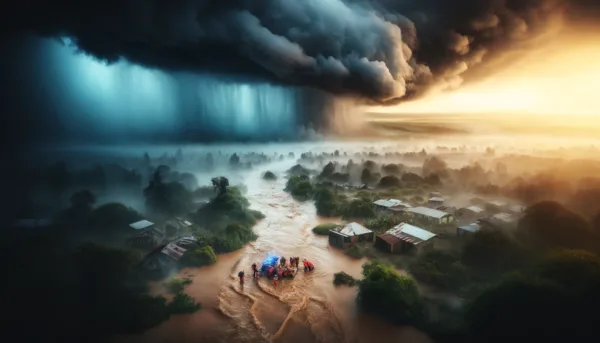
The summer of 2026 is becoming a warning about how climate disasters now overlap rather than arrive one at a time. Wildfire smoke from Canada has drifted across major U.S. cities, deadly floods have hit Texas, record heat has strained communities from the United States to Europe, and wildfires have swept across regions that once treated such events as rare.
The pattern matters because it shows how climate risk is becoming more complex, more expensive and harder for governments to manage. A heat wave is no longer only a heat wave when it dries vegetation, worsens wildfire risk, strains power grids, degrades air quality and increases health emergencies. A flood is no longer only a local disaster when it overwhelms infrastructure, disrupts insurance markets and exposes how much development has occurred in vulnerable terrain.
For businesses, governments and households, the central issue is not whether extreme weather is happening. It is whether public systems are prepared for multiple hazards hitting at once. This summer’s combination of smoke, heat, floods and fires suggests that climate adaptation is no longer a long-term planning exercise. It is becoming a present-day test of infrastructure, health systems, emergency response and economic resilience.
Why compounding disasters are harder to manage than single extreme events
Compounding disasters are harder to manage because they strain the same people, agencies and infrastructure from several directions at once. A city dealing with wildfire smoke may also be facing dangerous heat, increased hospital visits, power demand and outdoor work restrictions. A state recovering from flooding may still be dealing with insurance losses, road damage and emergency shelter needs when another storm system arrives.
Traditional disaster planning often treats events as separate categories. Fire departments prepare for wildfires, flood managers prepare for rainfall, utilities prepare for heat-driven power demand, and public-health agencies prepare for air-quality warnings. But the climate system does not separate those problems neatly. Heat can intensify drought. Drought can worsen fires. Fires can create smoke that travels hundreds of miles. Heavy rainfall can arrive in places where dried soils and built-up communities make flooding more dangerous.
This creates a planning problem for governments. Emergency managers need enough capacity to respond to overlapping events, not just one major incident. Hospitals need heat and smoke protocols at the same time. Utilities need grid resilience while storms and fires threaten physical assets. Cities need cooling centers that can also protect residents from dangerous air.
The result is a new kind of risk environment. The question is no longer whether a community can survive a severe heat wave or a severe flood in isolation. It is whether the community can handle a season in which several hazards build on one another and exhaust the systems meant to respond.
How wildfire smoke has turned air quality into a national climate issue
Wildfire smoke has become one of the clearest examples of how climate risks cross borders. Fires burning in Canada can change the daily lives of people in Boston, New York, Washington, Chicago and Detroit. Residents hundreds of miles from the flames may still face hazy skies, red sunsets, school changes, outdoor-work restrictions and health warnings.
That matters because smoke turns wildfire from a regional land-management problem into a national public-health problem. Fine particulate pollution can aggravate asthma, heart disease and respiratory conditions. It can be especially harmful to children, older adults, pregnant people, outdoor workers and people with existing health problems. When smoke blankets large population centers, millions of people are affected even if they are nowhere near a fire line.
The economic effects are also broad. Construction crews, delivery workers, airport operations, outdoor events, tourism, sports and local businesses can all be disrupted. Employers may need new safety policies for smoke days, just as they already plan for storms or heat. Schools may need filtration upgrades and indoor activity plans.
Wildfire smoke also changes how people experience climate risk. A flood or fire may feel distant until smoke reaches a person’s neighborhood and makes the air unsafe to breathe. That visibility can shift climate risk from an abstract debate to a daily health concern.
Why extreme rainfall is overwhelming old flood assumptions
The deadly Texas flooding shows why old rainfall assumptions are becoming less reliable. A so-called 1,000-year rainfall event is not supposed to happen often under historical climate conditions, but warmer air can hold more moisture, making extreme downpours more likely and more intense. When nearly a year’s worth of rain falls in some locations over a short period, rivers and streams can rise faster than warning systems, roads and homes can handle.
This is a major infrastructure problem. Many drainage systems, bridges, roads and flood maps were designed around past rainfall patterns. If extreme precipitation events become more common, those systems may understate risk. Communities may discover that homes, camps, schools and businesses built outside old high-risk zones are more exposed than previously believed.
The insurance implications are serious. Flood losses can hit households that lack adequate coverage, especially where people do not realize they live in a vulnerable area. Local governments may face repeated costs for road repairs, debris removal, emergency response and rebuilding. If floods become more frequent, budgets built around rare disasters will no longer be enough.
The political challenge is that flood adaptation is expensive before disaster strikes and urgent after it happens. Elevating infrastructure, updating flood maps, restricting development and improving warning systems all require money and public support. This summer’s flooding shows why delaying those decisions can leave communities exposed when extreme rainfall arrives faster than expected.
How heat waves are straining health systems, workers and power grids
Heat waves are among the deadliest climate hazards because they often kill quietly. People may not see the damage immediately, but high temperatures can worsen heart disease, kidney stress, dehydration, respiratory illness and heat stroke. The risk rises when nights remain hot, because the body has less chance to recover.
This summer’s heat has placed pressure on both the United States and Europe. Persistent heat domes have trapped hot air over large regions, pushing temperatures to record levels and making daily life dangerous for millions. In places not built for extreme heat, older buildings, limited air conditioning and dense urban neighborhoods can turn homes into health risks.
The workplace impact is becoming harder to ignore. Outdoor workers in agriculture, construction, delivery, landscaping, emergency response and transportation may face unsafe conditions for longer stretches of the day. Indoor workers in warehouses, kitchens and factories can also be exposed if cooling systems are weak or unavailable. That makes heat not only a weather issue but a labor, productivity and liability issue.
Power grids face a parallel challenge. Demand rises as homes and businesses use more cooling, while heat can stress transmission lines and reduce system efficiency. If grids fail during extreme heat, the result can quickly become a public-health emergency. Heat resilience therefore requires cooling access, worker protections, medical readiness and energy planning at the same time.
Why Europe’s wildfires show climate risk is moving into new regions
Europe’s wildfire season is showing that climate risk is not confined to the places historically associated with fire. Spain, France, the United Kingdom and other countries have faced fires in areas where such events were once considered less common. As heat and dry conditions intensify, landscapes that were not managed for frequent fire can become more vulnerable.
This is a major planning challenge because wildfire preparedness depends on experience, equipment, land management and public behavior. Regions that face frequent fires often build specialized firefighting capacity, defensible-space rules, evacuation plans and public-warning systems. Areas where wildfire was previously rare may not have the same readiness.
Tourism adds another layer. European summer travel depends heavily on outdoor attractions, coastal areas, rural landscapes, historic towns and transport corridors. Wildfires and smoke can disrupt travel, damage local economies and create emergency evacuation problems during peak visitor season. The more heat and fire overlap with tourism demand, the more climate risk becomes an economic risk.
The broader lesson is that climate baselines are shifting. Countries and cities cannot rely only on what was normal 20 or 30 years ago. A region that once worried mainly about heat may now need wildfire plans. A region that once worried mainly about rain may now need smoke and heat protocols. Adaptation has to follow current risk, not old assumptions.
How climate disasters could reshape politics and public spending
Compounding disasters could reshape politics because they force voters to judge whether governments are prepared for the risks people actually face. Climate politics often focuses on emissions targets, energy prices and ideological divides. Disaster seasons shift attention toward practical competence: emergency alerts, evacuation routes, cooling centers, air filtration, flood maps, grid reliability and rebuilding funds.
That shift matters for both parties. Voters may disagree over climate policy, but they still expect clean air, safe roads, functioning hospitals and reliable emergency response. If disasters keep overlapping, leaders will face pressure to fund resilience even in places where climate language is politically divisive. A city does not need consensus on every climate model to know it needs better drainage or cooling access.
Public spending will become more difficult. Governments must decide whether to pay upfront for adaptation or pay repeatedly after disasters. Upfront spending can be politically unpopular because benefits are less visible. Disaster recovery spending is often unavoidable but more expensive, reactive and unequal.
Businesses will also push for clarity. Insurers, utilities, real estate firms, logistics companies, agriculture, tourism and healthcare systems all need stable assumptions about climate risk. When disasters become more frequent and overlapping, private-sector planning becomes harder, and the demand for public investment grows.
What should readers watch as the summer disaster season continues?
The most important signal will be whether overlapping disasters continue through late summer and early fall. More wildfire smoke, heat waves, floods or power disruptions would reinforce the idea that the country is facing a season of layered risks rather than isolated emergencies. That would put more pressure on federal, state and local agencies to coordinate across hazard types.
Insurance markets will be another key measure. If repeated fires, floods and storms drive higher premiums or coverage withdrawals, climate risk will become a direct financial issue for homeowners, businesses and local governments. Insurance stress often reveals risk faster than political debate because prices adjust when losses rise.
Infrastructure failures will show where adaptation gaps are largest. Rail delays, road washouts, overwhelmed drainage systems, hospital strain, power outages and school closures can reveal which systems were designed for a climate that no longer exists. Each failure becomes evidence in the broader debate over resilience investment.
The political response after the disasters will matter as much as the disasters themselves. Governments may announce flood-control funding, grid upgrades, worker heat protections, smoke shelters, building-code changes or wildfire mitigation projects. The strength and durability of those responses will show whether leaders treat this summer as an emergency to move past or a preview of conditions that require structural change.
This summer’s compounding disasters are making climate risk harder to ignore because they are touching air, water, heat, health, housing, infrastructure and insurance at once. The lesson is not that every community will face every hazard every year. It is that the systems built for the old climate are being tested by a new pattern of overlapping extremes.
Key takeaways from this summer’s compounding climate disasters
- The summer of 2026 is showing how climate disasters increasingly overlap, with wildfire smoke, flash floods, record heat and wildfires affecting the United States and Europe at the same time.
- At least 120 million Americans were under air-quality warnings last week as wildfire smoke from Canada spread across large parts of the United States.
- Major cities including Boston, New York, Washington, Chicago and Detroit faced degraded air quality, showing how wildfires can create health risks far from the actual fire zones.
- Texas was hit by a deadly 1,000-year rainfall event, highlighting how extreme precipitation can overwhelm flood planning based on older climate assumptions.
- Heat domes have exposed hundreds of millions of people in the United States and Europe to dangerous temperatures, increasing risks for public health, workers and power grids.
- Wildfires across parts of Europe show that fire risk is expanding into areas where such events were once considered less common.
- Compounding disasters are more dangerous than isolated events because they strain emergency response, hospitals, utilities, transportation networks and local budgets simultaneously.
- Businesses face rising climate exposure through insurance costs, supply-chain disruption, worker safety risks, tourism losses and infrastructure damage.
- Governments will face growing pressure to invest in adaptation, including flood control, cooling centers, air filtration, wildfire mitigation, grid resilience and updated building standards.
- The central climate challenge is shifting from future projections to present-day resilience, as communities are forced to manage overlapping disasters in real time.
Discover more from Business-News-Today.com
Subscribe to get the latest posts sent to your email.