



Kongsberg Gruppen ASA (OSE: KOG) has completed the acquisition of 100% of Sonatech, giving the Norwegian defence and technology group a California-based underwater acoustics business with more than 100 employees, approximately $33 million of 2024 revenue and decades of experience supplying technology to the United States Navy.
The September 1 completion is commercially more important than a routine bolt-on acquisition because Sonatech gives Kongsberg a deeper operating base inside the United States defence market. Sonatech develops and manufactures customised devices, subsystems and systems used to transmit, receive and process acoustic signals underwater, while Kongsberg already supplies acoustic sensors, navigation technology, signal processing and HUGIN autonomous underwater vehicles. The purchase price has not been disclosed.
The transaction also took considerably longer to close than Kongsberg originally anticipated. The company signed the agreement on June 17, 2025 and initially expected completion later that year, subject to US government approvals. Subsequent disclosures pushed the expected completion into the first half of 2026 before the acquisition ultimately closed on September 1, meaning more than 14 months elapsed between signing and completion.
Why does buying a $33 million company matter to a Kongsberg group targeting NOK 100 billion of revenue?
Sonatech is small in financial terms compared with Kongsberg Gruppen ASA, which generated NOK 10.39 billion of revenue in the second quarter of 2026 alone and is targeting NOK 100 billion of annual revenue by 2029. The strategic value lies instead in customer access, specialist technology and the ability to combine Sonatech products with Kongsberg’s existing underwater portfolio for the United States market.
Sonatech has more than 50 years of experience in undersea acoustics and has been a technology supplier to the United States Navy. Kongsberg has explicitly linked the acquisition to improving access to that customer, suggesting the company sees local industrial presence and existing defence relationships as important components of its US growth strategy rather than relying solely on technology exported from Norway.
That fits a broader repositioning underway inside Kongsberg. Following the separation of Kongsberg Maritime in April 2026, the remaining Kongsberg Gruppen ASA has become more concentrated around defence, security, surveillance, ocean technology and space. Management has identified underwater operations as one of the emerging defence segments where it expects strong demand alongside established businesses such as missiles, air defence and remote weapon stations.
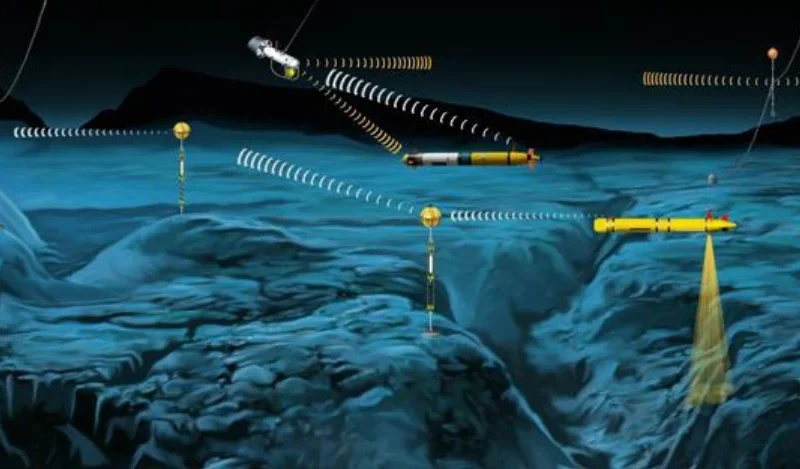
The commercial opportunity is also broader than traditional submarine detection. Modern naval customers increasingly require technologies for mine countermeasures, seabed intelligence, harbour defence, surveillance of critical infrastructure and autonomous underwater operations. That creates a market where acoustic sensing, processing and autonomous platforms increasingly need to work as integrated systems rather than separate products.
How could Sonatech strengthen Kongsberg’s HUGIN autonomous underwater vehicle business in America?
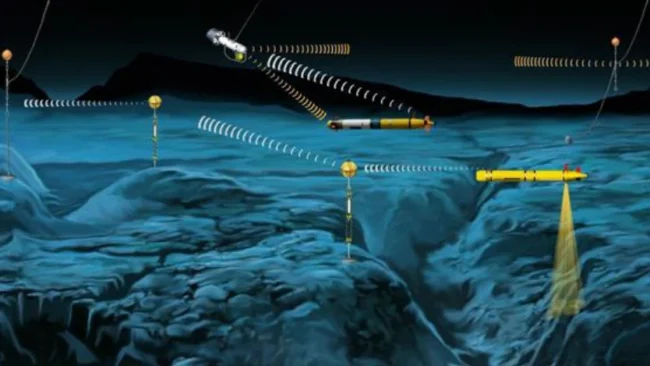
Kongsberg’s HUGIN family ranges from survey-oriented autonomous underwater vehicles to missionised defence configurations capable of operating for extended periods and carrying specialised payloads. Sonatech’s acoustic transmitters, receivers, processing technology and underwater communications expertise could expand the type of payloads and systems Kongsberg can offer to American customers.
The combination is particularly relevant as navies attempt to push more surveillance and mine-countermeasure activity away from crewed vessels and onto autonomous platforms. A vehicle able to navigate independently is only part of that equation. Its commercial and military utility increasingly depends on the quality of the sensors it carries, the processing performed onboard and its ability to exchange information through difficult underwater communications environments.
Kongsberg has also been investing elsewhere in hydroacoustics. Kongsberg Discovery acquired Naxys Technologies, a specialist in passive hydroacoustics, during 2025 and has subsequently introduced additional sonar products for subsea situational awareness. Sonatech therefore adds to a broader underwater sensing portfolio rather than standing as an isolated acquisition.
For the United States Navy, the attraction could be the availability of more technology through a domestic company with an established supplier history. For Kongsberg, Sonatech potentially shortens the distance between its Norwegian-developed systems and a customer whose procurement, security and industrial requirements can favour a substantial American presence.
Does Kongsberg’s latest financial performance support another phase of defence acquisitions?
Kongsberg enters the transaction from a position of unusually strong order visibility. Second-quarter 2026 revenue rose 31% year over year to NOK 10.39 billion, while EBIT increased to NOK 1.67 billion and the EBIT margin improved to 16.1%. Order intake reached NOK 17.07 billion and group backlog climbed to approximately NOK 157.54 billion.
Management is using that demand environment to pursue a far larger revenue base. Kongsberg wants annual revenue to reach NOK 100 billion in 2029 and NOK 150 billion by 2033, compared with around NOK 33 billion in 2025 on the basis used for its current targets. The company has identified both organic investment and selected acquisitions as tools for expanding capacity and technology.
Sonatech is not Kongsberg’s only recent US acquisition. The group completed its purchase of California missile company Zone 5 Technologies in June 2026, giving it another American industrial platform in an area where defence demand is accelerating. Together, the transactions indicate that Kongsberg is not merely pursuing export sales into the United States but building local capabilities in selected technologies.
That strategy carries integration and execution requirements. Kongsberg has to preserve the customer relationships that made Sonatech attractive while connecting its technology to a much larger international portfolio. The absence of a disclosed acquisition price also prevents investors from directly assessing the revenue multiple paid or the likely financial return from the transaction.
Why did Kongsberg shares show little excitement after the Sonatech closing?
The equity market has so far treated completion as a relatively small event compared with the scale of Kongsberg’s broader defence backlog. Kongsberg shares closed at NOK 313.40 on September 1, down 1.29% from the previous session, before falling another 0.73% on September 2. They finished September 3 at about NOK 307.80, down another 1.06%.
That leaves the stock roughly 1.4% below its August 28 close of NOK 312.30, while still modestly above its NOK 302.90 close on August 3. The shares also remain below the roughly NOK 350 area reached within the past year, suggesting investor sentiment toward Kongsberg is being determined more by expectations embedded in its defence growth outlook and valuation than by a relatively small undisclosed acquisition.
The muted reaction does not necessarily diminish Sonatech’s strategic value. A $33 million revenue company is unlikely to change near-term group earnings materially on its own. The transaction becomes more consequential if Sonatech helps Kongsberg sell substantially larger autonomous underwater, sonar and surveillance systems into United States Navy programmes.
That is the real test following completion. Kongsberg has finally obtained the asset it identified more than a year ago. What remains uncertain is how quickly a specialist underwater-acoustics foothold can translate into larger US defence orders.
Discover more from Business-News-Today.com
Subscribe to get the latest posts sent to your email.