ConocoPhillips (NYSE: COP) has begun a new leadership era with Andy O’Brien taking over as President and Chief Executive Officer on September 1, succeeding Ryan Lance after 14 years at the helm. Lance is moving into a transitional Executive Chairman role, while Vice President of Finance and Controller Konnie Haynes-Welsh becomes Senior Vice President and Chief Financial Officer, creating a coordinated CEO and CFO succession at one of the world’s largest independent oil and gas producers.
The leadership change arrives with operating and financial momentum considerably stronger than a conventional succession story might suggest. ConocoPhillips reported second-quarter earnings of $3.9 billion, nearly double the $2.0 billion generated a year earlier, while adjusted earnings reached $4.0 billion. Cash from operations was approximately $7.2 billion, total shareholder distributions reached $3 billion, and management remains focused on generating a roughly $7 billion free-cash-flow improvement by 2029.
O’Brien also begins his tenure with ConocoPhillips shares close to their annual high. The stock closed at $132.49 on August 31, approximately 2.5% below its 52-week peak of $135.88 and almost 10% above its July 31 closing level. That leaves the incoming CEO with unusually high investor expectations around capital discipline, portfolio management and the company’s ability to convert a larger resource base into sustained shareholder returns.
Why did ConocoPhillips choose its finance and strategy chief to succeed Ryan Lance?
O’Brien has been deeply involved in the financial architecture behind ConocoPhillips’ strategy rather than arriving as a conventional operating executive from outside the company. Before his promotion, he served as Chief Financial Officer and Executive Vice President of Strategy and Commercial, giving him direct exposure to capital allocation, acquisitions, portfolio decisions, LNG strategy and shareholder distributions. ConocoPhillips said his deep knowledge of the business and execution record made him the right leader for the next phase.
That background is especially relevant because ConocoPhillips has become a substantially different company through acquisitions and portfolio reshaping under Lance. Reuters noted that Lance’s tenure included the $22.5 billion Marathon Oil acquisition, the $9.7 billion Concho Resources transaction and the $9.5 billion purchase of Shell’s Permian assets, substantially increasing ConocoPhillips’ scale in North American shale.
The incoming CEO therefore does not need to prove that ConocoPhillips can assemble a large resource portfolio. His harder task is extracting increasing amounts of free cash flow from that portfolio while maintaining investment discipline through volatile commodity cycles.
O’Brien’s finance background may consequently become an advantage. The next phase of value creation depends heavily on deciding which barrels deserve investment, which assets should be sold, how aggressively shares should be repurchased and how new international opportunities fit against existing returns.
What financial position does Andy O’Brien inherit on his first day as CEO?
ConocoPhillips generated $7.4 billion of cash provided by operating activities during the June quarter and $7.2 billion of cash from operations excluding working-capital effects. The company spent approximately $3 billion on capital expenditures and investments while simultaneously repurchasing $2 billion of stock and paying around $1 billion of dividends.
That balance between reinvestment and shareholder returns is central to the ConocoPhillips model. Management says it remains on track to return roughly 45% of 2026 cash from operations to shareholders, demonstrating that production growth is not being pursued independently of capital returns.
Second-quarter production reached approximately 2.248 million barrels of oil equivalent per day, with Lower 48 production of 1.479 million barrels per day. The Delaware Basin alone contributed 720,000 barrels of oil equivalent per day, demonstrating the scale of the Permian position that O’Brien inherits.
Higher commodity prices also strengthened earnings. ConocoPhillips realised an average price of $62.33 per barrel of oil equivalent during the quarter, 36% above the $45.77 recorded a year earlier. That improvement helped push quarterly earnings to their strongest level since 2022.
Why is the $7 billion free-cash-flow target likely to define O’Brien’s tenure?
ConocoPhillips has said it expects approximately $7 billion of free-cash-flow improvement by 2029, making that target one of the clearest quantitative measures against which the new CEO can eventually be judged. The opportunity depends on a combination of project start-ups, portfolio optimisation, cost improvements and stronger cash generation from assets already acquired.
The company has already moved aggressively on portfolio recycling. During the second quarter, ConocoPhillips signed agreements to sell another $1.7 billion of non-core Lower 48 assets, reaching its $5 billion disposition target ahead of schedule. Those transactions closed in July.
Asset sales perform two functions. They remove properties management believes have lower strategic value while generating capital that can be directed toward higher-return projects, debt reduction or shareholder distributions. The danger is selling too aggressively if future commodity prices make disposed assets substantially more valuable.
O’Brien’s capital-allocation discipline will therefore matter as much as operational performance. ConocoPhillips increasingly has enough opportunities that the strategic challenge becomes choosing which opportunities not to fund.
How important will international expansion be after years of Permian growth?
ConocoPhillips is broadening its opportunity set beyond U.S. shale. The company has agreed to acquire a 42% interest in BP’s Kirkuk redevelopment venture in northern Iraq, has signed an agreement supporting re-entry into Syria and has increased contracted LNG offtake to approximately 12 million tonnes per year.
These projects differ fundamentally from short-cycle shale drilling. Large international developments can provide longer-duration production and competitive supply costs, but they also expose ConocoPhillips to political, contractual and geopolitical risks that require different operating capabilities.
Iraq is particularly significant because the Kirkuk redevelopment offers access to long-life conventional resources. ConocoPhillips is expected to hold 42% of the project company after regulatory completion, while BP retains 43% and Türkiye Petrolleri Anonim Ortaklığı has agreed to acquire 15%.
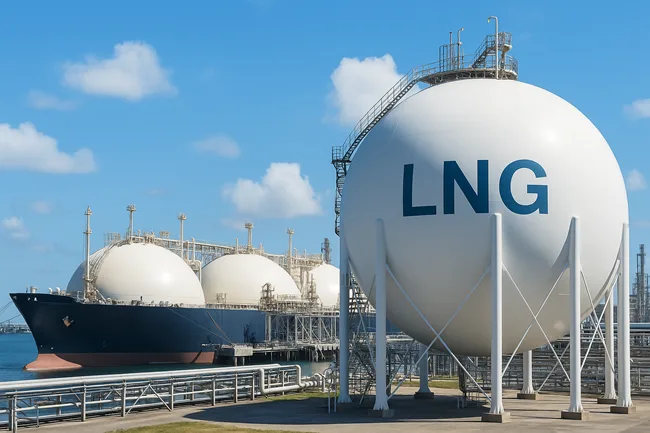
LNG presents another strategic opportunity. Increasing contracted offtake gives ConocoPhillips exposure to international gas demand without requiring the company to own every component of the export infrastructure itself.
O’Brien therefore inherits a business that remains anchored by North American production but is becoming increasingly diversified geographically.
What does Ryan Lance’s move to Executive Chairman mean for the transition?
Lance is not disappearing immediately from ConocoPhillips. Moving into a transitional Executive Chairman role provides continuity as O’Brien assumes responsibility for day-to-day management, particularly around large projects and relationships established over Lance’s 14-year CEO tenure.
The arrangement can reduce succession risk if responsibilities remain clearly defined. An outgoing CEO staying too involved can complicate authority, but a structured transitional period can preserve institutional knowledge while allowing a new leader to establish control.
ConocoPhillips has also promoted Haynes-Welsh into the CFO role rather than recruiting externally. The simultaneous internal CEO and CFO appointments indicate that the board is prioritising strategic continuity rather than using succession as an opportunity for a fundamental corporate reset.
That seems consistent with O’Brien’s initial message. He has indicated that his intention is to build on the existing strategy and operating momentum rather than redesign the company simply because leadership has changed.
What does ConocoPhillips stock performance say about the expectations facing its new CEO?
ConocoPhillips closed at $132.49 on August 31, gaining 1.64% during the session and leaving the stock only about 2.5% below its $135.88 52-week high. The shares were approximately 10% above their July 31 close of $120.48, while the five-session move from August 24 was slightly negative at roughly 0.6%.
The stock is also roughly 55% above its 52-week low of $85.57. That strong recovery means O’Brien enters with considerably less valuation pessimism than an incoming chief executive taking control during an oil downturn.
Investors appear to be rewarding the combination of stronger crude prices, cash generation, portfolio discipline and shareholder returns. The challenge is that expectations increase as the stock approaches its annual high.
O’Brien consequently inherits a company with relatively little tolerance for strategic mistakes. Investors will expect him to maintain capital discipline even if higher oil prices make additional acquisitions or aggressive production expansion look tempting.
What should investors watch during Andy O’Brien’s first year as ConocoPhillips CEO?
The clearest benchmark is progress toward the 2029 free-cash-flow inflection. Management has already established the $7 billion target, giving shareholders a measurable framework for evaluating whether portfolio changes and growth investments are producing the expected returns.
Shareholder distributions will be another important indicator. ConocoPhillips intends to return approximately 45% of 2026 cash from operations, and any major shift from that framework would signal a change in capital-allocation priorities.
Investors should also monitor international expansion. Kirkuk, Syria and additional LNG commitments could create durable long-term value, but they introduce execution and geopolitical exposure beyond ConocoPhillips’ U.S. shale core.
Finally, O’Brien will need to demonstrate that the company can remain disciplined at strong commodity prices. ConocoPhillips earned $3.9 billion in the latest quarter and is trading near its 52-week high, conditions that can make aggressive capital deployment easier to justify.
That is what makes this succession more consequential than a routine CEO handover. Ryan Lance spent 14 years building scale, reshaping the portfolio and navigating multiple commodity cycles. Andy O’Brien inherits that larger platform at a moment when cash generation is strong and investors already expect substantial future free-cash-flow growth.
His job is not to prove ConocoPhillips can become bigger. It is to prove the enlarged company can become more valuable.
Discover more from Business-News-Today.com
Subscribe to get the latest posts sent to your email.