


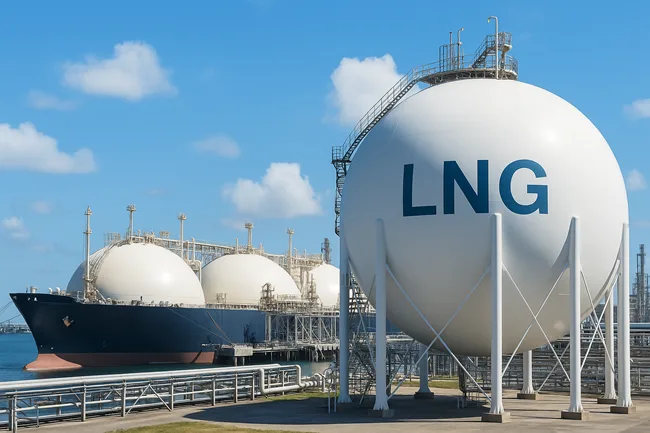
Energy Capital Partners and Centrica plc have officially closed the £1.5 billion acquisition of Grain LNG, solidifying their joint control over Europe’s largest liquefied natural gas regasification terminal. The deal, executed through a 50:50 joint venture, involved the purchase of National Grid Grain LNG Limited and Thamesport Interchange Limited from National Grid. With regulatory approvals now secured, the Isle of Grain terminal transfers into private hands at a time when energy security and infrastructure resilience are top national priorities in the United Kingdom.
The transaction was structured with approximately £1.1 billion in committed non-recourse project finance debt, while Centrica’s equity contribution stands at roughly £200 million. Energy Capital Partners brings deep operational expertise from its U.S. gas infrastructure portfolio, while Centrica aligns this acquisition with its broader pivot toward predictable, regulated and contracted energy assets. Together, the partners aim to expand the terminal’s role beyond traditional LNG services and create a scalable platform for future energy transition developments including hydrogen and ammonia.
Located in Kent, east of London, the Grain LNG terminal is already the largest LNG regasification facility in Europe by capacity. Its current regasification capability of 21.7 billion cubic metres per year and storage capacity of 1 million cubic metres position it as a cornerstone of the United Kingdom’s gas infrastructure. Following the ongoing expansion to add 5.3 billion cubic metres in regasification and 200,000 cubic metres in storage, the terminal is expected to meet up to one-third of the UK’s gas demand.
Why the acquisition could reshape LNG’s role in the UK’s future energy mix
The completed transaction underscores a strategic recalibration in how key stakeholders are viewing LNG in the United Kingdom. While the broader policy narrative is focused on decarbonisation, investment in long-life LNG terminals signals that natural gas continues to be seen as a foundational pillar in maintaining grid reliability and balancing intermittent renewables.
Grain LNG is nearly fully contracted with long-term, inflation-linked agreements. All capacity is sold through 2029, over 70 percent is contracted through 2038, and more than 50 percent is locked through 2045. The customer roster includes global energy majors such as Qatar Energy, TotalEnergies, Shell, Venture Global, Uniper, and Sonatrach. This secure cash flow profile enables both Centrica and Energy Capital Partners to extract consistent returns and lowers risk exposure even amid potential LNG market softening or policy shifts.
Centrica expects its share of annual EBITDA from the terminal to be around £100 million between 2026 and 2028, with average annual cash distributions of approximately £20 million. Analysts following Centrica believe these figures present an attractive yield, especially given the equity investment was efficiently structured through non-recourse financing. The unlevered internal rate of return (IRR) for the asset is projected to be about 9 percent, with equity IRR exceeding 14 percent, according to financial guidance provided during the deal announcement.
How Centrica is repositioning around infrastructure-backed energy income
Centrica plc, already a dominant player in the UK gas value chain, is reinforcing its strategy of acquiring regulated or contracted energy infrastructure assets. Alongside the Grain LNG transaction, Centrica is also investing in the Sizewell C nuclear power project, collectively committing more than £2 billion in capital to long-duration energy projects designed to deliver steady income streams. This represents approximately 75 percent of the capital allocated under the company’s current investment programme.
The Group Chief Executive of Centrica plc, Chris O’Shea, remarked that the Isle of Grain terminal is a strategic asset with long-term value to the UK. He stated that this acquisition, together with the Sizewell C investment, affirms the company’s focus on creating future-proof infrastructure options and generating long-term shareholder value. The terminal also complements Centrica’s current asset base, which includes the Morecambe gas field, the Rough gas storage facility, and the Barrow and Easington processing terminals.
Centrica has been an active user of the Grain LNG terminal since 2008, giving it both operational insight and commercial familiarity with the site’s throughput and customer requirements. This operational leverage could be crucial in unlocking efficiencies and supporting the terminal’s future growth, especially in emerging areas such as hydrogen import logistics and combined heat and power applications.
What Energy Capital Partners gains from entering the UK LNG landscape
For Energy Capital Partners, a U.S.-based infrastructure investor with an extensive portfolio of gas generation and energy transition assets, the acquisition marks its most significant foray into the UK energy sector. President and Managing Partner Tyler Reeder emphasized that natural gas remains a vital enabler of power grid resilience and a transitional tool in the journey toward a low-carbon economy.
Energy Capital Partners sees potential in leveraging the growing role of U.S. LNG exports, especially as the United States cements its position as the world’s leading low-cost LNG supplier. By securing a key terminal in the UK, the firm is effectively plugging into the transatlantic LNG corridor and hedging long-term bets on the durability of gas infrastructure as global energy systems evolve.
The investment also supports ECP’s ambition to grow its international infrastructure portfolio while staying aligned with sustainability mandates. Given the scale, contractual visibility, and strategic location of Grain LNG, the terminal fits the firm’s investment framework for assets offering stable yield with upside from development projects tied to decarbonisation.
What makes Grain LNG strategically irreplaceable for UK energy planners
Strategically located in South East England, the Isle of Grain terminal connects efficiently to the UK gas network and nearby interconnectors, enabling smooth flow to domestic demand centres and continental Europe. The site itself spans over 1,500 acres, with only 300 acres currently utilised, leaving significant room for future expansion and adjacent clean energy projects.
The terminal provides vital energy system functions including import, regasification, rapid-response storage, ship reloading, transshipment, and road tanker services. These flexible services make it a multi-role node in the gas supply chain, beyond simple LNG handling.
The UK is projected to depend on LNG for about 60 percent of its gas demand by 2050, up sharply from the current 15 percent in 2024. With this in mind, the long-term contracts in place and the sheer scale of Grain LNG suggest that its role in UK energy strategy is only likely to grow. The facility is not easily replicable given regulatory, environmental, and geographical constraints.
Regulators have also ensured that capacity auctions will be held on an arm’s-length basis under third-party access rules, which supports competitive pricing and ensures continued market discipline. Analysts tracking UK energy infrastructure believe Grain LNG will remain a benchmark for policy-aligned, private-capital-backed gas infrastructure.
How will the Grain LNG acquisition reshape long term returns, cash flows and strategic growth plans for both Centrica and Energy Capital Partners?
Grain LNG generated £176 million in EBITDA on a 100 percent basis for the year ended March 31, 2025. Centrica’s 50 percent share will now be included in its adjusted EBITDA reporting, with equity-accounted income reflected in the line item for profits and losses from joint ventures and associates. Cash returns to Centrica will be in the form of dividends, contributing to its income stability and yield-based investor appeal.
From a credit rating standpoint, the associated £1.1 billion in project finance is non-recourse and does not benefit from shareholder guarantees. However, Centrica expects credit agencies to proportionally consolidate this debt when assessing its net cash or debt position, though the impact is likely to be manageable within its current framework.
Going forward, industry observers will watch for Centrica and ECP’s strategy in potentially monetising adjacent opportunities, including value from hydrogen infrastructure, ammonia handling, and possibly integration with renewable hydrogen projects, given the surplus land available on-site.
As institutional investors continue to search for resilient, inflation-protected infrastructure opportunities, the Grain LNG transaction could serve as a template for future public-to-private partnerships in energy transition infrastructure. It also reflects a growing confidence in the UK’s regulatory environment and policy alignment, particularly around energy security and private capital enablement.
Key takeaways from ECP and Centrica’s £1.5 billion Grain LNG acquisition
- Centrica plc and Energy Capital Partners have completed the £1.5 billion acquisition of the Grain LNG terminal from National Grid.
- The Isle of Grain facility is the largest LNG regasification terminal in Europe, with capacity expansions set to meet up to one-third of the UK’s gas demand.
- Centrica contributed £200 million in equity, while the rest is financed via £1.1 billion in non-recourse project debt.
- The terminal is 100 percent contracted through 2029, with long-term, inflation-linked capacity deals ensuring steady income.
- Centrica expects to earn around £100 million in EBITDA annually and £20 million in cash distributions between 2026 and 2028.
- Energy Capital Partners adds UK LNG infrastructure to its global gas portfolio amid growing reliance on U.S. LNG exports.
- Future expansion options include hydrogen, ammonia, combined heat and power, and bunkering services.
- The acquisition aligns with Centrica’s pivot toward infrastructure-backed, yield-generating energy assets.
- The transaction confirms LNG’s enduring role in the UK energy mix despite net-zero targets.
- Grain LNG’s scale, location, and contracted revenues make it a keystone in the UK’s energy transition infrastructure.
Discover more from Business-News-Today.com
Subscribe to get the latest posts sent to your email.
