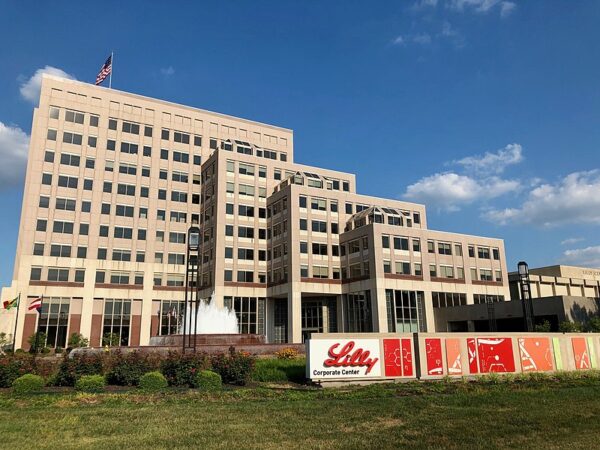
Eli Lilly and Company (NYSE: LLY) is reportedly nearing a deal worth more than $2 billion to acquire Kelonia Therapeutics, a private biotechnology company developing in vivo CAR-T therapies for cancer. If completed, the transaction would add an early clinical multiple myeloma program and a targeted gene-delivery platform to Eli Lilly and Company’s oncology portfolio at a time when the drugmaker is using its balance sheet much more aggressively. The immediate significance is not just pipeline expansion, but platform positioning: Eli Lilly and Company appears to be buying optionality in a part of cancer treatment that could become materially easier to scale if in vivo approaches work. With LLY closing at $927.03 on April 17, 2026, near the middle of a wide 52-week band and essentially flat over both the past five trading days and the past month, investors are being asked to weigh whether another expensive biotech swing strengthens long-term diversification or simply adds more early-stage execution risk.
Why would Eli Lilly and Company pay more than $2 billion for Kelonia Therapeutics now?
The most obvious answer is that Eli Lilly and Company is trying to buy time, not just technology. Conventional CAR-T has produced important clinical results, but it has also remained operationally awkward, expensive, and logistically heavy. Cells must usually be collected, engineered outside the body, expanded, and then returned to the patient after conditioning chemotherapy. That process is medically powerful, but commercially messy. It limits speed, broad access, and manufacturing efficiency, which is another way of saying it limits how large the market can become without heroic levels of operational coordination.
Kelonia Therapeutics is attractive because its pitch attacks that bottleneck directly. Its platform is designed to deliver genetic cargo inside the patient’s body to the intended tissue, with the ambition of creating in vivo CAR-T therapies that bypass much of the traditional ex vivo complexity. In plain English, Eli Lilly and Company would not just be buying a cancer asset. It would be buying a shot at a different production model for cell therapy. In oncology, changing the manufacturing equation can matter almost as much as changing the biology.
The timing also fits Eli Lilly and Company’s recent behavior. The company has been spending from a position of strength, using cash flows and market confidence generated by its obesity and diabetes franchise to fund a broader pipeline buildout. That matters because blockbuster metabolic medicines have been a gift and a trap for large pharmaceutical groups. They create abundant capital, but they can also distort the portfolio if management lets one therapeutic area become the entire story. Eli Lilly and Company appears determined not to let that happen. A reported Kelonia deal would fit the pattern of using present-day cash generation to purchase future therapeutic relevance.

There is also a competitive layer here. Oncology remains too large, too durable, and too strategically central for a company of Eli Lilly and Company’s scale to treat as a side portfolio. The company already has oncology exposure, but the market rewards platforms that can create repeatable programs, not just single assets. Kelonia Therapeutics offers the possibility of both: a lead candidate in multiple myeloma and a broader delivery approach that could be extended into additional hematologic cancers, and potentially beyond.
What does Kelonia Therapeutics actually add to Eli Lilly and Company’s cancer pipeline?
Kelonia Therapeutics brings something more valuable than simple novelty. Its lead clinical asset, KLN-1010, is in a Phase 1 trial in relapsed or refractory multiple myeloma, which means Eli Lilly and Company would be stepping into a program with human testing already underway rather than buying a science project still trapped in slide decks. That does not make the asset de-risked, far from it, but it does move the conversation from theory to translation. For a buyer, that is an important distinction.
The multiple myeloma angle is also commercially rational. Blood cancers remain one of the most active areas for cell therapy innovation because target biology is comparatively well mapped and treatment paradigms already include highly specialized, intensive regimens. In other words, the clinical setting can tolerate innovation that would be harder to introduce in broader solid-tumor markets. If Eli Lilly and Company wants to establish credibility in next-generation cell therapy, multiple myeloma is not a bad place to do it.
Kelonia Therapeutics also gives Eli Lilly and Company a stronger claim on in vivo cell engineering, an area that many in biotech have been eyeing precisely because conventional cell therapy has struggled to become as simple, scalable, and accessible as investors once hoped. This is where the logic starts to rhyme with Eli Lilly and Company’s earlier Orna Therapeutics acquisition. Both moves, if viewed together, suggest the company is building not just an oncology franchise but a thesis around engineering immune function inside the body rather than relying on cumbersome external manufacturing steps. Big pharmaceutical companies rarely spend this way unless they believe the technical direction itself could matter for a decade.
There is one more subtle advantage. Kelonia Therapeutics already had external validation through a 2024 research and license agreement with Astellas focused on in vivo CAR-T approaches. That does not prove clinical success, but it does suggest the platform had already cleared at least one serious diligence hurdle before Eli Lilly and Company showed up with rumored acquisition interest. In biotech, second looks from sophisticated buyers are often more revealing than first headlines.
How does the reported Kelonia transaction fit Eli Lilly and Company’s 2026 dealmaking pattern?
This is where the story becomes more strategic than sensational. Eli Lilly and Company has not been shopping randomly. Its 2026 moves point to an organization using scale to buy future engines in several areas rather than defending a single cash cow. Earlier this year, the company agreed to acquire Orna Therapeutics for up to $2.4 billion to advance cell therapies, bought Ventyx Biosciences for $1.2 billion to broaden beyond metabolic blockbusters, and struck a larger deal for Centessa Pharmaceuticals to expand into sleep-wake disorders. A Kelonia Therapeutics transaction would extend that pattern rather than break it.
What ties these deals together is not the disease categories themselves, which are quite different. It is the willingness to pay for platforms and optionality while the company still has the financial flexibility to do so. This is classic strength investing by a large pharmaceutical group: buy earlier, pay up, and hope the compounding from multiple shots on goal outweighs the inevitable failures. The alternative is waiting until assets are further de-risked and far more expensive, or worse, letting rivals secure the most interesting mechanisms first.
Still, there is a discipline question. A company can look visionary right up until it looks overextended. Kelonia Therapeutics is still early, and early platform acquisitions are notorious for creating dazzling narratives and uneven returns. The scientific challenge is obvious, delivery inside the body has to be precise enough to matter and safe enough to scale. The commercial challenge is just as real, even if in vivo CAR-T works biologically, it must prove it can outperform or materially simplify existing pathways in a way that payers, oncologists, and treatment centers actually value.
That is why this deal, if signed, should be read as a portfolio signal rather than an immediate earnings event. Eli Lilly and Company is telling the market that it intends to remain a serial allocator of capital across future therapy platforms, not merely a beneficiary of the GLP-1 era. Investors usually like that in principle. They become more selective when the bill arrives before the data do.
What should investors watch next if Eli Lilly and Company completes the Kelonia Therapeutics deal?
The first thing to watch is deal structure. Reports suggest milestone-based payments may be involved, and that matters enormously. A heavily contingent structure would tell investors Eli Lilly and Company is enthusiastic but still trying to protect itself against early-stage scientific uncertainty. A mostly upfront structure would signal stronger conviction, or greater competitive pressure in the auction, neither of which should be ignored.
Second, investors should watch whether Eli Lilly and Company frames Kelonia Therapeutics primarily as a single-asset oncology acquisition or as a broader platform addition. Those are very different valuation stories. If management emphasizes KLN-1010 alone, the market may treat the move as a speculative cancer expansion. If management emphasizes the delivery system and pipeline-generation potential, investors may start evaluating the acquisition as infrastructure for future programs. In biotech M&A, platform language is not just branding. It is a clue about how management intends to allocate follow-on capital.
Third, watch for integration speed and disclosure depth. Platform acquisitions often go quiet after the headline, which is where enthusiasm goes to nap. Investors will want to know whether Eli Lilly and Company accelerates trial execution, expands indications, or combines Kelonia Therapeutics’ delivery approach with internal programs. Silence would not mean failure, but it would reduce confidence that the asset is central.
From a stock perspective, the initial reaction may remain muted unless more concrete terms emerge. LLY’s latest close of $927.03 leaves the stock down roughly 0.27% over five trading days and about 0.36% versus March 17, while the 52-week range of about $623.78 to $1,133.95 shows just how much future growth has already been priced into the name. That is why a $2 billion-plus acquisition is unlikely to move the stock dramatically on rumor alone. Eli Lilly and Company is now large enough that small-to-mid-sized biotech deals affect narrative more than near-term valuation. The real investor question is whether these acquisitions collectively create a post-GLP-1 Lilly that looks broader, deeper, and harder to catch.
A Kelonia Therapeutics acquisition would help that case, but only if the company can do what every ambitious pharma acquirer promises and few fully deliver: turn expensive optionality into durable, clinically meaningful platforms. That is the part the press release never tells you. Unfortunately for investors, it is also the only part that really matters.
What are the most important strategic implications of Eli Lilly and Company’s reported Kelonia move for oncology and biotech M&A?
- Eli Lilly and Company appears to be buying access to a new treatment architecture, not just one experimental cancer asset.
- The reported Kelonia Therapeutics price suggests large pharmaceutical buyers are willing to pay real premiums for in vivo cell therapy optionality before late-stage proof arrives.
- Conventional CAR-T manufacturing remains a structural bottleneck, so any platform that can reduce complexity could have outsized strategic value.
- Multiple myeloma gives Eli Lilly and Company a practical entry point into next-generation hematologic oncology where specialized care models already exist.
- The reported transaction reinforces that Eli Lilly and Company is actively diversifying beyond obesity and diabetes rather than merely harvesting those franchises.
- Read alongside Orna Therapeutics, Ventyx Biosciences, and Centessa Pharmaceuticals, the move points to a deliberate multi-platform capital allocation strategy.
- The biggest risk is not just clinical failure, but the possibility that in vivo delivery proves harder to control, scale, or reimburse than current bullish narratives imply.
- Investors should focus less on immediate earnings impact and more on whether Eli Lilly and Company presents Kelonia Therapeutics as a platform to build around.
- A milestone-heavy structure would indicate financial discipline, while a rich upfront payment could imply stronger confidence or sharper competitive pressure.
- More broadly, the deal would signal that biotech M&A in 2026 is increasingly about owning future development engines, not simply backfilling near-term revenue gaps.
Discover more from Business-News-Today.com
Subscribe to get the latest posts sent to your email.