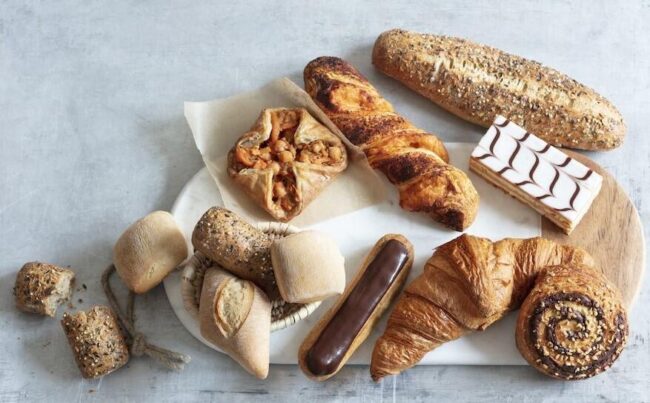
Vandemoortele Group has received conditional approval from the European Commission to proceed with its acquisition of Délifrance, a subsidiary of VIVESCIA Industries, in a deal that will consolidate two of Europe’s major frozen bakery players. The transaction, which positions the combined entity as a €2.4 billion global force in viennoiserie, pastries, and artisanal frozen bread, was greenlit after the parties agreed to divest key production assets in France to address competition concerns.
The merger brings together Vandemoortele’s €1.4 billion frozen bakery operations and Délifrance’s €930 million turnover, creating what is expected to be one of the most expansive frozen bakery portfolios in Europe and Asia. However, the Commission’s clearance came with structural remedies aimed at preserving market competitiveness in France and Italy, which are two markets where the combined entity risked becoming dominant.

Why did the European Commission intervene in the Vandemoortele–Délifrance deal?
The proposed acquisition raised red flags within the Commission over the likelihood of significant market concentration in frozen laminated dough products—such as croissants and pains au chocolat—particularly within retail and foodservice supply chains in France and among retail customers in Italy. According to the Commission’s investigation, the merged entity would have emerged as either the largest or second-largest player in these product segments in both markets.
Regulators flagged that the deal would leave limited room for competitive constraint from other suppliers. Most rivals reportedly lacked the spare production capacity to increase output in the short-to-medium term. In addition, imports of frozen laminated dough products were deemed unlikely to provide meaningful price discipline against a dominant domestic supplier.
Faced with the potential for price hikes and diminished choice for customers across the European Economic Area (EEA), the Commission applied pressure on Vandemoortele and VIVESCIA to deliver a structural remedy that could restore competitive balance.
What divestments were required to meet EU merger control rules?
To address these antitrust concerns, the companies proposed to divest two Délifrance production sites that are central to the frozen laminated dough business. These facilities, located in Avignon and Béthune, will be sold to an approved third-party buyer along with all necessary assets, equipment, personnel, and customer contracts. The goal is to empower the buyer to operate as a viable and independent competitor within the same product categories.
The Commission concluded that these divestitures would be sufficient to maintain competitive pressure in the affected markets. It also emphasized that the sale of these facilities must happen before the transaction is completed. Implementation of the remedy will be supervised by an independent trustee, while the identity of the buyer is subject to a separate approval process by the Commission.
What will the combined Vandemoortele–Délifrance frozen bakery business look like?
Post-acquisition, the combined group will control a network of over 40 production sites, employ more than 6,700 people, and generate an estimated €2.4 billion in annual revenue. Its brand portfolio will include Délifrance, Banquet d’Or, Doony’s, Lizzi, Acquaviva, and Lanterna, covering a full spectrum of bakery products from French viennoiseries and Danish pastries to Italian savouries and premium breads.
The strategic intent is clear: to create a European frozen bakery champion capable of serving both retail and foodservice segments at scale, while expanding global reach in Asia and the United States. With overlapping footprints in Western Europe, the merger is expected to deliver production synergies, customer cross-selling opportunities, and deeper innovation capabilities across convenience, sustainability, and packaging formats.
Vandemoortele’s stated ambition is to be not just a manufacturer, but also a value-added solutions provider. The enlarged group plans to accelerate the rollout of digital ordering, customization services, and sustainable logistics that address new demand signals from modern foodservice operators and retail partners.
How does this acquisition reshape the European frozen bakery landscape?
At a sector level, this deal is among the most significant consolidations in frozen bakery since Aryzta’s restructuring. While Vandemoortele and Délifrance operated complementary product lines, their overlap in geographic distribution networks created friction for antitrust regulators. That friction, however, also reflects the strategic logic of the deal: to build density in core markets while scaling selectively in emerging ones.
The Commission’s demand for structural remedies signals growing scrutiny around mid-market consumer goods mergers, especially in food categories with few domestic suppliers. This may serve as a precedent for other food and beverage transactions across the EEA, particularly where supply chain localization and vertical integration are increasing.
For other players in frozen bakery, such as Lantmännen Unibake, Aryzta, or regional artisan suppliers, the merger may raise the bar for innovation and service models. Vandemoortele’s willingness to divest and reconfigure its operational base in France may also be a signpost for capital-intensive food manufacturers facing market access challenges in post-merger Europe.
What are the integration and execution risks going forward?
Despite the Commission’s clearance, execution risks remain. Divesting two fully functional production sites means the merged entity must absorb any revenue leakage or customer transitions that occur during the changeover. Additionally, the challenge of merging corporate cultures, particularly between a Belgian family-owned group and a French cooperative-born subsidiary, should not be underestimated.
Operationally, integration across SAP systems, supply chains, and ESG compliance frameworks will demand careful project management, particularly as the group doubles down on its sustainability commitments. Vandemoortele has signalled an ambition to lead on low-carbon logistics and circular packaging in frozen food, and investors will watch closely to see if these environmental promises translate into differentiated margins or customer stickiness.
From a capital allocation perspective, the deal reflects a bold bet on post-pandemic shifts in bakery consumption, especially the rise of frozen premium offerings and out-of-home breakfast growth. Whether that bet pays off will hinge on how quickly the group can translate scale into advantage in procurement, branding, and margin protection.
What comes next for Vandemoortele and Délifrance if the deal succeeds?
If the integration proceeds smoothly and the group delivers on its growth and margin targets, Vandemoortele could emerge as a leading consolidator in the frozen food space. The combined platform opens the door to future bolt-on acquisitions, innovation alliances, and even geographic diversification beyond Europe and Asia.
It may also position the company as an attractive partner or acquisition target for global CPG giants looking to expand into frozen or artisanal bakery through a scalable, B2B-oriented platform.
For now, however, regulatory compliance and operational focus remain the priorities. The Commission’s approval is a green light, not a victory lap.
What are the key takeaways from Vandemoortele’s acquisition of Délifrance and the EU’s conditional approval?
- Vandemoortele Group has secured conditional European Commission approval for its acquisition of Délifrance from VIVESCIA Industries.
- The deal creates a €2.4 billion frozen bakery player with presence across Europe, Asia, and the USA.
- To address competition concerns in France and Italy, the companies agreed to divest two Délifrance plants producing laminated dough products.
- The merged entity will operate over 40 production sites with a diverse brand portfolio including Délifrance, Banquet d’Or, and Doony’s.
- EU regulators signalled increased scrutiny for mid-sized food M&A, especially in concentrated consumer goods categories.
- Integration risks include customer churn during divestment, ERP harmonization, and sustainability delivery credibility.
- The transaction could pave the way for future consolidation or a strategic exit to a global food major.
- Execution and delivery on synergies will be the focus as the combined group looks to reshape the European frozen bakery market.
Discover more from Business-News-Today.com
Subscribe to get the latest posts sent to your email.