





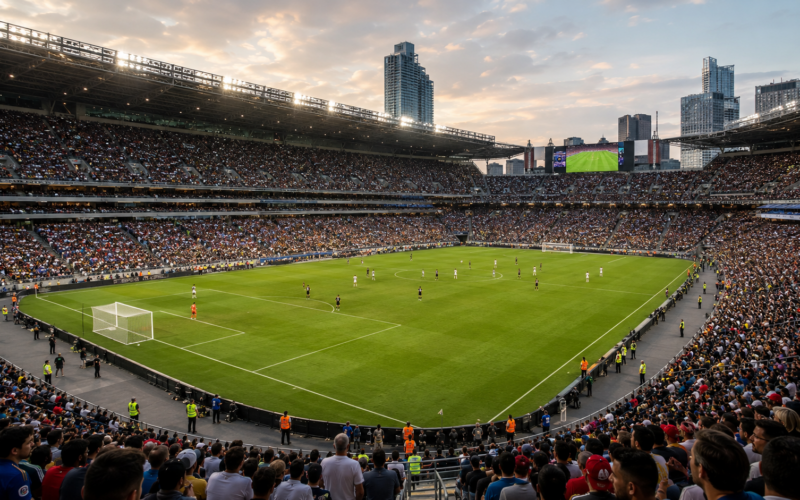
France beat Senegal 3-1 at New York New Jersey Stadium in East Rutherford on June 16, 2026, as Kylian Mbappé scored twice to become France’s all-time leading goalscorer and launch Les Bleus’ FIFA World Cup 2026 Group I campaign with a commanding second-half response. Mbappé broke the deadlock in the 66th minute, Bradley Barcola added France’s second in the 82nd minute, Ibrahim Mbaye pulled one back for Senegal in stoppage time, and Mbappé sealed the result almost immediately with a long-range finish.
The result gives France three points from their FIFA World Cup 2026 opener, though Norway’s later 4-1 win over Iraq leaves Didier Deschamps’ side second in Group I on goal difference. For Senegal, the defeat was harsh after a strong first-half display in which Pape Thiaw’s team created real pressure through Nicolas Jackson, Sadio Mané and Ismaïla Sarr, but failed to convert their best moments before France’s quality took over after half-time.
How did Kylian Mbappé turn France vs Senegal into a record-breaking FIFA World Cup 2026 statement?
Kylian Mbappé turned a difficult France opener into a record-breaking statement by producing the decisive quality after Senegal had frustrated Les Bleus for more than an hour. France were sluggish in the first half, short of rhythm in the final third and repeatedly forced into uncomfortable defensive moments by Senegal’s speed and directness. Mbappé, however, stayed in the match until the space finally opened.
The breakthrough came in the 66th minute when Michael Olise, operating more centrally after half-time, slipped a precise pass into Mbappé’s path. The France captain finished clinically, turning a tense match into a platform for French control. It was the goal that settled France’s nerves and shifted the match away from Senegal’s first-half energy.
Mbappé’s second goal in stoppage time carried even greater historical weight. After Senegal had reduced the deficit through Ibrahim Mbaye, Mbappé answered almost immediately with a powerful long-range strike. That finish sealed the 3-1 win, took him to 58 goals for France and moved him above Olivier Giroud as the national team’s all-time leading scorer.
The brace also took Mbappé to 14 World Cup goals, level with Gerd Müller and within range of Miroslav Klose’s all-time record of 16. For France, this was more than a captain scoring twice. It was their biggest player changing the emotional direction of a match that had been far more difficult than the final score suggests.
Why did Senegal trouble France before the match swung after half-time?
Senegal troubled France because they were aggressive, athletic and brave in the first half. Pape Thiaw’s side did not sit passively in a low block. They pressed intelligently, attacked quickly and used the movement of Nicolas Jackson, Sadio Mané and Ismaïla Sarr to stretch France’s defensive line.
Jackson had one of Senegal’s clearest openings before half-time, while Mané’s experience and ball-carrying kept France from settling into a comfortable passing rhythm. Senegal’s midfield also competed strongly, disrupting France’s build-up and forcing Deschamps’ side into several rushed moments.
The issue was efficiency. Senegal had enough first-half pressure to create a different match, but they did not score. At this level, that matters. France survived the difficult opening period, reached half-time level and had the squad quality to change the rhythm after the break.
Thiaw later highlighted efficiency and aggression as areas for improvement, which captured Senegal’s night. The performance had promise, but the final actions were not ruthless enough. Against France, promise without finishing can quickly become punishment.
How did Michael Olise and Bradley Barcola change France’s attacking rhythm?
Michael Olise was one of the biggest reasons France improved after half-time. His move into a more central creative role gave the team a different structure and helped connect midfield to Mbappé more directly. France had looked static before the break, but Olise’s passing and positioning created the angles Senegal had denied in the first half.
The first goal came from exactly that change. Olise found Mbappé with the kind of pass that cuts through pressure rather than simply moving possession sideways. It gave France the verticality they had lacked and forced Senegal to defend deeper.
Bradley Barcola then added the second goal in the 82nd minute, giving France the cushion that appeared to end the contest. His chipped finish showed France’s bench and attacking depth, especially as Senegal began to tire and spaces widened. Barcola’s goal was also important because it prevented the match from becoming solely about Mbappé. France need more than one route to goal if they are to go deep in FIFA World Cup 2026.
Olise and Barcola gave Deschamps the tactical positives he needed after an uneven start. France’s attacking ceiling is obvious, but the first half showed they still need the right structure to unlock it. The second half suggested that Olise’s central creativity could become one of the key levers of their tournament.
What did Senegal’s late goal and France’s immediate response reveal about both teams?
Senegal’s late goal showed that they did not collapse mentally after going 2-0 down. Ibrahim Mbaye’s stoppage-time finish gave the African champions a brief opening and reflected the persistence that had shaped their performance. Even when the match looked beyond them, Senegal kept attacking.
But France’s immediate response was equally revealing. Elite teams often answer danger before it grows into panic, and Mbappé’s second goal did exactly that. Senegal’s goal briefly made the scoreline 2-1. Within moments, Mbappé had restored the two-goal margin and ended any possibility of a frantic finish.
That sequence captured the difference between the teams. Senegal had courage, speed and enough quality to trouble France. France had the sharper final-third execution and the world-class finisher who could kill the match at the moment it threatened to reopen.
For Senegal, the late goal may still matter psychologically. It proved they could breach France’s defence and gave Mbaye a World Cup moment. But the way France responded also made clear that Senegal must be more ruthless earlier in matches, especially before facing Norway.
What does France’s win mean for the FIFA World Cup 2026 Group I table?
France’s win gives them a strong start, but Norway’s later 4-1 victory over Iraq means Les Bleus sit second in Group I on goal difference after the first round. Norway lead with a +3 goal difference, France have +2, while Senegal and Iraq are both under pressure after opening defeats.
| Team | Played | Points | Goal difference |
|---|---|---|---|
| Norway | 1 | 3 | +3 |
| France | 1 | 3 | +2 |
| Senegal | 1 | 0 | -2 |
| Iraq | 1 | 0 | -3 |
France next face Iraq, a match they will be expected to win, but they cannot ignore Iraq’s attacking flashes against Norway. A second victory would put France close to the knockout rounds and set up a high-profile meeting with Norway.
Senegal next face Norway, and that match already carries pressure. Norway have the points, the goal difference and Erling Haaland’s early scoring momentum. Senegal need a result to avoid entering their final group match with qualification hopes under strain.
The group now has early separation. France and Norway have control. Senegal and Iraq have urgency. That makes the second round of Group I fixtures more significant than the rankings alone might suggest.
Why does this FIFA World Cup 2026 result matter beyond France’s opening win?
This result matters because France avoided the kind of opening stumble that has already affected several major teams at FIFA World Cup 2026. Spain were held by Cape Verde, Belgium were held by Egypt, Brazil were held by Morocco, and Uruguay were held by Saudi Arabia. France also had a difficult first half, but unlike those teams, they found the second-half punch to take all three points.
It also matters because of Mbappé’s records. Becoming France’s all-time leading scorer in a World Cup opener is not just a statistical footnote. It reinforces his role as the central figure of this France era and places him even closer to the biggest individual World Cup scoring records.
For Senegal, the match is not a disaster, but it is a warning. Their first-half quality proved they can compete with elite opposition. Their second-half defensive gaps showed what happens when intensity drops and chances are not taken. A 3-1 defeat looks heavy, but the performance was more competitive than that margin suggests.
The editorial view is that France should be encouraged but not fully satisfied. Their ceiling looked high once Olise, Barcola and Mbappé clicked, but their first-half problems were real. Senegal, meanwhile, should take belief from their performance and urgency from the result. Group I has already become a race in which there is little room for slow correction.
Key takeaways from France vs Senegal at FIFA World Cup 2026
- France beat Senegal 3-1 at New York New Jersey Stadium on June 16, 2026, to open their FIFA World Cup 2026 Group I campaign with three points. Kylian Mbappé scored twice, while Bradley Barcola added the other France goal.
- Mbappé became France’s all-time leading goalscorer with 58 international goals and moved to 14 World Cup goals overall. His brace changed the match and strengthened his chase of the all-time World Cup scoring record.
- Senegal troubled France in the first half through Nicolas Jackson, Sadio Mané and quick attacking transitions, but they failed to convert their best chances before France improved after half-time.
- Michael Olise’s more central role after the interval helped France unlock Senegal’s defence. His assist for Mbappé’s first goal was the tactical turning point in the match.
- Group I now has Norway and France on three points, with Norway top on goal difference after beating Iraq 4-1. France next face Iraq, while Senegal meet Norway in a high-pressure second fixture.
Discover more from Business-News-Today.com
Subscribe to get the latest posts sent to your email.


