

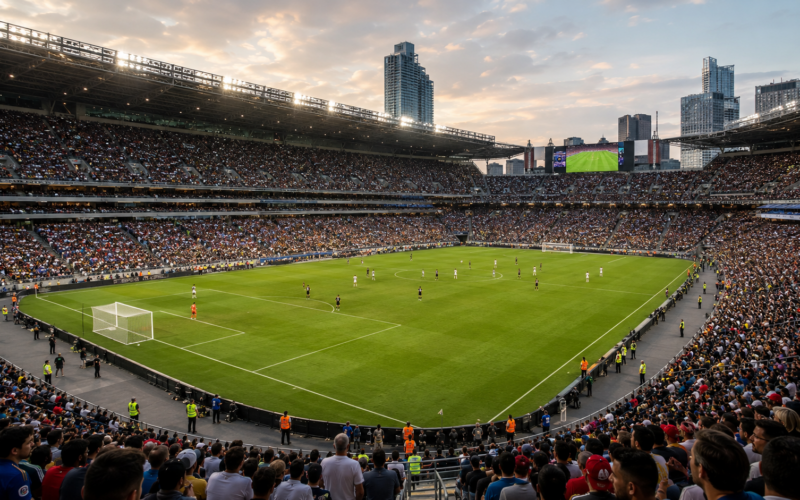
Iran drew 2-2 with New Zealand at Los Angeles Stadium in Inglewood on June 15, 2026, as Mohammad Mohebbi’s 64th-minute header rescued a point for Team Melli in a dramatic FIFA World Cup 2026 Group G opener. Elijah Just twice gave New Zealand the lead, scoring in the seventh and 55th minutes from Chris Wood assists, but Iran responded through Ramin Rezaeian in the 32nd minute and Mohebbi in the second half to keep Group G completely level after Belgium and Egypt had earlier drawn 1-1.
The result means all four teams in Group G sit on one point after the opening round, leaving Iran, New Zealand, Belgium and Egypt without early separation. For Iran, the draw showed resilience after a disrupted build-up shaped by travel and visa complications. For New Zealand, it was both encouraging and painful, as Darren Bazeley’s side led twice but remained without a first men’s World Cup victory.
How did Elijah Just put New Zealand close to a historic FIFA World Cup 2026 win?
Elijah Just nearly delivered New Zealand’s long-awaited first World Cup win with a sharp, clinical double that repeatedly punished Iran’s defensive gaps. His first goal came in the seventh minute, when Chris Wood created the opening and Just finished decisively inside the box to give the All Whites a dream start.
That early goal changed the match. Iran had entered the game carrying a heavy off-field backdrop, but New Zealand immediately forced the contest into footballing urgency. Bazeley’s team were not passive. They pressed, moved the ball forward quickly and used Wood as a central reference point, with Just making intelligent runs around him.
Iran equalised in the 32nd minute, but New Zealand showed the same pattern after the interval. Wood again supplied the decisive pass in the 55th minute, sliding the ball into Just’s path before the forward hammered home his second goal. The finish gave New Zealand a 2-1 lead and moved them within sight of a landmark result.
The frustration for New Zealand is that the platform did not last. Just had done enough to put his team in a winning position twice, but Iran’s pressure, crossing quality and late energy turned the match back toward parity. Even so, Just’s performance gives New Zealand one of their clearest attacking stories of the tournament so far.
Why did Iran’s two equalisers show resilience after a difficult build-up?
Iran’s two equalisers showed a team that refused to let the match or the external pressure overwhelm them. Rezaeian’s goal in the 32nd minute came after a penalty-area scramble, with the veteran reacting fastest after Shahriar Moghanloo’s effort was blocked. It was not a polished goal, but it was exactly what Iran needed after falling behind early.
That equaliser steadied Team Melli and reconnected the players with a crowd that had brought a charged atmosphere to Los Angeles Stadium. Reuters reported protests outside the venue and divisions among Iranian American supporters, while also noting strong support for the players inside the stadium. Against that backdrop, the football itself became a release for Iran.
Mohebbi’s second-half equaliser was more refined. Saman Ghoddos delivered an excellent early cross, and Mohebbi found space near the penalty spot before heading into the bottom corner in the 64th minute. The goal came only nine minutes after New Zealand had retaken the lead, showing Iran’s ability to respond quickly rather than drift into frustration.
The performance was not perfect. Iran conceded twice, allowed New Zealand too many openings and failed to convert late pressure into a winner. But after an unsettled build-up involving travel disruption and visa complications, a comeback draw kept their Group G campaign alive.
How important were Chris Wood and Max Crocombe to New Zealand’s performance?
Chris Wood was central to New Zealand’s attacking success even without scoring. His two assists for Just showed why the All Whites continue to rely on his experience, strength and decision-making in the final third. Wood did not need to dominate every duel. He needed to connect the attack at the right moments, and he did that twice.
The first assist came early and gave New Zealand belief. The second, shortly after half-time, was even more important because it restored the lead after Iran had fought back. Wood’s understanding with Just gave New Zealand a direct attacking route that repeatedly unsettled Iran.
Max Crocombe also had a major role in preserving the draw. Iran pushed hard after falling behind for the second time, and Crocombe had to stand up to a goalmouth scramble soon after Just’s second goal. His saves helped New Zealand survive Iran’s immediate response and kept the All Whites in position to take at least one point.
The issue for New Zealand is that two excellent attacking moments and several important defensive interventions still did not produce a win. That is why the draw will feel bittersweet. The All Whites showed they can compete in Group G, but they also showed how thin the margin remains when trying to convert good performances into historic victories.
What did the disallowed Ali Nemati goal and late pressure reveal about Iran’s attacking threat?
Ali Nemati’s disallowed first-half stoppage-time header was an important warning for New Zealand. The Iran defender found the net with a precise header, but the flag went up immediately for offside, and the goal did not stand. Even though the score remained 1-1 at half-time, the moment showed Iran’s set-piece and crossing threat.
Iran’s attack became more direct and dangerous as the match progressed. Rezaeian was not only a scorer but also an important delivery source. Ghoddos’ cross for Mohebbi’s equaliser showed the value of early service into the box, while Mehdi Taremi’s movement helped create space even when he did not score.
The final stages were chaotic. Iran had late corners and pressure, while New Zealand still threatened on the counter through Just and Wood. Hajsafi’s late booking to halt a Just break showed how open the match had become, with both sides still chasing a winner rather than simply accepting the draw.
That end-to-end finish is why the result was one of the more entertaining early group matches. Iran had more second-half momentum. New Zealand had the clearer headline performer. Both teams had reasons to feel they could have won.
What does the draw mean for the FIFA World Cup 2026 Group G table?
The draw leaves Group G completely level after the first round of fixtures. Belgium and Egypt drew 1-1 earlier, while Iran and New Zealand produced a 2-2 draw, leaving all four teams on one point.
| Team | Played | Points | Goal difference |
|---|---|---|---|
| Iran | 1 | 1 | 0 |
| New Zealand | 1 | 1 | 0 |
| Belgium | 1 | 1 | 0 |
| Egypt | 1 | 1 | 0 |
Iran next face Belgium, and that match now carries immediate importance. Belgium were below their best against Egypt, but they still have enough elite experience through Kevin De Bruyne, Romelu Lukaku and Thibaut Courtois to punish defensive lapses. Iran will need better control without losing the resilience that helped them recover twice against New Zealand.
New Zealand next face Egypt, a fixture that suddenly looks very open. Egypt troubled Belgium and showed attacking threat through Mohamed Salah, Omar Marmoush and Emam Ashour. New Zealand, meanwhile, showed that Wood and Just can create high-quality chances against strong opposition. A win for either side would reshape the group quickly.
The balanced table makes Group G one of the most unpredictable sections after the opening round. Nobody has separation. Nobody is already in crisis. That puts huge weight on the second matches.
Why does this FIFA World Cup 2026 result matter beyond Group G standings?
This result matters because both teams are chasing history. Iran are still seeking a first knockout-round appearance at a World Cup, while New Zealand are still seeking a first victory at the tournament. A draw does not deliver either milestone, but it keeps both ambitions alive.
For Iran, the performance showed emotional and competitive resilience. The build-up had been complicated by geopolitics, travel arrangements and missing staff, yet the players responded twice on the pitch. That matters because tournament campaigns often depend on how teams manage disruption as much as how they handle tactics.
For New Zealand, the draw proved they belong at this level. Their 2010 campaign was remembered for staying unbeaten, but wins have remained out of reach. This match showed a more proactive New Zealand, capable of scoring twice and hurting a strong Asian side through structured attacking play.
The editorial view is that New Zealand will feel the greater regret because they led twice. Iran will feel the greater relief because they had to chase twice. Both are valid. What matters now is whether either team can turn a promising draw into a decisive second-round result.
Key takeaways from Iran vs New Zealand at FIFA World Cup 2026
- Iran and New Zealand drew 2-2 at Los Angeles Stadium on June 15, 2026, in a lively FIFA World Cup 2026 Group G opener. Elijah Just scored twice for New Zealand, while Ramin Rezaeian and Mohammad Mohebbi equalised for Iran.
- Elijah Just was the standout attacking player, finishing two chances created by Chris Wood. His double put New Zealand ahead twice and nearly delivered the country’s first men’s World Cup win.
- Iran showed resilience after a difficult build-up shaped by travel and visa complications. Team Melli trailed twice but responded through Rezaeian’s first-half scramble finish and Mohebbi’s second-half header.
- The match had several key late moments, including Ali Nemati’s disallowed offside header before half-time and a late Hajsafi booking to stop a New Zealand counterattack.
- Group G is completely level after one round, with Iran, New Zealand, Belgium and Egypt all on one point. Iran next face Belgium, while New Zealand meet Egypt.
Discover more from Business-News-Today.com
Subscribe to get the latest posts sent to your email.