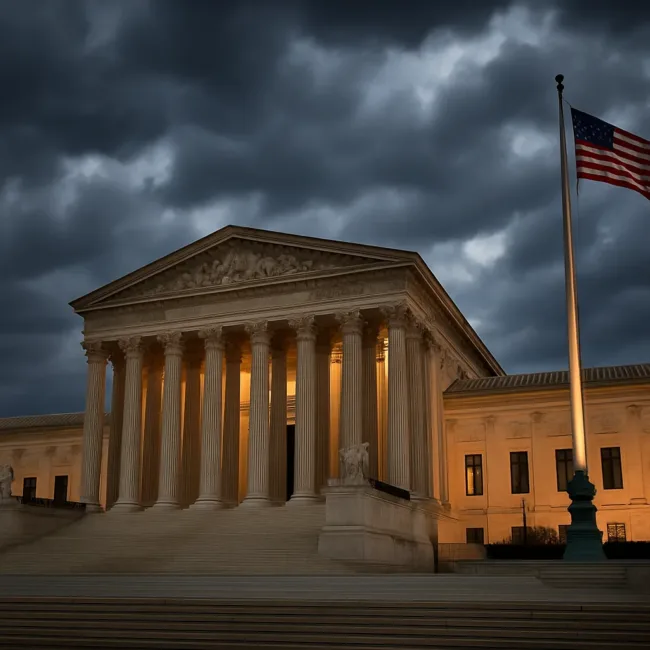
The US Supreme Court began its new term on October 5 with a case that could determine whether cities and counties can use state law to seek billions of dollars from major oil companies over the local costs of climate change. The dispute involving Boulder County, Colorado, ExxonMobil and Suncor Energy is only the first of several consequential cases awaiting the justices during a term that will also address semiautomatic rifle bans, immigration detention, voting requirements and religious organizations participating in publicly funded programs. Together, the cases could reshape the balance of authority among states, the federal government, companies and individual citizens across several of the country’s most contentious legal debates.
The court’s opening-day climate argument is especially significant because nearly 60 similar lawsuits have been filed around the country. Local governments are increasingly trying to recover costs associated with wildfires, flooding, infrastructure damage and other climate-related impacts, while energy companies argue that individual states should not be allowed to regulate activity with global consequences through lawsuits based on local law. A ruling is expected by the end of the court’s term in 2027 and could determine whether many of those cases are allowed to proceed.
The new term also arrives after another period in which the Supreme Court played a major role in disputes involving federal executive power. Several upcoming cases will require the justices to interpret how far federal agencies and the president can go when enforcing immigration policy, withholding federal funds or defending state laws challenged under constitutional protections. The resulting decisions could therefore influence national policy well beyond the individual plaintiffs appearing before the court.
Boulder climate lawsuit could determine whether dozens of similar cases can move forward
The first major dispute involves lawsuits brought by Boulder County and the city of Boulder against ExxonMobil and Suncor Energy. Local officials argue that the companies helped produce climate-related harms while misleading the public for decades about risks associated with fossil fuels, leaving taxpayers responsible for expenses linked to changing weather patterns, damaged infrastructure and disaster preparation. Rather than asking the courts to directly regulate emissions, Boulder is seeking compensation under Colorado law for alleged local harms.
The oil companies argue that the lawsuit effectively attempts to regulate global greenhouse gas emissions through state courts. Their attorneys contend that climate policy is inherently national and international, meaning federal law should govern disputes involving emissions produced across state and national borders. They also argue that allowing thousands of local governments to pursue different legal theories could create inconsistent standards for companies operating across the country.
The Trump administration has sided with the energy companies, arguing that the federal Clean Air Act and broader constitutional principles limit state authority in this area. Boulder counters that its lawsuit does not attempt to establish a separate emissions standard and instead resembles other state-law cases involving alleged corporate misconduct and damages. The disagreement therefore centers not only on climate policy but also on the division of power between state courts and federal law.
The Supreme Court could issue a relatively narrow ruling focused on procedural issues, or it could address broader questions about whether these climate lawsuits are legally viable at all. The latter outcome would have implications for cases brought by states and municipalities from California to Maryland seeking compensation from fossil-fuel companies. Justice Samuel Alito is not participating in the Boulder case because of financial holdings involving energy companies, leaving eight justices to decide the dispute.
AR-15-style rifle bans will bring another major Second Amendment dispute before the court
Gun rights will also return to the Supreme Court during the new term as the justices review state restrictions on semiautomatic rifles commonly described as assault-style weapons. Laws in states including Illinois and Connecticut restrict civilian possession or sale of certain rifles such as AR-15-style firearms, while challengers argue that those weapons are commonly owned for lawful purposes and therefore protected by the Second Amendment.
Supporters of the bans argue that states should retain authority to restrict weapons they consider unusually dangerous, particularly after repeated mass shootings involving semiautomatic rifles and high-capacity magazines. They distinguish those firearms from handguns commonly used for personal defense and say lawmakers should be able to respond to specific public-safety risks. Gun-rights groups counter that millions of Americans lawfully own the rifles and argue that widespread ownership places them within the category of arms protected by the Constitution.
The case will require the justices to apply the court’s recent Second Amendment framework, which focuses heavily on whether modern gun restrictions have relevant historical analogues. That approach has generated extensive litigation because many modern firearms and regulations did not exist during the periods courts use for historical comparison. The eventual ruling could affect assault-weapon laws in several states and provide lower courts with additional guidance for evaluating future gun restrictions.
The court does not have to decide whether every semiautomatic rifle restriction nationwide is constitutional. Its ruling could instead focus on particular features of the laws before it, but even a relatively narrow decision would carry significance because states have adopted substantially different approaches to regulating these weapons.
Immigration detention cases could redefine federal authority over people facing deportation
Immigration will be another major area of litigation, including a dispute over whether certain immigrants can be held without access to bond hearings while deportation proceedings continue. The Trump administration argues that federal law requires mandatory detention for a broad category of people who entered the country without authorization, even when they have lived in the United States for many years and do not have serious criminal records.
The case involves Brazilian national Ricardo Aparecido Barbosa da Cunha, who entered the United States roughly two decades ago and later faced detention while pursuing immigration claims. Lower courts have disagreed over whether the government can deny people in similar circumstances an opportunity to ask a judge for release on bond. That disagreement has created different rules depending on where immigration cases arise.
Civil-liberties organizations argue that prolonged detention without an individualized hearing raises serious due-process concerns and departs from longstanding immigration practice. The administration maintains that Congress gave federal authorities clear detention powers through immigration legislation and that courts should not create requirements that lawmakers did not include in the statute.
A separate case will examine deportations to third countries, meaning nations other than a migrant’s country of citizenship or origin. That issue has become increasingly important as the administration seeks additional agreements allowing removal of people whose home countries will not readily accept them. The court’s decisions could significantly affect the practical operation of the government’s broader immigration enforcement strategy.
Arizona voting rules will put citizenship requirements and voter access before the justices
The court is also expected to review Arizona voting laws requiring documentary proof of citizenship in certain circumstances. Supporters argue that stronger documentation requirements are necessary to maintain confidence that only eligible citizens participate in federal and state elections. Opponents say the rules create unnecessary obstacles for lawful voters who may not have immediate access to documents such as birth certificates or passports.
The dispute comes amid broader national disagreement over election administration and the extent to which states can impose additional registration requirements. Federal law already requires voters to attest to citizenship, while Arizona has pushed for more documentary proof in parts of its system. Courts have spent years determining where federal voter-registration law ends and state authority begins.
Another portion of the dispute involves procedures for maintaining voter rolls. Election officials argue that accurate rolls require mechanisms for removing people who have died, moved or become ineligible, while voting-rights groups warn that aggressive purges can mistakenly remove eligible voters. The Supreme Court’s eventual ruling could influence how other states design registration and citizenship-verification systems before future elections.
Because the case concerns election administration rather than any particular candidate, its effects could persist well beyond the current political cycle. States frequently adjust voting procedures based on Supreme Court interpretations of federal law and constitutional protections, making the decision potentially important for election officials nationwide.
Religious preschool case will test the boundary between public funding and anti-discrimination rules
Another significant case involves a Catholic preschool excluded from Colorado’s universal preschool program because of policies concerning LGBTQ+ students and families. The religious organization argues that excluding it from generally available public funding because of its faith-based practices violates constitutional protections for religious exercise. Colorado argues that organizations receiving public money must comply with nondiscrimination standards applying to participants in the state program.
The dispute reflects a recurring question before the Supreme Court: when does excluding a religious institution from public benefits become unconstitutional discrimination, and when can government attach neutral conditions to taxpayer-funded programs? Previous Supreme Court decisions have generally strengthened religious organizations’ ability to participate in programs available to comparable secular institutions.
Colorado argues that this case differs because participation would involve complying with specific rules governing the operation of a public education program rather than simply receiving a generally available benefit. The preschool says those conditions would require it to abandon religious teachings in order to participate. The eventual ruling could affect not only preschool programs but other publicly funded partnerships involving religious schools and social-service providers.
The case therefore sits at the intersection of religious liberty and civil-rights protections, two areas where legal claims can directly conflict. How narrowly or broadly the justices write the decision will determine whether its consequences remain focused on Colorado’s program or extend to similar government partnerships nationwide.
New Supreme Court term could produce decisions with effects far beyond Washington
The court’s docket demonstrates how frequently national policy is now shaped through litigation involving states, private organizations and the federal government. Climate lawsuits raise questions about corporate liability and federalism, gun cases test constitutional limits on state regulation, and immigration disputes focus on the reach of federal executive authority. Voting and religious-liberty cases add further disputes over rights and government power.
Many of the cases are expected to produce decisions by June 2027, although the court can resolve some disputes earlier or dismiss cases without deciding every issue presented. Oral arguments provide clues about the questions concerning individual justices, but they do not reliably establish the final outcome. The written decisions will ultimately determine how broadly each ruling applies and what lower courts must do afterward.
The opening climate case provides an early example of the stakes. What began as a lawsuit filed by one Colorado community could influence almost 60 cases elsewhere, potentially affecting billions of dollars in requested damages and the legal strategy used by local governments confronting climate costs. Similar ripple effects are possible in the gun, immigration, voting and religious-freedom disputes still ahead.
For that reason, the Supreme Court’s new term is likely to remain a central part of US current affairs over the coming months. The cases span different areas of law, but many raise the same underlying question: how much authority belongs to states, how much belongs to the federal government and where constitutional protections limit both.
Key cases and issues to watch in the new US Supreme Court term
- The Supreme Court opened its new term with a Colorado climate lawsuit that could determine whether local governments can seek damages from fossil-fuel companies under state law.
- ExxonMobil and Suncor Energy argue that climate-related claims involving global emissions should be governed by federal law rather than separate state lawsuits.
- Nearly 60 similar climate cases are pending nationwide, giving the Boulder dispute potential consequences well beyond Colorado.
- The justices will also examine state restrictions on AR-15-style semiautomatic rifles, potentially providing new guidance on the reach of Second Amendment protections.
- Immigration cases will address mandatory detention without bond hearings and the federal government’s ability to deport some migrants to third countries.
- Arizona voting rules will bring disputes over documentary proof of citizenship and voter-roll procedures before the court during another closely watched election period.
- A Colorado preschool case will test whether religious organizations can participate in publicly funded programs while maintaining policies that conflict with state nondiscrimination requirements.
- Major rulings from the term are expected by June 2027 and could reshape state and federal authority across climate policy, guns, immigration, elections and religious liberty.
Discover more from Business-News-Today.com
Subscribe to get the latest posts sent to your email.