
Vistra Corp. (NYSE: VST) is reportedly set to receive an approximately $4.2 billion US government loan package intended to support higher output from existing nuclear power plants, according to Reuters, which cited a person familiar with the matter. Bloomberg separately reported a roughly $4 billion package covering upgrades at three Vistra nuclear plants, while the Department of Energy and Vistra had not formally announced or confirmed the financing as of October 3.
The difference between a reported plan and a completed financing commitment is important. Energy Secretary Chris Wright is expected to announce the proposed package during a visit to Vistra’s Perry nuclear plant in Ohio on October 5, but the final loan amount, contractual conditions and capacity additions have not yet been publicly disclosed.
How much nuclear generating capacity does Vistra currently operate in the United States?
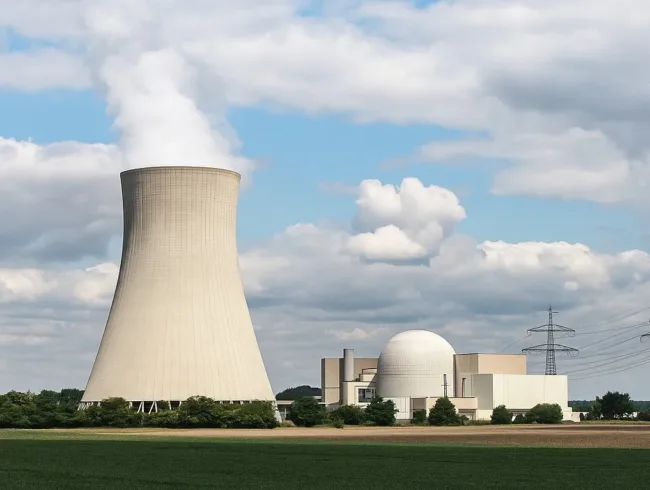
Vistra’s latest annual filing says it owns and operates six nuclear units across four facilities with approximately 6,448 megawatts of net generation capacity. Those assets are Comanche Peak Units 1 and 2 in Texas, Beaver Valley Units 1 and 2 in Pennsylvania, Perry in Ohio and Davis-Besse in Ohio.
The reported government financing is expected to focus on output increases at existing stations rather than construction of entirely new reactors. That distinction matters because extending or uprating an operating plant can add electricity more quickly than building a nuclear project from a greenfield site.
The specific additional megawatts funded by the reported package remain undisclosed. It would therefore be premature to calculate a loan cost per added megawatt or estimate additional annual generation before Vistra or the Department of Energy publishes the actual project scope.
What is a nuclear power uprate and how can a reactor produce more electricity without building a new unit?
An uprate increases the maximum licensed or operational output of an existing reactor through equipment upgrades, improved measurement, turbine modifications or changes to fuel and operating parameters. The Nuclear Regulatory Commission has decades of experience reviewing such applications and has approved numerous uprates across the US fleet.
Reuters noted that uprates can involve slightly more enriched uranium or major plant modifications such as replacement of turbines. The exact technical pathway varies by reactor and can require regulatory review depending on how much additional thermal or electrical output is sought.
This makes uprates attractive during periods of rapid demand growth. Utilities can use sites that already possess reactors, grid connections, trained workforces and much of the required safety infrastructure instead of waiting many years for an entirely new nuclear development.
Is Vistra’s Perry uprate project already real even though the federal loan has not been confirmed?
Yes, but the project and financing need to be kept separate. The Department of Energy currently lists a Perry Nuclear Power Plant Uprate Project in Lake County, Ohio, within its environmental notices, independently confirming that an uprate proposal exists.
The Nuclear Regulatory Commission also lists expected future Vistra uprate applications, including Perry and units at Beaver Valley, on its planning schedule. An expected application is not an NRC approval, and the federal environmental notice is not evidence that the reported multibillion-dollar loan has been finalised.
Those distinctions are crucial. The underlying nuclear-expansion strategy is real and documented, while the $4 billion-plus financing package remains reported rather than formally announced.
Why is US electricity demand making existing nuclear plants more strategically valuable?
Power demand is rising after a long period of comparatively slow growth, with artificial-intelligence data centres, industrial reshoring, electrification and other large loads placing additional pressure on regional grids. Data centres are especially demanding because they can require enormous volumes of around-the-clock electricity.
Nuclear plants fit that requirement because they generally operate at high capacity factors and provide continuous output independent of weather. Existing plants already connected to constrained transmission systems can therefore become highly valuable assets when demand increases faster than new generation and grid infrastructure can be built.
That does not mean nuclear uprates alone can solve the electricity-demand problem. Transmission investment, gas generation, renewables, storage and demand management are all likely to remain necessary, particularly in regions where data-centre projects cluster faster than new grid capacity arrives.
Why does the reported loan size require caution before drawing valuation conclusions for Vistra?
A government loan is financing rather than revenue. Even if the package is announced at approximately $4.2 billion, the amount would not represent profit earned by Vistra, and funds would normally be tied to qualifying investments and repayment obligations.
The final economics would depend on interest rates, maturities, project costs, incremental megawatts, electricity prices and regulatory approvals. Without those terms, analysts cannot reliably calculate the project’s return on invested capital or direct effect on Vistra’s equity value.
That is especially important because reports have not yet disclosed the size of the capacity expansion. A multibillion-dollar package supporting several projects can look large in isolation while producing very different economics depending on how much additional generation the upgrades ultimately create.
What are the key takeaways from the reported Vistra nuclear financing plan?
Reuters reports an approximately $4.2 billion US loan plan, while Bloomberg reported the package at roughly $4 billion. The difference appears to reflect preliminary reporting and rounding rather than two separate financing arrangements, and neither Vistra nor the Department of Energy had formally confirmed the final amount by October 3.
Vistra already operates 6,448 MW of nuclear capacity across six reactors at four sites, and official federal records independently show that uprate projects are being developed. The financing story is therefore linked to documented projects, but the loan itself remains at the reported-plan stage.
The expected October 5 announcement should provide the next controlling source. Until then, headline wording needs to preserve the distinction between a planned government financing package and a closed loan.
What should investors watch when the Vistra financing package is formally announced?
The most important details will be the confirmed amount, which plants receive funding, the incremental capacity targeted and the financing terms. Regulatory milestones will also determine the pace at which additional electricity can reach the grid.
If the final package substantially reduces Vistra’s cost of financing large uprates, it could accelerate capacity growth from existing nuclear assets at a time when power markets value firm generation highly. The scale of that benefit, however, depends on details that remain undisclosed and should not be assumed in advance of the formal announcement.
Discover more from Business-News-Today.com
Subscribe to get the latest posts sent to your email.