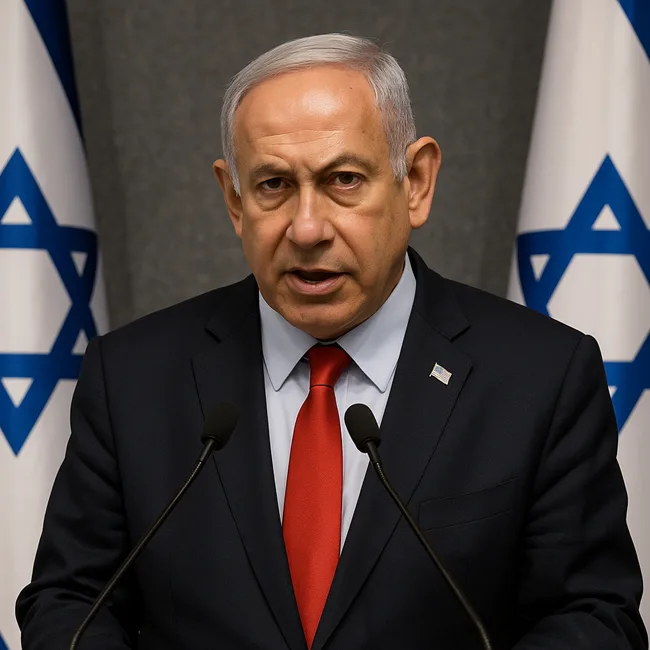


Israeli Prime Minister Benjamin Netanyahu’s political bloc is projected to secure approximately 53 seats in the 120-member Knesset following the October 27, 2026, parliamentary election, leaving it short of the 61 seats required for a governing majority. With about 85.6% of ballots counted on October 28, the opposition grouping led by former military chief Gadi Eisenkot was projected to receive 48 seats, while Arab-led parties were on course to win a combined 19 seats. The result creates a complicated coalition problem because neither principal Jewish-led political bloc can govern independently.
The vote drew turnout of approximately 77.7%, the highest in more than two decades, reflecting intense public interest in the country’s political direction following years of war and domestic controversy. Netanyahu’s Likud party emerged as the largest individual party, but the prime minister’s existing coalition appears to have lost its previous parliamentary majority. Eisenkot argued that voters had rejected Netanyahu’s continued leadership, while Netanyahu called for a strong right-wing government.
The reported figures remain provisional because hundreds of thousands of ballots, including those cast through special voting arrangements, still require counting. President Isaac Herzog will eventually need to determine which political leader has the strongest prospect of forming a government. Until a successor administration is established, Netanyahu may remain in office in a caretaker capacity.
What do the latest October 28 Israel election results show for Netanyahu and Eisenkot?
The Central Elections Committee’s partial count projected approximately 53 seats for Netanyahu’s right-wing, far-right and ultra-Orthodox partners. Eisenkot’s opposition bloc was projected at 48 seats, with Arab-led parties accounting for the remaining 19.
These figures add up to the Knesset’s 120 seats but do not represent certified final results. They reflect the projected allocation based on ballots counted at the relevant reporting time.
The distribution is significant because the prime minister’s bloc is clearly ahead of Eisenkot’s grouping yet remains eight seats short of the governing threshold. Numerical leadership alone does not create a parliamentary majority.
The result could still change as remaining ballots are processed, particularly if parties close to the electoral threshold gain or lose representation. The final count will determine the actual seat distribution available for coalition negotiations.
Why does Netanyahu need 61 Knesset seats to form a new Israeli government?
Israel elects members of its 120-seat parliament through proportional representation, meaning seats are distributed among qualifying parties rather than awarded entirely to a single national winner. Governments normally depend on coalitions involving several parties.
A parliamentary majority requires support from at least 61 lawmakers. Netanyahu’s projected 53 seats are therefore insufficient for a conventional majority government, even though his bloc currently leads the count.
A party can finish first in an election without automatically receiving the mandate to govern. The president considers which candidate is best positioned to assemble sufficient parliamentary backing.
The process creates an incentive for parties to negotiate with organisations that did not campaign together. However, ideological disagreements and previous political commitments may make those negotiations difficult.
How did Arab-led parties become potentially decisive in Israel’s election?
Arab-led parties are projected to hold 19 seats, a historically significant total that reflects stronger participation among Arab citizens of Israel. Their representation could influence whether an alternative government can secure enough parliamentary support.
The two main Arab-led political groupings include the Joint List and Ra’am. Their priorities and willingness to cooperate with other parties are not identical, making the details of potential arrangements important.
Eisenkot’s opposition bloc would require substantial additional backing to reach 61 seats. Cooperation involving Arab-led parties could provide a possible route, although the principal opposition leaders have expressed reservations about such arrangements.
Netanyahu has rejected forming a government dependent on Arab political parties. This creates a situation in which a significant parliamentary bloc may have numerical influence without an assured role in government.
Why did turnout rise to 77.7% in Israel’s first election since October 7?
The election followed the October 7, 2023, Hamas-led attack and subsequent military conflicts involving Gaza, Lebanon and Iran. Those events transformed political debate over security, government accountability and Israel’s future direction.
Many voters viewed the election as a judgment on Netanyahu’s handling of the security crisis and the years that followed. Supporters credit him with confronting military threats, while opponents criticise leadership failures and the political consequences of prolonged war.
Participation was particularly strong among Arab citizens, according to election reporting. That mobilisation contributed to the projected increase in representation for Arab-led parties.
High turnout demonstrates the importance voters attached to the contest, but it does not produce a simple political verdict. The result includes strong support for Netanyahu’s party alongside substantial opposition to his continued premiership.
Why did Netanyahu outperform expectations without securing a majority?
Some exit polls initially suggested that Eisenkot’s opposition bloc could finish ahead of Netanyahu’s grouping. As votes were counted, however, Netanyahu’s alliance performed more strongly than those projections indicated.
The outcome demonstrates the limitations of interpreting exit polls as final results. Differences in turnout, polling samples and the timing of ballot counting can alter early estimates.
Netanyahu retains substantial support among Jewish Israeli voters, particularly on questions of security and national identity. His party’s continued strength gives him influence even after losing the majority previously held by his coalition.
However, electoral support for the largest individual party is not equivalent to a mandate from a parliamentary majority. The distinction is central to understanding why Netanyahu can lead the count while remaining unable to form a government immediately.
What role will President Isaac Herzog play in choosing the next prime minister?
The president’s constitutional responsibilities include consultations concerning the formation of a government after parliamentary elections. Herzog must identify the political leader most likely to secure the backing necessary to govern.
The decision will depend on party recommendations and the available coalition possibilities. The leader of the largest party is often a strong contender, but the process does not automatically award government leadership solely on that basis.
A candidate tasked with forming a government must negotiate acceptable agreements with other parties. Those discussions can take considerable time when the electorate produces fragmented results.
Herzog has urged political leaders to approach negotiations with openness and avoid another election if possible. His appeal reflects the concern that the present configuration may be difficult to resolve through conventional alliances.
What happens to Israel’s government if coalition talks fail?
If no candidate can establish a workable coalition, Israel may face prolonged political uncertainty. Netanyahu could continue serving as caretaker prime minister while negotiations take place.
A caretaker administration can maintain government functions, but its political authority differs from that of a newly formed government backed by a parliamentary majority. The practical implications depend on the applicable legal framework and circumstances.
Political leaders could consider alternative arrangements involving cooperation across traditional blocs. Another election also remains possible if the parliamentary impasse cannot be resolved.
However, neither a unity government nor a second election has been agreed. Both should be reported as possible outcomes rather than inevitable consequences.
How are financial markets responding to the Israeli election deadlock?
Reuters reported that the shekel weakened to approximately 3.10 per U.S. dollar while major Tel Aviv equity indexes fell by more than 3% during the market reaction. Investors were assessing the prospect of continued political uncertainty and its implications for economic policy.
Such movements reflect financial-market expectations at a particular moment. They do not independently establish which coalition will form or the long-term economic consequences of the election.
A prolonged government-formation process could complicate policy decisions and investor confidence. Nevertheless, market conditions are also influenced by security developments and wider international financial factors.
The election result is therefore relevant to investors, but its economic significance will depend on subsequent political decisions. A single trading session should not be treated as a complete assessment of Israel’s future.
What are the key takeaways from Israel’s October 28 election count?
Netanyahu’s bloc is projected to win 53 seats, Eisenkot’s grouping 48 and Arab-led parties 19, based on approximately 85.6% of ballots counted. Neither main bloc has reached the 61 seats required for a parliamentary majority.
Turnout reached approximately 77.7%, while the strong performance of Arab-led parties has complicated coalition calculations. The seat figures remain provisional, and Netanyahu may continue as caretaker prime minister while parties consider their options.
Who has the clearest path to power after Israel’s inconclusive election?
Netanyahu leads the current seat projections but lacks enough partners to govern independently. Eisenkot’s possible route would involve cooperation with additional parties, including groups that some opposition leaders have resisted joining.
The final ballot count and party negotiations will determine whether either leader can secure a parliamentary majority. Until those questions are resolved, the election remains inconclusive rather than a confirmed victory for a new governing coalition.
Discover more from Business-News-Today.com
Subscribe to get the latest posts sent to your email.