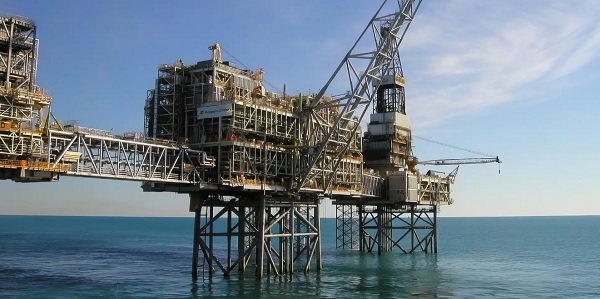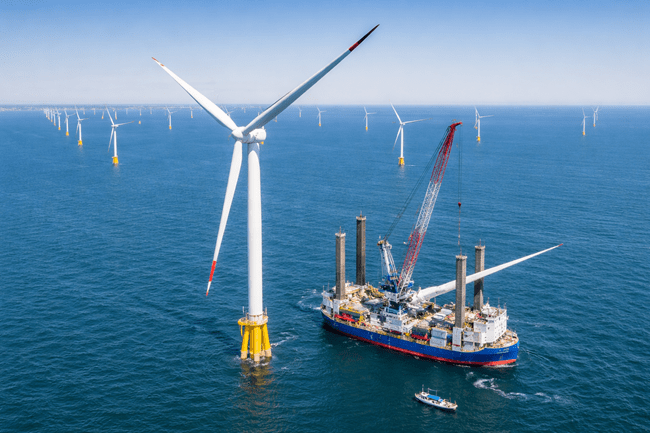
Shell plc (LON: SHEL, NYSE: SHEL) is reportedly preparing a potential sale of offshore wind farm assets that could raise more than $1 billion, Reuters reported, citing Bloomberg News. The reported process would mark another step in the company’s retreat from lower-return renewable power exposure and deepen its strategic pivot toward liquefied natural gas, upstream oil and gas, energy trading and shareholder distributions under chief executive officer Wael Sawan. Bloomberg News reported that Shell plc had engaged Rothschild & Co. and PJT Partners Inc. as advisers, with a possible sale process expected around 2027. Shell plc’s NYSE-listed ADR recently traded near $85.66, below its 52-week high of $94.90 and down over the latest five-day and one-month periods. The market question is whether investors will view the reported offshore wind sale plan as disciplined capital pruning or as another sign that oil majors are struggling to make large-scale renewable power work commercially.
Why would Shell plc reportedly sell offshore wind assets while energy transition pressure remains high?
Shell plc’s reported offshore wind sale plan reflects a harder, more returns-driven phase of the energy transition. The company has not publicly confirmed the reported process, so the development should be treated as a potential transaction rather than a completed portfolio decision. However, the reported move fits the pattern of a company becoming much more selective about which lower-carbon businesses deserve capital.
Offshore wind requires heavy upfront investment, long development timelines, complicated permitting, supply-chain exposure and uncertain returns. For a company under pressure to deliver cash, buybacks and dividends, that profile has become less appealing. Shell plc’s earlier transition strategy gave renewable power a more visible role, but the current management approach is more focused on businesses that can compete directly for capital against liquefied natural gas, upstream production and trading.
The reported sale also fits Shell plc’s broader strategic language around performance, discipline and simplification. Under Wael Sawan, Shell plc has shifted away from earlier ambitions to become a large power-generation player and toward businesses where it believes it has clearer competitive advantages. Offshore wind remains strategically important for energy systems, but Shell plc appears unwilling to build renewable power scale simply for transition credibility if the returns do not justify the capital. Investors usually enjoy green ambition, but they enjoy free cash flow even more.
How would a reported $1 billion offshore wind sale fit Shell plc’s capital allocation strategy?
If completed, a sale worth more than $1 billion would be relatively small compared with Shell plc’s market value, but the strategic signal would be larger. It would show management continuing to remove assets that do not match its current return priorities. The proceeds could support broader capital flexibility, simplify the portfolio and reduce exposure to a sector where project economics have become more difficult.
Shell plc’s first-quarter 2026 results showed adjusted earnings of $6.9 billion and cash flow from operations excluding working capital of $17.2 billion, while the company had also announced a $3 billion buyback programme. A separate June 12 update said Shell plc would temporarily pause that buyback until July 14 because of securities law requirements linked to its pending ARC Resources Ltd. acquisition vote. That context matters because Shell plc’s strategic direction is increasingly being judged through cash generation, portfolio discipline and capital returns rather than transition optics alone.
The reported offshore wind process would also come as Shell plc is making larger portfolio choices, including the pending ARC Resources Ltd. transaction and its continuing emphasis on liquefied natural gas growth. In that context, selling wind assets would be read as capital recycling. Shell plc can redeploy management attention and balance-sheet capacity toward areas it believes offer stronger risk-adjusted returns. The uncomfortable lesson for the renewable power sector is that strategic fit is no longer enough. The project also has to win the spreadsheet fight.
Why has offshore wind become a tougher investment case for oil majors?
Offshore wind has become more difficult because project economics have changed. Developers have faced higher turbine costs, more expensive financing, supply-chain bottlenecks, vessel shortages, grid connection delays and political friction around tariffs and subsidies. These pressures have made several projects less attractive than originally expected. For oil majors, which compare renewable returns against upstream and liquefied natural gas opportunities, the hurdle rate is unforgiving.
Oil majors entered offshore wind partly because it appeared to match their strengths. They understood offshore engineering, marine logistics, large projects and complex stakeholder management. However, offshore oil and offshore wind are not the same business. Wind projects often rely on regulated or contracted power pricing, face different construction risks and operate in highly competitive auction environments where returns can be squeezed before development even begins.
That has forced companies such as Shell plc to reassess whether they want to be large renewable power owners or selective participants in low-carbon value chains. The answer increasingly appears to be selective participation. Shell plc may still invest in areas linked to customers, trading, biofuels, electric vehicle charging, carbon capture or integrated energy solutions where it sees advantage. But large-scale offshore wind ownership looks less central than it once did.
What does the reported offshore wind process reveal about Shell plc’s energy transition repositioning?
Shell plc’s repositioning is increasingly clear. The company is moving from broad transition participation to a narrower model focused on returns, customer integration and trading advantages. That means lower-carbon businesses must justify themselves financially rather than symbolically. Offshore wind assets that were once seen as proof of transition commitment may now be viewed as capital-heavy holdings with limited strategic pull inside the group.
The reported review of Shell plc’s renewable energy exposure also follows earlier indications that the company was evaluating strategic options for Sprng Energy, its India-based renewable energy platform. That suggests a wider portfolio reshaping rather than a one-off decision. Shell plc appears to be asking whether renewable power generation ownership still fits its preferred role in the energy system.
This shift may disappoint investors and policymakers who wanted oil majors to scale renewable power more aggressively. However, it may satisfy shareholders who believe Shell plc’s strength lies in cash-generative hydrocarbons, liquefied natural gas, trading and disciplined shareholder returns. The strategic trade-off is clear. Shell plc may look less like a broad energy-transition utility and more like a sharper, higher-return integrated energy company. Whether that is good or bad depends on whether one is reading the climate policy memo or the equity valuation model.
How are investors likely to read Shell stock after the reported renewables retreat?
Shell stock has not shown a dramatic positive reaction to the reported offshore wind sale plan, which is unsurprising because the process has not been confirmed by the company and would not transform near-term earnings. The NYSE ADR recently traded near $85.66, with a 52-week range of $67.25 to $94.90. Market data also showed the shares down 1.14% over five days and 3.31% over one month, even though the stock remains up strongly year to date.
That muted reaction suggests investors already understand Shell plc’s strategic direction. The market has largely moved past the idea that the company will build a vast renewable power empire. Instead, investors are evaluating Shell plc through cash generation, liquefied natural gas exposure, buybacks, dividends, upstream returns and portfolio simplification. A reported offshore wind asset sale may support that thesis, but it is not enough on its own to re-rate the stock.
The bigger sentiment issue is whether Shell plc can keep delivering high returns while gradually reducing exposure to lower-return businesses. If investors see the reported wind sale as part of a coherent, disciplined capital plan, it could support confidence. If they see repeated exits as evidence of strategic reversals, the benefit may be smaller. Equity markets forgive changed strategy when the cash flow improves. They are less kind when strategy changes start looking like expensive lessons.
What could the reported sale mean for offshore wind competitors and potential buyers?
The reported sale could create an opportunity for specialist renewable developers, infrastructure funds, utilities or pension-backed platforms that want long-duration offshore wind exposure. These buyers may have lower return thresholds than oil majors or a stronger strategic need for renewable power assets. What looks non-core to Shell plc could still be valuable to a company focused entirely on clean energy infrastructure.
The buyer universe will matter because it could reveal how the market currently prices offshore wind risk. A strong sale price would suggest that long-term capital still sees value in offshore wind despite cost pressures. A weaker valuation would reinforce concerns that the sector’s economics have been permanently reset by inflation, interest rates and grid constraints. For Shell plc, the outcome would determine whether any sale looks like disciplined pruning or a discounted retreat.
Competitors will also watch the process closely. If Shell plc exits assets at an attractive price, other oil majors may feel encouraged to recycle renewable exposure where returns are below internal thresholds. If the sale struggles, companies may find that renewable assets are easier to announce than to monetise. In energy transition investing, the exit door matters almost as much as the entry pitch.
Why could liquefied natural gas benefit from Shell plc’s shrinking offshore wind exposure?
Shell plc’s liquefied natural gas strategy could benefit from reduced capital distraction in offshore wind. The company already views liquefied natural gas as a core growth business, supported by global demand for flexible gas supply, Asian energy security needs and its own trading capabilities. Capital and management attention freed from offshore wind could be directed toward liquefied natural gas projects, supply agreements, portfolio optimisation and trading.
This matters because liquefied natural gas is a business where Shell plc has genuine scale and competitive advantage. The company can source, ship, trade and optimise cargoes across global markets in ways that many competitors cannot. Offshore wind does not offer the same integrated commercial advantage unless Shell plc controls power offtake, trading, customer demand and grid access in a highly coordinated way.
There is also a timing argument. Global gas investment is rising as power demand from data centres, industrial electrification and emerging markets strengthens. If Shell plc believes gas will remain essential to energy security for decades, then prioritising liquefied natural gas over offshore wind may look commercially rational. The climate debate remains complex, but capital allocation has become brutally simple: businesses that generate better returns get the louder internal voice.
What risks could Shell plc face if it reduces offshore wind exposure further?
The first risk is reputational. Shell plc has spent years presenting itself as a company adapting to the energy transition. Further reductions in renewable power ownership could attract criticism from climate-focused investors, policymakers and campaigners who argue that the company is leaning too heavily back into hydrocarbons. That criticism may not move the stock every day, but it can shape policy relationships and long-term licence to operate.
The second risk is strategic optionality. Power markets are changing quickly as electrification accelerates. If Shell plc sells too much renewable generation exposure, it may reduce its ability to participate directly in future power value chains. The company can still play through trading, retail, charging and energy services, but owning generation gives different leverage. Exiting assets now may look smart if returns remain weak. It may look less smart if power scarcity and clean energy premiums improve later.
The third risk is execution. A reported sale process expected around 2027 means market conditions could shift before any transaction happens. Interest rates, power prices, policy incentives and buyer appetite may all change. Shell plc may want to sell, but the final value will depend on the mood of a renewable infrastructure market that has been anything but relaxed. The company can choose the process. It cannot fully choose the cycle.
What happens next if Shell plc completes a reported offshore wind farm sale?
If Shell plc completes a sale at a strong valuation, it would reinforce the credibility of Wael Sawan’s capital discipline strategy. Proceeds could be used to support broader portfolio priorities, strengthen financial flexibility or indirectly underpin shareholder returns. More importantly, a sale would simplify Shell plc’s low-carbon portfolio and reduce exposure to a sector where it no longer appears to want major ownership scale.
A successful sale would also send a signal across the oil and gas sector. Other integrated majors may take a similar view that renewable power generation is not necessarily the best route to transition exposure. They may prefer businesses where they can combine molecule trading, customer relationships, infrastructure and risk management. That would leave offshore wind increasingly in the hands of utilities, infrastructure funds and specialist developers.
If the sale does not attract strong interest, Shell plc may face a harder choice. It could retain the assets longer, accept a lower price or restructure its renewable exposure more gradually. For now, the reported strategic direction is clear. Shell plc is narrowing the energy transition story to fit its return profile. The next test is whether buyers agree that the assets it may sell still deserve a premium valuation.
Key takeaways on what Shell plc’s reported offshore wind sale means for investors and power markets
- Shell plc is reportedly preparing a potential offshore wind asset sale that could raise more than $1 billion, but the company has not publicly confirmed the process.
- Reuters reported the development citing Bloomberg News, which said Rothschild & Co. and PJT Partners Inc. had been engaged as advisers for a possible sale around 2027.
- The reported move fits Shell plc’s broader strategy under Wael Sawan, which emphasises performance, discipline, simplification and stronger shareholder returns.
- Offshore wind remains strategically important for power markets, but high costs, financing pressure, supply-chain delays and uncertain returns have made the sector tougher for oil majors.
- Shell plc is increasingly prioritising liquefied natural gas, upstream oil and gas, trading and higher-return energy businesses over large-scale renewable generation.
- Shell stock has not reacted dramatically because investors already appear to understand that the company is moving away from broad renewable power ambitions.
- A reported sale could create opportunities for utilities, infrastructure funds and specialist renewable developers with stronger appetite for long-duration offshore wind assets.
- A strong sale price would support Shell plc’s capital discipline narrative, while a weaker valuation could expose broader pressure on offshore wind asset economics.
- The shift carries reputational risk because climate-focused stakeholders may see further renewable power disposals as a retreat from energy transition commitments.
- The executive read is financially logical but politically sensitive: Shell plc appears to be choosing returns over transition breadth, and the market will judge whether that discipline pays.
Discover more from Business-News-Today.com
Subscribe to get the latest posts sent to your email.