



RWE AG (XETRA: RWE) has secured a Capacity Investment Scheme (CIS) contract for its proposed 1.1-gigawatt Theodore Wind Farm in Central Queensland, moving the AU$3 billion onshore wind development closer to final investment decision (FID). The Australian government selected the project in Tender 7 of the national Capacity Investment Scheme, which is designed to support new renewable generation through revenue underwriting. The award matters because Theodore Wind Farm is one of the larger onshore wind proposals in Queensland and could supply electricity equivalent to the needs of about 500,000 homes. For RWE AG, the contract strengthens its Australian renewables pipeline at a time when global power companies are competing for grid-connected, policy-backed clean energy assets.
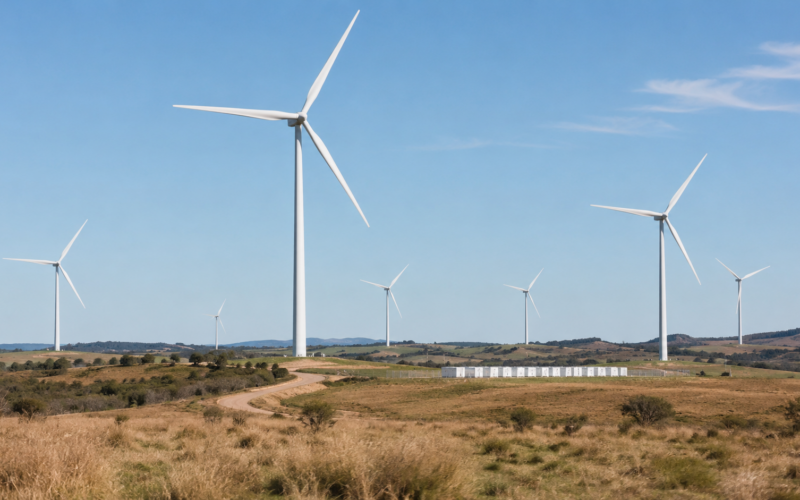
Theodore Wind Farm is proposed about 22 kilometres east of Theodore, 50 kilometres south-west of Biloela and 150 kilometres south-west of Gladstone, placing the project inside the Banana Shire Local Government Area. RWE AG expects the development to include up to 170 wind turbines and a battery storage facility, giving the project both generation scale and potential dispatchability. The company has already secured state Development Application approval, but the next decisive regulatory gate is approval under the federal Environment Protection and Biodiversity Conservation process. That makes Theodore less a done deal and more a project entering the serious-money phase, where policy support, permitting risk and capital discipline start pulling in different directions.
Why does the Capacity Investment Scheme contract matter for RWE’s Theodore Wind Farm financing plan?
The Capacity Investment Scheme contract gives Theodore Wind Farm something renewable developers increasingly need before committing billions of dollars: a clearer revenue framework. Under the scheme, selected projects receive support through a revenue floor and ceiling structure, reducing downside exposure while allowing government-backed risk sharing. That does not remove construction, grid, environmental or financing risk, but it can materially improve bankability for large-scale renewable energy projects. For RWE AG, the contract helps convert Theodore from a development-stage asset into a more financeable infrastructure project.
The broader Australian policy context is just as important. The Department of Climate Change, Energy, the Environment and Water said Tender 7 selected 19 projects expected to deliver 7.8 gigawatts of renewable energy, above the 5-gigawatt target initially planned for the tender round. That suggests strong developer appetite for policy-backed renewables, but it also raises a practical question: how many selected projects can move from tender success to actual construction without being slowed by approvals, grid congestion, supply-chain pressure or local opposition.
RWE AG’s advantage is scale and balance-sheet credibility. Smaller developers may struggle to carry late-stage development costs across long permitting timelines, while a large European utility can absorb longer execution cycles. However, a large company also faces sharper capital allocation scrutiny. Investors will want to see whether Theodore Wind Farm can meet return thresholds in an environment where wind turbine costs, grid connection timelines and social licence issues remain live concerns across Australia’s renewable energy buildout.

How could Theodore Wind Farm change Queensland’s renewable energy and grid investment outlook?
Theodore Wind Farm could become strategically important for Queensland because the state needs large-scale renewable generation to support coal retirement, industrial decarbonisation and future load growth. Central Queensland is also close to industrial demand centres linked to Gladstone, one of Australia’s major energy and export hubs. A 1.1-gigawatt wind project with battery storage is not just another green electricity asset; it could become part of the infrastructure base needed to support energy-intensive industries as they face decarbonisation pressure.
The proposed battery element is especially relevant. Wind generation alone can create variability challenges, but battery storage can help smooth output, improve dispatch flexibility and strengthen the project’s value proposition in the National Electricity Market. The final configuration will matter because battery duration, grid connection terms and market participation strategy can influence the economics as much as turbine capacity. In Australian renewables, the lesson is now obvious: megawatts get headlines, but grid integration decides whether the asset earns its keep.
Queensland also gains a regional development narrative. RWE AG has proposed an AU$17.5 million Community Benefit Fund over the project’s operational life, with at least AU$500,000 per year committed through construction and operations. The company has already delivered more than AU$215,000 through its Sponsorship Fund to the local community. Those commitments will not eliminate every land-use or environmental concern, but they indicate that large renewable projects are increasingly being judged on local economic participation, not only generation capacity.
What regulatory and execution risks could still delay RWE’s Theodore Wind Farm project?
The biggest near-term risk is federal environmental approval. RWE AG has already secured its state Development Application, but the project remains subject to the Environment Protection and Biodiversity Conservation process. Until that step is complete, construction timing remains conditional. The company expects construction to start later this year, subject to EPBC approval and final investment decision, with development likely to take up to four years and require up to 500 workers at peak periods.
That timeline exposes the project to three major execution risks. First, environmental approval can reshape project design, turbine placement, mitigation costs or construction sequencing. Second, grid connection processes in Australia can introduce delays that are difficult for developers to control. Third, wind projects continue to face community and political scrutiny in parts of regional Australia, especially where residents question visual impact, land-use change, transmission infrastructure or biodiversity trade-offs.
RWE AG appears to be trying to de-risk the social side early through local funding and community engagement. Still, the strategic challenge is clear. The company must keep Theodore Wind Farm moving quickly enough to preserve tender momentum, while not rushing the regulatory and community processes that could determine the project’s long-term stability. For a project of this size, the boring paperwork is not boring at all. It is where the value either gets protected or quietly leaks away.
How does Theodore Wind Farm fit into RWE’s wider Australian renewable energy strategy?
Australia has become one of RWE AG’s focus markets, and Theodore Wind Farm fits a portfolio strategy built around wind, solar and battery storage. The company has operated in Australia since 2013 and commissioned the 314-megawatt alternating current Limondale Solar Farm in Balranald, New South Wales, in 2021. RWE AG says Limondale Solar Farm uses 872,000 panels and generates enough electricity to power about 105,000 homes per year.
Theodore Wind Farm would be a much larger step in RWE AG’s Australian footprint. It gives the company exposure to Queensland, where renewable buildout is increasingly tied to industrial demand, coal transition planning and grid investment. The inclusion of a battery storage facility also aligns with the market direction: renewable developers are being pushed to offer more than intermittent generation, especially as system reliability becomes a political and consumer issue.
The project also supports RWE AG’s positioning as a global renewables investor at a time when European utilities are competing across geographies for projects that combine scale, policy support and long-term demand. Australia’s renewables market is attractive, but it is not frictionless. The winners will likely be developers that can combine capital strength, permitting discipline, grid expertise and community credibility. Theodore Wind Farm gives RWE AG a chance to show all four, assuming the final investment decision clears the internal hurdle.
What does RWE’s stock performance suggest about investor sentiment toward large renewable projects?
RWE AG shares have been trading near the upper end of their 52-week range, giving the company a stronger equity-market backdrop than it had through parts of 2025. Recent market data showed RWE AG around €57.04 on May 22, 2026, after a daily gain of about 0.92 percent, compared with a 52-week range near €31.78 to €60.76 in one recent market snapshot. Other market data placed the 52-week range around €32.10 to €62.00, confirming that the stock remains much closer to its yearly high than its low.
That share-price context matters because investors have become more selective about renewable growth stories. The market is no longer rewarding clean energy capacity expansion simply because it is clean energy capacity expansion. Capital discipline, risk-adjusted returns, grid access and contracted revenue visibility matter more than headline megawatts. Theodore Wind Farm’s CIS contract therefore gives RWE AG a stronger narrative: this is not just speculative capacity, but a policy-supported project with a clearer revenue framework.
The neutral reading is that the CIS award is strategically positive but unlikely to transform RWE AG’s valuation on its own. Investors will probably treat Theodore Wind Farm as one building block in a larger portfolio, not as a single catalyst. The real sentiment shift would come if RWE AG converts the award into EPBC approval, final investment decision and credible construction progress without cost escalation. In other words, the market may applaud the contract, but it will pay for execution.
Key takeaways on what RWE’s Theodore Wind Farm CIS award means for Australia’s energy transition
- RWE AG has moved Theodore Wind Farm closer to final investment decision by securing a Capacity Investment Scheme contract for the 1.1-gigawatt Central Queensland project.
- The CIS award improves project bankability by giving Theodore Wind Farm a clearer revenue support framework, but it does not eliminate approval, grid or construction risk.
- The AU$3 billion project could become a major Queensland renewable energy asset, with enough proposed generation to power about 500,000 homes.
- Federal EPBC approval is now the critical milestone, making environmental review the next major test before construction can begin.
- The planned battery storage facility could make Theodore Wind Farm more valuable than a standalone wind project by improving dispatch flexibility and grid relevance.
- The AU$17.5 million Community Benefit Fund signals that local economic participation is becoming central to renewable project approval and acceptance.
- RWE AG’s Australian strategy is shifting from presence to scale, with Theodore Wind Farm potentially becoming a flagship asset in its local portfolio.
- The stock-market backdrop is supportive but selective, with RWE AG shares trading near their 52-week high while investors focus on capital discipline.
- For Queensland, Theodore Wind Farm could support renewable supply growth near industrial demand centres, but transmission and integration challenges remain decisive.
- The project’s success will depend less on the CIS announcement itself and more on whether RWE AG can convert policy support into timely approvals, financing and construction.
Discover more from Business-News-Today.com
Subscribe to get the latest posts sent to your email.