




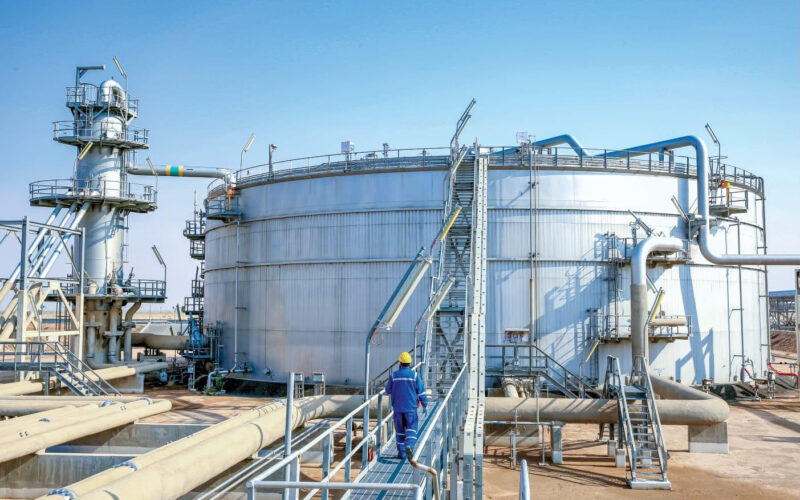
Kuwait Petroleum Corporation, through its wholly owned subsidiary Kuwait Oil Company, has signed a US$16.0 billion lease-and-leaseback partnership over its entire crude oil pipeline network with a consortium of Blackstone (NYSE: BX), Brookfield (NYSE: BN) and KKR (NYSE: KKR). The transaction, branded Project Peregrine, delivers US$7.85 billion in upfront proceeds to Kuwait Oil Company at closing, hands the three consortium members a combined 49 percent economic interest in a newly formed Kuwaiti joint venture on equal one-third terms, and leaves Kuwait Oil Company with a 51 percent majority stake and full operational control of the 13-pipeline, roughly 320-kilometre network. Kuwait Petroleum Corporation has called it the largest foreign direct investment in the country’s history and the largest energy infrastructure partnership Kuwait has ever executed.
The immediate significance is twofold: three of the world’s biggest alternative-asset managers have committed long-duration capital to Gulf midstream even as Kuwaiti territory has come under repeated Iranian drone and missile activity, and Kuwait Petroleum Corporation has unlocked a large upfront cash pool to help fund its 2040 Strategy target of four million barrels per day of crude production capacity by 2035. The tension running through the deal is whether Project Peregrine represents genuine equity-like conviction from Blackstone, Brookfield and KKR, or a carefully engineered tariff structure that lets the consortium underwrite Kuwait’s oil economy while insulating itself from the geopolitical and volumetric risks that would ordinarily deter such a commitment.
How does Project Peregrine actually work, and what is the consortium paying for at US$7.85 billion upfront?
The structure is not a sale of pipeline ownership. Under the terms disclosed by Kuwait Petroleum Corporation, a newly incorporated Kuwaiti joint venture leases the usage rights to the 13-pipeline network from Kuwait Oil Company, and then grants those rights back to Kuwait Oil Company on an exclusive basis for 20.5 years in exchange for a volume-based tariff. Kuwait Oil Company retains full ownership of the pipelines and remains the sole operator and maintenance provider. The joint venture is the economic vehicle that collects tariff revenue over the life of the arrangement, and the consortium’s 49 percent share of that vehicle is what is being purchased for US$7.85 billion upfront.
The remaining economic value that supports the US$16.0 billion headline figure flows to the joint venture through those volume-based tariffs over 20.5 years, discounted implicitly at some risk-adjusted rate the parties have not disclosed. That is a critical distinction. The US$16.0 billion is the enterprise value of the leaseback arrangement, not a cash cheque. What Blackstone, Brookfield and KKR have actually bought is a claim on future tariff cash flow tied to the volume of crude oil that Kuwait Oil Company chooses to move through its pipelines, backed by the operational reliability of a network that carries Kuwait’s export lifeblood to the Arabian Gulf terminals.

Why did Kuwait choose a lease-and-leaseback rather than an outright equity sale of its pipeline network?
The State of Kuwait has been highly protective of national ownership of upstream and midstream oil assets, in part for constitutional and political reasons and in part because the country’s fiscal budget is almost entirely dependent on oil revenue. A straight sale of 49 percent equity in the pipeline network would have implied giving foreign investors direct governance rights over a strategic asset and a share of production decisions. The lease-and-leaseback structure sidesteps that constraint. Kuwait Oil Company continues to hold the asset on its balance sheet, continues to make operational decisions, and continues to determine production volumes without contractual interference from the consortium.
What Kuwait gives up is a share of the economic rent that the pipeline network generates over the 20.5-year term. What it retains is optionality: the ability to raise or cut throughput in response to Organization of the Petroleum Exporting Countries quotas, price signals or geopolitical events without needing to renegotiate with three private-capital counterparties. Kuwait Petroleum Corporation has been explicit that the joint venture will not impose restrictions on refining throughput or production volumes. That is a meaningful concession from the consortium’s side, and it explains why the transaction is best understood as monetisation of tariff cash flow rather than partial privatisation of the pipeline system.
What does the timing signal about global infrastructure appetite for Gulf assets amid Iranian pressure?
The security context surrounding the announcement cannot be separated from the deal itself. Kuwait has been subject to Iranian drone and missile activity in recent months, including reported incidents affecting United States military installations on Kuwaiti soil, and the broader Gulf region has been operating under elevated conflict risk since the joint United States and Israeli strikes on Iran earlier this year. The competitive selection process that produced Project Peregrine was reportedly launched shortly before those strikes, and the consortium’s willingness to finalise the transaction under current conditions is itself a meaningful signal.
For Blackstone, Brookfield and KKR, Kuwait is neither an unfamiliar counterparty nor a marginal allocation. Blackstone’s chairman Stephen Schwarzman described the transaction as an extension of a nearly four-decade relationship with Kuwait, and Brookfield’s chief executive Bruce Flatt referred to Kuwait as a long-standing partner. The three firms collectively manage well over US$2.6 trillion in assets, and pipeline tariff income of the type Project Peregrine delivers is precisely the kind of long-duration, inflation-adjacent, contractually secured cash flow that global infrastructure funds have been raising capital to deploy into. The alternative destinations, whether North American midstream, European transmission networks or Asian ports, all currently trade on tight yields with limited scale opportunity. Kuwait offers scale, national counterparty credit and a tariff structure that decouples returns from spot crude prices, all in a single transaction.
The consortium’s due diligence exposure to Iranian strike risk is likely limited by the fact that the pipeline network is domestic infrastructure carrying oil to Kuwaiti terminals, and by the sovereign nature of the counterparty. Kuwait Oil Company is not going to disappear as a payer of tariffs even under significant operational stress. What the consortium is really underwriting is Kuwaiti sovereign continuity and the durability of Kuwaiti export volumes, and it has evidently concluded that those risks are priceable.
How does Kuwait’s 4 million barrels per day target shape the tariff economics for Blackstone, Brookfield and KKR?
The volume-based tariff mechanism gives the consortium direct exposure to Kuwait’s ability to hit its 2035 production capacity target of four million barrels per day. Kuwait currently produces roughly 2.4 to 2.5 million barrels per day depending on the point in the Organization of the Petroleum Exporting Countries cycle, and the 4 million barrel target represents a substantial capacity build-out over the next decade. That build-out depends on capital expenditure inside Kuwait Oil Company’s upstream operations, on continued exploration success in the Neutral Zone and elsewhere, and on the willingness of the wider Organization of the Petroleum Exporting Countries and its allies to accommodate Kuwaiti quota expansion. The US$7.85 billion of upfront proceeds is precisely the kind of capital pool that can accelerate that production ramp, which creates a circular alignment: the consortium’s returns improve as Kuwait uses the consortium’s cash to grow the volumes on which those returns depend.
However, the alignment is imperfect. If Kuwaiti production stalls at current levels because of Organization of the Petroleum Exporting Countries discipline, subdued global crude demand or execution delays in upstream projects, tariff revenue over the 20.5 years will underperform the base-case assumed at pricing. Kuwait has agreed not to restrict volumes for the consortium’s benefit, and there is no evidence in the disclosed structure that the joint venture receives a minimum tariff floor. That is where the consortium is genuinely taking risk rather than simply extracting rent, and it is the piece of the deal that most closely resembles equity exposure to the Kuwaiti oil economy.
What does Project Peregrine mean for the broader Gulf infrastructure monetisation playbook?
The transaction is not without precedent. Saudi Aramco executed comparable pipeline and gas infrastructure leasebacks in 2021 and 2022, Abu Dhabi National Oil Company completed a series of midstream monetisations, and Bapco Energies in Bahrain has followed with its own structures. Project Peregrine is the largest of the group by upfront proceeds, and the first from Kuwait, which had previously been more resistant to foreign participation in energy infrastructure than its Gulf peers. That resistance appears to have been overcome by a combination of fiscal pressure to fund the 2040 Strategy build-out, a desire to diversify capital sources beyond sovereign debt issuance and reserves drawdown, and a strategic view that inviting global infrastructure managers into the Kuwaiti economy will attract further foreign capital into non-oil sectors.
For Blackstone, Brookfield and KKR, Project Peregrine sets a template for how the Gulf can absorb scale infrastructure capital without ceding operational control, and it strengthens the case for follow-on transactions across power, water, telecommunications and downstream energy. The Kuwaiti Prime Minister Shaikh Ahmad Abdullah Al-Ahmad Al-Sabah announced the underlying policy at the Kuwait Oil and Gas Show in February 2026, and Project Peregrine is the first delivery against that commitment. Investor expectations that further Kuwaiti infrastructure will follow this structure are therefore not speculative; they are consistent with the direction the government has publicly stated.
What are the execution risks Project Peregrine and its investors have not yet fully priced?
Several risks remain unresolved in the disclosed terms. The tariff structure has not been made public in detail, which means external observers cannot yet assess how the volume-based mechanism handles low-throughput years, how it is inflation-adjusted, or whether tariff resets over the 20.5-year period are formulaic or negotiated. The governing law is Kuwaiti, which is standard for a domestic infrastructure joint venture, but it introduces jurisdictional considerations for the consortium’s investors that would not apply in a comparable United States or European transaction. Regional geopolitical risk cannot be eliminated by contract, and while the consortium has judged it acceptable, a sustained deterioration in Gulf security could pressure valuations of the joint venture’s cash flow in secondary transactions or refinancings.
There is also a strategic risk on the Kuwaiti side. Committing to a 20.5-year fixed-rights arrangement over the country’s entire pipeline network reduces flexibility to reorganise the midstream network, sell parts of it separately or bring in additional partners, without renegotiating with three of the world’s most sophisticated infrastructure investors. That constraint is unlikely to matter in the near term, but it is a genuine reduction in Kuwait Petroleum Corporation’s strategic optionality that the current headline figures do not capture.
The transaction remains subject to customary closing conditions and regulatory approvals. Centerview Partners, HSBC and J.P. Morgan advised Kuwait Petroleum Corporation. No consortium-side advisers have been publicly disclosed in the announcement.
What will determine whether Project Peregrine reshapes Kuwait’s capital-formation model or remains a one-off?
Kuwait has moved decisively from being one of the Gulf’s more inward-facing energy economies to hosting its most ambitious foreign direct investment. Project Peregrine’s ultimate significance will be measured not on announcement day but across the next decade: whether the four million barrels per day target is delivered on schedule, whether tariff cash flow performs to the consortium’s underwriting case, and whether the transaction catalyses the next wave of foreign capital into Kuwaiti infrastructure beyond hydrocarbons. Those are the specific tests that will determine whether the largest foreign direct investment in Kuwait’s history compounds into a durable shift in the country’s capital-formation model or remains a single, spectacular exception.
Key takeaways from Kuwait’s US$16.0 billion Project Peregrine pipeline deal with Blackstone, Brookfield and KKR
- Kuwait Petroleum Corporation and Kuwait Oil Company have signed a US$16.0 billion, 20.5-year lease-and-leaseback of the entire 13-pipeline, 320-kilometre network with a consortium of Blackstone, Brookfield and KKR, structured as a Kuwaiti joint venture with a 51 percent Kuwait Oil Company stake and a 49 percent consortium stake held in equal thirds.
- The joint venture pays US$7.85 billion upfront to Kuwait Oil Company at closing, with the balance of the US$16.0 billion enterprise value flowing to the joint venture as volume-based tariff income over the life of the arrangement.
- Kuwait Oil Company retains full ownership and operational control of the pipelines and remains free to set production and refining volumes without joint venture restrictions.
- Kuwait Petroleum Corporation has described the transaction as the largest foreign direct investment in Kuwait’s history and the first time global institutional investors have committed long-duration capital to Kuwaiti midstream infrastructure.
- The upfront proceeds are earmarked to support Kuwait’s 2040 Strategy, including its target of four million barrels per day of crude oil production capacity by 2035.
- The consortium’s return depends materially on Kuwait’s ability to grow throughput volumes over 20.5 years, creating a circular alignment between the consortium’s capital and Kuwait’s production ramp.
- Project Peregrine mirrors earlier infrastructure monetisations by Saudi Aramco, Abu Dhabi National Oil Company and Bapco Energies, and is the largest such transaction to date by upfront proceeds.
- The deal was closed amid reported Iranian drone and missile activity affecting Kuwaiti territory, signalling continued conviction in Gulf infrastructure from major alternative-asset managers despite regional security pressure.
- Detailed tariff mechanics, inflation adjustments, throughput floors and reset provisions have not been publicly disclosed, leaving open questions about how the consortium’s cash flow behaves in low-volume years.
- The next measurable proof point is transaction closing, followed by early tariff-year performance data and the pace of Kuwait Oil Company’s upstream capital deployment against the 4 million barrels per day target.
Discover more from Business-News-Today.com
Subscribe to get the latest posts sent to your email.