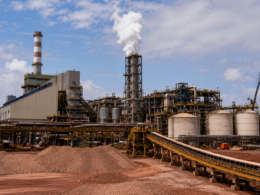




Predictive Discovery Limited (ASX:PDI) has moved into a much more demanding phase of its gold growth story after completing its merger with Robex Resources and building a larger West African platform around the Bankan and Kiniero assets in Guinea. The company is no longer just a high-profile gold developer with a major discovery. It is now being judged as an emerging multi-asset gold company with production, development, funding and execution expectations all moving at once. For retail investors, the question is no longer whether Predictive Discovery has scale. It is whether Bankan, Kiniero and the combined team can turn that scale into cash flow without losing control of development risk.
Why is Predictive Discovery Limited attracting investor attention after the Robex Resources merger?
Predictive Discovery Limited is drawing investor attention because the Robex Resources merger has changed the company’s profile from a single-project developer into a broader West African gold platform. The combination brings together Predictive Discovery’s Bankan Gold Project and Robex Resources’ Kiniero and Nampala assets, giving the merged company both development upside and nearer-term operating exposure.
That matters because gold developers usually face a difficult funding gap between study-stage promise and first production. The Robex transaction was designed to reduce that gap by combining Bankan’s large-scale development potential with Kiniero’s production and cash-flow pathway. Investors now have a more layered investment case than they did when ASX:PDI was mostly about the Bankan discovery alone.
The market has already recognised that shift. Recent data placed Predictive Discovery at a market value above A$4.2 billion, which means investors are no longer valuing the company as a forgotten explorer. They are valuing it as a serious gold growth company that must execute.
The risk is that scale brings pressure. A larger company with bigger assets, a dual-market profile and a higher valuation has less room for vague timelines. ASX:PDI now needs to prove that the merger improves funding, management depth and project sequencing, rather than simply adding more moving parts.
What does Predictive Discovery actually own and why does Bankan remain the centre of the ASX:PDI thesis?
Predictive Discovery’s core asset remains the Bankan Gold Project in northeast Guinea. Bankan is one of the largest undeveloped gold projects in Africa, with a mineral resource of about 5.53 million ounces and a development plan targeting roughly 250,000 ounces of gold production a year over more than 12 years.
Bankan matters because it is the asset that built the company’s market identity. The project gives Predictive Discovery a tier-one development story in the Siguiri Basin, a region known for major West African gold systems. Large gold resources with long mine lives are scarce, and that scarcity is part of why ASX:PDI has attracted sustained investor interest.
The development pathway is now the key issue. The project has moved beyond the discovery-stage excitement that drove earlier interest. Investors are now watching permitting, funding, engineering, construction readiness, capital cost control and the timeline toward first production.
The risk is that large gold projects can become difficult precisely because they are large. Capital intensity, government approvals, resettlement, infrastructure, mining schedules, plant construction and execution discipline all matter. Bankan’s scale is the attraction, but it is also the reason the next phase has to be handled carefully.
How does Kiniero change the funding and production pathway for Predictive Discovery shareholders?
Kiniero changes the story because it gives Predictive Discovery exposure to a nearer-term gold production platform in Guinea. That is strategically important because the company’s long-term ambition is not only to build Bankan, but to create a broader gold business capable of producing more than 400,000 ounces a year by 2029.
The value of Kiniero is that it can potentially support cash generation, operating credibility and development funding. A gold company with production or near-production assets is usually viewed differently from one that only has a future mine plan. Cash flow can help reduce reliance on equity markets and project debt, although it does not remove the need for disciplined capital management.
Kiniero also creates regional logic. Bankan and Kiniero sit within Guinea, and the merged company is trying to build a larger in-country platform rather than a scattered collection of unrelated assets. That can support management focus, operational synergies and government relationship building.
The risk is that production assets come with their own challenges. Ramp-up, grade reconciliation, recoveries, costs, maintenance, logistics and local execution can all affect cash flow. Investors should not assume Kiniero automatically funds Bankan smoothly. The next test is whether Kiniero delivers reliably enough to strengthen the combined company’s funding plan.
Why does the Bankan definitive feasibility study matter for the next valuation test?
The Bankan definitive feasibility study gave investors a more concrete framework for the project’s economics, production profile and development assumptions. That matters because a gold project moves into a more serious category once investors can assess mine life, production, capital intensity and expected returns using a formal study.
For ASX:PDI investors, the study is a valuation anchor. It supports the argument that Bankan is not only a large resource, but a development-stage project with a defined production plan. That is important because the market is now paying for more than exploration optionality.
However, a feasibility study is not the same as delivered production. The study provides a plan, but management still has to fund the project, build it, commission it and operate it. The further a company moves toward construction, the more investors focus on execution rather than headline ounces.
The risk is cost inflation. Mining projects in remote or emerging-market jurisdictions can face pressure from labour, fuel, power, construction materials, logistics and exchange rates. If Bankan’s capital or operating costs move higher, the market may reassess the value implied by the feasibility case.
How does the gold price environment support the Predictive Discovery investment case?
The gold price environment is supportive because higher gold prices improve the strategic appeal of large development assets. A project such as Bankan becomes more attractive when investors believe gold can remain elevated due to geopolitical risk, central bank demand, currency uncertainty and long-term concerns about inflation and debt.
For Predictive Discovery, a stronger gold backdrop can improve funding conversations and investor appetite. Lenders, strategic investors and institutions are more likely to support gold development stories when the commodity price makes project returns look resilient. A higher price environment can also help producers absorb cost pressures more comfortably.
The merged company’s production ambition adds another layer. If Kiniero and Bankan together can move the company toward more than 400,000 ounces a year, Predictive Discovery could become more than a single-project success story. It could become a mid-tier West African gold producer with genuine scale.
The risk is that gold prices can move faster than project timelines. A development plan may be launched during a strong gold market, but the asset may begin producing in a different price environment. Investors should therefore watch cost control, balance-sheet strength and funding structure, not only the gold price.
How is the market pricing ASX:PDI after the merger and share price recovery?
Recent market data showed Predictive Discovery trading around A$0.865, with a market value above A$4.2 billion and a 52-week range of A$0.38 to A$1.03. That means the stock has delivered a major recovery from its lower levels and now sits below, but not far from, its 52-week high.
This pricing tells investors that the market has already rewarded the Bankan and merger story. ASX:PDI is not being ignored. A multi-billion-dollar market value implies that investors are already assigning serious value to the combined company’s gold platform and future production ambition.
The next stage is therefore tougher. When a gold developer trades at a modest value, investors may tolerate delays because the upside still feels underpriced. When a company trades above A$4 billion, investors expect clearer delivery, stronger governance, better funding visibility and fewer surprises.
For retail investors, the key question is whether ASX:PDI still offers upside after the re-rating. That depends on whether the company can show that the Robex merger genuinely reduces Bankan funding risk, that Kiniero ramps well, and that the combined group can grow into its valuation.
What role does Guinea country risk play in the Predictive Discovery roadmap?
Guinea is central to the opportunity and the risk. The country hosts significant mineral resources and has attracted major mining investment, but investors still need to consider permitting, government relations, fiscal stability, community engagement, infrastructure and security.
Predictive Discovery’s advantage is that the combined platform is more focused than a company scattered across multiple jurisdictions. Bankan and Kiniero give the company a deeper Guinea operating base, which may help with relationships, logistics and local execution. A stronger in-country team can matter a lot when moving from studies to construction and production.
The challenge is that country risk does not disappear because a project is large. Investors need to watch mining convention progress, permitting conditions, tax and royalty terms, community agreements, environmental obligations and any changes in regulatory expectations.
For ASX:PDI, Guinea exposure is not a reason to dismiss the story. It is a factor that must be priced. The company’s valuation now assumes it can manage this jurisdiction well, and that makes every government, community and permitting update more important.
What catalyst timeline should investors watch as Bankan and Kiniero move forward together?
The first major catalyst has already happened: the Robex merger is complete. The next phase is about integration, operational delivery at Kiniero, Bankan development planning and evidence that the combined business can sequence growth without stretching capital.
Investors should watch Kiniero production performance, cash generation, cost trends and ramp-up progress. These numbers will help the market judge whether the asset can support the broader funding strategy and reduce the burden on future equity or debt.
For Bankan, the key milestones are development readiness, permitting progress, financing structure, construction schedule, engineering updates and any refinement of capital costs or production timing. A large project needs many small milestones to line up before first gold becomes credible.
The risk is a long execution gap. Retail investors often buy around major corporate events, then become impatient during the quieter integration and development phase. Predictive Discovery will need steady communication and measurable progress to keep confidence high.
What execution risks could still challenge the Predictive Discovery investment case?
The first risk is funding complexity. Even with Kiniero in the portfolio, Bankan is a large development project and may require substantial capital. The merged company must show that it can fund growth without excessive dilution or balance-sheet stress.
The second risk is construction execution. Mine builds can face delays, cost overruns, contractor issues, equipment lead times and commissioning problems. Bankan’s size makes execution quality crucial.
The third risk is operational delivery at Kiniero. If Kiniero underperforms, the funding logic of the merger could weaken. Investors will watch whether production, cash flow and costs match expectations.
The fourth risk is valuation pressure. ASX:PDI has already been re-rated. That means the market may react sharply if integration is slower than expected, if gold weakens, or if project funding looks more expensive than investors hoped.
What is the plain-English investor view on Predictive Discovery after the Robex merger?
The bullish view is that Predictive Discovery Limited now has one of the more compelling ASX-listed gold growth stories. Bankan gives it a large development asset, Kiniero gives it a production pathway, and the combined company is targeting a scale that could place it among more serious West African gold names.
The cautious view is that the market has already priced in a lot of success. A market value above A$4 billion means investors are expecting execution, not just ambition. The company must prove that the merger creates funding advantages and operational momentum, rather than just a larger asset map.
The next phase is about delivery. Investors should watch Kiniero output, Bankan development milestones, funding structure, Guinea permitting progress, cost updates and management’s ability to keep the growth plan disciplined.
For retail investors, Predictive Discovery is worth watching because the story has moved beyond discovery. It is also worth treating carefully because the easy narrative is over. ASX:PDI has gold scale. Now it needs operational proof.
What are the key takeaways for retail investors tracking Predictive Discovery (ASX:PDI) now?
- Predictive Discovery Limited (ASX:PDI) has become a larger West African gold platform after completing its merger with Robex Resources.
- Bankan remains the core long-term value driver, with a 5.53 million ounce mineral resource and a development plan targeting about 250,000 ounces of gold a year.
- Kiniero adds a nearer-term production and cash-flow pathway, which could help support the funding case for Bankan if execution stays on track.
- The combined company is targeting more than 400,000 ounces of annual gold production by 2029, giving investors a larger growth story than Bankan alone.
- Recent market data around A$0.865 and a market value above A$4.2 billion show that investors have already assigned serious value to the merger and gold platform.
- The biggest risks are Bankan funding, Kiniero ramp-up, Guinea country risk, construction cost inflation, integration execution and valuation pressure after the strong re-rating.
- ASX:PDI remains a high-interest gold growth stock, but the next phase is about proving the merged platform can deliver cash flow and development progress.
Discover more from Business-News-Today.com
Subscribe to get the latest posts sent to your email.