

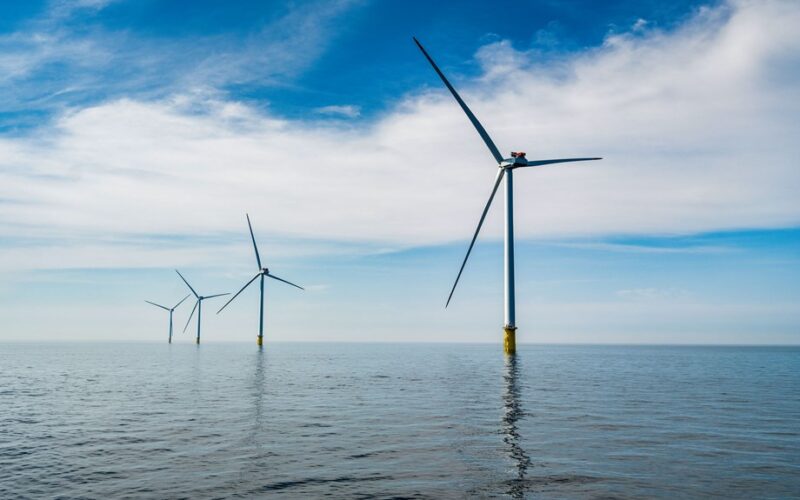
Northland Power Inc. (TSX:NPI) and ORLEN S.A. (WSE:PKN) have achieved first power from the Baltic Power offshore wind farm, delivering the first electricity generated from offshore wind into Poland’s national grid. The 1.1GW project, owned 49% by Northland Power Inc. and 51% by ORLEN S.A., is located in the Baltic Sea near Choczewo and Łeba and is moving through the final installation and commissioning phase. The milestone matters because Baltic Power is Poland’s first offshore wind farm and a key test of whether the country can turn Baltic Sea wind resources into dispatchable, grid-connected clean power infrastructure. Northland Power Inc. shares closed at C$22.21 on July 9, within a 52-week range of C$15.96 to C$25.99, while ORLEN S.A. recently traded around PLN139.44, within a 52-week range of PLN76.54 to PLN148.68, leaving both listed sponsors exposed to the next phase of execution rather than a simple milestone celebration.
Why does Baltic Power’s first electricity matter for Poland’s offshore wind strategy?
Baltic Power’s first electricity is strategically important because it shifts Poland’s offshore wind industry from construction promise to grid-connected reality. For years, Poland’s renewable transition has been discussed through targets, auctions, supply-chain plans and foreign partnerships. First power changes the conversation because electricity is now flowing from an offshore wind asset into the national system, even though the project is not yet fully commissioned.
The milestone is especially important because Poland has historically depended heavily on coal-fired electricity, making offshore wind a central part of its effort to diversify generation, reduce emissions and improve energy security. Baltic Power is expected to produce around 4 terawatt-hours of electricity annually once operational, enough to cover about 3% of current national electricity demand and supply more than 1.5 million households. That does not solve Poland’s power transition by itself, but it creates a working template for larger Baltic Sea buildout.
For Northland Power Inc. and ORLEN S.A., first power is also a credibility event. Offshore wind projects have faced cost inflation, supply-chain strain and political pressure across several markets, so reaching grid delivery helps separate executable projects from delayed pipelines. The next test is whether Baltic Power can complete remaining turbine installation, finish commissioning and reach commercial operations in the second half of 2026 without losing cost or schedule discipline.
How does the Baltic Power project change ORLEN’s role in Poland’s energy infrastructure market?
For ORLEN S.A., Baltic Power marks a significant step in its transformation from a conventional fuel and integrated energy group into a broader power infrastructure player. ORLEN S.A. still has major oil, gas, refining, petrochemical and retail exposure, but the company has been building a multi-energy profile in which renewables and low-carbon electricity become more central over time. Baltic Power is one of the clearest physical expressions of that shift because it connects ORLEN S.A. directly to large-scale offshore generation.
The strategic value is not only the electricity output. ORLEN S.A. gains project-development experience, supply-chain relationships, grid-integration knowledge and a stronger position in future Polish offshore wind auctions and partnerships. If Baltic Power moves smoothly into commercial operations, ORLEN S.A. can argue that it is not just sponsoring the Polish offshore wind market, but learning how to build and operate it.
The risk is that ORLEN S.A.’s energy-transition credibility will increasingly depend on delivery quality. A first-power milestone is positive, but investors and policymakers will watch turbine availability, operating costs, contract performance and the project’s ability to contribute reliable generation at scale. In that sense, Baltic Power is both an energy asset and a public exam for ORLEN S.A.’s capital allocation discipline. Conveniently for everyone involved, the exam has 76 very large turbines and no option to blame the printer.
Why is Northland Power’s 49% stake in Baltic Power important for its offshore wind portfolio?
Northland Power Inc.’s 49% stake matters because Baltic Power is a major addition to the company’s offshore wind platform at a time when offshore wind execution quality is under intense investor scrutiny. Northland Power Inc. already has operating offshore wind assets in Europe and a construction pipeline that includes major projects in Poland and Taiwan. Baltic Power reaching first power strengthens the company’s claim that it can move large offshore wind assets through complex construction phases with international partners.
The project is also important for portfolio scale. Once Baltic Power becomes operational, Northland Power Inc. expects its gross installed offshore wind capacity to rise materially. That matters for cash flow visibility, operating leverage and investor perception because offshore wind remains one of the company’s most strategically important asset classes. A successful commissioning process would support the idea that Northland Power Inc.’s offshore wind portfolio can generate long-life infrastructure returns rather than simply absorb construction capital.
However, Northland Power Inc. still has to manage the classic offshore wind balancing act: build large assets, protect returns, control debt exposure and avoid unpleasant surprises from weather, vessels, components or grid coordination. The company’s latest quarterly update showed higher offshore wind production supporting earnings, but also highlighted the broader moving parts across its portfolio. Baltic Power’s first power is therefore a positive step, but the market will care more about the transition from first electricity to stable commercial revenue.
What does the 25-year Contract for Difference mean for Baltic Power’s project economics?
Baltic Power’s 25-year Contract for Difference is central to the project’s bankability because it provides a long-term revenue stabilisation mechanism. Offshore wind requires large upfront capital commitments, and investors need visibility over future cash flows to justify construction risk. A Contract for Difference helps reduce merchant power-price exposure by giving the project a more predictable revenue framework, subject to the detailed mechanics of the agreement and market rules.
That structure is particularly important in Poland because the country is still building its offshore wind market. Mature offshore wind jurisdictions have deeper supply chains, operational track records and established regulatory pathways. Poland is developing those capabilities now, which makes revenue certainty more valuable for lenders, developers and suppliers. Baltic Power’s contract framework therefore supports not just one project, but confidence in the wider first wave of Polish offshore wind development.
There is still no free lunch, even in renewable power. Revenue support reduces price risk, but it does not eliminate construction risk, availability risk, maintenance cost risk or grid integration risk. If the project faces lower availability, delayed commissioning or higher operating costs, the long-term contract cannot magically spin the turbines faster. It improves the investment case, but execution remains the difference between policy design and shareholder value.
How does Baltic Power fit into Poland’s wider energy security and coal-reduction agenda?
Baltic Power fits into Poland’s energy security agenda because domestic offshore wind gives the country another source of large-scale electricity that is not tied to imported fossil fuels. Poland’s energy strategy has become more urgent since Europe’s wider energy-security shock, and the Baltic Sea offers one of the country’s most important renewable resources. Offshore wind cannot replace all firm generation needs, but it can materially reduce dependence on coal and imported fuels when paired with grid upgrades, storage, flexible generation and market reform.
The 4 terawatt-hour annual generation target is meaningful because Poland’s transition challenge is not abstract. Heavy industry, households, electrification and future data-driven demand all need dependable electricity. Offshore wind adds clean generation at scale, but the system also needs transmission capacity, balancing tools and market arrangements that can absorb variable output without creating congestion or curtailment.
Baltic Power also strengthens Poland’s industrial-policy narrative. Offshore wind creates demand for ports, cables, foundations, installation vessels, engineering services, maintenance capability and specialised labour. The supply-chain upside is real, but it requires consistency across future auctions and projects. One offshore wind farm starts the industry. A visible multi-project pipeline is what keeps factories, contractors and training programmes alive.
What execution risks remain before Baltic Power reaches commercial operations in 2026?
The most immediate execution risk is completion of installation and commissioning. Baltic Power has 54 of 76 turbines installed, which means substantial work remains offshore before full operational readiness. The remaining turbines, electrical systems, control systems, offshore infrastructure and onshore interface must all be completed and tested before commercial operations can begin. First power is a milestone, not the finish line.
Weather and vessel availability remain practical risks. Offshore wind construction depends on installation windows, marine logistics, specialist vessels and coordinated contractor performance. A project can be technically sound and still face delay if weather windows close or supply-chain sequencing becomes difficult. Poland’s first offshore wind farm also carries the added challenge of being an early market project, where local execution ecosystems are still maturing.
The second-order risk is investor expectations. A first-power announcement can lift confidence, but it also raises the pressure on the sponsors to deliver commercial operations on schedule and within original cost expectations. Northland Power Inc. has indicated that costs remain aligned with original expectations, which is encouraging. Investors will now watch whether that statement holds as the project moves through the last and often most operationally delicate phase of delivery.
How should investors read Northland Power and ORLEN stock sentiment after the milestone?
Northland Power Inc. stock closed at C$22.21 on July 9, up from a previous close of C$21.92 and within a 52-week range of C$15.96 to C$25.99. That places Northland Power Inc. closer to the upper end of its annual range, but still below prior highs. The market read is constructive rather than euphoric: investors appear to recognise the value of construction progress, while still pricing in offshore wind execution risk, debt sensitivity and portfolio-wide earnings variability.
ORLEN S.A. recently traded around PLN139.44, with the latest available market snapshot placing the stock within a 52-week range of PLN76.54 to PLN148.68. That puts ORLEN S.A. near the upper part of its annual trading band, although Baltic Power is only one element of a much larger integrated energy story. For ORLEN S.A., the market still has to weigh refining margins, fuel demand, gas, petrochemicals, regulated energy exposure, dividends and capital spending alongside renewable growth.
The investor takeaway is that the Baltic Power milestone is strategically meaningful but not a full valuation reset by itself. For Northland Power Inc., the project has greater proportional importance because offshore wind is central to its growth and operating profile. For ORLEN S.A., Baltic Power strengthens the energy-transition narrative but sits within a broader multi-energy portfolio. In both cases, the next equity-relevant question is whether first power becomes reliable commercial operation on schedule.
What does Baltic Power mean for future offshore wind competition in the Baltic Sea?
Baltic Power’s first power raises the competitive standard for offshore wind developers targeting the Baltic Sea. Poland’s first wave includes major international partnerships, and future projects will be judged against Baltic Power’s execution pace, technology choices, local supply-chain development and cost control. A project that reaches commercial operations smoothly can improve confidence across the market. A project that stumbles late can make policymakers and lenders more cautious.
The Baltic Sea is attractive because of wind resources, proximity to demand centres and the broader European push for energy diversification. However, offshore wind is no longer in the easy-money era. Developers now need stronger contract structures, disciplined procurement, realistic cost assumptions and credible grid timelines. Baltic Power’s use of 15MW turbines demonstrates modern technology adoption, but larger turbines also concentrate technical and availability risk because each unit represents more capacity.
For competitors such as PGE Polska Grupa Energetyczna, Ørsted, Equinor, Polenergia and RWE, Baltic Power’s progress creates both validation and pressure. It validates Poland as an investable offshore wind market, but it also gives the first movers a delivery benchmark. The next round of Polish offshore wind projects will need to show that Baltic Power was not an isolated success but the opening act of a scalable market.
Why could Baltic Power influence Poland’s offshore wind supply chain and industrial policy?
Baltic Power could influence Poland’s supply chain because first-mover projects often decide whether local industry gains real experience or remains a subcontracting footnote. Offshore wind supply chains are complex, involving foundations, cables, substations, turbines, ports, marine services, logistics, operations and maintenance. Poland’s ambition is not only to import offshore wind technology, but to build a domestic and regional industrial base around the sector.
The project’s construction phase already creates demand for Polish and international contractors. The longer-term opportunity lies in operations and maintenance, port services, grid infrastructure and future project replication. If Poland can build enough project visibility, suppliers may justify local capacity investment. If future auctions or permitting schedules become irregular, suppliers may hesitate, because factories and specialist workforces do not survive on enthusiasm alone.
For policymakers, Baltic Power is a proof point. It shows that Poland can bring offshore wind electricity into the grid, but it also exposes the next bottlenecks: transmission readiness, auction design, contract bankability, local content expectations and skills availability. The industrial-policy prize is significant, but only if the market pipeline is credible enough to support long-term investment across the value chain.
What are the key takeaways from Baltic Power reaching first electricity in Poland?
- Northland Power Inc. and ORLEN S.A. have achieved first power from Baltic Power, marking Poland’s first offshore wind electricity delivered to the national grid.
- Baltic Power is a confirmed construction and commissioning milestone, not an early-stage development announcement or speculative project concept.
- The 1.1GW offshore wind farm is owned 49% by Northland Power Inc. and 51% by ORLEN S.A., giving both listed companies direct exposure to the project’s execution outcome.
- The project has 54 of 76 turbines installed and remains on track for commercial operations in the second half of 2026.
- Baltic Power is expected to generate around 4 terawatt-hours annually once operational, equal to about 3% of Poland’s current electricity demand.
- The 25-year Contract for Difference improves revenue visibility and supports the project’s long-term bankability.
- Northland Power Inc. gains a major offshore wind scale-up opportunity, while ORLEN S.A. strengthens its transition from conventional energy toward multi-energy infrastructure.
- The main execution risks now are remaining turbine installation, commissioning, grid integration, weather windows, contractor coordination and operating availability.
- Poland gains a practical offshore wind proof point, but future market growth still depends on auctions, grid expansion, supply-chain depth and regulatory consistency.
- The expert assessment is that Baltic Power has moved Poland’s offshore wind market from theory to delivery, but the commercial test begins only when first power becomes steady power.
Discover more from Business-News-Today.com
Subscribe to get the latest posts sent to your email.