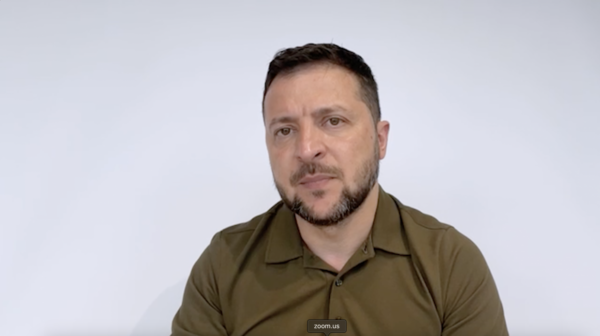



Former Peruvian President Ollanta Humala was released from prison on the evening of July 31, 2026, after Peru’s Constitutional Court annulled his 15-year money-laundering conviction and invalidated the criminal proceedings that had kept him detained since April 2025.
The Constitutional Court upheld a habeas corpus petition filed on behalf of Ollanta Humala and ruled that prosecutors and lower courts had violated the constitutional principles of legality and criminal typicity. The court concluded that criminal provisions introduced in November 2016 had been applied retroactively to campaign contributions allegedly received during the 2006 and 2011 presidential elections.
Ollanta Humala left the Barbadillo prison complex east of Lima after serving approximately 15 months of the sentence imposed on April 15, 2025. The facility was created to hold former Peruvian presidents and has become a symbol of the corruption and constitutional crises that have affected the country’s political leadership.
The former president and his wife, former First Lady Nadine Heredia, had been convicted of laundering illicit campaign contributions allegedly provided by Brazilian construction company Odebrecht, now known as Novonor, and sources connected to the former Venezuelan government.
The Constitutional Court did not merely suspend the sentence or order a new trial. The majority decision declared the proceedings against Ollanta Humala null from the preliminary investigation stage and instructed the responsible prosecution office to issue a definitive closure of the case.
The ruling represents one of the most consequential reversals in Peru’s long-running Lava Jato prosecutions. It raises new questions about how Peruvian prosecutors classified undeclared campaign contributions, whether anti-corruption investigations relied on criminal provisions that did not exist when the alleged conduct occurred and how similar cases involving political financing will now be treated.
Why did Peru’s Constitutional Court annul the entire criminal case against Ollanta Humala?
The Constitutional Court concluded that Ollanta Humala’s prosecution violated the principle that a person can be punished only under a criminal law that was already in force when the alleged conduct occurred.
Prosecutors accused Ollanta Humala and members of his political organisation of receiving and concealing campaign contributions during the 2006 and 2011 presidential elections. The prosecution treated the receipt and use of those funds as aggravated money laundering.
The Constitutional Court found that the specific form of money laundering used to support the conviction, known as patrimonial receipt, was incorporated into Peruvian law through Legislative Decree 1249 in November 2016.
The alleged campaign transactions occurred years earlier. The Constitutional Court therefore ruled that the later provision could not constitutionally be applied to conduct from 2006 or 2011.
This reasoning reflects the legal principle of lex praevia, which prevents governments from creating a criminal offence after conduct has occurred and then punishing the earlier conduct under the new law.
The court also found that the ordinary criminal proceedings had not identified and individualised the underlying offence from which the allegedly illicit funds originated. Money-laundering cases ordinarily require prosecutors to establish that funds came from criminal activity, even when a conviction for the original offence is not always necessary.
The Constitutional Court further determined that the criminal courts had not rationally demonstrated that Ollanta Humala knew or should have presumed that the campaign money had an illegal origin.
The receipt of money outside the formal banking system was not sufficient by itself to prove criminal intent. The Constitutional Court stated that knowledge and intention had to be supported by objective evidence rather than presumed solely from the manner in which the funds were delivered.
What happened after Ollanta Humala received the 15-year sentence in April 2025?
A Peruvian court convicted Ollanta Humala and Nadine Heredia on April 15, 2025, after a trial that began in 2022 and followed an investigation opened in 2016.
The court imposed 15-year prison sentences on both defendants. Ollanta Humala was taken into custody immediately and transferred to Barbadillo, where several former Peruvian leaders have been detained in separate criminal cases.
Nadine Heredia entered the Brazilian embassy in Lima shortly after the judgment. Brazil granted diplomatic asylum to Nadine Heredia and the couple’s youngest son, while the Peruvian government authorised safe passage for their departure.
Ollanta Humala maintained that the prosecution was politically motivated and that prosecutors had failed to prove that the campaign money originated from criminal activity.
The defence also argued that the sentence was excessive and that the legal theory used by prosecutors improperly converted political contributions into money laundering.
The Constitutional Court later considered a habeas corpus petition challenging the legality of the prosecution and the resulting imprisonment.
Five Constitutional Court magistrates supported the July 31 decision, while two magistrates issued separate opinions. The majority ordered the nullification of judicial and prosecutorial actions from the preliminary investigation stage.
The responsible criminal court was then required to resolve Ollanta Humala’s immediate legal position. The release order was implemented later on July 31, allowing the former president to leave prison before the start of August.
What campaign contributions were at the centre of the Ollanta Humala prosecution?
The case centred on allegations that Ollanta Humala’s political movement received undeclared funds for the 2006 and 2011 presidential campaigns.
Prosecutors alleged that Brazilian construction group Odebrecht provided approximately $3 million to support the successful 2011 campaign. Former Odebrecht executives had acknowledged financing political candidates across several Latin American countries.
The prosecution also alleged that funds connected to the Venezuelan government of former President Hugo Chávez supported Ollanta Humala’s unsuccessful 2006 campaign.
Ollanta Humala lost the 2006 presidential election to Alan García but won the presidency in 2011 after defeating Keiko Fujimori in the second-round vote. Ollanta Humala served as president from July 2011 until July 2016.
The money-laundering case focused on whether the contributions were criminal proceeds and whether the Humala campaign concealed their origin through false contributors, political-party accounts or other financial mechanisms.
The Constitutional Court did not find that every campaign contribution had been properly declared or ethically acceptable. Its decision focused on whether the alleged conduct satisfied the legal elements of the money-laundering offence applicable at the time.
That distinction is central to the judgment. Electoral-finance violations, undeclared contributions and money laundering are not automatically interchangeable legal concepts.
A campaign may receive money in violation of political-finance rules without the transaction necessarily constituting money laundering. Prosecutors must still prove the required criminal origin, concealment mechanism and knowledge specified by the law.
How does the ruling affect Nadine Heredia and the other defendants in the case?
The habeas corpus ruling was issued specifically in favour of Ollanta Humala, whose imprisonment created the immediate constitutional question before the court.
Nadine Heredia was convicted under the same criminal case and similar legal theory, but Nadine Heredia was not detained in Peru because she received diplomatic asylum and relocated to Brazil after the April 2025 verdict.
The Constitutional Court’s reasoning may strengthen legal efforts by Nadine Heredia and other defendants seeking to overturn their convictions or close related proceedings.
However, the release of Ollanta Humala does not automatically establish that every procedural order involving every defendant has been separately cancelled without further judicial action.
Each defendant’s position may depend on the scope of the judgment, the charges applied, the evidence presented and petitions filed before the appropriate courts.
Peruvian prosecutors and judges will need to interpret how the nullification of the proceedings against Ollanta Humala affects the wider case file. The court ordered the prosecution office responsible for Ollanta Humala’s case to issue a definitive dismissal of the preliminary investigation against him.
The ruling may also affect financial penalties, asset seizures and restrictions that resulted from the original prosecution. Those consequences will require implementation orders from the relevant judicial authorities.
Nadine Heredia’s diplomatic and legal situation remains particularly sensitive because she is residing outside Peru under asylum granted by Brazil. Any change in her conviction, arrest status or asylum basis would require separate decisions involving Peruvian courts and Brazilian authorities.
Why does the Ollanta Humala decision matter for Peru’s wider Lava Jato prosecutions?
The Lava Jato investigation exposed extensive bribery and political-financing networks linked to Odebrecht and other Brazilian construction companies across Latin America.
Peru became one of the countries most deeply affected by the scandal. Investigations reached former presidents, presidential candidates, ministers, political parties and senior business figures.
Some cases involved allegations of direct bribes exchanged for public-works contracts. Other prosecutions focused on undeclared campaign contributions and the alleged concealment of political funding.
The Constitutional Court’s decision draws a legal boundary between those categories. Evidence that a company financed a campaign does not automatically prove that the recipient committed money laundering under the criminal law then in force.
The ruling follows similar legal reasoning used in the separate campaign-financing case involving Keiko Fujimori. That proceeding also raised questions about applying later money-laundering rules to political contributions received before the relevant provisions existed.
The decision may encourage additional defendants to file constitutional petitions arguing that their prosecutions violated legality, typicity or the prohibition against retroactive criminal punishment.
This does not mean that every Lava Jato conviction will collapse. Cases involving proven bribery, public contracts, identifiable criminal proceeds or conduct occurring after the relevant laws took effect may remain legally distinct.
The broader consequence is that prosecutors may need to reassess whether they expanded money-laundering law too aggressively when pursuing political-finance cases.
Does the Constitutional Court ruling clear Ollanta Humala of every allegation?
The ruling nullifies the criminal proceeding and removes the legal foundation for Ollanta Humala’s imprisonment in this case.
It does not constitute a factual declaration that every contribution was properly reported, that campaign-finance rules were fully respected or that every allegation made during the investigation was false.
The court’s central finding concerns constitutional criminal law. The conduct used to support the conviction did not fit the applicable offence without retroactively applying provisions enacted later.
The decision also found insufficient legal identification of the underlying criminal source and inadequate proof that Ollanta Humala knew the funds were illicit.
Those findings are substantial because they prevent the state from continuing the same criminal prosecution under the invalidated theory.
Political and historical debate over campaign financing may continue. Former Odebrecht executives, political operatives and witnesses provided extensive testimony about the company’s relationships with Peruvian candidates and parties.
The legal question is narrower than the political question. Courts determine whether prosecutors proved a defined criminal offence under valid law, not whether campaign financing met the highest ethical or transparency standards.
Ollanta Humala can now state that the conviction and process were annulled. It would nevertheless be inaccurate to describe the ruling as proof that no undeclared campaign contributions were received.
What does the decision reveal about Peru’s judiciary and anti-corruption system?
The case demonstrates the tension between aggressive anti-corruption enforcement and constitutional protections limiting criminal power.
Peru’s prosecutors faced strong public pressure to investigate political leaders after Odebrecht admitted widespread bribery and campaign financing. Failure to act could have reinforced public belief that powerful figures enjoyed immunity.
The Constitutional Court found that enforcement crossed a constitutional boundary when later criminal provisions were applied to earlier campaign activity.
The result exposes the cost of a flawed prosecution. Ollanta Humala spent approximately 15 months serving a sentence that the country’s highest constitutional tribunal later found was based on an invalid criminal process.
Ollanta Humala and Nadine Heredia had also spent time in pretrial detention between 2017 and 2018 during the same investigation.
The ruling may increase criticism of the Public Ministry and ordinary judiciary for allowing the case to continue for years without resolving the legality and typicity questions earlier.
At the same time, the decision may trigger concern that constitutional litigation is being used to dismantle major corruption cases after lengthy investigations and trials.
Restoring confidence will require courts to publish clear legal reasoning, apply the same standards consistently and distinguish genuine constitutional defects from procedural challenges intended only to delay accountability.
Prosecutors will need stronger case design, clearer identification of underlying crimes and greater discipline when selecting charges. High-profile convictions that are later annulled can weaken trust in anti-corruption enforcement as severely as a failure to prosecute.
Could Peruvian prosecutors reopen or replace the case against Ollanta Humala?
The Constitutional Court ordered the nullification of the proceedings and directed the responsible prosecution office to definitively archive the preliminary investigation.
That language creates a substantial barrier to reviving the same money-laundering allegations under the legal theory rejected by the court.
Prosecutors cannot avoid the constitutional ruling by simply restarting an identical case or reapplying the criminal provision introduced in 2016 to earlier conduct.
Any new investigation would require a legally distinct offence, evidence that has not already been invalidated and compliance with statutes of limitation and protections against repeated prosecution.
The Constitutional Court’s findings concerning retroactivity and criminal intent would remain binding on lower authorities implementing the judgment.
Civil, electoral or administrative questions may be treated differently from criminal money laundering, but the passage of time and previous proceedings may limit available options.
The immediate legal consequence is final closure rather than retrial. Ollanta Humala is free, the 15-year conviction no longer stands and the prosecution office must complete the formal dismissal ordered by the Constitutional Court.
The future significance of the case will therefore extend beyond Ollanta Humala. It will influence how Peru investigates undeclared campaign financing and how courts define the boundary between political irregularities and laundering criminal proceeds.
What are the key takeaways from the Constitutional Court ruling that freed Ollanta Humala?
- Former Peruvian President Ollanta Humala was released from Barbadillo prison on July 31, 2026, after the Constitutional Court annulled his 15-year money-laundering conviction and invalidated the criminal proceedings against him.
- The Constitutional Court found that prosecutors and lower courts had retroactively applied a form of the money-laundering offence introduced through Legislative Decree 1249 in November 2016 to campaign contributions allegedly received in 2006 and 2011.
- The majority ruling concluded that the prosecution failed to identify the underlying criminal offence from which the disputed funds originated and did not objectively prove that Ollanta Humala knew or presumed the money had an illicit source.
- Ollanta Humala and former First Lady Nadine Heredia were convicted in April 2025 over alleged campaign funding from Odebrecht and sources connected to the former Venezuelan government, with both originally receiving 15-year prison sentences.
- Nadine Heredia received diplomatic asylum from Brazil and left Peru after the original conviction, while the July 31 habeas corpus judgment directly resolved Ollanta Humala’s imprisonment and criminal proceeding.
- The Constitutional Court ordered prosecutors to issue a definitive closure of the preliminary investigation, creating a substantial legal barrier to reopening the same money-laundering case under the rejected theory.
- The ruling may influence other Peruvian campaign-finance prosecutions by requiring courts to distinguish undeclared political contributions from bribery and money laundering and to apply only criminal provisions in force when the conduct occurred.
- The case highlights the institutional cost of defective anti-corruption prosecutions because Ollanta Humala spent about 15 months serving a conviction that Peru’s highest constitutional tribunal ultimately declared invalid.
Discover more from Business-News-Today.com
Subscribe to get the latest posts sent to your email.