

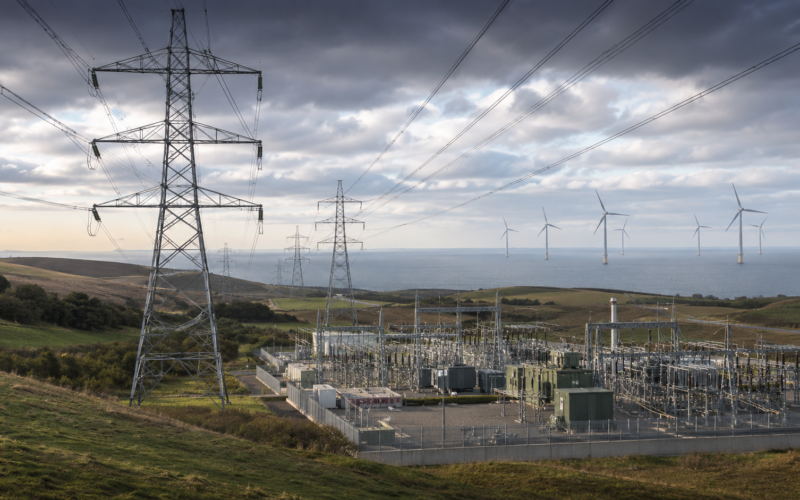
NTPC Limited (NSE: NTPC, BSE: 532555) has set out a cumulative investment programme of approximately ₹16.86 lakh crore through FY2037 as India’s largest power producer prepares to expand from roughly 91 GW of current group capacity to an aspirational 244 GW by 2037, excluding energy storage. Chairman and Managing Director Gurdeep Singh told shareholders at NTPC’s 50th annual general meeting that the company first aims to reach 149 GW by 2032, including 60 GW of renewable capacity, before adding another 95 GW over the following five years. The capital programme spans thermal generation, hydro and pumped storage, solar and wind, battery storage, captive mining and nuclear power, making the roadmap a diversification strategy rather than a straightforward renewable transition.
The scale is difficult to overstate. ₹16.86 lakh crore equals ₹16.86 trillion of cumulative proposed capital deployment over roughly the next decade, while moving from around 91 GW to 244 GW requires approximately 153 GW of additional generation capacity before accounting for storage. The targeted 2037 fleet would be roughly 2.7 times NTPC’s current size and more than 5.6 times the 43.1 GW capacity the company operated in FY2014.
How quickly does NTPC need to build to reach 244GW?
The first milestone requires capacity to increase from around 91 GW today to 149 GW by 2032, an addition of roughly 58 GW. The second stage requires another 95 GW between 2032 and 2037 if the aspirational 244 GW target is to be reached. Those figures imply that NTPC’s annual commissioning rate will need to accelerate significantly compared with much of its historical expansion.
Execution cannot depend on one technology because the company is intentionally spreading investment across several generation categories. Renewable capacity is targeted at 60 GW by 2032, while coal, gas-linked flexibility, hydroelectric generation, pumped storage and nuclear power remain part of the long-term mix.
The approach reflects the physical requirements of India’s power system. Renewable generation can supply rapidly growing amounts of low-variable-cost electricity, but the grid also requires power during evening peaks and periods of low wind or solar availability, preserving a commercial role for storage and dispatchable generation.
How much of NTPC’s 2032 portfolio will be renewable?
If NTPC reaches 149 GW in 2032 with 60 GW of renewable capacity, renewables would represent approximately 40% of nameplate capacity. That does not mean they would produce 40% of annual electricity because solar and wind operate at lower capacity factors than coal, nuclear or some hydro assets, but it demonstrates how materially the physical portfolio would shift from NTPC’s historically thermal-dominated structure.
NTPC Green Energy Limited is the primary listed growth platform for much of that expansion. Renewable generation from the green-energy portfolio reached 14.6 billion units during FY26, more than double the previous year, according to the parent company.
The next challenge is converting development pipelines into actual commissioned capacity quickly enough to remain on the 60 GW trajectory. Land, transmission connectivity, equipment procurement and project financing will determine whether renewable additions keep pace with the targets rather than remaining concentrated in awarded or under-construction portfolios.
Why is NTPC planning around 30GW of nuclear capacity?
NTPC now aims to contribute around 30 GW toward India’s national objective of reaching 100 GW of nuclear generation by 2047. The company is building nuclear capability through wholly owned NTPC Parmanu Urja Nigam Limited and Anushakti Vidhyut Nigam Limited, its joint venture with Nuclear Power Corporation of India Limited.
Its immediate focus includes the 2.8 GW Mahi Banswara nuclear project in Rajasthan, while studies or discussions are progressing across another 34 sites in 13 states and multiple technologies. A 30 GW nuclear portfolio would be enormous relative to India’s current operating nuclear base and would move NTPC well beyond its historic identity as a thermal utility.
The economics are materially different from renewable development. Nuclear stations require very high upfront capital, long construction periods and complex regulatory oversight but can generate low-carbon round-the-clock electricity for decades once operating.
That makes execution schedule particularly important. Even modest delays on multi-gigawatt nuclear projects can tie up substantial capital before revenue begins, meaning the balance between project risk and long-term system value will be central to NTPC’s 2037 strategy.
Why does storage sit outside the 244GW target?
NTPC explicitly described the 244 GW aspiration as generation capacity excluding storage. The company separately intends to build both battery energy storage and pumped-storage capability and wants storage to become a business in its own right rather than simply equipment attached to solar or wind projects.
That distinction makes the investment plan larger than the generation number alone suggests. Storage projects can require billions of rupees of incremental capital while contributing no conventional generation MW because they move electricity through time rather than create primary energy.
NTPC is also evaluating longer-duration technologies including redox-flow batteries and carbon-dioxide-based storage. Those technologies remain much less mature commercially than lithium-ion batteries or pumped hydro, so future capital allocation will depend on performance, cost and domestic supply chains.
Is NTPC abandoning coal as renewables and nuclear expand?
No. NTPC’s strategy explicitly retains thermal power as a major pillar of the system while seeking to make the fleet more flexible. Coal plants achieved a 72.04% plant load factor during FY26, while NTPC’s captive mines produced 48.65 million tonnes of coal and supplied about 18% of the group’s requirements.
The company is even examining whether sub-critical units of up to 250 MW can operate in two-shift mode, allowing thermal plants to reduce output or shut down during periods of strong renewable generation and return when evening demand rises. This type of operational flexibility could become increasingly important as solar capacity grows.
The investment mix therefore reflects a reliability strategy rather than a simple substitution model. NTPC is expanding renewables aggressively while also investing in fuel security, coal flexibility and nuclear power, essentially betting that India’s demand growth will be large enough to require growth across several technologies simultaneously.
Can NTPC’s balance sheet support ₹16.86tn of investment?
NTPC reported consolidated FY26 profit after tax of ₹27,546 crore, up 15%, while group EBITDA increased to ₹60,564 crore and net worth reached approximately ₹2.03 lakh crore. The consolidated debt-equity ratio improved slightly to 1.32 from 1.34 despite heavy investment, and the weighted average interest rate on borrowings was 5.98%.
Receivable days also improved to 15 days at March 2026 from 31 days a year earlier, strengthening cash conversion and reducing working-capital pressure. Those figures provide a stronger starting point for the capital cycle than NTPC had during periods when distribution-company receivables were substantially higher.
The sheer size of the future programme means internal cash flow will not fund everything, however. NTPC will need continuous access to domestic and international bonds, bank lending, project-level financing, partnerships and potentially capital recycling through subsidiaries.
Management acknowledged that leverage, returns and shareholder distributions must remain balanced as investment accelerates. That financial discipline will become increasingly visible as annual capital expenditure rises toward levels required to deliver the 2032 and 2037 capacity targets.
What other businesses are being built around NTPC’s generation fleet?
Mining is becoming a larger internal fuel-security platform, while NTPC Vidyut Vyapar Nigam Limited traded 46.52 billion units of electricity during FY26. NTPC has also established its first international subsidiary in Mauritius as part of a plan to take project-development capabilities beyond India.
The company is simultaneously developing a coal-gasification-based synthetic natural gas project with capacity of 575,000 tonnes annually, which management says would substitute imported natural gas once operating.
These businesses make the ₹16.86 trillion programme broader than a power-plant construction plan. NTPC is attempting to control or participate in more of the surrounding energy chain, including mining, storage, trading, fuels, nuclear and international development.
Why is the 2037 target an execution story rather than simply a capacity story?
Adding 153 GW of generation over roughly 11 years requires land acquisition, environmental and nuclear approvals, transmission connections, equipment manufacturing, financing and construction at a scale few utilities globally attempt simultaneously. Each technology carries a different bottleneck: coal plants require fuel and emissions compliance, renewables require land and grid connections, pumped storage requires geography and lengthy approvals, while nuclear projects carry the longest construction and regulatory timelines.
The challenge is magnified because NTPC must maintain its existing fleet while building the new one. Current operations remain essential to meeting Indian electricity demand, so capital and managerial resources cannot simply be transferred wholesale from older assets into the growth portfolio.
That makes project sequencing as important as aggregate ambition. An integrated schedule in which renewable, storage, thermal and nuclear capacity arrives in complementary phases is more valuable to the power system than hitting one headline GW target while other supporting infrastructure falls behind.
How are investors pricing NTPC’s huge capital programme?
NTPC shares closed around ₹329 to ₹331 on August 27, falling roughly 1% to 2% during a broadly weak Indian market. The stock remained about 20% below its April 27 52-week high of ₹414.40.
The subdued valuation relative to the annual high illustrates the tension surrounding large utility growth plans. Higher capacity can expand regulated and contracted earnings for decades, but ₹16.86 trillion of cumulative investment creates significant financing, execution and return-on-capital risk before all of that capacity begins producing revenue.
NTPC has already demonstrated its ability to expand from 43.1 GW in FY14 to about 91 GW today. The next stage is categorically larger. Reaching 244 GW would transform the company from a dominant Indian thermal generator into a diversified electricity infrastructure group spanning coal, solar, wind, hydro, batteries, pumped storage and nuclear power. The market ultimately will not reward the 244 GW number itself; it will reward how much of that capacity NTPC can build on schedule while preserving balance-sheet strength and acceptable returns.
Discover more from Business-News-Today.com
Subscribe to get the latest posts sent to your email.