




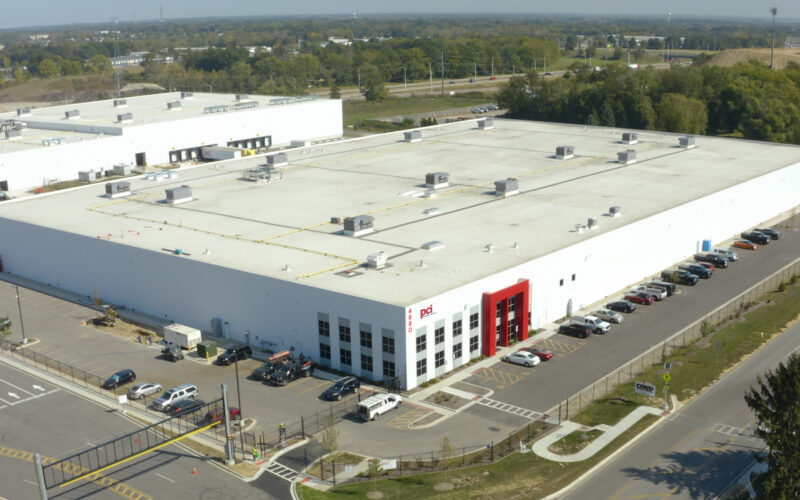
PCI Pharma Services is expanding its United States sterile fill-finish and drug-device combination manufacturing platform as pharmaceutical companies reassess supply-chain resilience, injectable capacity, and commercialization risk across biologics and complex therapies. The Philadelphia-headquartered contract development and manufacturing organization is backing the push with infrastructure investments exceeding $1 billion across its United States and European operations, including a $100 million San Diego project focused on ready-to-use prefilled syringes and cartridges. The announcement matters because sterile injectable manufacturing has become one of the most strategically constrained parts of the pharmaceutical outsourcing chain, especially for biologics, peptides, oligonucleotides, mRNA-based products, and combination therapies. For drug developers, PCI Pharma Services is not merely adding capacity; it is positioning itself as a clinical-to-commercial infrastructure partner at a time when geography, compliance history, speed, and device integration are increasingly deciding outsourcing mandates.
Why is PCI Pharma Services expanding sterile fill-finish capacity in the United States now?
PCI Pharma Services’ latest investment wave lands at a moment when drug manufacturers are placing far greater value on domestic capacity, redundancy, and control over late-stage manufacturing risk. For years, pharmaceutical outsourcing decisions were heavily shaped by cost, specialized technical capability, and access to global networks. Those factors still matter, but the post-pandemic manufacturing cycle has added another layer: companies now want supply chains that can withstand border disruption, geopolitical uncertainty, regulatory pressure, and sudden demand surges.
Sterile fill-finish has become particularly sensitive because it sits close to the final stage of drug production. A biologic, peptide, mRNA product, or complex injectable therapy can clear years of research, formulation, and clinical development, only to face launch delays if aseptic filling, lyophilization, inspection, or packaging capacity is unavailable. That makes fill-finish less of a back-office manufacturing function and more of a commercial launch risk variable. PCI Pharma Services appears to be reading that shift correctly.
The company’s emphasis on high-speed isolator filling lines, ready-to-use prefilled syringes, cartridges, vials, drug-device assembly, and automated visual inspection suggests it is targeting the areas where pharmaceutical sponsors are likely to see the strongest capacity pressure. Injectable drugs are becoming more sophisticated, patient-administered therapies are expanding, and biologics pipelines increasingly require flexible presentation formats. For a contract development and manufacturing organization, the opportunity is not just to fill more units; it is to reduce friction between development, manufacturing, device assembly, inspection, packaging, and launch.

How does the $100 million San Diego project strengthen PCI Pharma Services’ injectable drug platform?
The $100 million San Diego project is the most visible anchor of the investment plan because it directly addresses demand for prefilled syringes and cartridges. The new high-speed isolator filling line is scheduled to become operational in the first half of 2028 and is expected to more than double the site’s existing syringe and cartridge filling capacity. That timeline is important. PCI Pharma Services is not solving a one-quarter capacity issue; it is building for the next wave of injectable drug launches likely to emerge from biologics, metabolic disease, oncology, immunology, rare disease, and advanced therapeutic pipelines.
San Diego already matters within PCI Pharma Services’ network because the campus supports more than 45 FDA-approved products and handles large-scale aseptic filling for prefilled syringes and cartridges. The site also has experience in specialized modalities such as oligonucleotides, peptides, complex formulations, lyophilized injectables, nanoparticles, mRNA, monoclonal antibodies, proteins, and highly potent products. That mix is strategically useful because drug pipelines are becoming more technically demanding, not less.
The deeper point is that the San Diego investment extends PCI Pharma Services’ value proposition from capacity to confidence. Pharmaceutical companies outsourcing injectable production are not only buying equipment access. They are buying regulatory credibility, manufacturing know-how, validated processes, technical problem-solving, and the ability to move from clinical supply to commercial launch without reconfiguring the entire partner ecosystem. If the new San Diego line scales as planned, PCI Pharma Services could become more attractive to sponsors that want late-stage and commercial manufacturing optionality in the United States.
What does the Bedford sterile vial and lyophilization investment signal about CDMO competition?
The Bedford, New Hampshire campus gives PCI Pharma Services a second major lever in the United States sterile manufacturing race. The site is commissioning a GMP-ready bespoke isolator vial and lyophilization line designed for batch sizes of up to 300,000 vials at 400 units per minute, with annual capacity of 33 million vials. The campus is also expected to commission a customer-dedicated high-potent sterile fill-finish line, reinforcing the company’s push into more technically complex segments.
This is strategically significant because vial filling and lyophilization remain critical for many injectable therapies that cannot be supplied in simpler formats. Lyophilization can extend stability, support sensitive biologics, and improve product handling, but it also adds manufacturing complexity. Companies that can combine high-throughput vial filling with lyophilization, inspection, and regulatory execution are likely to command strong interest from sponsors with fragile, high-value, or difficult-to-manufacture products.
The Bedford investment also shows how CDMO competition is shifting from generic capacity expansion to differentiated capability clusters. It is no longer enough to say a facility can manufacture injectables. The more important question is whether it can support highly potent compounds, biologics, advanced formulations, larger batch sizes, inspection requirements, and future commercial scale. PCI Pharma Services is using Bedford to signal that it wants to compete in those higher-value segments rather than only in commoditized sterile production.
Why do automated visual inspection systems matter for sterile fill-finish scale and quality control?
PCI Pharma Services’ investment in automated visual inspection systems across San Diego and Bedford may sound less headline-friendly than new filling lines, but it is highly consequential for sterile manufacturing economics. The company’s United States automated visual inspection infrastructure is described as supporting more than 70 million prefilled syringes and cartridges and 40 million vials per year. For pharmaceutical companies, that matters because inspection capacity can become a hidden bottleneck when fill-finish volumes rise.
Automated visual inspection plays a critical role in detecting particulate matter, cosmetic defects, container issues, and quality deviations in injectable products. As batch sizes increase and product complexity grows, manual inspection alone becomes difficult to scale efficiently. Automated systems can improve consistency, throughput, and documentation, although they still require robust validation, skilled oversight, and regulatory discipline.
The strategic implication is that PCI Pharma Services is not only investing in the front end of filling capacity but also in the quality-control infrastructure needed to make that capacity commercially usable. In sterile drug manufacturing, speed without quality systems is not an advantage. It is a regulatory headache waiting for a calendar invite. By pairing fill-finish expansion with automated inspection, PCI Pharma Services is trying to show pharmaceutical customers that its capacity growth is matched by release-readiness and compliance infrastructure.
How could drug-device combination assembly reshape PCI Pharma Services’ commercial role?
The expansion into drug-device combination assembly and packaging may be just as important as the sterile fill-finish investments. PCI Pharma Services is building out autoinjector and combination-device assembly infrastructure at its Philadelphia, Pennsylvania and Rockford, Illinois campuses, with upgrades coming online over the next six months. In 2027, the company expects to add a third autoinjector line, lifting United States autoinjector and device assembly capacity to more than 250 million units annually.
This is a powerful signal because the injectable drug market is increasingly moving toward patient-friendly delivery formats. Prefilled syringes, safety devices, cartridges, and autoinjectors are not just packaging decisions; they influence adherence, prescribing comfort, payer acceptance, lifecycle management, and competitive differentiation. For therapies in chronic disease, immunology, metabolic disorders, and specialty care, delivery format can affect whether a product feels like a hospital-administered therapy or a scalable outpatient treatment.
By expanding both sterile fill-finish and device assembly, PCI Pharma Services is trying to capture more of the value chain. That could make the company more attractive to sponsors that want fewer handoffs between filling, inspection, labeling, safety-device assembly, secondary packaging, cold-chain handling, and commercial launch. The risk, however, is execution complexity. Device assembly introduces its own validation, tooling, supplier coordination, and quality requirements. If PCI Pharma Services manages that complexity well, the company could deepen customer relationships. If timelines slip, the very integration it is selling could become a pressure point.
What role do Philadelphia and Rockford play in PCI Pharma Services’ packaging strategy?
Philadelphia and Rockford are central to PCI Pharma Services’ United States packaging strategy because they function as packaging centers of excellence with capacity across oral solid dose products, injectable products, cold-chain storage, blister packaging, bottles, and vials. Available annual capacity across the two sites includes 40 million blister units, 70 million bottles, and 75 million vials. That gives the company a broader commercial support platform beyond sterile manufacturing alone.
For pharmaceutical customers, packaging is not a cosmetic afterthought. It affects serialization, cold-chain integrity, market readiness, labeling compliance, distribution efficiency, and patient usability. When a drug company is preparing for clinical studies, regulatory filing, launch, or market expansion, packaging capacity can become a surprisingly material constraint. This is especially true for biologics and injectable therapies that require temperature control, device coordination, and market-specific labeling.
PCI Pharma Services’ packaging footprint therefore strengthens the company’s claim to end-to-end support. The company can position itself as a partner that helps sponsors move from development to commercial supply without forcing them to stitch together multiple vendors at every step. That does not eliminate outsourcing risk, but it can simplify accountability. In an industry where delayed launch execution can cost more than the manufacturing contract itself, simplification has economic value.
Why are the Bedford and León development centers important for early-stage pharmaceutical customers?
PCI Pharma Services’ Development Centers of Excellence in Bedford, New Hampshire and León, Spain add an important early-stage layer to the investment story. These centers are expected to support lyophilization, formulation, analytical work, drug-device combination assets, long-acting injectables, and ophthalmic products. Bedford is expected to become operational in May, with León following in June, creating a transatlantic development platform for both small molecule and biologic programs.
The strategic value here is continuity. Drug developers often face a painful transition between formulation development, clinical manufacturing, scale-up, device selection, and commercial production. Each transition can create delays, comparability questions, process-transfer risk, and documentation burdens. A CDMO that can support development work while also offering downstream sterile fill-finish, device assembly, inspection, and packaging may reduce that friction.
The León center also matters because PCI Pharma Services is not making this a United States-only story. While the company is clearly leaning into United States supply-chain resilience, it is maintaining a broader global manufacturing and development network. That balance may appeal to multinational pharmaceutical companies that want domestic United States options without losing European development support, regulatory flexibility, or global launch planning capability.
What are the main execution risks behind PCI Pharma Services’ expansion strategy?
The biggest risk in PCI Pharma Services’ expansion strategy is not demand. Demand for sterile fill-finish, injectable drug-device combinations, and resilient supply chains appears structurally strong. The harder challenge is execution across timelines, equipment commissioning, validation, workforce readiness, regulatory expectations, and customer onboarding. A high-speed isolator line that becomes operational in 2028 still needs to move through qualification, process validation, client integration, and commercial utilization before it fully contributes to strategic value.
Workforce availability is another risk. Advanced sterile manufacturing requires specialized operators, engineers, quality professionals, validation teams, formulation experts, and regulatory personnel. Equipment investment is visible; talent depth is less visible but equally important. If the broader industry is expanding sterile capacity at the same time, competition for experienced technical staff could intensify.
There is also a utilization risk. Large-scale capacity additions work best when customer pipelines, commercial launches, and long-term commitments align with facility readiness. PCI Pharma Services’ phased approach across San Diego, Bedford, Philadelphia, Rockford, and León suggests the company is trying to manage that risk through diversified demand pools. Even so, the economics of CDMO expansion depend on converting infrastructure into contracted, validated, revenue-generating programs. That is where strategy meets the less glamorous but decisive world of batch records, audits, and production calendars.
How does PCI Pharma Services’ investment reflect the broader future of pharmaceutical outsourcing?
PCI Pharma Services’ expansion reflects a broader shift in pharmaceutical outsourcing from transactional manufacturing to strategic infrastructure partnership. Large pharmaceutical companies and emerging biotechs are both under pressure to move faster, reduce launch risk, support complex modalities, and protect supply continuity. That is pushing CDMOs to offer more integrated platforms, not just isolated services.
The strongest CDMO models are likely to combine technical specialization with geographic resilience, regulatory credibility, flexible capacity, and commercial-scale execution. PCI Pharma Services’ investment in sterile fill-finish, lyophilization, automated inspection, autoinjector assembly, packaging, development centers, and global site coverage fits that direction. The company is effectively betting that customers will value integrated capability more than fragmented outsourcing across multiple vendors.
For the industry, the move also underscores how injectable therapies are becoming a strategic battleground. As biologics, complex injectables, long-acting formulations, ophthalmic products, and self-administered therapies grow, the companies that control reliable fill-finish and device delivery infrastructure may gain influence over launch timelines and product economics. PCI Pharma Services is not the only CDMO chasing that opportunity, but its latest investment package shows how quickly the competitive bar is rising.
Key takeaways on PCI Pharma Services’ sterile fill-finish expansion and CDMO strategy
- PCI Pharma Services is using more than $1 billion in infrastructure investments to position itself around pharmaceutical supply-chain resilience, sterile injectables, and drug-device delivery.
- The $100 million San Diego expansion targets ready-to-use prefilled syringes and cartridges, a high-demand area as biologics and self-administered therapies grow.
- The Bedford vial and lyophilization investment strengthens PCI Pharma Services’ role in complex sterile manufacturing, including high-potent and technically demanding products.
- Automated visual inspection capacity is strategically important because inspection can become a bottleneck as sterile fill-finish volumes increase.
- The Philadelphia and Rockford device assembly upgrades could move PCI Pharma Services higher up the value chain by linking fill-finish with autoinjector and safety-device platforms.
- Packaging capacity across blister units, bottles, vials, and cold-chain products supports PCI Pharma Services’ clinical-to-commercial positioning.
- The Bedford and León development centers create earlier entry points for customers and may reduce friction between formulation, clinical supply, scale-up, and launch.
- The main execution risks include validation timelines, skilled labor availability, facility utilization, and coordination across multiple sites and technology platforms.
- The expansion reflects a broader CDMO industry shift from contract manufacturing toward integrated infrastructure partnerships.
- If PCI Pharma Services executes well, its United States and European network could become more attractive to pharmaceutical companies seeking resilient, technically advanced launch support.
Discover more from Business-News-Today.com
Subscribe to get the latest posts sent to your email.


