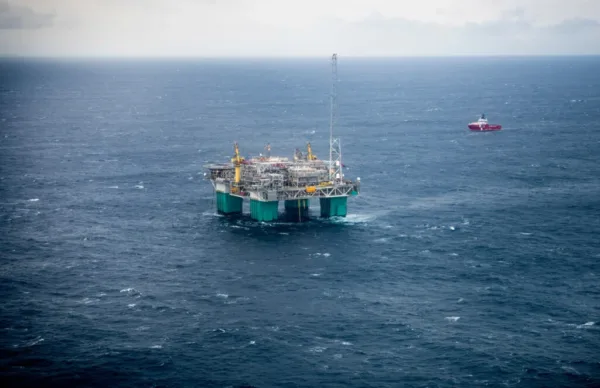




Panoro Energy ASA (OSE: PEN) has agreed to acquire an indirect 9.09% interest in the producing Block CI-27 offshore Côte d’Ivoire from DNO ASA, adding approximately 3,300 barrels of oil equivalent per day and accelerating a transformation that has already more than doubled the scale of the African exploration and production company’s portfolio. Panoro presents the transaction at a US$80 million cash-free, debt-free consideration with an effective date of January 1, 2025, while DNO describes total consideration at closing economics of US$86.5 million, comprising US$65.1 million of cash and seven million newly issued Panoro shares. The acquired interest carries 9.4 million boe of net proved and probable reserves and 5 million boe of 2C contingent resources, with production approximately 95% weighted toward gas sold into Côte d’Ivoire’s domestic power market.
The deal follows Panoro’s June completion of a separate acquisition from Kosmos Energy that increased its interest in Equatorial Guinea’s producing Block G from 14.25% to 54.625%. Panoro paid US$127 million at completion after customary adjustments for that transaction, and its existing business is now producing approximately 17,500 barrels per day. Adding the Côte d’Ivoire interest on a pro forma basis takes current group production to around 20,800 boepd before additional organic projects targeted for 2027.
Why do Panoro and DNO quote different values for the same Côte d’Ivoire deal?
The US$80 million figure disclosed by Panoro represents transaction consideration on a cash-free and debt-free basis at the January 1, 2025 effective date, while DNO’s US$86.5 million figure reflects the seller’s total consideration presentation, including US$65.1 million in cash and the market-linked value attributed to seven million Panoro shares. The figures therefore should not be treated as contradictory prices without considering effective-date adjustments and the different accounting perspectives of buyer and seller.
Panoro plans to finance the transaction through equity and debt, issuing the seven million shares directly to DNO while funding the cash portion partly through a fully placed US$50 million senior unsecured bond. This means the transaction increases both Panoro’s share count and its debt obligations rather than being funded exclusively from existing cash.
For DNO, the exit monetises an asset that has become relatively small after its wider North Sea expansion. DNO said the Côte d’Ivoire investment generated an estimated annualised internal rate of return of approximately 24% since it entered the country in October 2022. DNO’s net production has grown toward approximately 150,000 boepd, making the 3,300 boepd CI-27 interest less strategically important to the seller even as it remains highly material to Panoro.
What does the CI-27 acquisition add to Panoro’s production and reserves?
Panoro estimates the acquisition will increase group production by approximately 23% and group 2P reserves by about 11%. The interest being acquired produced 3,334 boepd during the first half of 2026, while effective-date reserves were 9.4 million boe on a 2P basis plus another 5 million boe of 2C resources.
The acquired barrels are substantially different from Panoro’s existing oil-dominated portfolio because approximately 95% of CI-27 production is gas. Gross field production during 2025 averaged about 195 million standard cubic feet per day of gas plus 1,380 barrels per day of liquids, equivalent to roughly 36,000 boepd. The gas is sold under long-term contracts into Côte d’Ivoire, where most volumes support electricity generation in and around Abidjan, while liquids are sold to a domestic refinery.
Management indicated that contractual gas pricing is around US$6.50 per million British thermal units and largely de-linked from oil prices, with a take-or-pay component covering approximately 140 million standard cubic feet per day. That pricing structure adds revenue diversification to a company whose existing earnings are heavily influenced by crude-oil prices and lifting schedules.
How much has Panoro Energy already changed before the Côte d’Ivoire deal closes?
Panoro’s H1 results show the effect of the earlier Equatorial Guinea acquisition even before CI-27 is consolidated. On an IFRS basis, first-half production averaged 9,046 barrels per day, reported revenue was US$60.3 million and EBITDA reached US$28 million. On a pro forma basis incorporating the additional Block G interest from January 1, production was 15,191 barrels per day, revenue was US$130 million and EBITDA was US$68.1 million.
The comparison illustrates why the company increasingly needs to be analysed on a pro forma basis while acquisitions work through its financial statements. Reported H1 revenue captures only the ownership interests legally consolidated during the period, whereas pro forma figures show how the portfolio would have performed had the enlarged Block G interest been owned throughout the half-year.
Panoro ended June with US$57.3 million in cash and US$297.8 million of gross debt, almost entirely reflecting US$300 million of senior secured notes. It also held more than 1.3 million barrels of crude inventory, creating future cash-conversion potential as those barrels are lifted and sold.
Is Panoro taking on too much debt to accelerate production growth?
The acquisition strategy has unquestionably increased financial leverage. Panoro completed the Equatorial Guinea acquisition for US$127 million and is now financing another transaction through a combination of shares and a US$50 million bond issuance. Gross debt of nearly US$300 million at June 30 is therefore substantial relative to first-half reported EBITDA, although the pro forma earnings base is also considerably larger than IFRS results currently show.
The relevant question is whether incremental production converts into enough free cash flow to reduce leverage after the acquisitions close. CI-27’s low production cost of approximately US$6 per boe and long-term domestic gas contracts potentially improve that equation because the asset is less exposed to crude-price volatility than Panoro’s oil production.
Panoro’s existing portfolio also continues to generate growth without additional acquisitions. Production from the pre-Côte d’Ivoire business is already around 17,500 barrels per day, and management expects organic programmes across Gabon and Equatorial Guinea to lift output further. Including CI-27, the company indicated that pro forma production is already around 20,800 boepd and could progress toward approximately 23,000 boepd during 2027 as current work programmes mature.
Why is Côte d’Ivoire a strategically different fourth market for Panoro?
Panoro’s existing producing countries are Equatorial Guinea, Gabon and Tunisia, where crude oil dominates the economic profile. Côte d’Ivoire introduces a large domestic gas market tied directly to power generation and therefore changes both commodity exposure and customer structure.
The country has built much of its electricity system around domestically produced natural gas, creating sustained demand from power stations serving Abidjan and other regions. For Panoro, that means CI-27 adds contracted gas cash flows alongside its oil-lifting business rather than simply increasing exposure to another export crude stream.
The transaction also creates a new platform from which Panoro could evaluate additional West African opportunities. Management explicitly identified Côte d’Ivoire as an investment-friendly jurisdiction with further growth potential, although no additional acquisition has been announced and future opportunities should not be assumed merely because the company has established an initial position.
Can Panoro maintain shareholder distributions while funding this expansion?
Panoro’s board has maintained quarterly distributions despite the acquisition programme. The company declared another NOK50 million distribution with its half-year results, following NOK50 million payments in March and June. It estimated total permitted shareholder distribution capacity for calendar 2026 at US$21.6 million, equivalent to roughly NOK205 million at prevailing exchange rates.
Management has nevertheless shifted toward explicitly assessing distributions quarter by quarter because closing the Côte d’Ivoire acquisition changes both cash requirements and leverage. That approach is sensible given the scale of transformation: a company that began 2026 with three producing countries will enter 2027 with four, materially higher production, more debt and a larger development portfolio.
Panoro shares fell about 4% around the H1 update despite the production growth and acquisition announcement, with the stock trading around NOK28.35 compared with a previous close near NOK29.55. The reaction suggests investors are weighing the improved production outlook against acquisition financing, leverage and dilution rather than automatically rewarding higher headline output.
The strategic logic is straightforward. Panoro is acquiring producing barrels rather than undeveloped acreage, and CI-27 immediately adds contracted gas production at low operating cost. The financial challenge is equally clear: management now has to prove that two rapid acquisitions create enough incremental cash flow to justify the additional debt and shares used to fund them.
Discover more from Business-News-Today.com
Subscribe to get the latest posts sent to your email.