



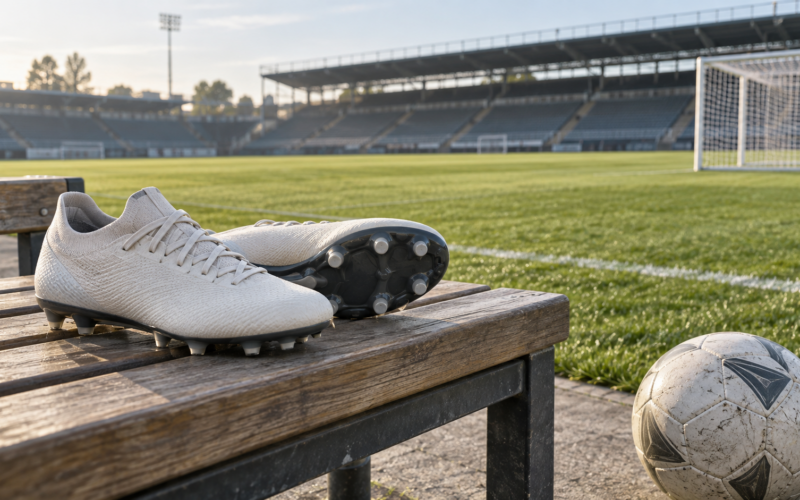
On Holding AG (NYSE: ONON), the Swiss performance-sportswear company best known for running shoes, has signed Kylian Mbappé as it enters football for the first time and attempts to extend its premium brand beyond running and tennis. The France and Real Madrid forward is leaving a roughly two-decade relationship with Nike, while the commercial arrangement with On includes cash and equity, according to Reuters. Financial terms were not disclosed, and On’s first football boots are expected in 2027.
The company is building the football programme around more than one celebrity endorsement. Former France and Arsenal striker Thierry Henry is joining as director of football, while Swiss international Sydney Schertenleib is also involved in product development. On says the three athletes will contribute their experience to future products, including football boots based on its LightSpray manufacturing technology.
Why is Kylian Mbappé such a significant signing for On Holding?
Mbappé gives On immediate global visibility inside a sport where the company has virtually no existing product heritage. Running shoes can create strong awareness among athletes and lifestyle consumers, but football operates through a different ecosystem of professional clubs, national teams, boot contracts, grassroots players and intensely established brand loyalty.
Nike and Adidas have spent decades building their positions through athletes, teams and major tournaments. Puma remains another deeply established competitor, meaning On cannot rely solely on premium positioning or its running reputation to gain credibility.
Mbappé can accelerate that process because he is among the world’s most visible footballers and competes at the highest level for Real Madrid and France. His switch also carries additional attention because he is not moving from an unknown supplier but ending a relationship with Nike that began when he was a child.
The equity component creates a closer alignment than a conventional endorsement contract in which an athlete receives only cash. It gives Mbappé exposure to the value of the company if the partnership contributes to longer-term growth, although On has not disclosed the size of his equity interest.
Why would On enter football when running is still producing strong growth?
The company’s existing business remains healthy enough to fund expansion. Second-quarter 2026 net sales reached CHF850.3 million, up 13.5% reported and 21.6% in constant currencies. Direct-to-consumer sales climbed 26% to CHF388.4 million, taking the channel to 45.7% of revenue, while global brand awareness reached 30%.
On’s gross-margin economics are particularly striking. Gross margin reached 65.4% in the quarter, while management lifted its full-year expectation to at least 65% and maintained adjusted EBITDA margin guidance of 19.5% to 20%. Premium pricing and a growing direct-to-consumer mix have allowed the company to generate margins more commonly associated with high-value branded consumer products than traditional commodity footwear.
Those economics create an incentive to expand into adjacent sports if On can preserve premium positioning. Football offers an enormous global customer base and potentially higher lifetime engagement because players can buy boots, apparel and accessories across many years.
The risk is dilution. Expanding too rapidly into sports where a brand lacks technical credibility can weaken the exclusivity that helped create premium pricing in the first place.
What role could LightSpray technology play in On’s football strategy?
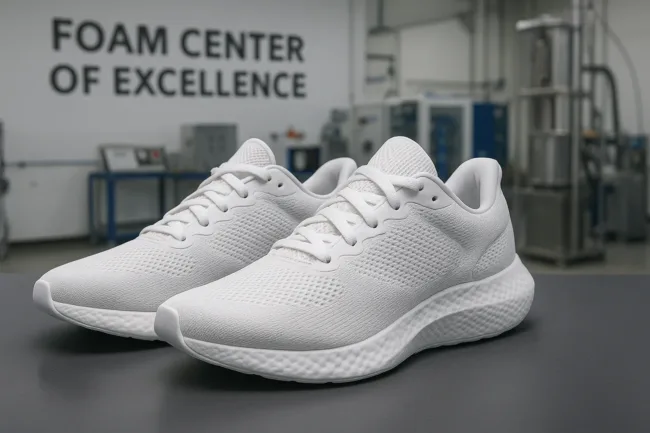
On says it intends to bring LightSpray technology, originally developed for running footwear, onto the football pitch. The manufacturing process uses robotic technology to create lightweight footwear uppers with relatively little material, and On says future football boots will be engineered around a close, barefoot-like feel.
That technology gives the company a more substantive entry narrative than simply placing its logo on Mbappé. Successful performance-footwear brands need a reason for athletes to switch products, and manufacturing innovation could provide differentiation if LightSpray boots perform well under football conditions.
Football creates different technical demands from running. Boots must manage traction, ball contact, lateral movement, fit and durability while remaining comfortable through repeated changes in direction. On will therefore have to demonstrate that a technology successful in running translates effectively to a sport with very different biomechanics.
Mbappé, Henry and Schertenleib are being positioned partly as product collaborators rather than only marketing figures. Their involvement could help On refine design before commercial launch, although ultimate credibility will depend on how the product performs for ordinary players as well as elite athletes.
Can On compete against Nike and Adidas without matching their sponsorship budgets?
That is likely to be the harder commercial problem. Football sponsorship operates at enormous scale, with major brands spending heavily across star players, clubs, federations and tournaments. On is much smaller and could destroy some of its attractive economics if it attempts to replicate those spending levels immediately.
A more focused approach may fit the company better. On built its running business around premium products, distinctive design and carefully selected athletes rather than attempting to outspend every incumbent across every category. Roger Federer’s involvement similarly helped expand awareness without turning On into a conventional mass-market sportswear company.
Mbappé offers the possibility of applying that strategy to football. One globally recognisable athlete combined with distinctive technology can generate substantial attention without immediately requiring dozens of expensive team sponsorships.
Reuters noted that success is far from guaranteed, however, citing the difficulty challenger brands face when attempting to break deeply entrenched sporting categories. A famous athlete can increase awareness, but consumer conversion depends on product performance, distribution and sustained cultural relevance.
Why is On trying to diversify beyond shoes?
Footwear still dominates the business. On generated CHF781.6 million of second-quarter shoe sales, compared with CHF54.2 million from apparel and CHF14.5 million from accessories. Yet apparel grew 47.7% reported and 56.2% in constant currencies, substantially faster than the overall company.
That mix suggests management already sees an opportunity to increase customer spending beyond the first pair of shoes. Football could accelerate that strategy because the category naturally encompasses jerseys, training apparel and accessories as well as boots.
Geographic diversification also matters. Asia-Pacific already represents more than 20% of On’s global sales and second-quarter growth remained strong across Japan, South Korea and Greater China. Football can provide another route to reach consumers in Europe, Latin America, Africa and Asia where the sport has enormous cultural reach.
The strategic objective is therefore broader than selling football boots. On wants to prove its brand can move successfully between sports while retaining enough distinctiveness to preserve premium pricing.
Why should investors be cautious despite the scale of the Mbappé announcement?
On shares have struggled during 2026 despite strong company growth, with Reuters noting that the stock was down roughly 40% for the year around the announcement. That disconnect reflects concerns about slowing growth in parts of the Americas, valuation expectations and whether expansion can continue without increased promotional activity.
Football adds another variable. Product development, athlete compensation and marketing create costs before meaningful revenue appears, and the first boots are not expected until 2027.
The most useful milestones will therefore arrive after the publicity. Investors should watch the 2027 boot launch, additional athlete signings, wholesale distribution, direct-to-consumer sales and whether football contributes incremental customers without weakening gross margin.
Mbappé gives On instant visibility. What the company still needs to build is a football business.
Discover more from Business-News-Today.com
Subscribe to get the latest posts sent to your email.