

Ocado Group plc (LSE: OCDO) and Asda have agreed to enter a major ecommerce partnership that will see the supermarket operator replace and upgrade its online grocery infrastructure using Ocado Group plc technology from 2027. The agreement gives Ocado Group plc a significant UK client win at a time when investors have been demanding clearer evidence that its technology platform can scale profitably beyond its own retail ecosystem. For Asda, the deal lands during a wider turnaround effort aimed at improving availability, customer experience, delivery efficiency, and market share performance in one of Europe’s most competitive grocery markets. For Ocado Group plc shareholders, the immediate relevance is simple: the market finally has a fresh reason to reprice the company as a technology infrastructure provider rather than only as a volatile online grocery story.
Why does the Ocado Group plc and Asda ecommerce partnership matter for UK online grocery competition?
The Ocado Group plc and Asda ecommerce partnership matters because it moves the UK grocery technology conversation away from warehouses alone and toward the full digital operating system behind online food retail. Ocado Group plc is not simply providing a web upgrade. The agreement covers front-end ecommerce technology, in-store fulfilment, last-mile planning, and route efficiency, with deployment planned across Asda stores and dark stores from 2027. That makes the deal a broad infrastructure reset for one of Britain’s largest supermarket chains.
For Asda, the logic is defensive and offensive at the same time. The company already has a large online grocery business, with hundreds of thousands of ecommerce orders each week, but its broader market position has been under pressure from Tesco, J Sainsbury, Aldi, and Lidl. Online grocery is not just a convenience channel anymore. It affects loyalty, basket size, household data, substitution rates, and the customer’s perception of whether a supermarket can actually deliver what it promises. If Asda wants to repair momentum, ecommerce cannot remain a side corridor. It has to become part of the main store experience.
For Ocado Group plc, the strategic value lies in validation. The company has long argued that its technology can help major retailers run smarter online grocery operations, yet investors have become more sceptical after delays, partner changes, and a difficult share price history. Winning Asda gives Ocado Group plc a domestic proof point with scale, relevance, and visibility. It is not a magic wand, because grocery technology rarely behaves like one. But it does give Ocado Group plc a new commercial answer to the market’s favourite question: where is the next credible platform customer?
How could Ocado Group plc benefit financially from Asda’s move to upgrade ecommerce infrastructure?
Ocado Group plc expects the Asda ecommerce partnership to contribute around £20 million of annual earnings from 2027, while the agreement is not expected to have a significant impact on 2025 or 2026 guidance. That timing matters because investors should not treat the deal as an instant profit accelerator. The near-term value is sentiment, strategic validation, and future earnings visibility. The financial contribution begins when the platform starts to roll out and scale across Asda’s ecommerce operations.
The agreement also supports a more software-led reading of Ocado Group plc’s business model. Much of the debate around Ocado Group plc has historically focused on capital intensity, automated fulfilment centres, robotics, and partner economics. The Asda deal appears more focused on software, store-based fulfilment support, webshop capability, and last-mile optimisation. That may be important because software-heavy partnerships can be easier for investors to understand if they produce recurring revenue, operational leverage, and lower capital strain.
However, execution risk remains very real. Migrating a large supermarket’s ecommerce infrastructure is not like changing the colour of a checkout button and calling it transformation. Asda needs continuity of service, customer reliability, inventory accuracy, delivery slot stability, and smooth integration with store operations. Ocado Group plc needs to prove that its platform can improve performance without creating disruption during transition. If the rollout works, the deal becomes a commercial reference point. If it stumbles, it could reinforce investor doubts about complexity and scalability.
Why is Asda turning to Ocado Group plc while trying to stabilise sales and regain market share?
Asda’s decision to work with Ocado Group plc should be seen in the context of a retailer trying to stabilise after a difficult period. The supermarket group reported a slower decline in quarterly like-for-like sales, but it still faces pressure from stronger rivals and value-led discounters. Asda’s leadership has been investing in availability, pricing, and customer satisfaction, while also dealing with the operational consequences of past system changes and a highly competitive UK grocery environment.
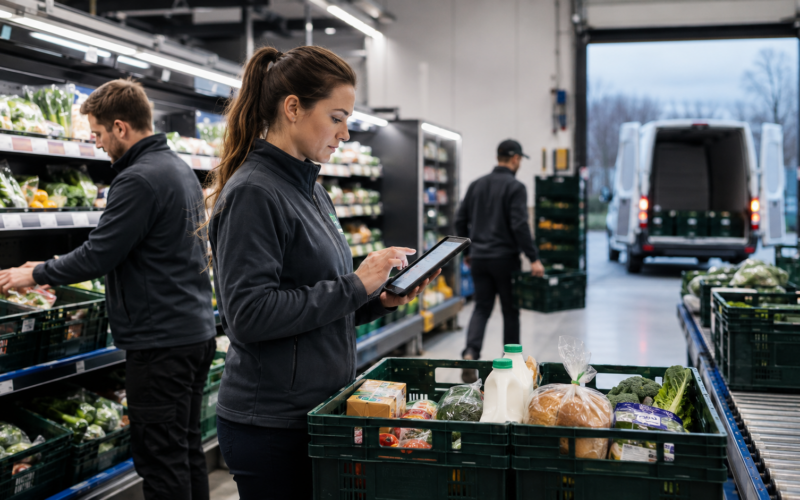
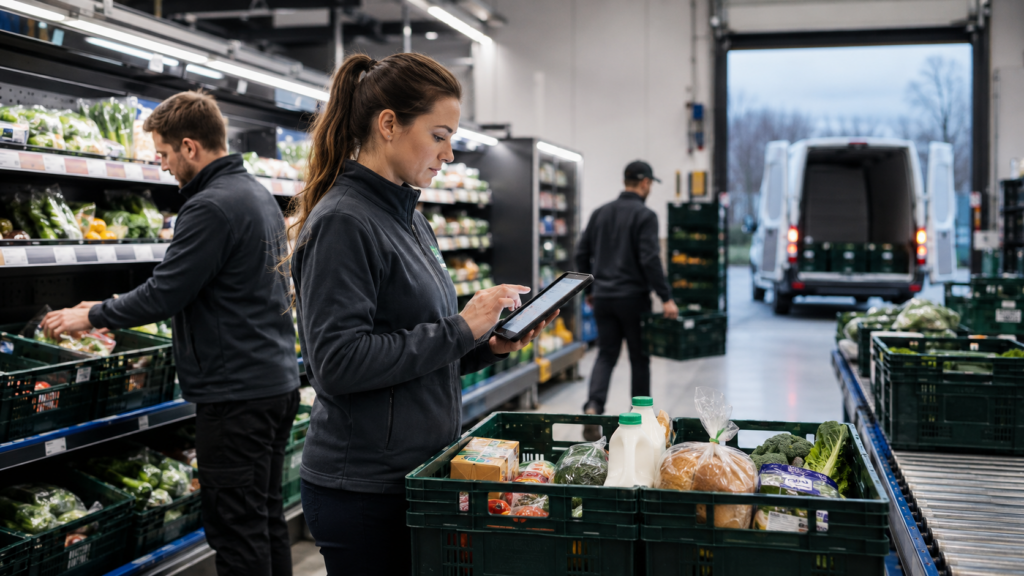
Online grocery is one of the most visible places where these pressures collide. Customers expect wide product availability, accurate substitutions, flexible delivery slots, fast checkout, reliable click-and-collect, and increasingly, access through third-party platforms. The partnership with Ocado Group plc is designed to help Asda support scheduled orders, faster-turnaround delivery models, store picking, dark store operations, and delivery route planning. In other words, Asda is trying to make ecommerce less fragmented and more operationally disciplined.
The broader strategic signal is that supermarkets may be less willing to build every digital capability internally. Grocery margins are thin, customer expectations are unforgiving, and technology investment competes with price cuts, store labour, logistics, debt servicing, and private-label investment. By using Ocado Group plc’s platform, Asda is effectively betting that specialist grocery technology can deliver faster operational improvement than a purely internal rebuild. That is sensible, but it also raises the bar. Once a retailer outsources a major technology layer, customers will not care whose system is behind the curtain. They will only notice whether their milk arrives, whether their bananas look traumatised, and whether the delivery slot actually exists.
What does the Ocado Group plc share price reaction reveal about investor sentiment toward OCDO?
Ocado Group plc shares rose sharply after the Asda announcement, reflecting a market reaction that was more about confidence than immediate earnings. The stock has spent much of the past year under pressure, trading well below its 52-week high despite improving from its lows. That makes any credible customer win more powerful because the market has been looking for evidence that Ocado Group plc can rebuild momentum in its technology solutions narrative.
The share price reaction suggests that investors viewed the Asda deal as a validation event. The deal gives Ocado Group plc a major UK grocery name, a sizeable ecommerce base, and a visible rollout timetable. It also arrives after a period in which the company’s global platform story had been tested by partner uncertainty and investor concern about cash flow. In that context, even a £20 million annual earnings contribution from 2027 can carry symbolic weight because it suggests that Ocado Group plc can still win serious retail mandates.
That said, the stock reaction should not be confused with full strategic resolution. Ocado Group plc still has to show that its model can generate durable margins, convert technology credibility into cash flow, and manage implementation risk across partners. A one-day jump can improve the mood, but it does not erase the long-term investor debate. The better interpretation is that the Asda partnership gives Ocado Group plc a much-needed opportunity to prove the platform story again in its home market.
How could the Asda partnership affect Tesco, J Sainsbury, Morrisons, Aldi and Lidl?
The competitive effect of the Ocado Group plc and Asda partnership depends on whether technology improvements translate into customer behaviour. Tesco and J Sainsbury remain formidable because they combine scale, loyalty programmes, online penetration, store networks, and supplier strength. Aldi and Lidl keep applying pressure through price perception and operational simplicity. Asda is trying to fight on several fronts at once, and online grocery is one area where a better platform could reduce friction.
For Tesco and J Sainsbury, the immediate risk is not that Asda suddenly leapfrogs them overnight. The risk is that Asda becomes less easy to take share from if it improves online reliability, delivery choice, and customer retention. In grocery, small improvements can matter because shoppers are habitual. If Asda can reduce pain points in online ordering and improve fulfilment consistency, it may slow leakage among households that still like the brand but have grown frustrated with execution.
For Morrisons, the dynamic is more interesting because Morrisons has also worked with Ocado Group plc technology. This creates a stronger UK reference base for Ocado Group plc but also raises questions about differentiation among retailers using similar technology foundations. The advantage will not come from software alone. It will come from how well each grocer integrates technology with range, pricing, promotions, stores, delivery density, and customer service. The platform is the engine room, not the whole ship.
What are the biggest execution risks as Ocado Group plc and Asda move toward the 2027 rollout?
The first execution risk is migration complexity. Replacing ecommerce infrastructure across a large grocery estate requires careful sequencing, testing, staff training, data migration, integration with stock systems, and customer communication. Any weakness in order accuracy, website performance, substitution handling, or delivery planning could quickly become visible to shoppers. Grocery customers are not famously patient when dinner depends on a missing basket item.
The second risk is operational adoption. Technology only works when store teams, pickers, delivery planners, and customer service processes adapt around it. If Asda treats the Ocado Group plc platform as a plug-in rather than an operating model change, the benefits may be diluted. For Ocado Group plc, this means the partnership must deliver practical improvements on the ground, not just elegant software architecture in investor presentations.
The third risk is competitive response. Tesco, J Sainsbury, Aldi, Lidl, and Morrisons are not standing still. Rivals can respond through price investment, loyalty offers, delivery improvements, retail media, private-label expansion, and fulfilment partnerships of their own. Asda’s ecommerce upgrade could therefore become necessary rather than sufficient. It may stop the bleeding in digital convenience, but the broader turnaround still depends on price perception, store standards, balance-sheet flexibility, and customer trust.
Could the Asda deal strengthen the long-term case for Ocado Group plc as a grocery technology platform?
The Asda deal strengthens the long-term case for Ocado Group plc because it gives the company a new way to demonstrate that grocery technology demand extends beyond automated warehouses. If the platform improves Asda’s ecommerce performance, Ocado Group plc can use the partnership as evidence that its software and fulfilment intelligence are relevant to store-based grocery networks, not just highly automated centralised models.
That distinction could matter globally. Many grocers operate hybrid networks with stores, dark stores, delivery partners, click-and-collect, and third-party apps. Not every retailer wants to build a fully automated customer fulfilment centre immediately. A flexible platform that can improve digital ordering, in-store picking, and route planning may be easier to sell, faster to deploy, and less intimidating from a capital allocation perspective. For Ocado Group plc, that could widen the addressable market.
Still, the market will judge Ocado Group plc by outcomes, not architecture. Investors will want proof that the Asda implementation improves earnings visibility, partner economics, and long-term platform credibility. Asda will want better customer experience and stronger ecommerce productivity. Rivals will watch whether the partnership shifts market share or merely modernises a channel Asda already needed to fix. The deal gives both companies a sharper story. Now they have to deliver the less glamorous part: making it work every day.
Key takeaways on what the Ocado Group plc and Asda ecommerce deal means for UK grocery technology
- The Asda partnership gives Ocado Group plc a strategically important UK customer win at a time when investors wanted fresh proof of platform demand.
- The deal is expected to support Asda’s ecommerce infrastructure across webshop technology, in-store fulfilment, dark stores, last-mile planning, and route efficiency.
- Ocado Group plc expects the partnership to contribute around £20 million in annual earnings from 2027, with limited impact on 2025 and 2026 guidance.
- Asda is using the partnership as part of a wider turnaround effort focused on availability, pricing, customer satisfaction, and market share recovery.
- The agreement could help Ocado Group plc shift investor focus from capital-intensive automation debates toward software-led grocery infrastructure.
- Execution risk remains high because ecommerce migration across a large supermarket network requires system reliability, store adoption, and customer continuity.
- The competitive impact on Tesco, J Sainsbury, Morrisons, Aldi, and Lidl will depend on whether Asda can convert better technology into improved customer retention.
- The sharp move in Ocado Group plc shares suggests the market viewed the deal as a validation event rather than simply a near-term earnings upgrade.
- The partnership could become an important reference case if Ocado Group plc can show that its platform works across hybrid grocery models using stores and dark stores.
- The next major test is whether the 2027 rollout produces measurable improvements in online grocery productivity, delivery availability, and customer satisfaction.
Discover more from Business-News-Today.com
Subscribe to get the latest posts sent to your email.