

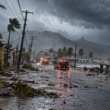


At least 21 people were killed across Nepal between September 24 and 27, 2026, as torrential rain triggered floods, landslides and widespread infrastructure damage, while a separate avalanche on Himlung Himal killed at least four people and left 12 others missing. The overlapping disasters have created another major emergency for the Himalayan nation barely a month after catastrophic flooding killed more than 1,400 people and left thousands missing.
Nepal’s National Disaster Risk Reduction and Management Authority said landslides accounted for most of the latest rain-related deaths, while floods and other incidents caused by continuous rainfall also claimed lives. Hundreds of families have been affected, homes have been destroyed and authorities have evacuated residents from high-risk areas as swollen rivers and unstable slopes continue to threaten communities.
The separate Himlung Himal disaster has added another dimension to the crisis. Rescue teams recovered four bodies from the 7,126-meter mountain after an avalanche buried part of the base camp, while 12 Nepali workers and guides remained missing as search crews battled difficult conditions at high altitude.
Nepal’s flood and landslide death toll rises as rescuers confront widespread destruction
The latest official figures show 21 people killed and five missing in rain-related disasters across Nepal. Authorities recorded dozens of flood incidents and hundreds of landslides after a low-pressure system originating over the Bay of Bengal brought exceptionally heavy rainfall across large parts of the country.
Four deaths were attributed directly to flooding, while 14 people were killed in landslides and three others died in incidents linked to continuous rainfall, according to the National Disaster Risk Reduction and Management Authority. Five people were injured, and 747 families were directly affected.
The scale of the rainfall helps explain how quickly conditions deteriorated. More than 100 millimeters of rain was recorded at 186 monitoring stations, while Dedhgaun in Nawalparasi East received approximately 544 millimeters and Panchase in Kaski recorded more than 500 millimeters during the multi-day event.
Authorities moved roughly 2,000 people from high-risk communities to safer locations and used helicopters to reach residents stranded by floods and landslides in mountainous districts. Emergency teams have also distributed relief supplies in coordination with local governments and district administrations.
Homes and infrastructure have sustained significant damage. Official figures cited by Nepalese media indicate that more than 140 houses were completely destroyed and dozens more partially damaged, while landslides and flooding blocked roads and disrupted electricity and telecommunications in multiple regions.
Himlung Himal avalanche kills four as rescuers search for 12 missing workers and guides
The emergency became even more severe when an avalanche struck the base camp of Himlung Himal in north-central Nepal. The 7,126-meter mountain lies in Manang district, an area already experiencing flooding and landslides associated with the heavy rainfall affecting the country.
Four bodies had been recovered by Monday after rescuers found two victims on Sunday and two more the following day. The Nepal National Mountain Guide Association said 12 people remained missing as specialized mountain guides continued digging through snow and avalanche debris.
Those killed and missing were Nepali nationals working at the base camp ahead of the autumn climbing season. They included mountain guides and kitchen staff preparing camps and equipment before foreign climbers were scheduled to arrive. Ten people were successfully rescued from the mountain.
Bad weather initially complicated efforts to reach the avalanche zone by helicopter. CNN reported that rescuers were attempting to land aircraft in remote mountain areas while rainfall and deteriorating conditions limited access, forcing experienced teams to wait for safer weather windows.
The disaster highlights the risks faced by Nepal’s high-altitude workers, who often arrive on mountains before foreign expeditions to establish camps, carry equipment, install ropes and prepare climbing routes. Their work places them in exposed terrain during periods when weather and snow conditions can change rapidly.
Nepal is confronting another disaster barely a month after catastrophic August floods
The latest emergency is particularly difficult because Nepal has not recovered from the enormous floods that struck in August. That disaster swept through Himalayan valleys, damaged villages and hydropower infrastructure and left more than 1,400 people confirmed dead while thousands remained missing.
The August catastrophe also exposed vulnerabilities inside Nepal’s rapidly expanding hydropower sector. Floodwaters and landslides damaged power facilities and trapped workers inside underground tunnels, creating extraordinarily difficult rescue operations and contributing to an estimated reconstruction bill running into billions of dollars.
Authorities had already begun discussing stronger early-warning infrastructure before the latest floods. Reuters reported earlier this month that Nepal planned to rebuild warning systems near the Chinese border using seismic sensors, cameras and satellite communications after the August disaster destroyed monitoring infrastructure.
The recurrence of major flooding so quickly illustrates the challenge facing a mountainous country where communities, roads and energy infrastructure frequently occupy steep river valleys. Heavy rainfall can rapidly raise rivers while saturating unstable slopes, producing floods and landslides at the same time.
Nepal’s topography also complicates emergency response. Roads connecting mountain communities can be blocked by landslides, while helicopters may be unable to operate safely during heavy rain, cloud cover or strong winds.
Hydropower and electricity networks suffer another blow from extreme rainfall
Nepal’s electricity system has again been affected by the latest weather. Power supplies were completely disrupted in Manang, Mustang, Myagdi and Baglung districts as authorities worked to restore damaged infrastructure.
Flooding along the Rahuganga River damaged structures and transmission towers belonging to a 40-megawatt hydropower project, according to Nepalese energy officials. Telecommunications were also disrupted after damage to optical-fiber networks and power supplies.
The damage matters economically because Nepal has invested heavily in hydropower as both a domestic energy source and a potential export industry. Mountain rivers provide enormous electricity-generation potential, but infrastructure located near those waterways can also be exposed to flash floods, debris flows and landslides.
Repeated disasters could therefore increase pressure on engineers and policymakers to rethink where critical infrastructure is built and what level of protection is required. Higher construction costs may be difficult to avoid if developers are expected to design facilities capable of surviving increasingly severe floods and slope failures.
The challenge extends beyond power stations themselves. Transmission lines, access roads and tunnels can all become vulnerable even when the main generation equipment survives, meaning a single landslide can disrupt electricity production or prevent workers from reaching damaged facilities.
Nepal’s autumn tourism season faces another setback after months of disasters
The timing is also damaging for Nepal’s tourism industry. Autumn is traditionally one of the country’s most important trekking and mountaineering seasons, drawing climbers and hikers from around the world as weather conditions normally become more favorable after the summer monsoon.
CNN reported that the repeated disasters are creating concern over whether international visitor numbers will decline following the catastrophic August floods and the latest round of severe weather. The Himlung avalanche is particularly sensitive because the victims were preparing the mountain for foreign climbing expeditions.
Tourism supports hotels, trekking companies, mountain guides, porters, restaurants and transportation businesses across Nepal. Disruptions therefore affect communities far beyond the immediate disaster zones.
The government must balance the economic importance of keeping trekking routes and mountain areas accessible with the need to respond cautiously when unstable weather persists. Closing routes or delaying expeditions can create financial losses, but failing to respond to credible avalanche, flood or landslide risks can have far greater consequences. The latest events may therefore increase pressure for stronger weather monitoring and clearer communication with trekking operators, tourists and mountain communities.
Nepal’s latest disaster highlights the growing importance of early-warning systems
One encouraging element of the response has been the scale of preventative warnings and evacuations. Authorities said thousands of residents were moved from vulnerable areas before conditions worsened, while hundreds of thousands of mobile-phone alerts were distributed to people in potential flood zones.
Nepal’s meteorological authorities continue to operate flood and weather warning systems across the country, with dedicated alerts for rainfall, landslides, snowfall and other hazards. The government’s Department of Hydrology and Meteorology maintained active warnings as officials monitored rivers and changing weather conditions. Those systems cannot prevent extreme weather, but they can significantly reduce casualties when people receive enough time to move away from rivers or unstable slopes.
The challenge is ensuring that warning infrastructure continues operating during disasters. Floods can destroy sensors, electricity failures can interrupt communications and isolated communities may have limited mobile connectivity, making redundancy increasingly important.
Nepal’s geography means there will never be a single technological solution. Effective disaster preparedness requires weather forecasting, river monitoring, local emergency planning, resilient communications and communities that know what to do when warnings arrive.
Repeated disasters are testing Nepal’s capacity to recover before the next emergency begins
The greatest challenge may be the speed at which emergencies are now overlapping. Nepal is still searching for people missing from August’s catastrophic floods while families affected by the newest landslides are beginning another cycle of rescue, temporary shelter and reconstruction.
That creates enormous pressure on government agencies, humanitarian organizations and local communities. Resources deployed toward rebuilding one damaged region may suddenly be needed for emergency operations elsewhere, while repeated losses can weaken household finances long before full reconstruction is completed.
The Himlung avalanche adds another painful dimension because those affected were workers supporting one of Nepal’s most important industries. Their deaths and disappearances demonstrate how disasters can affect both isolated mountain communities and the broader economy built around the Himalayas.
The immediate priority remains search and rescue. Weather conditions will determine how quickly teams can reach those still missing on Himlung Himal, while emergency officials continue assessing damage from floods and landslides elsewhere.
The longer-term challenge is considerably larger. Nepal must rebuild homes, hydropower plants, roads and warning systems while preparing for the possibility that another severe weather event could arrive before recovery from the current disasters is complete.
Key takeaways from Nepal’s deadly floods, landslides and Himlung avalanche
- At least 21 people have died and five remain missing after several days of heavy rainfall triggered floods and landslides across Nepal.
- Landslides accounted for most of the rain-related fatalities, while hundreds of families have been affected and more than 140 homes completely destroyed.
- A separate avalanche on Himlung Himal has killed at least four Nepali workers and guides, with 12 people still missing as search operations continue.
- Ten people were rescued from the 7,126-meter mountain, but difficult weather and remote terrain have complicated helicopter and ground operations.
- Nepal is still recovering from catastrophic August floods that killed more than 1,400 people and left thousands missing, placing enormous strain on recovery resources.
- Power, telecommunications and hydropower infrastructure have again been damaged, highlighting the vulnerability of critical systems located in steep river valleys.
- The disasters are also threatening Nepal’s autumn tourism and climbing season, an economically important period for mountain communities and trekking businesses.
- Large-scale evacuation and mobile warning efforts may have prevented additional casualties, reinforcing the importance of stronger early-warning systems across the Himalayas.
Discover more from Business-News-Today.com
Subscribe to get the latest posts sent to your email.