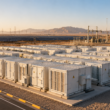


NAVER Corporation (KRX: 035420), NVIDIA Corporation (NASDAQ: NVDA) and Brookfield today outlined a proposed expansion of Korea’s sovereign artificial intelligence factory infrastructure that would more than triple the buildout NAVER announced only a month ago. The three parties intend to scale NAVER’s initial NVIDIA DSX AI factory at the GAK Sejong hyperscale data centre in Sejong, South Korea, from 55 megawatts to 200 megawatts by 2028, with NAVER signalling a longer-term path to a full gigawatt of NVIDIA accelerated computing. NVIDIA plans to invest $1 billion into NAVER Corp and Brookfield has entered into a non-binding term sheet to fund up to $9 billion, with NAVER funding the balance. The announcement, made during Korean President Jae Myung Lee’s AI Summit visit to San Francisco, formalises a financing stack that answers the central question hanging over Korea’s sovereign AI push, namely who would write the cheques. The central tension now shifts from ambition to execution, because NVIDIA’s $1 billion strategic investment is expressly conditional on NAVER finalising at least $9 billion of committed financing separate from NVIDIA’s own commitment.
Investors read the announcement as a decisive de-risking of NAVER’s AI infrastructure roadmap. NAVER Corporation shares closed at ₩271,500 on 24 July, up 16.03 percent on the day, the sharpest single-session gain the stock has posted in years and enough to help the KOSPI benchmark reverse early losses. The move lifted NAVER Corporation’s market capitalisation to roughly ₩40 trillion, or around $29 billion at current exchange rates, and moved the stock back into the upper half of a 52-week range of ₩181,100 to ₩304,000. Analyst consensus price targets before the announcement clustered around ₩301,000 to ₩321,000 with 22 buy ratings on the name.
How does the tripling of the GAK Sejong buildout reset Korea’s sovereign AI ambitions?
Only four weeks earlier, NAVER Corporation and NVIDIA Corporation had unveiled a 55 megawatt NVIDIA DSX deployment at GAK Sejong that already ranked as one of Asia’s most ambitious sovereign AI factory commitments. Tripling the buildout to 200 megawatts by 2028, with a signposted path to a full gigawatt, changes the character of the project. A 200 megawatt AI factory places the site in the same conversation as the largest sovereign compute deployments announced globally in 2026, including the Japan national AI infrastructure that NVIDIA Corporation helped launch on 16 July and NVIDIA Corporation’s expanded partnership with SK Group announced on the same day as the NAVER expansion. It also compresses the timeline for Korea’s ambition to run a domestically operated frontier training and inference platform capable of serving both Korean enterprises and global AI cloud customers.
For NAVER Corporation, the buildout is a strategic pivot as much as an infrastructure decision. NAVER Corporation’s 2025 revenue of ₩12.04 trillion (roughly $8.18 billion) still sits mostly in search, commerce, fintech and content, and the business has faced sustained scepticism from analysts about how generative AI erodes traditional search economics. A 200 megawatt multi-tenant AI factory operated by NAVER Corporation as an NVIDIA Cloud Partner reframes the company as an AI infrastructure operator, not merely an application layer defender.
Why is the NVIDIA and Brookfield financing stack strategically distinct from an ordinary GPU supply contract?
The structure NAVER Corporation has assembled is unusual for Korea and increasingly familiar as a global template. NVIDIA Corporation’s planned $1 billion equity investment in NAVER Corp aligns the accelerator vendor’s balance sheet with the customer it will supply, echoing NVIDIA Corporation’s earlier strategic investments in AI infrastructure operators including CoreWeave and Nebius Group. Brookfield’s non-binding term sheet for up to $9 billion sits alongside NVIDIA Corporation’s participation in the Brookfield Global AI Infrastructure Program, a $100 billion platform in which NVIDIA Corporation is a founding partner. Brookfield’s existing ~$12 billion of Korean assets across infrastructure, real estate and energy, dating back to the firm’s 2014 arrival in the country, provides an established operating footprint from which to structure a project of this scale.
The commercial signal for NVIDIA Corporation is that its accelerated computing platform is now being sold with financing attached. Rather than waiting for customers to raise capital markets debt or negotiate export-credit-backed facilities, NVIDIA Corporation is pairing its DSX platform with a preferred capital provider in Brookfield and its own equity cheque. Investors in NVIDIA Corporation should recognise that this pattern converts NAVER Corporation from a bilateral supply relationship into a captive customer, because the DSX-based factory is architecturally dependent on the NVIDIA Corporation stack including DSX MaxLPS software for token throughput and DSX OS for lifecycle and multi-tenant management. Whether that structure represents a durable competitive moat or a form of vendor-financed demand pull will depend on whether NAVER Corporation can fill 200 megawatts of capacity with paying tenants.
What execution and financing conditions stand between the announcement and 2028 commissioning?
The press language matters. NVIDIA Corporation’s investment is described as planned and subject to customary closing conditions and NAVER Corporation finalising at least $9 billion of committed financing separate from NVIDIA Corporation’s own commitment. Brookfield’s participation is a non-binding term sheet, not a signed facility. Neither instrument is currently drawn cash for NAVER Corporation. In practical terms, NAVER Corporation must convert Brookfield’s term sheet into definitive documentation, secure any additional lender participation required to fill the residual gap, and satisfy NVIDIA Corporation’s closing conditions before the $1 billion strategic cheque lands on its balance sheet.
The physical execution challenge is equally material. A 200 megawatt AI factory targeting 2028 commissioning at a single site requires power procurement, grid interconnection upgrades, data centre construction at hyperscale, cooling infrastructure sized for Vera Rubin class systems, and staged delivery of NVIDIA Corporation’s next-generation platforms including NVIDIA Vera Rubin and NVIDIA Blackwell. Any of the standard risks that accompany hyperscale data centre projects, including permit delays, transformer supply constraints, and the availability of high-density cooling, could shift the 2028 target. NAVER Corporation has not disclosed the split between grid, gas peaking and any renewables sourcing for the site.
How does the NVIDIA DSX platform shape the economics of 200 megawatts of multi-tenant capacity?
The NVIDIA DSX platform is central to NAVER Corporation’s ability to monetise the site. NVIDIA Corporation positions DSX as an end-to-end, codesigned stack spanning chips, systems, software, facilities and partner technologies, purpose-built to minimise the cost of tokens generated and to shorten the time from ground-breaking to first production tokens. NVIDIA DSX MaxLPS software targets token throughput per megawatt, a metric that becomes commercially decisive at the 200 megawatt scale where every incremental point of utilisation efficiency translates directly into gross margin for NAVER Corporation as operator. NVIDIA DSX OS provides multi-tenant AI factory management, which is the software layer that will determine whether NAVER Corporation can rent capacity to third-party AI innovators without operational friction.
The multi-tenant framing is important because it signals that NAVER Corporation intends to operate GAK Sejong as an NVIDIA Cloud Partner serving Korean enterprises, Korean government organisations, Korean industrial customers and, notably, US-based AI innovators. That last group extends the addressable market beyond Korea’s domestic demand pool. Whether US customers will source capacity from a Korean sovereign AI factory in commercial volumes will depend on price, latency, data sovereignty considerations and any future export or regulatory frictions.
How does Brookfield’s $100 billion AI infrastructure programme change the sovereign compute landscape?
Brookfield’s involvement is the most quietly consequential element of the announcement. The firm’s approximately $100 billion AI infrastructure platform, spanning data centres, compute, semiconductor manufacturing and dedicated power generation, has emerged as one of the largest pools of capital purpose-built for the AI buildout. The NAVER Corporation commitment marks another significant milestone in a strategic partnership with NVIDIA Corporation that positions Brookfield as a preferred capital partner for sovereign AI factory deployments. That template is now visible across Japan, Korea and the United States, and it materially reduces the number of financing counterparties that individual national champions need to negotiate with to unlock hyperscale AI capacity.
For NAVER Corporation, the Brookfield partnership provides two things that a syndicated bank loan or bond offering could not easily deliver. First, capital scale sufficient to fund a project of this size without either overloading NAVER Corporation’s own balance sheet or diluting existing shareholders to an uncomfortable degree. Second, operating expertise in energy infrastructure and semiconductor-adjacent assets that a pure financial partner would lack. Whether the term sheet ultimately converts into a fully documented, drawable facility on terms acceptable to both sides remains the near-term proof point.
What does NAVER’s HyperCLOVA X and Seoul World Model roadmap require of 200 megawatts?
NAVER Corporation is not building a merchant colocation site. The company has committed HyperCLOVA X, its flagship Korean-language large language model family, to be based on NVIDIA Nemotron 3 Ultra open models trained with NAVER Corporation’s proprietary data. NAVER Corporation is the first Korean company to join the NVIDIA Nemotron Coalition, contributing to open model development across pretraining, post-training and reinforcement learning stages. In the second half of 2026, NAVER Corporation plans to launch an AI agent platform in Korea powered by NVIDIA Agent Toolkit software including NVIDIA NemoClaw blueprints, and the company is developing a Seoul World Model using proprietary urban street-view and spatial modelling data built on NVIDIA Cosmos world foundation models.
These workloads are precisely the categories that consume large training and inference budgets. Frontier language model training on proprietary Korean data, physical AI world models that ingest urban street-view imagery, and agentic platforms that run continuous inference for millions of users all justify capacity at 200 megawatt scale. The question analysts will ask through 2027 and into 2028 is whether the internal workload plus external tenant demand generate enough token revenue to service the financing cost of a $10 billion buildout. NAVER Corporation has not disclosed pricing, tenant commitments or utilisation assumptions.
What does the deal signal for Korean and global AI infrastructure competitors?
The announcement lands alongside NVIDIA Corporation’s expanded partnership with SK Group across AI factories and next-generation memory, also disclosed on 24 July, and follows the launch of the NVIDIA Corporation joint AI research lab with KAIST the previous day. Taken together, the three announcements read as a coordinated positioning of NVIDIA Corporation across Korea’s leading corporate and academic AI infrastructure nodes. For SK Group, the parallel deal reinforces its role in memory and semiconductor supply for AI factories. For KT Corporation, KakaoTalk operator Kakao Corporation, and Samsung SDS, the NAVER Corporation announcement sets a higher bar for domestic AI infrastructure ambition and raises the question of whether they will pursue similar financing structures with global capital partners.
Globally, the deal fits within a widening pattern where NVIDIA Corporation’s platform is being embedded into sovereign AI programmes through a combination of strategic equity investment, cornerstone infrastructure partners such as Brookfield, and national champion operators. Japan’s national AI infrastructure launched on 16 July was the first such deployment. Korea via NAVER Corporation is the second sovereign AI factory of comparable scale. The template is now sufficiently well defined that analogous structures could emerge across other Asian, Middle Eastern and European economies through 2027.
What are the key catalysts to track as NAVER converts a $10 billion plan into cash flow?
- NAVER Corporation, NVIDIA Corporation and Brookfield have unveiled a proposed $10 billion expansion of the GAK Sejong AI factory in Sejong, South Korea, targeting 200 megawatts of NVIDIA DSX capacity by 2028 versus the 55 megawatts announced in June 2026, with NAVER Corporation signalling a longer-term path to 1 gigawatt.
- NVIDIA Corporation plans to invest $1 billion into NAVER Corp and Brookfield has entered into a non-binding term sheet for up to $9 billion, with NAVER Corporation funding the balance and NVIDIA Corporation’s cheque conditional on NAVER Corporation finalising at least $9 billion of committed financing separate from NVIDIA Corporation’s investment.
- NAVER Corporation shares closed at ₩271,500 on 24 July, up 16.03 percent, the sharpest single-day gain in years and enough to move the KOSPI benchmark higher after early losses, lifting NAVER Corporation’s market capitalisation to roughly ₩40 trillion.
- The GAK Sejong AI factory will feature NVIDIA Vera Rubin and NVIDIA Blackwell platforms managed with NVIDIA DSX MaxLPS token throughput software and NVIDIA DSX OS multi-tenant management, with capacity to be offered to Korean enterprises, Korean government organisations and US-based AI innovators.
- Brookfield’s approximately $100 billion AI infrastructure platform, in which NVIDIA Corporation is a founding partner, extends the Japan-Korea template of national champion operator plus preferred financial partner plus accelerator vendor equity investment as a repeatable structure for sovereign AI factory financing.
- NAVER Corporation’s HyperCLOVA X models will move to an NVIDIA Nemotron 3 Ultra base, NAVER Corporation joins the NVIDIA Nemotron Coalition as its first Korean member, and the company plans an H2 2026 AI agent platform launch built on NVIDIA Agent Toolkit software plus NVIDIA NemoClaw blueprints, alongside a Seoul World Model on NVIDIA Cosmos world foundation models.
- The nearest financing proof point is conversion of Brookfield’s non-binding term sheet into a definitive committed facility, without which NVIDIA Corporation’s $1 billion equity investment does not close, and the nearest execution proof point is grid interconnection and construction progress at GAK Sejong through 2027.
- Downside risks include construction and permitting slippage against a 2028 commissioning target, insufficient tenant demand to fill 200 megawatts at economics that service the financing stack, execution risk on HyperCLOVA X and Seoul World Model workloads, and any macroeconomic or geopolitical development that widens Korean corporate credit spreads while $9 billion of committed financing is still being assembled.
- Upside catalysts include earlier than expected conversion of the Brookfield term sheet, an announced anchor US enterprise tenant for GAK Sejong multi-tenant capacity, a further NAVER Corporation and NVIDIA Corporation announcement expanding beyond 200 megawatts toward the 1 gigawatt path before 2028, and Korean government policy support that accelerates permitting and power supply for the site.
- For NVIDIA Corporation, the transaction reinforces a template of pairing accelerator supply with equity investment and preferred capital partners, converting sovereign AI programmes into captive multi-year demand for the NVIDIA DSX platform.
Discover more from Business-News-Today.com
Subscribe to get the latest posts sent to your email.