

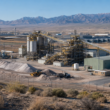


Microsoft Corporation (NASDAQ: MSFT) has secured an expanded foothold at a Norwegian data centre campus that was originally earmarked for OpenAI’s Stargate initiative, signing an agreement to rent 30,000 additional Nvidia Corporation Vera Rubin chips from neocloud operator Nscale at a site located above the Arctic Circle in Narvik, Norway. The deal builds on a prior $6.2 billion capacity commitment Microsoft had already made at the same facility, deepening a strategic relationship with Nscale that now spans Norway, the United Kingdom, and, through a separate letter of intent, a 1.35-gigawatt campus planned for Mason County, West Virginia. OpenAI, which had publicly marketed the Narvik site as “Stargate Norway” following a July 2025 announcement, failed to conclude a commercial agreement with Nscale, allowing Microsoft to absorb a piece of European AI compute infrastructure that its partner-turned-rival had originally claimed. The development signals something more layered than a simple facilities swap: it reflects a reconfiguration of power, money, and strategic intent at the heart of the global AI infrastructure race.
How did Microsoft end up taking the Norwegian Stargate data centre that OpenAI planned to anchor?
The Narvik campus was announced publicly in July 2025 as a joint venture between Nscale Global Holdings and Norwegian energy infrastructure firm Aker ASA. OpenAI was positioned as the anchor off-taker, committing to consume compute capacity powered by up to 100,000 Nvidia graphics processing units by end-2026, running entirely on renewable hydropower. OpenAI Chief Executive Sam Altman lent the project his personal endorsement, calling Narvik the right European destination for the Stargate brand. The site’s geography was deliberate: northern Norway’s cool climate reduces cooling costs, its mature hydropower infrastructure delivers near-zero carbon electricity at scale, and excess heat from GPU operations was to be recycled into local industrial use.
What changed between that announcement and April 2026 is instructive. OpenAI did not conclude a capacity agreement with Nscale at the Norwegian site. Separately, OpenAI paused its analogous Stargate UK project at another Nscale-developed facility, citing high energy costs and regulatory complexity in Britain. The pattern suggests OpenAI has moved from expansive infrastructure commitment to selective execution, narrowing its near-term cost exposure. In February 2026, OpenAI revised its infrastructure spending guidance to investors, framing a $600 billion outlay by 2030 as the working figure, compared with the $1.4 trillion in long-range commitments it had previously telegraphed. The arithmetic of ambition was being quietly corrected.
Microsoft, already a committed customer at the Narvik site under the earlier $6.2 billion arrangement, simply stepped into the space OpenAI vacated. From Nscale’s perspective, the substitution carries no commercial downside: Microsoft is a tier-one anchor tenant with balance sheet depth and Azure-driven demand that OpenAI cannot currently match at the infrastructure procurement level.
What does the Nscale relationship now mean for Microsoft’s European cloud and AI compute strategy?
Microsoft’s engagement with Nscale has escalated with unusual speed for a relationship that began in earnest only in 2025. The $6.2 billion initial commitment at Narvik, the new 30,000 Vera Rubin chip rental, and the separate 1.35-gigawatt West Virginia campus letter of intent represent a structural alignment between Microsoft Azure’s capacity expansion ambitions and Nscale’s asset-heavy neocloud model. Nscale, founded in 2024, has moved to operational scale at sites in Narvik and Glomfjord in Norway, Loughton in the UK, and Texas in the United States, all within roughly two years of inception. A $1.4 billion delayed draw term loan backed by its GPU fleet, raised in February 2026, and a valuation of $14.6 billion placed during a fundraise advised by Goldman Sachs and JPMorgan, signal that Nscale is positioning for a public listing, possibly as early as 2026.
For Microsoft, the attraction is straightforward: Nscale provides renewable-energy-powered, next-generation GPU capacity at scale and speed that owned data centre construction cannot match given permitting and grid connection lead times. The Narvik campus is particularly well-suited to heavy AI training and inference workloads that benefit from consistent cooling and low-carbon power purchasing agreements. Microsoft’s broader infrastructure narrative, which includes its Fairwater AI superfactory programme deploying Nvidia Vera Rubin NVL72 rack-scale systems across multiple sites, fits cleanly with the Norwegian compute block.
The Vera Rubin chip specification matters here. Nvidia’s Rubin platform, launched at CES in January 2026, delivers up to a tenfold reduction in inference token cost compared to its Blackwell predecessor, making it particularly valuable for the inference-heavy workloads that dominate enterprise AI deployment today. Microsoft is among the first cloud providers to deploy Vera Rubin-based instances in 2026, alongside Amazon Web Services, Google Cloud, and Oracle Cloud Infrastructure. Locking in 30,000 Vera Rubin chips at Narvik, on top of the existing commitment, gives Microsoft a significant block of next-generation European inference capacity before competitors can match it at the same location.
What does OpenAI’s withdrawal from Narvik reveal about the shifting economics of AI infrastructure?
OpenAI’s failure to close the Narvik deal, read alongside the UK Stargate pause, exposes a tension that has been building inside the AI infrastructure narrative for over a year. The company announced Stargate as a $500 billion US infrastructure commitment in January 2025, a figure that was partly aspirational and partly reliant on financing structures that required time, partners, and market confidence to assemble. The overseas extensions of that brand, Norway, the UK, the UAE, and Argentina, were announced with varying degrees of commercial commitment behind them.
The gap between announcement and execution is now visible. OpenAI’s infrastructure cost base is real and growing, driven by compute demand for model training and increasingly by inference at consumer scale through ChatGPT and enterprise API channels. Against that backdrop, committing to multi-year neocloud capacity agreements in jurisdictions with specific regulatory and energy cost profiles requires confidence in demand visibility that OpenAI may not yet have for European workloads. The $600 billion revised infrastructure figure is more disciplined than the earlier $1.4 trillion framing, but it still represents a capital allocation challenge for a company that remains pre-profitability at the operating level.
The irony of the Narvik situation is that the facility was designed precisely to serve OpenAI’s renewable-energy commitments and European regulatory positioning. The site checks every ESG box that AI data centre critics raise: hydropower, waste heat recycling, liquid cooling, Arctic climate advantage. That OpenAI chose not to finalise an agreement there says less about the site’s quality and more about OpenAI’s near-term capacity to absorb European compute obligations while managing its US infrastructure pipeline and its ongoing restructuring from a nonprofit to a for-profit entity.
How does Google’s parallel move with Nscale reframe competitive dynamics at the Narvik campus and across European AI infrastructure?
One detail in the Narvik story that sharpens the competitive picture is Alphabet Inc.’s Google, which has also agreed to rent capacity from Nscale, specifically at a separate facility in West London running Nvidia GPUs. Google’s presence in the Nscale ecosystem means that the Narvik and associated European campuses now have two of the three dominant US hyperscalers, Microsoft and Google, as paying anchor tenants, with OpenAI sidelined at the very site it publicly branded. The reputational dimension is not trivial.
For Nscale, this outcome validates its commercial model aggressively. Having Microsoft and Google as customers, and having absorbed OpenAI’s intended position without disruption to its development timeline, positions Nscale as a genuinely neutral neocloud infrastructure provider rather than a captive supplier to any single AI lab. That neutrality has strategic value as European sovereign AI ambitions intensify. The European Union is investing heavily in AI compute infrastructure, including a multi-billion-euro programme to establish AI factories across member states, and Norway sits just outside the EU but within the European Economic Area, making it a useful offshore compute location for European enterprise customers who want geographical proximity without being subject to EU data residency rules.
The competitive implications for incumbent European cloud providers are real. Nscale’s partnership with Aker, a Norwegian industrial conglomerate with deep energy infrastructure relationships, gives it access to hydropower contracts and grid connections that new entrants cannot replicate quickly. Microsoft and Google effectively acquire that competitive moat by proxy, locking in renewable compute capacity ahead of regional demand curves.
What is the current market signal from Microsoft’s stock performance and what does it tell investors about the Narvik deal’s strategic weight?
Microsoft Corporation shares closed at approximately $390 on April 14, 2026, up roughly three percent on the day, extending a rebound that has pushed the stock around seven percent above its late-March low. The 52-week range sits between $355.67 and $555.45, meaning Microsoft is trading well below its October 2025 all-time closing high of $539.83, a correction of approximately 30 percent from peak. The market’s recovery from the March lows reflects broader rotation back into large-cap technology as macro uncertainty stabilises rather than any specific response to the Narvik announcement.
At a trailing price-to-earnings multiple of approximately 24 times, Microsoft is trading meaningfully below its five-year median multiple of around 34 times, a valuation compression that reflects investor caution around Azure growth rates and near-term capital expenditure intensity. Microsoft’s next earnings report is scheduled for April 29, 2026, and the Narvik deal is unlikely to move that needle materially given the rental structure and phased chip deployment. The deal’s strategic significance operates on a longer time horizon: securing next-generation Vera Rubin capacity in a renewable-energy-advantaged European location, at a moment when AI compute demand is compounding faster than owned infrastructure can scale, is a capital-efficient approach to positioning Azure for inference-heavy enterprise workloads across the EMEA region.
Mizuho has recently lowered its price target on Microsoft to $515 from $620, citing a revised growth outlook. Even at the lower target, that implies roughly 32 percent upside from current levels, reflecting the underlying conviction that Microsoft’s infrastructure investments, including the Nscale relationship, represent genuine long-term earnings power that the current depressed multiple does not fully credit.
Key takeaways on what the Microsoft-Nscale Narvik deal means for Microsoft, OpenAI, Nscale, and the AI infrastructure sector
- Microsoft has materially expanded its position at the Narvik campus by adding 30,000 Nvidia Vera Rubin chips on top of an existing $6.2 billion commitment, cementing its status as the site’s dominant anchor tenant.
- OpenAI’s failure to conclude a commercial agreement at Narvik, combined with its Stargate UK pause, signals a strategic retrenchment from its most expansive international infrastructure announcements, driven by cost discipline and execution sequencing rather than a rejection of European expansion.
- The Nscale relationship is now one of Microsoft’s most important neocloud partnerships globally, spanning Norway, the UK, and a letter of intent for a 1.35-gigawatt West Virginia campus covering approximately 430,000 Vera Rubin GPUs.
- Nvidia Corporation’s Vera Rubin platform, which delivers significantly improved inference token economics over its Blackwell predecessor, is the compute substrate anchoring Microsoft’s next-generation Azure AI capacity expansion.
- Nscale’s position as a neutral neocloud provider with both Microsoft and Google as anchor customers across its European portfolio substantially strengthens its path to a public listing, which its CEO has indicated could occur as early as 2026.
- The Narvik campus’s renewable hydropower base and Arctic cooling advantage give Microsoft and Nscale a structural cost advantage in European AI inference that new entrants will struggle to replicate within any near-term build cycle.
- OpenAI’s revised infrastructure guidance, from $1.4 trillion in long-range commitments to a more specific $600 billion by 2030, reflects a necessary recalibration but also narrows the gap between OpenAI’s announced footprint and its actual committed capital.
- Microsoft’s current share price, approximately $390 against a 52-week high of $555.45, reflects macro-driven compression rather than fundamental deterioration, and the Narvik expansion reinforces rather than challenges the long-term Azure inference growth thesis.
- For European enterprise AI customers, Microsoft’s expanded Narvik position translates into greater Azure capacity availability in a low-carbon, geopolitically stable compute jurisdiction over the next 18 to 24 months.
- The broader competitive implication is that neocloud operators with renewable energy access and next-generation GPU supply agreements are becoming structurally important to hyperscaler strategy, rather than peripheral capacity supplements.
Discover more from Business-News-Today.com
Subscribe to get the latest posts sent to your email.