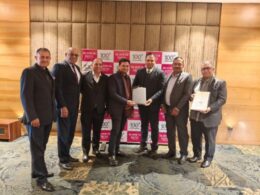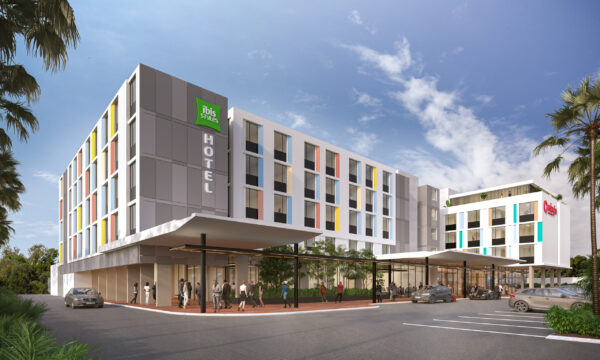

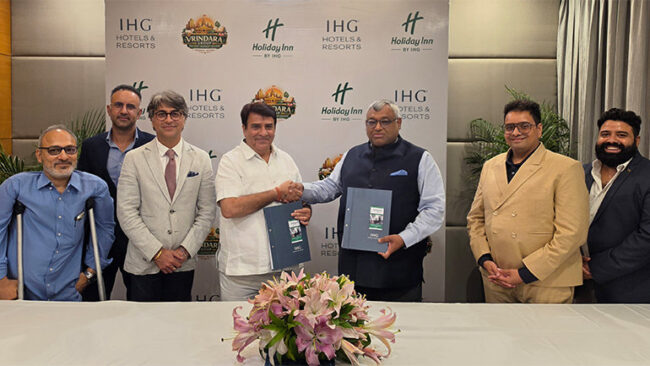
InterContinental Hotels Group PLC (NYSE: IHG) has signed a management agreement with Embrassio Hotels & Resorts Private Limited to develop the 115-room Holiday Inn Mathura in Uttar Pradesh. Scheduled to open in early 2030, the hotel will expand the Holiday Inn brand into a major spiritual tourism destination where branded accommodation remains less developed than visitor demand might suggest. The property will include three dining venues, five meeting and event spaces, a ballroom, a fitness centre and a swimming pool. The signing supports InterContinental Hotels Group’s plan to expand beyond India’s largest commercial cities and secure positions in destinations supported by pilgrimage, domestic leisure and social-event travel. For investors, the individual agreement is financially modest, but it demonstrates how InterContinental Hotels Group intends to translate India’s travel growth into management fees and long-term system expansion.
Why is InterContinental Hotels Group bringing Holiday Inn to Mathura before 2030?
Mathura presents a different demand profile from the corporate and technology centres that have traditionally attracted international hotel development in India. The city’s importance is anchored in religious travel, particularly its association with Lord Krishna and its position within the broader Mathura and Vrindavan pilgrimage circuit. This gives the destination a visitor base that is less dependent on conventional business cycles, although spending patterns and accommodation expectations can vary considerably across traveller segments.
InterContinental Hotels Group is targeting the part of this market that seeks recognisable service standards, predictable room quality, organised food and beverage facilities and dependable event infrastructure. The opportunity is not simply to place an international brand near religious attractions. It is to capture travellers who may currently choose between small independent hotels, informal accommodation, guesthouses and limited-service properties that do not always provide the consistency expected by families, groups or corporate organisers.
The early 2030 opening schedule indicates that this is a development-led project rather than a rapid conversion of an operating hotel. That creates time for design, financing, approvals, construction and pre-opening recruitment, but it also exposes the project to a long execution period. Demand conditions, construction costs, local infrastructure and competitive supply could all change before the first guest checks in.
Signing early can still provide strategic value. It gives InterContinental Hotels Group and Embrassio Hotels & Resorts Private Limited time to establish the property’s position before the market becomes more crowded. It also allows the hotel to be developed around Holiday Inn standards rather than retrofitting an existing asset that may carry structural compromises.
The location reinforces a broader industry pattern. International hotel companies are becoming more willing to enter Indian cities where travel demand is driven by religion, weddings, regional commerce, healthcare, education or government activity rather than multinational corporate offices. These markets may have lower average rates than Mumbai or Delhi, but land costs, competition and development economics can also be more favourable.
How could spiritual tourism support year-round demand for Holiday Inn Mathura?
Spiritual tourism offers a potentially resilient demand base because travel is often linked to religious calendars, family traditions and major life events rather than discretionary sightseeing alone. Mathura attracts pilgrims throughout the year, while festivals can create substantial peaks in visitor numbers. A recognised hotel brand can benefit when travellers prefer to reserve accommodation before arriving rather than negotiate locally during periods of high demand.
The city also forms part of a wider tourism network that includes Vrindavan, Govardhan and other locations associated with Krishna pilgrimage. Holiday Inn Mathura may therefore serve travellers who stay for more than one night and visit multiple sites across the region. Extending average length of stay would improve the economics of the hotel by reducing room turnover costs and creating more opportunities for restaurant, transport and event spending.
However, visitor volume and hotel profitability are not the same thing. Pilgrimage destinations can attract very large numbers of travellers without automatically generating premium room rates. Many visitors travel in groups, remain price conscious or use accommodation primarily as a place to sleep between religious activities.
Holiday Inn Mathura will need to identify the segments willing to pay for international-brand reliability. These may include middle and upper-income families, overseas Indian visitors, organised pilgrimage groups, wedding parties, corporate retreats, religious organisations and travellers combining spiritual visits with leisure itineraries. The hotel’s commercial success will depend on converting a broad visitor base into sufficient occupancy at rates that justify the development cost.
Demand will also be uneven. Festival periods may create sell-out conditions, while quieter weeks could require conferences, weddings and group bookings to stabilise occupancy. Revenue management will therefore become especially important. The hotel must maximise peak-period rates without appearing opportunistic and build attractive packages during lower-demand periods without weakening its positioning.
What does the management agreement mean for IHG and Embrassio Hotels & Resorts?
The management agreement separates the responsibilities of the hotel owner and the international operator. Embrassio Hotels & Resorts Private Limited, the hospitality arm of Vrindara Group, is responsible for developing the asset and carrying the principal capital exposure. InterContinental Hotels Group will provide the Holiday Inn brand, operating systems, distribution, loyalty infrastructure and management expertise.
This structure supports InterContinental Hotels Group’s asset-light business model. The company can expand its room system and earn management-related fees without funding the full construction cost of each hotel. The model can generate attractive returns on corporate capital, but it depends on convincing property owners that the brand and operating platform will improve revenue sufficiently to justify the associated fees.
For Embrassio Hotels & Resorts Private Limited, the Holiday Inn affiliation can reduce some commercial risks but cannot eliminate development risk. Access to InterContinental Hotels Group’s reservation channels and IHG One Rewards membership base may improve visibility, especially among travellers who prefer known brands. Standardised operating processes may also support recruitment, procurement, revenue management and quality control.
The owner must still manage construction expenditure, financing costs, regulatory approvals and the possibility of delays. A hotel scheduled for early 2030 could face several years of interest expense before generating operating cash flow. Material inflation in labour, equipment, interiors or imported components could weaken the project’s expected return.
The relationship will ultimately be judged through hotel-level performance. A global flag can attract customers, but it does not guarantee profitable occupancy. The project must be appropriately sized for the market, designed around actual guest needs and operated with enough cost discipline to protect margins.
Why are the hotel’s restaurants, ballroom and event spaces important to its economics?
Holiday Inn Mathura will include an all-day dining restaurant, a bar and a lobby lounge, giving the property three distinct food and beverage outlets. These facilities can increase guest spending, but their importance extends beyond hotel residents. Restaurants and lounges can attract local families, business meetings and social gatherings, expanding revenue beyond the number of available rooms.
The bar requires particularly careful positioning in a spiritual destination. Demand may exist among business travellers, international visitors and some leisure guests, but local preferences and religious sensitivities could influence its operating model. The hotel will need to balance the expectations associated with an international full-service brand against the cultural context of Mathura.
Five meeting and event spaces, including a ballroom, could become central to the property’s financial performance. Mathura and the surrounding region generate demand for weddings, religious functions, family celebrations, community gatherings and business events. A professionally operated ballroom with accommodation, catering and parking can capture spending that would otherwise be divided across separate local vendors.
Events can also reduce dependence on room revenue. A wedding or conference may generate income through venue rental, catering, accommodation blocks, decoration coordination and related services. This gives the hotel several opportunities to earn revenue from the same customer relationship.
The risk is that event facilities require substantial space and capital. Ballrooms, kitchens and meeting rooms must be used frequently enough to justify construction, maintenance and staffing costs. Competition may come not only from hotels but also from standalone banquet halls and wedding venues that can operate with lower overheads.
InterContinental Hotels Group and Embrassio Hotels & Resorts Private Limited will therefore need a local sales strategy well before opening. Corporate accounts alone will not fill the calendar. Relationships with wedding planners, pilgrimage organisers, tour operators, local institutions and regional businesses could determine whether the hotel’s non-room facilities become profit centres or expensive empty spaces.
How does Holiday Inn Mathura fit into InterContinental Hotels Group’s India expansion?
InterContinental Hotels Group has identified India as a major long-term growth market, with 52 operating hotels and 98 properties in development at the time of the Mathura signing. More than 40 hotels in the pipeline carry the Holiday Inn brand, showing that the company continues to see strong owner demand for its established full-service offering.
The broader ambition is significantly larger. InterContinental Hotels Group plans to exceed 400 open and pipeline hotels in India within five years. Reaching that level will require expansion beyond the country’s largest metropolitan areas because suitable sites and owner partners in major cities alone will not provide enough volume.
Mathura illustrates the type of market that could help close the gap. It has an established reason for travel, national recognition and growing demand for organised accommodation. Similar opportunities exist in religious centres, industrial clusters, state capitals, emerging commercial districts and leisure destinations.
Holiday Inn is well suited to this strategy because it occupies a broad position between luxury hospitality and limited-service accommodation. The brand can serve families, business travellers, groups and events without requiring the rates associated with an upper-luxury property. That flexibility can make it easier to secure owner agreements in markets where customer demand is diverse.
The challenge will be maintaining consistency as the system grows. Rapid signing activity creates a future pipeline, but signed hotels do not always open on schedule. Projects can be delayed by financing, land issues, construction difficulties or changes in owner priorities.
Pipeline quality therefore matters as much as headline quantity. InterContinental Hotels Group must support owners through development, keep projects moving and avoid weakening brand standards in pursuit of room growth. A large pipeline impresses investors only when it converts into operating hotels that generate fees.
Could Holiday Inn Mathura change competition among branded hotels in pilgrimage cities?
The arrival of Holiday Inn could encourage other international and domestic hotel groups to evaluate Mathura more aggressively. Once a recognised operator commits to a market, competitors often reassess demand assumptions, search for local partners and accelerate planned developments.
Indian hotel companies already understand the potential of religious and cultural tourism. International brands add another competitive layer through global distribution, loyalty programmes and operating systems. Domestic operators may respond through lower development costs, stronger local relationships and products designed specifically for pilgrimage travellers.
Competition will not be limited to comparable full-service hotels. Budget chains, independent hotels, serviced apartments, guesthouses and religious accommodation all compete for different parts of the visitor market. Holiday Inn Mathura will need to establish a clear value proposition rather than assuming that brand recognition alone will secure demand.
The hotel could raise customer expectations across the destination. Travellers may begin to expect better booking systems, hygiene standards, organised transport, professional event services and consistent food quality. Local operators that invest in these areas could benefit from the overall formalisation of the market.
There is also a risk of overbuilding if several groups interpret high visitor numbers as evidence of unlimited branded-hotel demand. Pilgrimage traffic can look enormous in annual statistics, but only part of that traffic may be willing to pay full-service hotel rates. New supply must be matched to the addressable paying customer, not simply the number of people entering the city.
A disciplined project could strengthen Mathura’s hospitality ecosystem by creating jobs, training local employees and attracting organised travel groups. An oversized or excessively expensive hotel could struggle to achieve acceptable returns. The difference will depend on development cost, pricing, location and operating efficiency.
What execution risks could delay or weaken the Holiday Inn Mathura investment?
The long development timeline is the most visible risk. An early 2030 opening leaves room for changes in interest rates, construction costs, regulatory requirements and tourism infrastructure. Delays could increase financing expenses and postpone the management-fee income expected by InterContinental Hotels Group.
Site access and surrounding infrastructure will influence guest experience. Pilgrimage destinations can experience severe congestion during festivals and peak seasons. A hotel may offer strong rooms and restaurants, but difficult road access or unreliable local transport can reduce customer satisfaction and complicate events.
Water, energy and waste management will also require attention. A 115-room hotel with restaurants, a swimming pool, laundry operations and event facilities can consume substantial resources. Efficient systems will be necessary to control operating costs and reduce pressure on local infrastructure.
Recruitment presents another challenge. International brand standards require trained employees across front-office operations, housekeeping, kitchens, engineering, sales and events. The hotel may need to develop local talent while attracting experienced managers from larger hospitality markets.
Demand forecasting could be equally difficult. The owner must avoid building an operating structure designed only for festival peaks. Staffing and food operations need enough flexibility to manage sharp changes in occupancy while maintaining service quality.
Cultural integration will matter as well. Holiday Inn Mathura must feel appropriate to its destination without turning religious identity into superficial decoration. Menu planning, guest activities, alcohol service, event positioning and staff training must reflect local expectations while preserving the consistency associated with the brand.
What does the Holiday Inn Mathura deal mean for InterContinental Hotels Group stock?
InterContinental Hotels Group’s American depositary receipt closed at approximately $165.01 on July 10. The stock was around 1.5% lower than its July 3 close but remained approximately 1.7% above its June 10 level, suggesting modest short-term consolidation rather than a meaningful deterioration in sentiment.
The shares were trading about 6.2% below their 52-week high of $175.89 and roughly 46% above the $113.32 low. That performance indicates that investors continue to value the company’s asset-light growth, operating recovery and shareholder-return potential.
Holiday Inn Mathura will not materially change group earnings on its own. The hotel has only 115 rooms and is not expected to open until 2030. Its importance lies in what it reveals about the repeatability of InterContinental Hotels Group’s India development strategy.
InterContinental Hotels Group reported 4.4% global revenue per available room growth during the first quarter of 2026 and opened 82 hotels. It has also moved beyond 7,000 operating hotels globally, supported by a development pipeline exceeding 2,300 properties. Investors are therefore assessing the company on its ability to combine existing-hotel revenue growth with continued expansion of the fee-generating system.
India could become an increasingly important contributor to that expansion. The market offers a large domestic travel base, low branded-room penetration in many cities and an expanding pool of property owners seeking international affiliations. Management and franchise agreements can allow InterContinental Hotels Group to participate without committing substantial capital to each building.
The market risk is that aggressive pipeline ambitions may outpace project conversion or owner economics. Signing hundreds of hotels is commercially useful only when owners secure financing, complete construction and operate properties profitably. Holiday Inn Mathura will eventually become one small test of whether the India pipeline can move from announcements to dependable fee income.
What are the key takeaways from IHG signing the Holiday Inn Mathura agreement?
- Holiday Inn Mathura will add 115 rooms to InterContinental Hotels Group’s India pipeline and is scheduled to open in early 2030.
- The management agreement gives InterContinental Hotels Group access to future fee income while Embrassio Hotels & Resorts Private Limited carries the principal development exposure.
- Mathura offers demand driven by pilgrimage, domestic leisure, weddings and organised groups rather than conventional corporate travel alone.
- High visitor numbers do not automatically guarantee premium hotel economics, making rate discipline and customer segmentation essential.
- Three dining venues and five event spaces could diversify revenue beyond rooms and reduce dependence on festival-period occupancy.
- The ballroom may become a major commercial asset if the hotel builds relationships with wedding planners, institutions and group-travel organisers.
- InterContinental Hotels Group’s 98-hotel India pipeline demonstrates strong owner interest but also creates pressure to convert signings into timely openings.
- The company’s ambition to exceed 400 open and pipeline hotels in India will require deeper expansion into secondary and specialised travel markets.
- InterContinental Hotels Group stock remains close to its 52-week high, reflecting confidence in asset-light growth despite recent short-term consolidation.
- The main risks include construction inflation, development delays, infrastructure constraints, staffing requirements and overestimating demand for full-service accommodation.
Discover more from Business-News-Today.com
Subscribe to get the latest posts sent to your email.