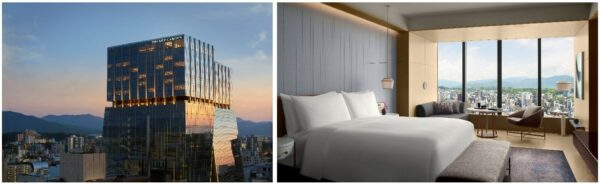





Leisure Hotels Group has launched Samsara Hill Resort in Mussoorie, adding a boutique mountain retreat to its Uttarakhand portfolio and deepening its focus on experiential hospitality in North India. The privately held hospitality company is using the property to strengthen its presence in a hill station where premium stays, family leisure travel and regulated tourist flows are increasingly converging. Samsara Hill Resort brings 21 accommodations across rooms, suites and luxury mushroom tents, with dining and recreation spaces designed around mountain views and outdoor experiences. Strategically, the launch matters because Mussoorie is moving from a volume-driven hill destination toward a more curated lodging market, where access, experience design and operating discipline may matter as much as room count.
The launch expands Leisure Hotels Group’s Uttarakhand portfolio to 15 properties, reinforcing a state-led concentration strategy rather than a scattered national roll-out. That is important because the company already has brand familiarity in destinations such as Nainital, Rishikesh, Corbett, Haridwar, Kanatal and Bhimtal, giving it a stronger local operating base than many new entrants chasing post-pandemic leisure demand. In hospitality terms, Samsara Hill Resort is not a large inventory play. It is a yield, positioning and experience play, which means the success of the asset will depend on occupancy quality, average daily rate discipline, guest reviews and repeat leisure traffic rather than scale alone.
Why does Leisure Hotels Group’s Mussoorie launch matter for Uttarakhand’s premium hospitality market?
The most important signal from the Samsara Hill Resort launch is that Leisure Hotels Group is doubling down on Uttarakhand at a time when India’s domestic leisure market is becoming more valuable, more competitive and more operationally demanding. Mussoorie has long benefited from accessibility from Delhi, Dehradun and other North Indian source markets, but that same accessibility has also created congestion, uneven service quality and pressure on public infrastructure. A boutique resort model located away from the most crowded parts of town allows Leisure Hotels Group to position the property as a retreat rather than just another hill-station accommodation option.
For Leisure Hotels Group, the portfolio logic is clear. A 21-key property can support a premium guest proposition if it maintains pricing power, offers differentiated experiences and avoids becoming dependent on discount-led online travel platform traffic. The limited room count also creates scarcity, which can help during peak holiday windows, long weekends, school vacations and wedding-adjacent leisure trips. However, the same small scale also raises execution pressure, because every unsold room has a larger impact on daily revenue and every weak guest review is more visible in a boutique operating model.

The wider competitive implication is that Uttarakhand hospitality is moving beyond conventional hill hotels and homestays. Operators are increasingly competing on curated stays, wellness cues, local cuisine, outdoor programming, family-friendly spaces and proximity without chaos. That is good for room rates, but it also raises the operating bar. Guests who pay boutique resort prices do not forgive poor access roads, inconsistent service, weak food execution or thin experience programming. In mountain hospitality, a good view helps, but it cannot carry the entire profit and loss statement.
How does Samsara Hill Resort change Leisure Hotels Group’s positioning in crowded Mussoorie?
Samsara Hill Resort gives Leisure Hotels Group a more defined Mussoorie proposition at a time when the destination is trying to balance popularity with liveability. The resort is positioned away from the crowd while remaining within driving distance of the town centre, which gives it a useful middle ground between seclusion and convenience. That matters because Mussoorie’s core challenge is no longer demand generation alone. The bigger issue is how operators can deliver a premium experience without exposing guests to the worst effects of congestion.
The accommodation mix also points to a broader shift in Indian leisure hospitality. Rooms and suites provide familiarity, while luxury mushroom tents and select private Jacuzzi-led experiences allow the resort to participate in the glamping and experiential stay trend without becoming a full wilderness property. This hybrid format can appeal to families, couples, urban professionals and small groups that want nature without surrendering comfort. It also gives Leisure Hotels Group more pricing segmentation inside a compact resort, which can help revenue management if demand is handled carefully.
The risk is that Mussoorie is not an empty canvas. Branded hospitality players, legacy hotels, independent premium resorts, vacation rentals and homestays are all competing for travellers with different budgets and expectations. Large brands can offer loyalty programmes and stronger distribution muscle, while independent properties can move faster on pricing and local customisation. Leisure Hotels Group’s advantage lies in regional familiarity and destination-specific operations. Its challenge is to make Samsara Hill Resort feel distinct enough to justify premium pricing in a market where many properties already sell the same promise of mountain calm, misty mornings and “escape from the city” serenity. The hills are beautiful, but the brochure vocabulary is getting crowded.
What execution risks could limit returns from boutique resort expansion in Mussoorie?
The biggest execution risk is destination pressure. Mussoorie’s visitor growth has already forced authorities to focus more closely on registration, traffic management and carrying capacity. For a resort operator, that means demand growth is positive only if access, parking, check-in flow, staff availability, utilities and local compliance keep pace. A premium property cannot control the entire destination experience, but guests will still judge the stay by the full journey from arrival to departure.
Seasonality is another important risk. Hill destinations often see sharp demand during summer, festive periods and long weekends, but softer demand during monsoon disruptions or off-peak windows. A boutique resort with limited keys must therefore rely on smart packaging, corporate offsites, wellness weekends, family itineraries, local food experiences and direct-booking campaigns to reduce revenue volatility. If Samsara Hill Resort becomes too dependent on peak pricing, the asset may look strong during holidays but under-optimised across the full year.
There is also the operating-cost question. Mountain resorts typically face higher logistics costs for supplies, maintenance, staff accommodation, energy reliability and weather-linked upkeep. Add guest expectations around food, safety, comfort, internet connectivity and curated experiences, and the margin equation becomes more complex than room-rate headlines suggest. Leisure Hotels Group’s regional depth may help manage this complexity, but Samsara Hill Resort will still need tight cost control. Boutique hospitality can command premium pricing, but it can also become expensive to run if staffing, procurement and maintenance are not disciplined.
Why are Indian hotel operators pushing deeper into leisure, wellness and hill destinations?
Indian hospitality operators are pursuing leisure destinations because demand has broadened beyond traditional business travel. Urban consumers are taking more frequent short breaks, families are prioritising drivable destinations, and premium travellers are increasingly willing to pay for privacy, design, nature and local experiences. This has made hill stations, spiritual corridors, wildlife destinations and boutique leisure properties more strategically important for hotel companies that once leaned heavily on metro business demand.
The competitive map is also changing. Larger hotel groups are expanding into boutique luxury, spiritual travel, wellness and destination-led hospitality, while regional operators are defending their strongest geographies through local knowledge and faster site-level execution. Leisure Hotels Group’s Samsara Hill Resort launch sits inside this wider trend. The company is not merely adding inventory. It is trying to strengthen relevance in a part of the market where the guest is paying for mood, memory and perceived exclusivity, not just a bed and breakfast.
This shift also has capital allocation implications. Smaller boutique properties can be attractive because they may require less inventory than large hotels while offering premium rates, especially in constrained hill locations. However, smaller does not automatically mean safer. Returns depend on land economics, regulatory approvals, operating model, distribution cost, brand pull and asset maintenance. The best-positioned operators will be those that combine local authenticity with professional hospitality systems. The weakest operators may discover that “experiential” is not a magic word. It is a promise that has to be operationally funded every day.
What does Samsara Hill Resort signal for competitors across Uttarakhand and North India?
For competitors, the launch signals that Uttarakhand’s premium hospitality market is becoming more segmented. The old split between budget hotels and luxury resorts is giving way to a more layered market that includes boutique retreats, glamping formats, villa-led stays, wellness-oriented properties, branded resorts and hybrid family leisure destinations. Samsara Hill Resort adds another signal that operators see value in focused, experience-led assets that can command a premium from travellers seeking quieter stays near well-known destinations.
This creates pressure on independent hotels in Mussoorie that rely mainly on location and legacy demand. As branded and regionally established operators improve the product mix, older properties may need to upgrade rooms, improve food and beverage quality, add local experiences or sharpen digital distribution. Otherwise, they risk being squeezed between budget options on one side and more curated premium retreats on the other. In a market shaped by online reviews, weak service has nowhere to hide. The algorithm has no nostalgia.
For larger hotel companies, Leisure Hotels Group’s move reinforces the value of regional clusters. A portfolio spread across Uttarakhand allows cross-selling between destinations, multi-stop itineraries, repeat guest engagement and centralised procurement advantages. The strategic question is whether Leisure Hotels Group can turn that cluster into stronger brand loyalty before larger national and international brands deepen their own presence across the state. In that sense, Samsara Hill Resort is both an expansion and a defensive move.
What should executives watch next as Leisure Hotels Group scales its mountain resort portfolio?
The first metric to watch is whether Samsara Hill Resort can deliver rate integrity without sacrificing occupancy. A boutique resort can look attractive in launch coverage, but the real test arrives after the novelty fades and the property moves into regular revenue cycles. Strong weekend demand is useful, but weekday demand, shoulder-season demand and direct-booking conversion will reveal whether the asset has durable commercial strength.
The second metric is guest mix. If Samsara Hill Resort attracts families, couples, small celebrations and high-yield urban travellers without becoming dependent on one segment, the property will have better resilience. If demand is concentrated too heavily around peak holiday windows, the resort may need deeper promotional activity during softer periods. Leisure Hotels Group’s broader Uttarakhand network could help here by packaging multi-destination stays and drawing repeat guests from its existing properties.
The third area is sustainability and local integration. Mussoorie’s growth pressures mean hospitality expansion will be judged not just by room additions but by how properties manage waste, water, traffic impact, employment, sourcing and community relationships. For a company with a long Uttarakhand presence, this is not a side issue. It is central to long-term operating permission, both formal and informal. Samsara Hill Resort will therefore be judged by guests, regulators, local stakeholders and competitors at once.
Key takeaways on what Leisure Hotels Group’s Samsara Hill Resort means for Mussoorie and Uttarakhand hospitality
- Leisure Hotels Group’s Samsara Hill Resort launch strengthens the company’s Uttarakhand concentration strategy, giving it another premium mountain asset in a state where regional operating knowledge can be a meaningful competitive advantage.
- The 21-key boutique format suggests Leisure Hotels Group is prioritising yield, guest experience and positioning over large-scale inventory, which can support premium pricing but also raises pressure on execution quality.
- Mussoorie’s popularity is both the opportunity and the risk, because strong demand supports room rates while congestion, tourist management rules and infrastructure pressure can weaken the end-to-end guest experience.
- The resort’s mix of rooms, suites and luxury mushroom tents reflects the wider shift in Indian hospitality toward experiential stays that combine comfort, nature, privacy and localised design.
- Competitors in Mussoorie may face pressure to upgrade service quality, digital visibility, food and beverage offerings and experience programming as boutique and branded properties raise customer expectations.
- Leisure Hotels Group’s regional portfolio gives it potential cross-selling advantages across Uttarakhand destinations such as Nainital, Rishikesh, Corbett, Haridwar, Kanatal and Bhimtal.
- The property’s long-term performance will depend on occupancy beyond peak holiday periods, direct-booking strength, review quality, cost control and the ability to maintain rate discipline.
- For India’s hospitality sector, Samsara Hill Resort reinforces the movement of capital and operator attention toward leisure-led, drivable, premium and experience-rich destinations outside major metros.
- The main downside risk is that boutique mountain hospitality can become operationally expensive if logistics, staffing, maintenance and seasonality are not tightly managed.
- The launch gives Leisure Hotels Group a stronger Mussoorie foothold, but sustained success will require more than scenic positioning. The property must convert destination appeal into repeatable commercial performance.
Discover more from Business-News-Today.com
Subscribe to get the latest posts sent to your email.