



LNG Canada and its Joint Venture Participants announced on 14 July 2026 a landmark equity option agreement with MNT Investments LP, a limited partnership formed by the economic development organizations of five North Coast First Nations, giving those Nations the opportunity to invest up to C$1 billion to acquire majority equity ownership of the planned LNG storage tank in the proposed Phase 2 expansion of the Kitimat facility. The five participating First Nations are the Gitga’at First Nation, Gitxaała Nation, Haisla Nation, Kitselas First Nation and Kitsumkalum. Under the structure disclosed, a special purpose entity would finance and own the 225,000 cubic metre storage tank and would lease it back to LNG Canada for the operational life of the project. The equity option is conditional on LNG Canada’s joint venture participants approving the Phase 2 expansion, with a Final Investment Decision targeted by the end of 2026. LNG Canada is jointly owned by Shell plc (LSE: SHEL, NYSE: SHEL) as the majority participant, alongside Petronas, PetroChina, Mitsubishi Corporation (TSE: 8058) and Korea Gas Corporation (KRX: 036460). The central tension is that the deal is being framed as a defining precedent for Indigenous equity ownership in Canadian energy infrastructure, but its execution depends on a commercial Final Investment Decision that has not yet been taken.
What did LNG Canada announce, and how does the special purpose entity and lease-back structure work?
The 14 July 2026 announcement is structured as an equity option rather than as a direct investment or completed transaction. MNT Investments LP would have the right, subject to the condition described below, to acquire a majority equity ownership position in a special purpose entity created to finance and hold the planned LNG storage tank for the Phase 2 expansion. The special purpose entity would own the tank asset and would enter into a long-term lease agreement with LNG Canada under which LNG Canada retains full operational responsibility. The financial mechanic is a project ownership and lease-back arrangement, common in large infrastructure financing but rarely applied to Indigenous ownership positions of this scale. Under such a structure, MNT Investments and its First Nation partners would derive returns through lease payments over the operational life of the LNG Canada facility, converting a capital contribution at the construction phase into a multi-decade income stream. LNG Canada would retain complete operational control of the tank, its safety systems, its ship-loading interface and its associated cryogenic infrastructure, while the ownership title on the asset would sit with the special purpose entity. The structure gives the five First Nations an economic ownership position without transferring operational or safety liability, which is critical for a piece of infrastructure of this size and technical complexity.
Who are the five First Nations, and how does MNT Investments LP consolidate their participation?
MNT Investments LP is not a new entity created for this transaction; it is a limited partnership formed by the economic development organizations of the five First Nations whose traditional territories neighbour the LNG Canada facility at Kitimat. Those Nations are the Gitga’at First Nation, the Gitxaała Nation, the Haisla Nation, the Kitselas First Nation and Kitsumkalum. The formation of a single limited partnership vehicle to hold the Phase 2 equity option matters because it aggregates the participating Nations into a common investment structure rather than requiring five separate transaction paths. Under this structure, each Nation’s economic development organization participates as a limited partner, with agreed governance rules determining voting, distributions and any subsequent decisions. The elected chief councillors of the participating Nations issued individual statements at the announcement. Maureen Nyce of the Haisla Nation described the announcement as a defining point in collective history. Arnold Clifton of the Gitga’at First Nation characterised the partnership as an example of a whole greater than the sum of its individual contributions. Glenn Bennett of the Kitselas First Nation and Luugagwelks Linda Innes of the Gitxaała Nation likewise emphasised the reframing of major project development around Indigenous ownership rather than benefits agreements alone. The MNT framework provides a template for future large-scale infrastructure participation by multi-Nation Indigenous groups in Canada.
Why the 225,000 cubic metre storage tank is central to the Phase 2 expansion economics
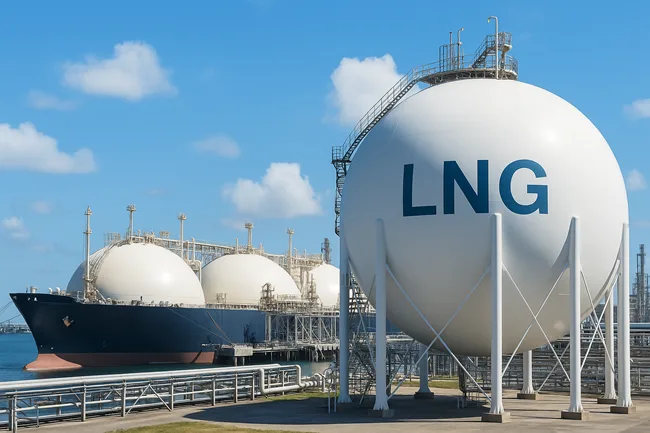
The asset at the centre of the transaction is the planned 225,000 cubic metre LNG storage tank, described as the largest in Canada and among the largest of its class globally. The tank would stand 56 metres tall and 92 metres across, with a nine percent nickel alloy steel inner tank designed for cryogenic service and an outer concrete containment structure. Storage capacity is a critical operating variable at any liquefied natural gas export terminal because it determines how many days of production the facility can hold between vessel loadings, and therefore how resilient operations are to weather delays, shipping schedule disruption and demand seasonality. In an expansion scenario, incremental storage capacity is not optional; it is a hard constraint that must be built in parallel with any additional liquefaction capacity. Placing the tank asset into a special purpose entity means that its capital cost is separated from the wider Phase 2 project financing, which allows the equity ownership position to be defined narrowly around a single, high-value, discrete piece of infrastructure. The scale is significant. A C$1 billion investment in a single asset represents one of the largest Indigenous equity positions ever taken in Canadian infrastructure at the point of construction, and it converts the ownership question from a stake in the whole facility to a majority claim on a specific asset with a defined lease-back stream.
How does the equity option depend on the joint venture participants’ Final Investment Decision by the end of 2026?
The transaction is conditional on LNG Canada’s joint venture participants approving the Phase 2 expansion. The Final Investment Decision is targeted by the end of 2026. LNG Canada is a joint venture between five participants: Shell plc, which holds the majority interest; Petronas of Malaysia; PetroChina; Mitsubishi Corporation of Japan; and Korea Gas Corporation of South Korea. Any Final Investment Decision requires internal governance approval within each partner as well as consent under the joint venture agreement. Phase 2 has been under study since well before the Phase 1 start-up on 30 June 2025, and preparatory engineering work has been ongoing in parallel with Phase 1 commissioning. The proposed Phase 2 expansion could include two additional LNG processing trains and would lift total plant capacity to up to 30 million tonnes per annum from the current Phase 1 nameplate. The commercial rationale for the joint venture participants to approve Phase 2 is significant. LNG Canada shipped its first cargo on 30 June 2025 and has since dispatched more than 100 cargoes, giving the participants operational data and customer traction on which to base a Phase 2 investment case. Global LNG demand from Asia, and increasing European interest in supply diversification, provide a demand backdrop that could support a Final Investment Decision within the current timing target. What remains unresolved is the internal capital allocation debate within each participant and the treatment of the Phase 2 project against alternative uses of capital across each partner’s global portfolio.
How does this compare to Coastal GasLink and Cedar LNG as Indigenous equity precedents in Canadian energy?
The MNT Investments equity option follows a distinct pattern that has been building in British Columbia’s LNG value chain. The Coastal GasLink pipeline, which supplies natural gas from northeastern British Columbia to LNG Canada, was structured with a 10 percent equity option for First Nations along its route. That option, taken up through a group vehicle, represented one of the earliest large-scale Indigenous equity positions in a major Canadian midstream project. The Haisla Nation has since gone further and taken majority ownership of Cedar LNG, described as the world’s first Indigenous-majority-owned LNG export facility, currently under construction near Kitimat in the same region as LNG Canada. Across the country, First Nations have acquired or negotiated over C$10 billion in equity in energy and resource projects in recent years, and the trajectory of that participation is a material variable in Canadian energy project economics. The LNG Canada Phase 2 equity option formalises the model at a different scale. Coastal GasLink provided a 10 percent stake in a linear midstream asset. Cedar LNG provides Indigenous majority ownership of a mid-scale export facility. LNG Canada Phase 2 provides majority ownership of a specific major infrastructure asset embedded within one of Canada’s largest private-sector investments. The tank is not the whole facility, but the ownership position on that discrete asset carries structural weight because the asset sits on a critical path within Phase 2.
What Phase 2 approval would mean for LNG Canada’s global position and for its joint venture partners
If Phase 2 receives a Final Investment Decision, LNG Canada’s total nameplate capacity would rise to as much as 30 million tonnes per annum, placing the facility among the largest LNG export projects globally. For Shell plc, which is already executing a broader strategic pivot toward its upstream and integrated gas businesses, a Phase 2 sanction would add material long-term volume to its LNG portfolio. For Petronas, PetroChina, Mitsubishi Corporation and Korea Gas Corporation, Phase 2 either supplies their internal markets directly under offtake arrangements or provides tradeable LNG cargoes that support downstream gas businesses. The strategic value of the LNG Canada project to Asian joint venture partners is amplified by geography. Kitimat’s Pacific coast location provides shipping distances to major Asian buyers that are meaningfully shorter than those from United States Gulf Coast facilities, translating into lower delivered-cost economics and lower voyage carbon intensity. The proposed Phase 2 tank equity option therefore lands at a moment when the commercial case for expansion is arguably as strong as it has been at any point since Phase 1 sanction. Whether that translates into a positive Final Investment Decision by the end of 2026 will depend on final capital cost estimates, contractor availability in a tight construction market, and the ability of each participant to align its own capital plan with the Phase 2 timing.
What still needs to happen for the C$1 billion option to convert into Indigenous ownership
The path from equity option to funded Indigenous ownership includes several sequential steps. First, LNG Canada’s joint venture participants must reach a Final Investment Decision on Phase 2 by the end of 2026 or in a revised target window if the current schedule slips. Second, the special purpose entity would need to be capitalised and formed under the agreed structure, with financing terms, distribution rules and lease terms documented. Third, MNT Investments LP would exercise the equity option, subject to satisfactory diligence and any final governance approvals within each participating Nation. Fourth, the tank construction contract would need to be awarded, with capital drawdowns aligned to construction milestones. Fifth, the tank would need to be built, commissioned and integrated into the wider Phase 2 facility. Any of these steps can extend the timeline, and none of them are guaranteed by the equity option agreement announced on 14 July. LNG Canada was careful in its own materials to describe the arrangement as an option and to condition it on joint venture participant approval. The economic and social dividend to the participating Nations, if the option is realised, would flow through lease payments over the operational life of the facility. LNG Canada was quiet on the specific expected life of the project in the announcement, but LNG export terminals are typically designed for at least 25 to 40 years of primary operating life, making the economic tail of an ownership position of this kind materially longer than most conventional infrastructure investments.
Key takeaways from LNG Canada’s C$1 billion equity option for MNT Investments and the five First Nations
- LNG Canada and its joint venture participants have announced an equity option agreement with MNT Investments LP, a limited partnership representing five North Coast First Nations, for up to C$1 billion in ownership of the planned Phase 2 LNG storage tank.
- The participating Nations are the Gitga’at First Nation, Gitxaała Nation, Haisla Nation, Kitselas First Nation and Kitsumkalum.
- The structure involves a special purpose entity acquiring the 225,000 cubic metre storage tank and leasing it back to LNG Canada for the operational life of the project.
- LNG Canada retains full operational control, safety responsibility and maintenance of the tank and associated infrastructure.
- The equity option is conditional on LNG Canada’s joint venture participants approving the proposed Phase 2 expansion, with a Final Investment Decision targeted by the end of 2026.
- LNG Canada’s joint venture participants are Shell plc, Petronas, PetroChina, Mitsubishi Corporation and Korea Gas Corporation.
- Phase 2 could include two additional LNG processing trains and lift total plant capacity to up to 30 million tonnes per annum.
- The 225,000 cubic metre tank, standing 56 metres tall and 92 metres across, would be the largest in Canada and among the largest of its class globally.
- The transaction extends a pattern of Indigenous equity participation in Canadian energy infrastructure established through the Coastal GasLink 10 percent equity option and the Haisla Nation’s majority ownership of Cedar LNG.
- LNG Canada Phase 1 commenced operations on 30 June 2025 and has shipped more than 100 cargoes since, providing operational track record to support the joint venture participants’ Phase 2 investment decision.
Discover more from Business-News-Today.com
Subscribe to get the latest posts sent to your email.