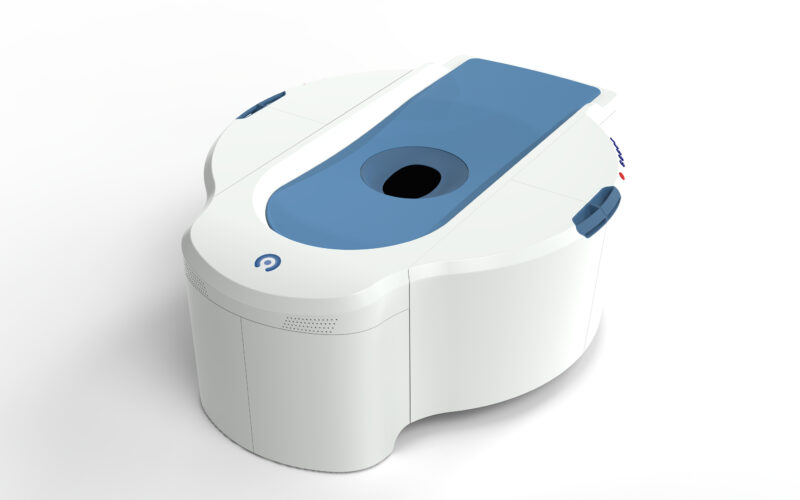
Koning Corporation, operating as Koning Health, has achieved Medical Device Single Audit Program certification and expanded its United States presence through Koning Vera Breast CT installations in the Seattle and Richmond markets. The quality-system milestone gives the private medical imaging company a stronger compliance platform across several major medical-device jurisdictions, while the new sites add real-world deployment points for its compression-free breast CT technology. The combination matters because regulatory credibility and installed-base growth must advance together for an emerging imaging modality to move beyond specialist adoption. Medical Device Single Audit Program certification is not a new clinical indication or automatic authorisation to sell in every participating market. The commercial test is whether Koning Health can turn quality-system readiness and geographic expansion into recurring scan volumes, clinician confidence and broader payer acceptance.
The latest developments extend a period of expansion for Koning Health, which has been placing its dedicated breast computed tomography system in hospitals, diagnostic centres, specialist breast clinics and mobile imaging environments. Its Seattle-area system is located at Vital View in Bellevue, Washington, while the Richmond installation advances a market that the company had previously identified as part of its 2026 expansion pipeline. Koning Health’s current network also includes locations in New York, California, Florida, Tennessee, Texas, Missouri, Illinois, Arkansas, Alabama and Georgia, among other markets.
For Koning Health, the strategic value lies in reducing the gap between regulatory preparedness and commercial execution. Certification can make discussions with regulators, distributors, hospitals and procurement teams easier because it demonstrates that the manufacturer’s quality management system has undergone a recognised audit. Installations, however, create the clinical evidence, referral relationships and operating experience that ultimately determine whether the technology becomes a sustainable imaging platform rather than a collection of isolated placements.
Why does MDSAP certification matter for Koning Health’s international expansion strategy?
The Medical Device Single Audit Program allows an audit conducted by a recognised auditing organisation to assess a medical-device manufacturer’s quality management system against the requirements of multiple participating regulatory authorities. The core participants include regulators in Australia, Brazil, Canada, Japan and the United States. The framework is intended to reduce duplicative regulatory auditing while giving participating authorities access to a more consistent assessment of a manufacturer’s quality controls.
Certification documents can only be issued after the satisfactory completion of an initial certification audit or recertification audit covering the manufacturer’s quality management system. The certification process includes ISO 13485:2016 requirements and applicable regulatory expectations within the jurisdictions included in the audit scope. That makes the achievement more substantial than a general corporate quality statement, although its precise commercial value depends on the scope, facilities and activities covered by Koning Health’s certificate.
The timing is particularly relevant in the United States. The U.S. Food and Drug Administration’s Quality Management System Regulation became effective on February 2, 2026, replacing the previous Quality System Regulation framework and incorporating ISO 13485:2016 into the foundation of American medical-device manufacturing requirements. The agency also introduced a new inspection process aligned with the updated regulation. Koning Health’s certification therefore arrives during a period when quality-system harmonisation is becoming more important for manufacturers serving both United States and international markets.
The operational benefit is not that Koning Health can avoid regulatory scrutiny. Participating authorities retain their own legal powers, product-registration processes, market-access requirements and enforcement responsibilities. Rather, the company may be able to build one more globally consistent quality infrastructure for design control, manufacturing, supplier management, complaints, risk management, corrective action and post-market activities.
That should become increasingly valuable if Koning Health expands production or adds international distributors. A manufacturer selling a specialised capital imaging system must manage not only the equipment itself, but also installation qualification, software control, servicing, calibration, training, complaint handling and field corrections. A globally aligned quality system can reduce the risk that each new market requires a substantially different internal process.

How do the Seattle and Richmond installations strengthen Koning Health’s commercial position?
The Seattle-area installation provides Koning Health with a visible operating site in the Pacific Northwest, a region containing major healthcare systems, research institutions and specialised diagnostic providers. Vital View is located in Bellevue and was identified by Koning Health earlier in 2026 as the destination for a system being shipped to the Seattle market. The company subsequently described the installation as part of its widening United States footprint and its effort to educate providers and patients about dedicated breast CT.
The Richmond installation adds another strategically useful geography. It extends Koning Health’s presence in the eastern United States and creates an additional reference site that could support relationships with regional physicians, radiologists, breast surgeons and outpatient imaging providers. Richmond had already appeared in the company’s planned installation pipeline in March 2026, meaning the latest announcement indicates movement from planned expansion toward physical deployment.
For a medical-equipment company, installations serve several purposes simultaneously. They generate equipment revenue or contractual value, establish service and support relationships, expose clinicians to the technology and create opportunities to collect utilisation and workflow data. A successful reference site can also influence nearby providers because radiologists and referring physicians often want evidence that a new modality can be integrated into routine care without disrupting existing diagnostic pathways.
The growing variety of Koning Health sites may be as important as the number of installations. The company has deployed systems in comprehensive breast centres, hospitals, independent imaging clinics, patient-focused diagnostic practices and a mobile imaging platform. That diversity provides several potential commercial models, but it also means Koning Health must demonstrate that the economics work in settings with different patient volumes, staffing structures, referral networks and payment arrangements.
A hospital may evaluate Koning Vera Breast CT as part of a broader diagnostic service line, where capital expenditure can be supported by multiple clinical applications and institutional research. A boutique imaging centre may depend more heavily on direct patient demand, physician referrals and predictable reimbursement. Mobile deployments create an access opportunity, particularly in underserved communities, but introduce additional logistics, scheduling and utilisation challenges.
What can the Koning Vera Breast CT currently do under its United States regulatory status?
The Koning Breast CT originally received U.S. Food and Drug Administration premarket approval in January 2015. The approved indication describes a cone-beam computed tomography system intended to provide three-dimensional images for diagnostic imaging of the breast. Importantly, the approval states that the images should be read alongside standard two-view mammography, meaning the current regulatory language should not be interpreted as a blanket replacement for conventional screening mammography.
The distinction is commercially important. Koning Health markets the Koning Vera Breast CT around compression-free, true three-dimensional imaging, with a scan completed in less than ten seconds per breast. The company also positions the platform for diagnostic workups, implant evaluation, post-operative monitoring, treatment-response assessment and image-guided biopsy workflows.
Patient comfort provides an understandable entry point for marketing because breast compression is one of the most recognisable sources of anxiety and discomfort associated with mammography. However, comfort alone is unlikely to determine broad institutional adoption. Procurement teams and clinical leaders will examine diagnostic performance, radiation dose, workflow requirements, technologist training, radiologist interpretation time, maintenance costs, throughput and reimbursement.
Koning Health must also communicate the difference between regulatory approval, clinical capability and emerging commercial use with precision. The existence of an approved diagnostic device does not mean every potential application has been separately validated or authorised. Similarly, claims regarding improved detection, reduced unnecessary procedures or superior performance require support from appropriately designed clinical evidence and must remain consistent with the product’s approved labelling.
The company’s opportunity is still meaningful. Dedicated breast CT offers volumetric imaging without the tissue overlap created by conventional two-dimensional images, while avoiding the compression used in mammography. It could therefore become a useful option within selected diagnostic pathways, especially where clinicians require additional anatomical information or where patients have implants, dense tissue or unresolved findings.
Can reimbursement and clinical workflow keep pace with Koning Health’s installation growth?
Reimbursement remains one of the most important commercial variables. Dedicated breast CT received Category III Current Procedural Terminology codes that became available in 2021, giving providers a mechanism to report breast CT procedures. However, Category III codes are temporary codes intended to track emerging technologies, procedures and services. The American Medical Association states that receiving a code does not guarantee insurance coverage, reimbursement or payment.
This means each Koning Vera Breast CT installation may face a different payment environment. Coverage can vary among commercial insurers, employer-sponsored programmes, Medicare contractors, self-pay models and individual provider arrangements. Even where claims are reimbursed, payment levels must be sufficient to support the cost of the equipment, staff, facility space, service contracts and radiologist interpretation.
Utilisation is equally important. Capital imaging equipment creates value only when enough appropriate patients are referred and scanned. Koning Health and its clinical partners must educate referring physicians about when breast CT is suitable, establish protocols for integrating it with mammography, ultrasound and magnetic resonance imaging, and ensure that patients understand its role.
Radiologist familiarity could also influence adoption. True volumetric breast CT produces a different dataset from standard mammography, requiring interpretation experience and confidence. Koning Health’s investment in training through Koning Academy and other professional education initiatives therefore supports more than marketing. It addresses one of the practical barriers to introducing a new imaging modality into established clinical routines.
The Seattle and Richmond sites can help answer these commercial questions. Scan volumes, referral patterns, repeat physician usage, payer responses and patient conversion rates will provide more meaningful evidence than installation announcements alone. If the sites demonstrate reliable utilisation and smooth workflow integration, they could strengthen Koning Health’s case with other providers.
What must Koning Health prove after the MDSAP certification and new installations?
The latest developments strengthen two foundations of the business. Medical Device Single Audit Program certification supports the company’s quality and regulatory infrastructure, while the Seattle and Richmond installations expand its clinical and commercial footprint. Neither achievement should be dismissed as procedural, but neither independently confirms that dedicated breast CT is approaching mainstream adoption.
The next stage requires evidence of replication. Koning Health must show that installations become active clinical sites, that imaging volumes rise after launch, that physicians continue referring patients and that providers can secure sustainable payment. Repeat orders from existing partners or multi-site agreements would provide stronger evidence of commercial confidence than one-off placements.
Internationally, the certification may help Koning Health pursue regulatory and distribution opportunities across participating jurisdictions. The company will still require product-specific registrations, local approvals and effective commercial partners. Certification improves readiness, but it does not remove the need for country-by-country execution.
The central opportunity is clear. Koning Health has an FDA-approved dedicated breast CT platform, a growing network of operating sites and a quality system designed for multiple regulatory environments. The unresolved question is whether the company can translate those assets into a repeatable commercial model that combines clinical evidence, patient demand, provider economics and payer acceptance.
What are the key takeaways from Koning Health’s MDSAP certification and U.S. expansion?
- Koning Corporation, operating as Koning Health, has achieved Medical Device Single Audit Program certification.
- The company has linked the quality milestone with Koning Vera Breast CT installations in the Seattle and Richmond markets.
- Medical Device Single Audit Program audits can address requirements across Australia, Brazil, Canada, Japan and the United States.
- Certification strengthens quality-system credibility but does not automatically provide product authorisation in every participating jurisdiction.
- The Seattle-area system is located at Vital View in Bellevue, Washington.
- Richmond had previously been identified as part of Koning Health’s planned 2026 installation pipeline.
- The Koning Breast CT is approved in the United States for diagnostic imaging alongside standard two-view mammography.
- Category III Current Procedural Terminology codes allow dedicated breast CT procedures to be reported, but do not guarantee reimbursement.
- Clinical utilisation, physician referrals, payer acceptance and repeat equipment orders are the next important proof points.
- Sustainable expansion will depend on turning installation announcements into active, economically viable imaging services.
Discover more from Business-News-Today.com
Subscribe to get the latest posts sent to your email.