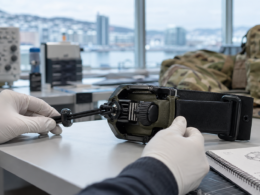
James Hardie Industries plc (NYSE/ASX: JHX) has agreed to sell its European Fermacell walling and flooring business to Holcim (SIX: HOLN) for €840 million in cash, equivalent to about US$980 million at the exchange rate cited when the deal was announced, while separately preparing to close its European fiber cement operations. The transaction represents a much broader strategic withdrawal than a conventional asset sale because James Hardie is effectively dismantling its European operating segment and concentrating capital around North America, Australia and New Zealand following its acquisition of AZEK.
Fermacell includes the fermacell and Aestuver brands and will continue under existing chief executive Christian Claus after the transaction closes. Completion is targeted for the first half of calendar 2027 and remains subject to regulatory approvals and applicable employee and works council consultation processes. The planned closure of the separate European fiber cement business is also conditional on customary legal, regulatory and employee consultations, meaning James Hardie’s European exit will occur through two different processes rather than one simultaneous transaction.
How much of the Fermacell sale proceeds will James Hardie use for debt and buybacks?
James Hardie expects to direct approximately US$600 million of the proceeds toward debt repayment and has simultaneously authorized a new US$250 million share repurchase programme. Using the company’s approximately US$980 million translation of the transaction value, debt repayment represents about 61% of the stated proceeds and the repurchase authorization another 26%. Together, the two announced capital-allocation actions account for roughly 87% of the headline dollar value, leaving about US$130 million before transaction costs, taxes, closure costs and other potential uses.
The emphasis on debt reduction follows the much larger balance-sheet commitment James Hardie made when it acquired AZEK. Management has been explicit that deleveraging sits near the top of its fiscal 2027 capital-allocation priorities and has targeted net leverage below 2.0 times by September 30, 2027. The Fermacell proceeds therefore provide a relatively direct route toward the leverage objective rather than requiring the target to be achieved exclusively through operating cash generation.
James Hardie generated US$344 million of operating cash flow and US$254.2 million of free cash flow during its first fiscal quarter of 2027, more than double the corresponding free cash flow a year earlier. The business consequently has internal cash generation available for deleveraging, but adding approximately US$600 million from the European disposal could materially accelerate the process if the transaction closes on current terms.
Why sell Europe when the segment had just delivered stronger results?
The disposal is notable because James Hardie is not exiting a segment that had just collapsed operationally. European first-quarter fiscal 2027 sales increased 15% to US$156.4 million, or 12% in euro terms, while operating income rose 34% to US$20.2 million and EBITDA climbed 39% to US$30.4 million. EBITDA margin improved by 340 basis points to 19.4%, supported by higher fiber gypsum volumes, pricing and operating efficiencies.
Europe nevertheless remained relatively small within the enlarged James Hardie portfolio. The US$156.4 million of European sales represented roughly 10.6% of consolidated first-quarter revenue of US$1.475 billion, while the Siding & Trim and Deck, Rail & Accessories businesses generated approximately US$860 million and US$305 million respectively. The sale therefore removes a profitable but comparatively smaller geography while releasing close to US$1 billion of cash for capital priorities elsewhere.
Management has said the transaction should improve the company’s margin profile and return on invested capital after closing. That outcome is plausible if the remaining portfolio carries structurally higher margins and the proceeds reduce expensive debt, although the final financial effect will also depend on European closure costs, taxes, transaction expenses and the amount of earnings lost with Fermacell.
How does Holcim fit into Fermacell’s next phase?
For Holcim, Fermacell adds fiber gypsum walling and flooring products to a portfolio increasingly oriented toward higher-value building systems rather than conventional cement and aggregates alone. The acquisition also gives Holcim the Aestuver brand and a platform with established European manufacturing, customers and distribution relationships.
The fit is different from James Hardie’s strategic direction. James Hardie has increasingly centred its growth case on North American siding, exterior products and the AZEK decking platform, whereas Holcim has been building a broader European construction-solutions portfolio through acquisitions. Fermacell can therefore be strategically useful to Holcim even though James Hardie believes the same capital can generate stronger returns elsewhere.
The US$250 million repurchase authorization adds another layer to that portfolio decision. James Hardie is not simply using the disposal to repair leverage; management is also reserving part of the capital released from Europe for direct shareholder returns. Actual repurchases will depend on market conditions and management decisions, so the authorization should not be interpreted as a commitment that all US$250 million will be deployed immediately.
The central significance of the transaction is therefore broader than the €840 million headline. James Hardie is converting a European business that accounted for roughly one-tenth of recent group revenue into liquidity that can reduce debt and support buybacks while simultaneously closing the rest of its European fiber cement footprint. If completed as planned, the company emerging in 2027 will be geographically and strategically more concentrated than the one investors owned before the AZEK acquisition and Fermacell disposal.
Discover more from Business-News-Today.com
Subscribe to get the latest posts sent to your email.