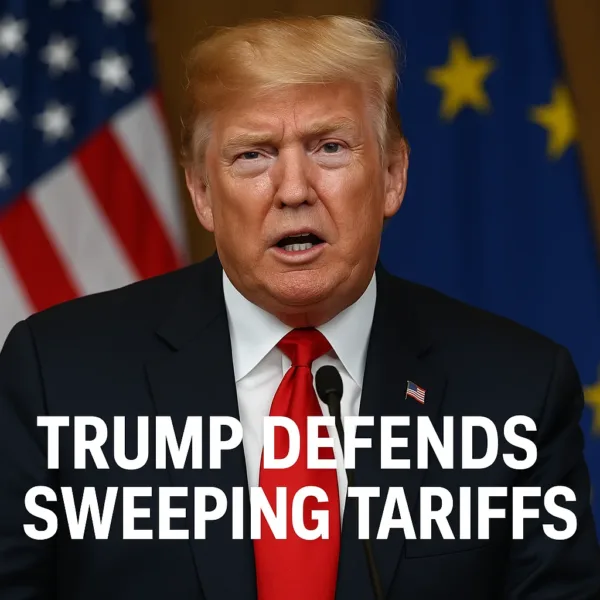

United States President Donald Trump convened his top national security aides at the White House on Monday to review a fresh proposal from Iran on resolving the ongoing war, as the two-month-old conflict remained locked in a stalemate and energy supplies from the Gulf region remained sharply reduced. The session marked one of the most consequential decision points yet in the Trump administration’s handling of the West Asia conflict, with diplomatic, military, and economic pressures converging on the Oval Office.
Why is Tehran proposing to defer the nuclear question until after the war ends and shipping disputes are resolved?
Iranian sources disclosed Tehran’s latest proposal earlier on Monday, indicating that the framework would set aside discussion of Iran’s nuclear programme until the war is concluded and disputes over shipping through the Gulf are resolved. The sequencing reflects a deliberate Iranian strategy to consolidate immediate military and economic gains before reopening the most contested file in its decades-long standoff with the West. Tehran’s negotiators believe that if a ceasefire architecture and a Strait of Hormuz settlement can be locked in first, Iran will enter any subsequent nuclear talks from a stronger position than it held before the war began.
That sequencing is unlikely to satisfy Washington. The Trump administration has consistently maintained that nuclear non-proliferation must be addressed from the outset of any negotiations, treating Iran’s enrichment programme as the central justification for the conflict. The structural gap between the two positions, Iran prioritising war termination and shipping rights, the United States prioritising a hard nuclear ceiling, explains why a quick breakthrough remains elusive even as both sides acknowledge the diplomatic track is open.
How are mediator Pakistan, special envoy Steve Witkoff, and Jared Kushner shaping the indirect diplomatic channel?
Work has not halted to bridge gaps between the United States and Iran, sources from mediator Pakistan said, despite the absence of face-to-face diplomacy after Donald Trump called off a trip by his envoys over the weekend. Hopes of reviving peace efforts receded after the United States President scrapped a visit on Saturday by his envoy Steve Witkoff and son-in-law Jared Kushner to Islamabad, the Pakistani capital, where Iranian Foreign Minister Abbas Araghchi had shuttled in and out twice over the weekend.
Pakistan’s role as mediator has expanded substantially during the conflict, with Islamabad positioning itself as the only Muslim-majority nuclear power capable of hosting both sides. The cancellation of the Witkoff and Kushner visit was framed by Donald Trump on Truth Social as a response to wasted time, with the United States President asserting that Washington still held all the cards. The streets of Islamabad, locked down for a week in anticipation of high-level talks, have since reopened, signalling that no face-to-face meetings are planned in the immediate term and that any further movement will run through indirect channels.
What is happening to oil prices, Brent crude, and global energy flows as the Strait of Hormuz remains contested?
With the warring sides still seemingly far apart on issues including Iran’s nuclear ambitions and access through the Strait of Hormuz, oil prices resumed their upward march on Monday, hitting a two-week high. Brent crude was up about 2.5 per cent at around 108 dollars a barrel, levels that translate directly into higher petrol prices, freight costs, and headline inflation across import-dependent economies in Europe, Asia, and the developing world.
The Strait of Hormuz has been the single most consequential pressure point of the war. Between 125 and 140 ships usually crossed in and out of the strait daily before the conflict, but only seven have done so in the past day, according to Kpler ship-tracking data and satellite analysis from SynMax, and none of them were carrying oil bound for the global market. The collapse in transit volumes has reordered global crude flows, with refiners across Asia and Europe scrambling for alternative supplies, and shipping insurers repricing risk premiums on Gulf voyages to levels not seen since the 1980s tanker war.
What did White House Press Secretary Karoline Leavitt confirm about the Oval Office review and the President’s red lines?
Donald Trump met his national security team on Monday morning. White House Press Secretary Karoline Leavitt indicated that she did not want to get ahead of the President or his national security team, but reiterated that the President’s red lines with respect to Iran had been made very clear, both to the American public and to Iran’s leadership. She also confirmed that the meeting may be ongoing and that the proposal was being discussed.
The choice of language from the White House podium was carefully calibrated. By repeating the phrase red lines, Karoline Leavitt signalled that the United States would not soften its core demand for a verifiable nuclear ceiling even under domestic political pressure to end the war. The deliberate framing also served to manage expectations on Wall Street and in allied capitals, where any signal of an imminent breakthrough or breakdown can move oil markets, equity indices, and currency pairs within minutes.
How did Secretary of State Marco Rubio frame Iran’s negotiating stance and the Strait of Hormuz offer?
United States Secretary of State Marco Rubio said in an interview with Fox News that he believed Iran was attempting to buy more time. Marco Rubio stated that Washington could not allow Tehran to do so, describing Iran’s officials as very experienced and capable negotiators. Marco Rubio added that any agreement reached must definitively prevent Iran from sprinting toward a nuclear weapon at any point in the future.
Marco Rubio also poured cold water on Iran’s proposal regarding the Strait of Hormuz, indicating that Iran’s offer to reopen the strait would, in practical terms, require ships to coordinate with Tehran or face being attacked. The Secretary of State stated that international waterways could not be normalised under a system in which Iran decides who is allowed to use them and on what terms. The framing reflects Washington’s broader insistence that freedom of navigation through the Strait of Hormuz is a non-negotiable principle of the post-1945 maritime order, not a bargaining chip that Tehran can rent back to global commerce.
What does the staged Iranian proposal carried by Abbas Araghchi reveal about Tehran’s escalation ladder?
Senior Iranian sources, speaking on condition of anonymity, indicated that the proposal carried by Abbas Araghchi to Islamabad over the weekend envisioned talks in stages, with the nuclear issue set aside at the start. A first step would require ending the United States and Israeli war on Iran and providing guarantees that Washington could not restart it. Negotiators would then resolve the United States blockade and the fate of the Strait of Hormuz, which Iran aims to reopen under its own control. Only then would talks address other issues, including the long-standing dispute over Iran’s nuclear programme, with Tehran still seeking some form of acknowledgment of its right to enrich uranium for what it describes as peaceful purposes.
Abbas Araghchi visited Oman over the weekend and travelled to Russia on Monday, where he met President Vladimir Putin and received words of support. Abbas Araghchi told reporters in Russia that Donald Trump had requested negotiations because the United States had not achieved any of its objectives. The diplomatic itinerary, Oman as a long-standing back-channel host, Pakistan as the active mediator, and Russia as the strategic backstop, illustrates the diversified architecture Tehran has built to survive Western isolation, and underscores why a clean bilateral deal between Washington and Tehran has so far remained out of reach.
How has the United States blockade reshaped Iranian oil exports, tanker movements, and Gulf shipping risk?
Although a ceasefire has paused the United States and Israeli strikes on Iran that began on February 28, no agreement has been reached on terms to end a war that has killed thousands, driven up oil prices, fuelled inflation and darkened the outlook for global growth. Iran has largely blocked all shipping apart from its own from the Gulf through the Strait of Hormuz since the war began, while the United States this month began a counter-blockade against Iranian ships. Six tankers loaded with Iranian oil have been forced back to Iran by the United States blockade in recent days, according to ship-tracking data.
Iran’s foreign ministry condemned United States seizures of Iran-linked tankers as outright legalisation of piracy and armed robbery on the high seas, in a statement posted on social media. Tehran’s framing is intended to mobilise diplomatic support across the Global South and within the Non-Aligned Movement, where freedom of the seas is a sensitive principle for major exporters of commodities. The United States position, in contrast, treats the blockade as a lawful interdiction regime against a state that has itself blocked international shipping, casting the dispute as a question of proportional enforcement rather than naval aggression.
What domestic political pressures and approval ratings are constraining the Trump administration’s options?
With his approval ratings falling, Donald Trump faces domestic pressure to end the unpopular war. Iran’s leaders, though weakened militarily, have found leverage with their ability to stop shipping in the strait, which normally carries a fifth of global oil shipments. The political asymmetry is significant. The Trump administration entered the conflict with a clear strategic objective on the nuclear file, but the longer the Strait of Hormuz remains contested and oil prices remain elevated, the heavier the cost shows up at the petrol pump, in inflation prints, and ultimately in midterm political risk.
In a sign that no face-to-face meetings are planned any time soon, streets reopened in Islamabad that had been locked down for a week in anticipation of talks that never took place. The visible normalisation of the Pakistani capital is itself a diplomatic signal, telegraphing to markets and to allied governments that a near-term breakthrough is not in the works and that the next phase of the conflict will play out through indirect messaging, naval pressure, and economic attrition.
How is the Lebanon front, Hezbollah, and the mid-April ceasefire complicating any path to a wider settlement?
Fighting has intensified in Lebanon, where Israeli strikes killed 14 people and wounded 37 in the south on Sunday, according to the Lebanese health ministry, making it the deadliest day since a United States-brokered ceasefire was agreed in mid-April. Iran has indicated it will not hold talks on the wider conflict unless a ceasefire also holds in Lebanon, which Israel invaded in March in pursuit of the militant group Hezbollah, which had fired across the border in solidarity with Iran.
The Lebanon linkage complicates any straightforward diplomatic path. By tying its own willingness to negotiate to the durability of the Lebanon ceasefire, Tehran has effectively given Hezbollah a veto over the timing of broader West Asia talks, and given Israel an incentive to manage rather than escalate the southern Lebanon front. For Washington, that linkage means a Strait of Hormuz settlement, a nuclear framework, and a Lebanon ceasefire must all hold simultaneously for any durable peace to take shape, raising the diplomatic degree of difficulty considerably.
What are the key takeaways from the United States review of Iran’s latest war proposal and the Strait of Hormuz standoff?
- United States President Donald Trump met his top national security aides on Monday to review Iran’s latest proposal, which would defer nuclear talks until the war ends and Strait of Hormuz disputes are resolved.
- Secretary of State Marco Rubio said Iran was attempting to buy more time and rejected any Strait of Hormuz arrangement that required vessels to coordinate with Tehran for transit rights.
- Iranian Foreign Minister Abbas Araghchi carried the proposal to Islamabad over the weekend, then travelled to Oman and to Russia, where he met President Vladimir Putin.
- Brent crude rose about 2.5 per cent on Monday to around 108 dollars a barrel, with only seven ships transiting the Strait of Hormuz in the past day against a pre-war daily average of 125 to 140 vessels.
- Six Iranian oil tankers have been forced back to Iran by the United States blockade in recent days, while Israeli strikes killed 14 people in southern Lebanon on Sunday, the deadliest day since the mid-April ceasefire.
Discover more from Business-News-Today.com
Subscribe to get the latest posts sent to your email.