

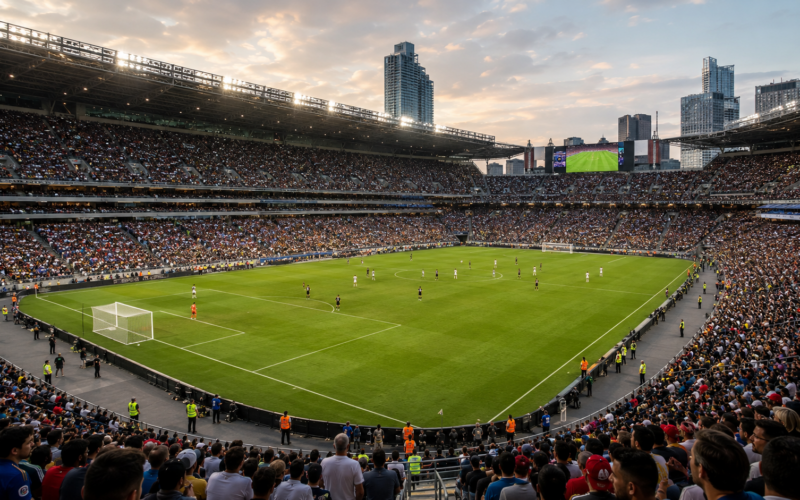
Brazil drew 1-1 with Morocco at New York New Jersey Stadium in East Rutherford on June 13, 2026, as Vinicius Junior rescued a point for Carlo Ancelotti’s side after Ismael Saibari had given the Atlas Lions a deserved first-half lead in their FIFA World Cup 2026 Group C opener. Saibari struck in the 21st minute after Morocco’s aggressive pressing exposed Brazil’s midfield, before Vinicius Junior equalised in the 32nd minute with a sharp finish that prevented the five-time champions from opening the tournament with a damaging defeat.
The result leaves Brazil and Morocco on one point each in Group C, with Haiti and Scotland still completing the other match in the section at the time this report was prepared. For Morocco, the draw strengthens the belief that their 2022 semi-final run was not a one-off. For Brazil, it raises immediate questions about midfield balance, defensive transitions and whether Ancelotti can turn individual attacking quality into a coherent FIFA World Cup 2026 title challenge.
How did Morocco expose Brazil’s early problems in their FIFA World Cup 2026 opener?
Morocco began with the greater intensity, pressing Brazil’s midfield and forcing Carlo Ancelotti’s side into uncomfortable turnovers. The Atlas Lions were sharper in duels, quicker to second balls and more confident in possession during the first half, with Ayyoub Bouaddi giving Morocco energy and composure in midfield despite his age and the size of the occasion.
The opening goal arrived in the 21st minute after Morocco broke quickly and punished Brazil’s defensive gaps. Ismael Saibari lifted a composed finish over Alisson to give Morocco a 1-0 lead, a goal that reflected the pattern of the opening half rather than a sudden shock. Brazil’s midfield struggled to contain Morocco’s movement, while Casemiro and Bruno Guimarães found it difficult to establish control.
The goal forced Brazil into a response, but it also exposed a deeper issue. Without Neymar, Rodrygo and other unavailable attacking options, Brazil depended heavily on moments from Vinicius Junior and Raphinha rather than sustained collective rhythm. Morocco, by contrast, looked comfortable moving as a unit, pressing with purpose and dropping into shape when required.
For Morocco, the first half was proof that their 2022 World Cup run has become a foundation rather than a memory. They did not play like a team hoping to survive Brazil. They played like a team convinced they could hurt them.
Why did Vinicius Junior’s equaliser prevent a much bigger Brazil crisis?
Vinicius Junior’s 32nd-minute equaliser was the moment that stopped Brazil’s opener from sliding into crisis. After a difficult start, Brazil needed an individual intervention, and Vinicius delivered with a sharp finish that brought the score back to 1-1 before half-time.
The goal mattered because Brazil had looked rattled after Saibari’s opener. Their passing lacked rhythm, their midfield looked stretched and Morocco’s defensive confidence was growing. Vinicius changed that with a finish that reminded everyone why he is central to Brazil’s FIFA World Cup 2026 hopes, especially in Neymar’s absence.
The equaliser did not solve Brazil’s structural problems, but it bought them time and prevented Morocco from turning control into scoreboard authority. A 1-0 half-time deficit would have forced Ancelotti into a much more desperate second-half plan. At 1-1, Brazil could reset, adjust and try to regain control.
Even so, the reliance on Vinicius will be an early talking point. Brazil have enough attacking talent to win matches through individual brilliance, but World Cup campaigns are rarely built on isolated moments alone. If Ancelotti wants Brazil to go deep, Vinicius needs support, especially against teams that can press as aggressively and intelligently as Morocco.
What did Carlo Ancelotti’s half-time changes reveal about Brazil’s concerns?
Ancelotti’s half-time substitutions spoke loudly. Casemiro and Roger Ibañez were withdrawn after first-half bookings, with Fabinho and Danilo Santos introduced as Brazil tried to reduce risk and regain control. That was a practical decision, but it also showed how uncomfortable Brazil had been during the opening 45 minutes.
The midfield issue was especially important. Morocco had disrupted Brazil’s rhythm and made the game feel quicker than Ancelotti would have wanted. Casemiro’s booking, combined with Morocco’s ability to attack spaces around him, made his position fragile. Fabinho’s introduction was designed to bring control and avoid the danger of Brazil being caught short in midfield.
Ibañez’s replacement also mattered because Morocco had attacked Brazil’s defensive channels with confidence. Achraf Hakimi, Hakim Ziyech and the Moroccan runners repeatedly looked for ways to pull Brazil out of shape. Danilo’s introduction gave Brazil more experience and defensive management on the right side.
The changes helped Brazil avoid defeat, but they did not fully tilt the match. Morocco remained dangerous deep into stoppage time, and Alisson had to make a crucial late save to stop the Atlas Lions from snatching a dramatic winner. That late moment will worry Brazil because it showed the match was never fully under their control.
How did Morocco’s key players shape the result against Brazil?
Morocco’s performance was built on collective discipline, but several individual performances stood out. Saibari took his goal with composure and kept pressing Brazil’s defenders before being substituted late. Bouaddi was one of the most impressive players on the pitch, showing maturity in midfield and helping Morocco compete against Brazil’s more experienced names.
Yassine Bounou also played a major role. The Morocco goalkeeper dealt with pressure, took knocks and still remained composed in a match where Brazil were always capable of producing danger from limited openings. His handling and positioning helped Morocco survive Brazil’s spells of momentum.
Hakimi gave Morocco width and confidence, although Brazil’s left-sided threat through Vinicius meant he also had defensive responsibility. That duel was one of the most important tactical battles of the match. Morocco needed Hakimi’s attacking qualities, but they also needed his recovery pace and decision-making to limit Brazil’s best forward.
For Brazil, Vinicius was the obvious difference-maker, while Alisson’s late save protected the point. Raphinha was quieter than Brazil would have wanted, and the midfield did not create enough control. Marquinhos and Gabriel Magalhães had difficult moments as Morocco repeatedly tested Brazil’s defensive spacing.
What does the 1-1 draw mean for FIFA World Cup 2026 Group C qualification?
The draw leaves Brazil and Morocco with one point each after their first FIFA World Cup 2026 Group C match. That is not a bad result for either team, but the emotional meaning is very different. Morocco will feel validated, while Brazil will feel warned.
Brazil next face Haiti, a match they will be expected to win. That expectation brings its own pressure. If Brazil beat Haiti, this draw becomes manageable. If they stumble again, the questions around Ancelotti’s system, Neymar’s absence and midfield balance will grow louder.
Morocco next face Scotland, and the result against Brazil gives them a strong platform. A win in their second match would put them in a strong position to advance and would reinforce their status as one of the most dangerous non-European and non-South American teams in the tournament.
The other Group C match, Haiti vs Scotland, was still not confirmed as full-time at the time this report was prepared. That means the group table could shift further before the next round of fixtures. What is already clear is that Brazil have not been given a comfortable start. Morocco have made Group C more competitive from the opening night.
Why does this FIFA World Cup 2026 result matter beyond the Group C table?
This result matters because it challenges the assumption that Brazil’s individual quality alone will be enough. Ancelotti has the reputation, Vinicius has the star power, and Brazil have the history. But Morocco showed that organisation, midfield speed and belief can make even the most decorated national team look uncertain.
For FIFA World Cup 2026, the draw also strengthens the idea that the expanded tournament will not be short on competitive tension. Morocco are no longer a surprise package. They are a serious tournament side with a tactical identity, experienced leaders and enough young energy to trouble elite opponents.
Brazil, meanwhile, must turn this into a correction rather than a warning sign that grows. An opening draw is not a disaster. Many eventual contenders have started tournaments slowly. But the details matter. Brazil looked vulnerable in midfield, uncomfortable under pressure and dependent on Vinicius for rescue. Those are problems that better knockout-stage opponents will target.
The editorial view is that Morocco left East Rutherford with more encouragement than Brazil. The Atlas Lions looked organised, confident and dangerous. Brazil avoided defeat, but they did not yet look like a team ready to dominate FIFA World Cup 2026. That can change quickly, but Ancelotti now has work to do before the Haiti match.
Key takeaways from Brazil vs Morocco at FIFA World Cup 2026
- Brazil opened FIFA World Cup 2026 with a 1-1 draw against Morocco at New York New Jersey Stadium on June 13, 2026. The result gives Carlo Ancelotti’s side one point, but the performance raised immediate questions about midfield control and defensive balance.
- Morocco took the lead through Ismael Saibari in the 21st minute after a strong start built on pressing, energy and tactical confidence. The Atlas Lions looked composed for long spells and showed they remain a serious tournament threat after their 2022 semi-final run.
- Vinicius Junior equalised for Brazil in the 32nd minute with the kind of individual quality Brazil needed in Neymar’s absence. His goal prevented a much bigger early crisis, but it also underlined Brazil’s reliance on individual moments rather than sustained team fluency.
- Carlo Ancelotti made important half-time changes by replacing Casemiro and Roger Ibañez after first-half bookings. The substitutions reduced risk but also showed how much Morocco had disrupted Brazil’s original plan during the first half.
- Alisson made a crucial late save in stoppage time to prevent Morocco from winning the match. That final scare reinforced the sense that Brazil were never fully comfortable, even after equalising before half-time.
- Group C remains wide open, with Brazil and Morocco both on one point before the group moves toward Brazil vs Haiti and Morocco vs Scotland. Morocco leave with momentum, while Brazil leave with questions to answer.
Share this:
Discover more from Business-News-Today.com
Subscribe to get the latest posts sent to your email.