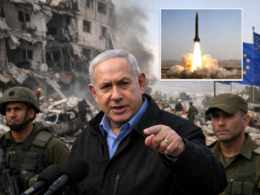





The United States has intensified its strikes against Iran while destroying military systems that could obstruct a wider campaign, giving United States President Donald Trump additional options that include operations around Kharg Island, strategic islands in the Strait of Hormuz and a fortified nuclear site.
The latest attacks began on July 15, 2026, with strikes against Iranian coastal defence systems, missile storage and launch sites, radar facilities, drones, small boats and other maritime assets. United States Central Command carried out multiple waves during the day, including attacks on Greater Tunb Island and several locations across southern Iran.
United States officials described the attacks as operations that could prepare the battlefield for more complex action if Donald Trump authorises another escalation. No final order to seize Iranian territory, deploy ground forces or attack additional nuclear infrastructure had been announced.
Iran nevertheless retains missiles, drones and coastal capabilities sufficient to threaten commercial vessels and United States positions across the Gulf. Iran also continued retaliatory attacks against Bahrain, Kuwait and Jordan while warning that pressure on Iranian energy exports could lead to wider disruption of oil and natural gas shipments from the Middle East.
The conflict has therefore entered a more dangerous phase. The United States has achieved substantial tactical damage against Iranian military infrastructure, but Washington has not yet secured uncontested passage through the Strait of Hormuz or forced Tehran to accept the United States interpretation of the June ceasefire memorandum.
Why do the July 15 United States strikes give Donald Trump more options against Iran?
The latest United States strikes were directed at capabilities that would present immediate dangers during a larger military operation. Iranian air defence systems, coastal radars, missile launchers, drone facilities and maritime assets can threaten aircraft, warships, transport vessels and troops operating near the Iranian coastline.
Destroying or degrading those systems reduces the number of threats that United States forces would have to manage during a more complex mission. Such action does not prove that a ground or amphibious operation will occur, but it can make those operations more practical if the United States later decides to proceed.
United States officials characterised the strikes as preparatory military activity that strengthens the range of choices available to Donald Trump. The targets were selected not only because they had allegedly supported attacks on commercial shipping, but because the same systems could interfere with future United States operations around the Strait of Hormuz.
The operational pattern is significant. United States Central Command attacked Iranian facilities during both daylight and nighttime hours, conducted multiple waves and struck targets across a broad section of Iran’s southern coast. The tempo demonstrated an ability to sustain pressure rather than conduct a single retaliatory raid.
The United States position remains that the immediate objective is to protect vessels moving through the Strait of Hormuz and enforce the renewed blockade against Iranian ports. However, the destruction of coastal military infrastructure also creates options extending beyond defensive protection of merchant shipping.
The political question is whether Donald Trump is using those options primarily to pressure Iran into negotiations or preparing to authorise another phase of the war. Donald Trump has publicly discussed both settlement and escalation, leaving the final direction deliberately uncertain.
What military targets did the United States hit across southern Iran on July 15?
United States Central Command began one major strike wave at approximately 1000 GMT on July 15. The initial attacks targeted coastal defence systems and cruise missile storage and launch sites on Greater Tunb Island, a strategically important island near shipping routes in the Strait of Hormuz.
That strike wave was completed within approximately 90 minutes. A second wave was reported around nine hours later, followed by further attacks during the day.
Iranian reports identified explosions or strikes around Ahvaz, Bandar Abbas, Konarak, Sirik, Qeshm, Bushehr, Khormuj and Kuh-e Stak. Several of these locations are connected to Iran’s naval, coastal defence, missile or energy infrastructure.
Bandar Abbas is Iran’s principal port city on the Strait of Hormuz and a major centre for naval activity. Qeshm lies inside the strait, while Bushehr hosts important energy and military infrastructure on the Gulf coast. Ahvaz is located inland from the northern Gulf and is close to Iran’s main oil-producing region.
An attack also hit a barracks used by Iran’s 388th Mechanized Infantry Brigade in Sistan and Baluchestan province. Iranian authorities said at least seven soldiers were killed in that strike, including conscripts and career personnel.
The Iranian Health Ministry said more than 35 people had been killed and more than 300 wounded during the latest period of United States attacks. At least 72 people remained in hospital. The ministry did not provide a complete division between military and civilian casualties.
Iranian authorities also reported that an attack near a hospital in Ahvaz forced a temporary evacuation. The hospital includes a paediatric cancer centre. The United States had not confirmed that the medical facility itself was an intended target.
The absence of a final independent assessment means casualty totals and damage estimates may change. What is clear is that the latest campaign has extended across military sites, coastal regions and urban areas containing civilian infrastructure.
Why does Kharg Island now sit at the centre of possible United States escalation?
Kharg Island is the principal hub for Iranian crude oil exports and handles an estimated 90% of the country’s seaborne oil shipments. Control or disruption of the island would directly affect Iran’s ability to earn revenue from crude exports.
Donald Trump has acknowledged that United States forces previously avoided attacking Iranian oil facilities on Kharg Island. Donald Trump has also left open the possibility of taking further action against the island if Iran’s military capabilities are sufficiently weakened.
A military operation involving Kharg Island could take several forms. The United States could attack military positions, damage export infrastructure, impose a tighter maritime cordon or attempt to place forces on the island. No such operation had been formally ordered as of July 16.
Any attempt to seize Kharg Island would carry substantial risks. The island lies close enough to the Iranian mainland to remain within range of missiles, drones and artillery. United States personnel stationed there could face repeated attacks from launch sites dispersed across Iran’s coastline.
Damage to Kharg Island’s oil infrastructure could also remove Iranian barrels from the global market. That could lift crude prices at a time when the Strait of Hormuz is already operating under severe disruption.
Brent crude closed at $84.95 a barrel on July 15, its highest level in about a month. Prices remained below the peak recorded earlier in the conflict, but renewed attacks on Iranian oil infrastructure could produce another significant rise.
Kharg Island therefore combines military, economic and diplomatic importance. Threatening the island increases pressure on Tehran, but carrying out that threat could strengthen Iran’s justification for attacking energy infrastructure elsewhere in the Gulf.
How much missile and drone capability does Iran still retain after months of attacks?
The United States and Israel have inflicted substantial losses on Iran’s conventional armed forces since the conflict began on February 28, 2026. Air defence systems, naval vessels, missile sites, production facilities and command infrastructure have all been attacked.
Those losses have reduced Iran’s ability to operate openly, but they have not eliminated Iran’s capacity to launch missiles and drones. Iranian weapons can be moved, concealed or launched from dispersed locations, complicating efforts to destroy the entire inventory.
Iran continued firing at United States positions and countries hosting United States forces during the July escalation. Bahrain and Kuwait activated warning systems repeatedly, while Jordan intercepted Iranian missiles moving through or towards its airspace.
Kuwait said its forces intercepted four missiles and 21 drones during attacks on July 15. The interceptions caused material damage but no reported injuries. Jordan said it intercepted three Iranian missiles.
The Islamic Revolutionary Guard Corps said its current operations were focused on United States offensive military infrastructure across the region. The Islamic Revolutionary Guard Corps also warned that a further operational phase could follow.
Iran’s remaining capability gives Tehran an important form of leverage. Even if Iran cannot defeat the United States military conventionally, Iran can impose costs on bases, shipping, energy infrastructure and regional governments.
That asymmetry has prevented tactical United States victories from producing a decisive political outcome. Iran has lost significant military equipment, but it has retained enough capacity to keep neighbouring countries under alert and make commercial passage through the Strait of Hormuz dangerous.
The United States would therefore need more than airstrikes to guarantee safe navigation. Commercial ships require predictable routes, reliable protection and confidence that missiles or drones will not reach them after entering the waterway.
Why has the Strait of Hormuz remained contested despite repeated United States strikes?
The Strait of Hormuz is narrow, geographically complex and bordered by Iran and Oman. Iranian forces do not need a large conventional navy to threaten vessels moving through the passage.
Missiles, drones, mines, fast boats and shore-based surveillance systems can be used from dispersed positions. Iran can also target ships after they enter or leave the narrowest part of the strait, extending the danger across a larger maritime area.
Before the war, approximately one-fifth of global oil and natural gas trade passed through the Strait of Hormuz. The concentration of energy shipments means that even a limited number of attacks can affect global prices, insurance costs and shipping decisions.
The June ceasefire memorandum temporarily allowed some commercial vessels to resume movement through a route closer to Oman and overseen by the United States military. Iran later attacked ships using that route and insisted that vessels must comply with Iranian navigation arrangements.
The United States rejects Iran’s claimed authority to determine passage rules for the entire strait. Washington maintains that commercial ships travelling through the international waterway should be able to proceed without Iranian restrictions.
Iran argues that the United States failed to honour parts of the June agreement and cannot unilaterally dictate navigation arrangements. Mohammad Bagher Qalibaf, Iran’s parliament speaker and lead negotiator, said reopening the strait required the United States to implement the full memorandum and recognise Iranian regulations.
The dispute is therefore not only about physical security. It is also about which side has the authority to organise commercial passage and whether Iran can use access to the waterway as leverage in negotiations.
Repeated United States strikes can reduce Iran’s capabilities, but they cannot permanently prevent every missile, drone or small boat attack without a much larger and potentially open-ended military presence.
What does the disabled Belma tanker reveal about enforcement of the renewed blockade?
United States Central Command said a United States aircraft disabled the Curacao-flagged oil tanker Belma after the vessel continued sailing towards Kharg Island and ignored repeated warnings.
The Belma was reportedly unladen when it was intercepted. United States forces fired Hellfire missiles into the tanker’s smokestack, disabling the vessel without sinking it.
Two other commercial vessels changed course after receiving instructions from United States forces. Since restoring the blockade, the United States had redirected two ships and disabled the Belma.
The incident demonstrates that the blockade is being enforced through direct military action rather than warnings alone. Commercial vessels attempting to reach Iranian ports face interception, diversion, boarding or disabling strikes.
The enforcement policy introduces risks for civilian crews. During the first period of the United States blockade, at least eight commercial vessels were disabled, including one incident in which three sailors were killed.
The United States argues that the blockade is intended to pressure Iran and prevent maritime activity supporting the Iranian government. Iran considers the operation unlawful and views attacks on commercial ships entering Iranian ports as acts of war.
Shipping companies must now assess competing dangers. A vessel approaching Iran may face United States interception, while a ship using a United States supported route through the Strait of Hormuz may face Iranian attack.
This double exposure helps explain why some vessel operators remain reluctant to resume normal passage despite United States assurances. Freedom of navigation cannot be restored through announcements alone when both sides possess the ability to strike non-compliant ships.
How could Iranian retaliation against Bahrain, Kuwait and Jordan widen the conflict?
Bahrain, Kuwait and Jordan host United States personnel, military facilities or defence systems. Iran considers those facilities part of the infrastructure supporting United States attacks.
Iranian retaliation therefore places regional governments in a difficult position. They depend on United States security cooperation but also want to avoid becoming direct parties to an expanding war.
Repeated Iranian missile and drone attacks increase the risk of casualties, infrastructure damage or failed interceptions. A strike causing major civilian deaths could produce direct military retaliation from the affected government.
Bahrain hosts the United States Navy’s Fifth Fleet, making the country particularly important to naval operations in the Gulf. Kuwait supports United States forces and logistics, while Jordan provides military access and hosts personnel involved in regional operations.
Iran may calculate that threatening these countries increases the political cost of allowing United States forces to operate from their territory. The same strategy could instead strengthen regional support for United States air defences and military deployments.
The Islamic Revolutionary Guard Corps has also threatened to prevent oil and natural gas exports from the wider Middle East if Iranian exports are blocked. Such a strategy could extend the conflict to terminals, pipelines and shipping connected to Saudi Arabia, the United Arab Emirates, Qatar, Kuwait and other producers.
An attack on major Gulf energy infrastructure could rapidly transform a United States-Iran confrontation into a broader regional crisis. Governments that have attempted to limit their participation could be forced to respond if their territory or essential exports came under sustained attack.
Can negotiations survive while Donald Trump threatens escalation and Iran demands control?
Donald Trump said Iran wanted to reach a settlement and suggested that the United States could either conclude an agreement or intensify the military campaign. Donald Trump did not provide details of a new negotiating timetable.
Iran maintains that the United States must first comply with the 14-point memorandum reached in June. Tehran also insists that Iranian navigation arrangements in the Strait of Hormuz must be recognised.
The two positions remain difficult to reconcile. The United States wants commercial passage through the strait without Iranian restrictions, while Iran considers control over navigation a central security requirement and negotiating asset.
The release of an American who had been detained in Iran since 2024 provided a limited sign that communication channels remain open. Donald Trump described the release as a gesture of goodwill.
That development did not stop the military escalation. United States strike waves continued, Iran launched further missiles and drones, and the renewed blockade remained in force.
The central danger is that military preparation acquires its own momentum. As Iranian defences are destroyed, the United States may find more ambitious operations increasingly feasible. Iran may respond by using its remaining missiles and drones before those capabilities are further degraded.
Negotiations would require both sides to accept limits that they have so far rejected. The United States would need a credible arrangement protecting commercial shipping, while Iran would require economic and security concessions sufficient to justify reducing its control over the strait.
Until that gap narrows, the conflict is likely to remain suspended between tactical escalation and uncertain diplomacy. The latest strikes have widened Donald Trump’s choices, but they have not resolved the strategic problem at the centre of the war.
What are the key takeaways from the July 16 escalation in the United States-Iran war?
- United States forces conducted multiple strike waves against Iran on July 15, 2026, targeting coastal defences, radar systems, cruise missile sites, drones, small boats and other military assets across southern Iran.
- United States officials view the latest attacks as operations that can reduce threats ahead of more complex missions, although Donald Trump had not authorised a territorial seizure or major ground operation by July 16.
- Kharg Island has emerged as a potential escalation point because it handles approximately 90% of Iranian oil exports, but any attempt to seize or disable it could trigger wider attacks on Gulf energy infrastructure.
- Iran retains significant missile and drone capability despite extensive military losses, allowing Tehran to threaten commercial ships and launch retaliatory attacks against countries hosting United States forces across the Middle East.
- The Strait of Hormuz remains contested because Iran can use missiles, drones, small boats and coastal systems without maintaining a large conventional navy, preventing the United States from guaranteeing completely safe commercial passage.
- United States forces disabled the Curacao-flagged tanker Belma with Hellfire missiles after it continued towards Kharg Island, demonstrating that the renewed blockade will be enforced through direct military action when vessels reject warnings.
- Bahrain, Kuwait and Jordan faced additional Iranian missile or drone attacks on July 15, increasing the possibility that regional governments seeking to avoid the war could be drawn into direct retaliation.
- Negotiations remain possible but deeply constrained because Washington demands unrestricted commercial passage while Tehran insists that the June memorandum and Iranian navigation arrangements must be implemented before the strait is fully reopened.
Discover more from Business-News-Today.com
Subscribe to get the latest posts sent to your email.