



International Business Machines Corporation (NYSE: IBM) announced on 15 July 2026 a set of Power-line infrastructure product releases spanning new hardware, an autonomous operations software agent and a generative development assistant for IBM i, in a launch dated one day after the company’s rare pre-announcement of a materially disappointing second quarter. The three products are the Power S1112 entry-level server, generally available on 24 July 2026; IBM Power Autonomous Operations, an AI agent for continuous monitoring and remediation of Power systems, generally available on 23 September 2026; and IBM Bob Premium Package for IBM i, an agentic development environment already generally available since 24 June 2026. IBM cited internal testing indicating that Power Autonomous Operations resolves capacity constraint conditions on average 15 times faster than manual intervention, and that the Power S1112 delivers up to two times the core performance of the previous Power S914 with up to 69 percent greater energy efficiency.
Hillery Hunter, General Manager for IBM Power and Chief Technology Officer of IBM Infrastructure, described the launch as making Power increasingly self-operating so that clients’ teams can focus on innovation rather than upkeep. The launch was almost certainly planned prior to the 14 July trading update, but its timing places it in a period when the market is actively re-evaluating IBM’s Infrastructure segment. The central question is whether the strength of the Power line, which reported 37 percent growth in Distributed Infrastructure in the second quarter, can offset the Z mainframe weakness that drove the segment lower overall.
What did IBM announce in the Power S1112, Autonomous Operations and Bob Premium Package launch?
The 15 July 2026 announcement covers three distinct components under the Power banner. First, the Power S1112 is a new one-socket Power11 entry-level server built for compact on-premise deployment. It runs AI workloads locally using the Power11 on-chip Matrix Math Acceleration engine for inference. Second, Power Autonomous Operations is an AI agent embedded across the Power platform that automates capacity monitoring, alert ingestion, diagnostic analysis and remediation, with human-in-the-loop approval for the remedial actions it recommends. Third, IBM Bob Premium Package for IBM i is an AI-powered development assistant that provides an agentic software development lifecycle experience for engineers working on IBM i, the successor operating system to the AS/400 line that continues to run mission-critical applications at many mid-market enterprises. Alongside the S1112 launch, IBM Technology Lifecycle Services introduced Power Expert Care Premium Essentials, a new support tier available exclusively for the Power S1112 that provides priority access to IBM experts and accelerated response with intelligent support automation. Client references cited by IBM include M.R. Williams, Wynne Systems, Innovative Software Solutions, City Home and Heartland Co-Op, spanning small-to-mid business, ERP support, distribution and grain operations. The launch was made from IBM’s Armonk headquarters and is positioned as an extension of the autonomous IT narrative IBM has been building around the Power11 platform since its introduction the previous year.

How does the new Power S1112 sit within the Power11 family and what does the 15x autonomous operations claim actually measure?
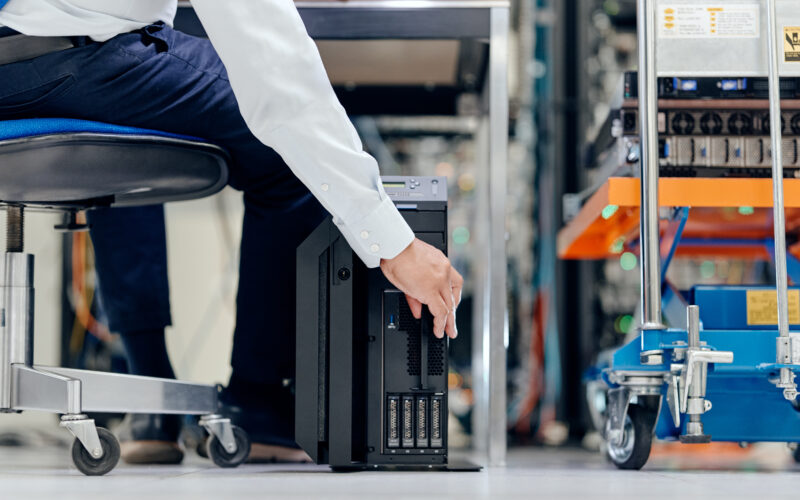
The Power S1112 is a 1-socket, half-wide Power11 system in a tower chassis form factor, designed for compact on-premise deployment scenarios where a full-rack Power system is either economically or physically over-scaled. According to IBM’s published disclosures, the S1112 delivers approximately two times the core performance of the previous Power S914 based on published CPW results comparing four-core configurations, and approximately three times the core performance of the older Power S814. Energy efficiency, measured as performance per watt, is up to 69 percent greater than the S914. The system incorporates the Power11 on-chip Matrix Math Acceleration engine, which is IBM’s silicon-level acceleration architecture for AI inference workloads. This positions the S1112 as an entry point for enterprises that want to run local AI inference on the same platform that hosts their traditional Power workloads, rather than routing inference traffic to a separate GPU-based system. The claimed 15 times acceleration on Power Autonomous Operations is based on IBM internal testing conducted in a controlled representative Power infrastructure environment consisting of eleven Power systems, in which a manual capacity management process required on average 52.59 minutes to complete, versus 3.33 minutes for the same process executed by the Autonomous Operations agent. Both figures are IBM internal benchmarks rather than independently audited third-party tests, and their applicability to any specific client environment depends on the operational context in which the agent is deployed.
Why IBM Bob Premium Package for i matters commercially for the IBM i installed base
IBM Bob Premium Package for IBM i is aimed at a specific commercial challenge that IBM has been trying to address for a decade: the shrinking pool of engineers with RPG language skills sufficient to maintain and modernise the IBM i application estate at large mid-market enterprises. IBM i, which evolved from the AS/400 line, continues to run core business systems at thousands of companies across manufacturing, distribution, retail and financial services. Modernising those applications historically required a specialised skill set that has become increasingly scarce as the developer population trained during the original AS/400 era has aged out of the workforce. IBM Bob is positioned as an AI-powered development assistant with built-in support for IBM i conventions and patterns across the full development lifecycle. It is designed to help engineers make changes faster, onboard sooner, and evolve applications while prioritising team capacity. Early adopter Heartland Co-Op estimated a 60 percent faster time for new-to-platform developers to understand complex applications, according to a case study IBM linked in the launch materials. From a commercial perspective, the tool addresses one of the specific reasons customers have historically considered migrating away from IBM i: the cost and complexity of maintaining skilled engineering capacity on the platform. If IBM Bob succeeds at meaningfully lowering that friction, it strengthens the IBM i franchise as a durable revenue stream regardless of where broader enterprise infrastructure trends move.
How does the Power launch relate to the 14 July Q2 2026 pre-announcement and the Distributed Infrastructure narrative?
The launch lands one day after IBM’s rare Form 8-K letter from Chairman, President and Chief Executive Officer Arvind Krishna disclosing preliminary second-quarter 2026 financial results that missed Wall Street expectations, including revenue of $17.2 billion against a FactSet consensus of $17.86 billion and operating earnings per share of $2.93 against a consensus of $3.01. IBM’s shares fell as much as 25 percent from the previous close of $290.23 to trade near $226.80 in pre-market on 14 July. The Infrastructure segment was the primary source of the miss, with revenue down 7 percent and the Z mainframe and Transaction Processing software franchise cited as the largest contributors to the shortfall. Krishna’s letter did, however, highlight one specific area of strength inside the Infrastructure segment: Distributed Infrastructure delivered 37 percent growth in the second quarter, described by the company as its best-ever quarter for the line, with an approximate $500 million backlog exiting the quarter. Distributed Infrastructure includes Power, Storage and adjacent categories. The 15 July launch is therefore a direct extension of the one clearly positive data point within the second-quarter disclosure. The Power S1112, Power Autonomous Operations and IBM Bob Premium Package for IBM i are all Distributed Infrastructure products, and their commercial success feeds directly into the segment that has been outperforming.
What the Power S1112 entry-level positioning means for competition with HPE, Dell and Lenovo in on-prem AI inference
The Power S1112 competes with a specific segment of the enterprise infrastructure market populated by Hewlett Packard Enterprise’s ProLiant DL and DL380 series, Dell PowerEdge R-series servers and Lenovo ThinkSystem SR-series systems, particularly at the entry-level tower and rack configurations. Where the Power S1112 differs from those systems is in its integration with the IBM Power software stack, including support for AIX, IBM i and Linux workloads, and in the on-chip Matrix Math Acceleration engine designed specifically for AI inference on the same processor as the primary workload. For customers already running Power-based estates, the S1112 provides a lower-cost entry point that avoids the operational complexity of introducing a GPU-based inference tier as a separate component. For customers running x86 estates on HPE, Dell or Lenovo hardware, the S1112 does not obviously displace incumbent systems, but it does provide an alternative for specific use cases where local AI inference must sit alongside existing IBM i or AIX applications. The competitive frame therefore favours retention and expansion within the Power installed base more than aggressive share gain against x86 incumbents. IBM’s disclosure that the Power S1112 will begin shipping on 24 July 2026 suggests that early customer commitments are already in place, consistent with the $500 million exit backlog Krishna cited in the second-quarter letter.
How the autonomous IT and AI development narrative fits Arvind Krishna’s broader strategic reset
The launch fits within a broader autonomous IT narrative IBM has been constructing across its infrastructure and software portfolio. Power Autonomous Operations extends the AI-agent model IBM launched at the Power11 introduction, where the platform was described as autonomous IT for the AI era. IBM Bob Premium Package for IBM i extends the agentic development model IBM has communicated across watsonx and its enterprise AI portfolio. On the software side, the Lightwell open-source security clearinghouse launched on 8 July 2026 with $5 billion in stated commitment and financial services customers including Bank of America, BNY, Citi, Goldman Sachs, JPMorganChase, Mastercard, Morgan Stanley, Royal Bank of Canada, State Street, Visa and Wells Fargo. Taken together, the recent product releases signal that IBM’s strategic response to the second-quarter miss is not a course correction on strategy but an acceleration of the existing agentic AI infrastructure narrative. The commercial test of that narrative is whether the individual product lines produce visible revenue growth in the second half of 2026 and into 2027, not whether the launch cadence continues. Announcements can be scheduled and executed even during weak quarters. Sustained revenue conversion is harder.
What investors should watch on the 22 July Q2 2026 earnings call and beyond
The next material milestone for IBM investors is the second-quarter 2026 earnings conference call scheduled for 22 July 2026 at 5:00 p.m. Eastern Time. On that call, several product-specific items will matter. First, disclosure of Power revenue trajectory within the Distributed Infrastructure line and expected contribution from the S1112 through the second half. Second, guidance on the Autonomous Operations software revenue model, whether it will be sold on a subscription basis, an included capability of the Power support tier, or an à la carte add-on. Third, quantification of IBM Bob adoption metrics beyond the Heartland Co-Op case study. Fourth, updated commentary on the full-year 2026 guidance range that IBM communicated in April, in light of the second-quarter shortfall and the expected second-half recovery in Z and Transaction Processing. Fifth, any updated commentary on the Lightwell revenue trajectory and on the pace of the quantum programme, which was reiterated as a $10 billion five-year commitment in Krishna’s investor letter. The 22 July call is the setting where the market judges whether IBM’s product cadence is translating into revenue growth. The 15 July launch provides the product content. Whether it lands commercially will be visible only in the numbers.
Key takeaways from IBM’s Power S1112, Power Autonomous Operations and IBM Bob Premium Package launch
- IBM announced three product releases on 15 July 2026: the Power S1112 entry-level server, Power Autonomous Operations AI agent, and IBM Bob Premium Package for IBM i.
- Power S1112 is generally available on 24 July 2026; Power Autonomous Operations on 23 September 2026; IBM Bob Premium Package for IBM i was made generally available on 24 June 2026.
- IBM cites internal testing showing Power Autonomous Operations resolves capacity issues on average 15 times faster than manual intervention, at 3.33 versus 52.59 minutes across an 11-system test environment.
- Power S1112 delivers approximately 2x the core performance of the Power S914 and 3x that of the Power S814, with up to 69 percent greater energy efficiency, based on published CPW results.
- The launch lands one day after IBM pre-announced disappointing second-quarter 2026 results, with revenue of $17.2 billion missing consensus by $660 million.
- Distributed Infrastructure, which includes Power, delivered 37 percent growth in the second quarter and was cited by CEO Arvind Krishna as the segment’s best-ever quarter with a $500 million exit backlog.
- IBM Bob Premium Package for IBM i is positioned to address a decade-long IBM i skills scarcity, with Heartland Co-Op reporting 60 percent faster onboarding time for new-to-platform developers.
- IBM Technology Lifecycle Services also introduced Power Expert Care Premium Essentials as a new support tier exclusive to the S1112.
- The launch extends the autonomous IT and agentic AI narrative IBM has been constructing across Power11, Lightwell, watsonx and its broader enterprise AI portfolio.
- The next material milestone is the 22 July 2026 second-quarter earnings conference call, which will provide the first opportunity to test whether product cadence is translating into revenue growth.
Discover more from Business-News-Today.com
Subscribe to get the latest posts sent to your email.


