


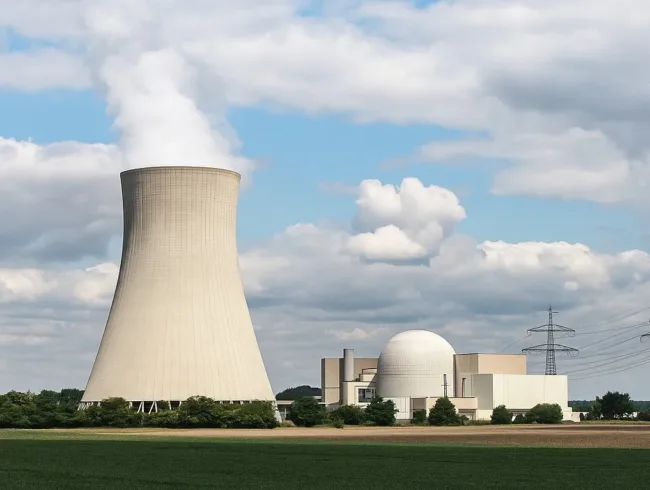
Hungary began taking its only nuclear power plant fully offline on August 3, 2026, after record-low water levels in the Danube River left the Paks facility without sufficient cooling water for continued electricity generation.
The four-reactor plant, which has approximately 2,000 megawatts of capacity and normally produces close to half of Hungary’s electricity, had already reduced output to just over 10% by Sunday evening. Prime Minister Péter Magyar warned that the facility could remain unavailable for several weeks if the Danube continues receding.
The shutdown is a preventive operational measure rather than a reactor accident. The plant requires large volumes of river water to remove heat during normal generation, and authorities concluded that continued production could no longer be maintained safely under the deteriorating conditions.
Hungary is entering the shutdown as another heatwave pushes temperatures towards 40 degrees Celsius and increases demand for air conditioning. The government has appealed to households and companies to reduce electricity use, while preparing mandatory restrictions if voluntary conservation proves insufficient.
Major industrial users including MOL, Samsung SDI, Audi and Denso have agreed to reduce consumption. The measures lowered national demand by approximately 400 megawatts, but the loss of Paks still creates an unusually large gap that Hungary must cover through imports, solar generation and other domestic power plants.
The emergency demonstrates how prolonged drought can simultaneously disrupt electricity generation, water supplies, shipping, tourism and industrial activity. It also raises wider questions about the resilience of European nuclear plants that depend on rivers becoming warmer, shallower and less predictable during extreme summers.
Why did record-low Danube levels force Hungary to shut the Paks nuclear power plant?
The Paks nuclear plant draws water from the Danube to cool equipment and remove heat produced during electricity generation.
A nuclear reactor continues producing substantial heat while operating. Water is therefore required throughout the generation process to transfer that heat and maintain safe operating temperatures.
The Danube has fallen to exceptionally low levels after prolonged drought and limited rainfall across Central and Eastern Europe. The decline reduced the amount of water available near the plant’s intake infrastructure and tested the ability of pumps to draw sufficient volumes into the cooling system.
Paks began reducing output before the full shutdown became necessary. Lower generation reduces the amount of heat that must be removed and allows operators to remain within technical and environmental limits while river conditions deteriorate.
The plant had fallen from its normal output of around 2,000 megawatts to approximately 240 megawatts by the weekend. Continuing at that level could not provide a durable solution because forecasts showed the river falling further.
Authorities therefore chose to remove the remaining reactors from electricity generation. The decision protects cooling margins and avoids operating equipment under conditions outside the plant’s permitted limits.
The shutdown does not indicate that reactor cooling has failed or that radioactive material has been released. It represents the planned use of safety procedures when the external water source required for normal generation becomes inadequate.
Why is the closure of Paks such a serious challenge for Hungary’s electricity system?
Paks is Hungary’s largest single source of electricity and normally supplies close to half of national generation.
Removing the entire plant means the power system must replace a large amount of stable output that is usually available throughout the day and night.
Solar power can meet a substantial share of daytime demand during clear summer weather. Its contribution declines rapidly in the evening, precisely when households continue using cooling systems, lighting and appliances.
Hungary must therefore rely more heavily on gas-fired power plants, regional electricity imports and voluntary reductions by major users during periods when solar production falls.
The shutdown is occurring during a heatwave expected to raise temperatures towards 40 degrees Celsius. Electricity demand normally increases during such conditions because homes, offices, shops and industrial facilities require additional cooling.
The simultaneous loss of nuclear output and increase in heat-related demand creates a difficult evening peak. The grid must maintain enough generation and imported power to meet consumption at every moment.
Prime Minister Péter Magyar described the first days of the shutdown as critical because the system has limited time to adjust. Unexpected failures at another power plant, transmission line or cross-border connection could tighten supply further.
The government has not announced general household blackouts. It has nevertheless prepared emergency measures that could progressively restrict large industrial users before residential consumers are affected.
What electricity conservation measures has Péter Magyar’s government introduced?
The Hungarian government first asked households, state institutions and businesses to reduce consumption voluntarily.
Large companies responded by cutting or rescheduling electricity use. MOL, Samsung SDI, Audi and Denso were among the industrial groups participating in the conservation effort.
The combined response reduced demand by approximately 400 megawatts, equivalent to a meaningful share of the generation lost during the gradual reduction at Paks.
MOL agreed to make a particularly large reduction in its electricity consumption. Industrial facilities can lower demand by slowing production, rescheduling energy-intensive operations or using alternative generation where available.
The government also ordered reductions in non-essential public-sector consumption. Decorative lighting on state buildings can be switched off, while some offices may move employees to remote work to reduce cooling and electricity requirements.
Rail operations could also be adjusted during peak periods. Freight movements may be reduced or rescheduled, while lower train speeds can decrease electricity demand across the transport system.
Mandatory industrial restrictions remain available if voluntary measures fail. Authorities could instruct selected large consumers to reduce operations or temporarily disconnect particular loads.
The government is attempting to avoid uncontrolled outages by reducing demand in an organised sequence. Planned industrial conservation is less disruptive than a sudden system imbalance that forces emergency power cuts across wider areas.
How long could the Paks nuclear plant remain offline because of the drought?
Péter Magyar warned that Paks could remain unavailable for several weeks because forecasts showed no rapid recovery in Danube water levels.
Restarting the plant will depend on more than a single day of rainfall. Water must rise sufficiently and remain stable enough for operators to restore cooling and generation within approved limits.
Rain falling elsewhere in the Danube basin may take time to reach Hungary. The river travels through several European countries, and its level at Paks reflects weather conditions across a broad upstream area.
Extremely dry soil can absorb rainfall before significant water reaches rivers. A short storm may therefore provide limited relief after months of drought.
The plant will also not return instantly to its full 2,000-megawatt output. Nuclear reactors must follow controlled restart procedures, technical checks and gradual increases in generation.
A prolonged shutdown would increase Hungary’s dependence on imported electricity. Regional prices could rise if neighbouring countries face similar heat, drought and generation constraints.
Officials estimated that additional imports and emergency energy measures could cost between 100 billion and 200 billion Hungarian forints, equivalent to approximately $315 million to $630 million.
The final economic cost will depend on the length of the shutdown, wholesale electricity prices, industrial reductions and the availability of lower-cost regional imports.
Why has the drought created wider problems for Danube shipping and water supplies?
The Danube is not only a cooling source for power plants. It is also a major transport corridor, tourism route, water resource and economic artery connecting Central and Eastern Europe.
Low water levels force cargo vessels to reduce their loads because heavily laden ships sit deeper in the river and risk grounding.
Carrying less cargo increases the cost of transporting fuel, grain, metals, chemicals and industrial products. More voyages may be required to move the same volume of goods.
Some river tourism services have also been interrupted. Cruise vessels may be unable to reach scheduled ports or pass through shallow sections, affecting passengers, local businesses and tourism operators.
Water restrictions have been introduced in more than 100 Hungarian cities and villages. Municipalities are attempting to protect drinking water and essential services while reducing non-critical consumption.
The drought has also exposed riverbeds, stranded boats and disrupted activities around Budapest and other riverside communities.
Hungary is not facing the problem alone. Romania has reduced nuclear generation because Danube flows became insufficient for normal cooling, while other European countries are managing restrictions involving rivers, agriculture and industry.
The crisis demonstrates how one environmental condition can affect several systems at the same time. Water shortages can reduce electricity supply while increasing transport costs and limiting the water available to households and farms.
Could Hungary experience blackouts or mandatory electricity rationing this week?
Hungarian authorities have said electricity supply remains manageable, but the risk of restrictions has increased.
The government’s immediate strategy is to combine imports, solar generation, domestic fossil-fuel plants and voluntary demand reductions.
Mandatory restrictions would probably begin with large industrial consumers rather than households. Major factories can reduce substantial amounts of demand more quickly than millions of individual residential users.
The power system is most vulnerable during evening hours, when solar generation declines while temperatures remain high and cooling demand continues.
Cross-border electricity imports will be essential. Hungary is connected to neighbouring power markets, allowing electricity to flow from countries with available generation.
Regional assistance has limits. Slovakia and other neighbouring states may provide support, but they must also protect their own supply during the heatwave.
Electricity prices could rise sharply when several countries seek imports at the same time. Hungary may have to purchase expensive power to prevent shortages.
A blackout is not inevitable simply because Paks is offline. Grid operators continuously balance generation, imports and demand and can introduce controlled restrictions before the system becomes unstable.
The danger would increase if another major plant or transmission connection failed while demand remained elevated. The government’s conservation campaign is intended to preserve a margin against such an event.
What does the Paks shutdown reveal about climate risks facing nuclear energy?
Nuclear power produces electricity with low direct carbon emissions and can operate continuously for long periods.
Many nuclear plants nevertheless depend on rivers, lakes or coastal water for cooling. Changes in water temperature, flow and availability can restrict generation even when the reactors themselves remain technically functional.
A drought can reduce the volume available for cooling. A heatwave can make river water too warm to absorb additional heat without damaging aquatic ecosystems or violating environmental limits.
These risks do not mean nuclear power is uniquely vulnerable. Drought can also reduce hydroelectric generation, interrupt coal transportation and restrict water used by gas or industrial facilities.
The Paks shutdown does show that energy planning must account for extreme river conditions that may occur more frequently or last longer than historical operating assumptions suggested.
Plants can improve resilience through upgraded intake systems, cooling towers, water storage or alternative cooling arrangements. Each solution involves engineering, licensing, environmental and financial challenges.
Hungary’s experience will be studied by other European countries operating river-cooled reactors. Regulators may need to reassess whether existing drought and heat scenarios remain adequate.
The shutdown also strengthens the case for a more diverse electricity mix. A system combining nuclear, renewable energy, storage, flexible generation and cross-border connections is less dependent on a single plant or weather condition.
How could the crisis influence Hungary’s long-term nuclear and energy strategy?
Hungary has relied on Paks for decades because the plant provides large volumes of relatively stable domestic electricity.
The shutdown is unlikely to cause the government to abandon nuclear energy. It may instead increase pressure to modernise cooling infrastructure and ensure that future reactors can operate under more extreme climate conditions.
Hungary must also strengthen alternatives for periods when nuclear generation becomes unavailable. Solar power has expanded rapidly, but storage and flexible backup generation remain important when sunlight declines.
Wind power, battery systems and improved regional grid connections could reduce pressure during future outages.
Energy efficiency will become another priority. Buildings that require less electricity for cooling reduce the demand surge produced by heatwaves.
Industrial users may also invest in onsite generation, storage and systems that allow consumption to be adjusted during grid emergencies.
The government must decide how much strategic capacity it is willing to maintain for rare but severe events. Backup infrastructure can appear expensive during normal conditions but becomes valuable when a plant supplying half of national generation disappears from the grid.
The August 3 shutdown therefore represents more than a temporary operational problem. It is a national test of whether Hungary’s electricity system can adapt when drought affects the infrastructure on which its energy security has depended for more than 40 years.
What are the key takeaways from Hungary’s first complete Paks nuclear shutdown?
- Hungary began taking the Paks nuclear power plant fully offline on August 3 after record-low Danube water levels prevented the facility from obtaining sufficient cooling water for continued electricity generation.
- Paks contains four reactors with approximately 2,000 megawatts of total capacity and normally produces close to half of Hungary’s electricity, making its complete loss an exceptional national energy challenge.
- The plant had reduced production to just over 10% by Sunday evening before entering the final shutdown process, following several days of declining output as the Danube continued receding.
- Prime Minister Péter Magyar warned that Paks could remain unavailable for several weeks because forecasts showed limited rainfall and further declines in the river’s water level.
- Hungary is simultaneously facing another heatwave with temperatures approaching 40 degrees Celsius, increasing air-conditioning demand while the country loses its largest source of continuous electricity.
- Voluntary conservation by households, public institutions and major companies including MOL, Samsung SDI, Audi and Denso reduced national demand by approximately 400 megawatts.
- The government has prepared mandatory industrial restrictions, reduced public lighting, possible rail adjustments and increased electricity imports if voluntary measures cannot maintain adequate supply.
- The shutdown is a preventive safety action rather than a nuclear accident, but it exposes the vulnerability of river-cooled power infrastructure to prolonged drought, extreme heat and increasingly unstable European water conditions.
Discover more from Business-News-Today.com
Subscribe to get the latest posts sent to your email.

