


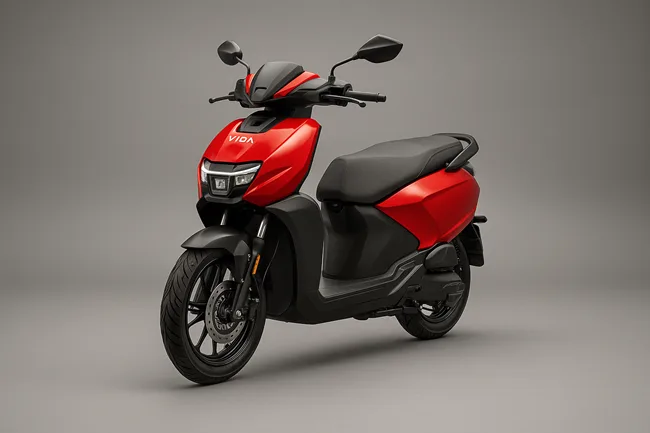
Hero MotoCorp Limited reported 570,068 motorcycle and scooter dispatches in May 2026, up from 507,701 units a year earlier, giving India’s largest two-wheeler manufacturer a stronger volume base at the start of the fiscal year. The NSE-listed company, which trades under the ticker HEROMOTOCO, also reported 496,957 domestic VAHAN registrations for the month, excluding Telangana data. The update matters because the growth was not limited to entry motorcycles, with scooters, Deluxe 125cc models, premium motorcycles, exports and VIDA electric mobility all contributing to the momentum. Hero MotoCorp shares closed at ₹4,819.90 on June 1, 2026, down 1.69 percent for the session, leaving investors to weigh solid operating data against a stock that remains well below its 52-week high.
Why does Hero MotoCorp’s May 2026 dispatch growth matter for India’s two-wheeler market?
Hero MotoCorp Limited’s May 2026 dispatch figure points to a company that is defending its core franchise while slowly widening the sources of growth inside its portfolio. Total dispatches increased by about 12.3 percent year on year, with motorcycles rising to 503,763 units from 475,164 units and scooters more than doubling to 66,305 units from 32,537 units. That distinction matters because Hero MotoCorp Limited has historically been viewed primarily through the lens of commuter motorcycles, while the latest numbers suggest stronger participation in categories where urban mobility, replacement demand and younger riders are reshaping buying behaviour.
The company’s year-to-date numbers also show a sharper acceleration. Total dispatches for FY2027 to date stood at 1,136,154 units, compared with 813,107 units in the same period of FY2026. Motorcycles contributed 1,005,554 units, while scooters rose to 130,600 units. This gives Hero MotoCorp Limited a larger opening run rate at a time when India’s two-wheeler market is being pulled in two directions, with mass mobility still dependent on fuel-efficient commuter products and premiumisation becoming more visible in urban and semi-urban demand.
The strongest strategic read-through is not simply that Hero MotoCorp Limited sold more units. It is that the company appears to be broadening the mix without surrendering its volume foundation. That matters because two-wheeler manufacturers increasingly need to balance affordability, aspirational upgrades, electric transition costs and dealer profitability. The easy headline is 5.70 lakh units. The harder question is whether Hero MotoCorp Limited can convert this volume strength into a more profitable product mix without allowing competitors to chip away at the categories where growth is fastest.
How are VIDA, scooters and exports changing the Hero MotoCorp growth narrative?
VIDA, Hero MotoCorp Limited’s emerging mobility business, recorded 19,052 VAHAN registrations in May 2026, representing 166 percent retail growth from the same month last year. The company also began retail operations for the DIRT.E K3 in select markets, extending the product portfolio beyond conventional electric scooter use cases. This is strategically important because Hero MotoCorp Limited’s electric vehicle story has often been judged against faster-moving EV specialists, while VIDA’s improving registration base gives the company a more credible platform to speak to younger riders and urban buyers.
Scooters are another underappreciated part of the update. Hero MotoCorp Limited’s scooter dispatches rose to 66,305 units in May 2026, compared with 32,537 units in May 2025. That is not a small rounding error in a motorcycle-heavy business. It signals that Hero MotoCorp Limited may be gaining traction in a category where brand recall, design, convenience, urban households and women riders can matter as much as fuel efficiency. The scooter improvement also gives the company a better bridge into electric mobility, where customer expectations are often closer to scooter usage than traditional motorcycle commuting.
Exports added a third layer to the story. Hero MotoCorp Limited reported global business dispatches of 33,284 units in May 2026, up from 18,704 units in May 2025, reflecting nearly 78 percent year-on-year growth. Year-to-date exports also rose to 66,937 units from 35,586 units. Export growth remains small compared with the domestic business, but it has strategic value because international markets can help diversify cyclicality, improve brand visibility and test premium products outside India. The execution risk, naturally, is that export growth often depends on distributor strength, currency movements, local financing conditions and regulatory fit in each market.
Can Hero MotoCorp’s 125cc and premium motorcycle push defend its domestic leadership?
Hero MotoCorp Limited said domestic dispatch growth in May 2026 was led by Deluxe 125cc, premium motorcycles and scooters, each delivering double-digit growth. Domestic dispatches rose to 536,784 units from 488,997 units a year earlier, while domestic year-to-date dispatches increased to 1,069,217 units from 777,521 units. For a company whose strength has long been tied to mass commuter motorcycles, the 125cc and premium motorcycle traction is crucial because it gives Hero MotoCorp Limited a way to defend market share while improving customer lifetime value.
The launch of the Super Splendor XTEC 2.0 also fits this strategy. The Super Splendor brand carries legacy value in the 125cc category, and the updated model gives Hero MotoCorp Limited a product refresh in a segment where buyers increasingly expect technology, comfort and design upgrades without completely leaving the value-conscious commuter mindset. This is the sweet spot for India’s two-wheeler incumbents. Too much premiumisation can alienate mass-market customers, while too little innovation can make legacy models feel tired. Hero MotoCorp Limited is trying to walk that thin line without tripping over its own kickstand.
The competitive pressure remains real. Bajaj Auto Limited, TVS Motor Company Limited, Honda Motorcycle and Scooter India Private Limited and Royal Enfield continue to define different parts of the two-wheeler growth map, from performance motorcycles to scooters and electric vehicles. Hero MotoCorp Limited’s May numbers suggest the company is not standing still, but the next phase will depend on whether product refreshes can hold pricing power, whether premium models can scale without diluting margins, and whether VIDA can avoid being treated as a side business in an EV market that rewards speed and visibility.
What does the HEROMOTOCO stock reaction say about investor sentiment after the May sales update?
Hero MotoCorp Limited’s operating update landed while the stock was still under pressure. HEROMOTOCO closed at ₹4,819.90 on June 1, 2026, down 1.69 percent, with a 52-week range of ₹4,158.10 to ₹6,388.50. That placed the stock about 24.55 percent below its 52-week high and about 15.92 percent above its 52-week low, suggesting investors have not fully rewarded the recent volume recovery.
The one-week picture also points to caution. Economic Times data showed Hero MotoCorp Limited shares had moved down 3.20 percent over one week, while Moneycontrol listed a market capitalisation of about ₹96,445 crore, a trailing twelve-month price-to-earnings ratio near 16.80 and a dividend yield of 3.84 percent. Those valuation markers make the stock look less aggressively priced than parts of the broader consumption and auto universe, but the discount is not accidental. Investors appear to be asking whether Hero MotoCorp Limited can convert improving dispatches into stronger earnings quality.
The sentiment layer is therefore mixed rather than bearish. On one side, May dispatches, scooter growth, export momentum and VIDA registrations all support the view that Hero MotoCorp Limited is regaining operating rhythm. On the other side, the stock’s distance from its 52-week high shows that the market still wants proof on margin resilience, electric vehicle economics, premium motorcycle traction and sustained rural demand. In plain English, the market is not ignoring the growth. It is just asking for receipts, preferably with margin expansion attached.
What execution risks could decide whether Hero MotoCorp sustains this growth momentum?
The first risk is mix management. Stronger growth in scooters, premium motorcycles and electric mobility can improve strategic positioning, but those segments also require higher marketing spend, product refresh intensity, distribution investment and technology costs. If Hero MotoCorp Limited pushes too aggressively into growth categories without protecting profitability, dispatch growth may look impressive while operating leverage disappoints. For investors, the quality of growth will matter as much as the quantity of dispatches.
The second risk is electric vehicle scalability. VIDA’s 166 percent retail growth in May 2026 is encouraging, but the Indian electric two-wheeler market remains highly competitive and policy-sensitive. Subsidy changes, battery costs, charging access, financing availability and after-sales reliability can all alter adoption curves quickly. Hero MotoCorp Limited has brand reach and dealer depth, but EV buyers often evaluate software, charging, battery warranty and digital experience in ways that differ from traditional motorcycle purchases. That forces the company to behave less like an old-school manufacturer and more like a mobility platform operator.
The third risk is export consistency. The 78 percent year-on-year growth in global dispatches looks strong, but international two-wheeler markets can be uneven. Currency volatility, import duties, local competition and macroeconomic pressure in emerging markets can affect demand. Still, if Hero MotoCorp Limited can build a durable export pipeline, the global business could become more than a monthly volume sweetener. It could help the company reduce reliance on domestic seasonality and create a stronger base for premium product expansion.
Key takeaways on what Hero MotoCorp’s May 2026 sales mean for HEROMOTOCO investors and India’s two-wheeler industry
- Hero MotoCorp Limited’s May 2026 dispatches rose to 570,068 units, showing that the company has entered FY2027 with stronger volume momentum across motorcycles, scooters, exports and electric mobility.
- The scooter business is becoming more strategically relevant, with May scooter dispatches rising to 66,305 units from 32,537 units a year earlier, giving Hero MotoCorp Limited a broader urban mobility base.
- VIDA’s 19,052 VAHAN registrations and 166 percent retail growth indicate that Hero MotoCorp Limited’s electric vehicle business is gaining visibility, although scalability and profitability remain the real tests.
- Export dispatches rose nearly 78 percent year on year to 33,284 units, suggesting that international markets could become a more meaningful growth lever if execution remains consistent.
- Domestic dispatches increased to 536,784 units in May 2026, supported by Deluxe 125cc, premium motorcycles and scooters, which points to a healthier mix than pure commuter-led growth.
- The Super Splendor XTEC 2.0 launch reinforces Hero MotoCorp Limited’s focus on defending the 125cc segment, where commuter loyalty and upgrade demand overlap.
- HEROMOTOCO’s stock remains well below its 52-week high, showing that investors are not yet treating the May volume update as enough proof of a sustained re-rating.
- The market reaction suggests investor sentiment is cautiously constructive, with stronger dispatch data offset by concerns around margins, EV economics and competitive intensity.
- The bigger industry signal is that India’s two-wheeler market is no longer only about mass-market motorcycles, with scooters, premiumisation and electric mobility reshaping growth priorities.
Share this:
Discover more from Business-News-Today.com
Subscribe to get the latest posts sent to your email.