


HanAll F&B Farming Association Corporation, a South Korean food manufacturer based in Taebaek, Gangwon Province, is developing a rice noodle production method intended to reduce dependence on specific rice varieties and expand the use of domestically grown rice in processed foods. The company announced on October 31, 2026, that it had filed a patent application in June following three years of research involving approximately six tonnes of rice flour. Its development programme focuses on overcoming manufacturing difficulties encountered when increasing domestic rice content to 50% or more while using different rice varieties, with improved noodle separability identified as an important technical objective. HanAll F&B is also considering rice pasta and rice naengmyeon as follow-on products, positioning the process as a potential manufacturing platform rather than a single noodle formulation. The commercial opportunity comes as South Korea seeks additional processed-food applications for domestic rice, although the company’s method still requires further validation, product development and evidence of market demand.
The announcement provides an early indication of how regional Korean food manufacturers are attempting to move beyond traditional agricultural products into more technically demanding processed foods. HanAll F&B has experience manufacturing products using wild mountain greens from Gangwon Province and specialty agricultural ingredients sourced from different regions. Its rice noodle initiative extends that operating experience into a category where raw-material characteristics can directly influence manufacturing consistency.
The company has not disclosed the patent application number, specific formulation, manufacturing capacity or expected commercial launch date. It has also not confirmed that its proposed method can accommodate every domestic rice variety at commercial scale. These details are important because a patent filing establishes an intellectual property application, not regulatory approval, completed technology validation or a profitable production process.
Why is HanAll F&B developing rice noodles that can use multiple Korean rice varieties?
Rice varieties differ in characteristics that influence how their flour behaves during food processing. Starch composition, gelatinisation properties, protein content and moisture absorption can affect whether a noodle maintains its structure during production and cooking. Manufacturers seeking consistent texture and appearance may consequently prefer particular varieties that perform predictably within established processes.
HanAll F&B encountered this constraint while attempting to increase the proportion of domestic rice in its noodle formulations. The company reported significant manufacturing difficulties when using flour from varieties other than a specific preferred type while raising domestic rice content to at least 50%. Its research programme therefore concentrates on widening the range of usable rice rather than making incremental changes to one established recipe.
The objective has potential procurement implications. A manufacturer dependent on one rice variety may face limitations in sourcing volumes, regional availability and purchasing flexibility. A process that performs reliably with multiple varieties could provide more options for buying domestic ingredients, particularly when agricultural supply conditions change.
However, broader ingredient compatibility can also introduce quality-control requirements. Rice sourced from different regions or harvests may need testing and processing adjustments to ensure that the finished noodles maintain consistent characteristics. The commercial benefit would depend on whether those adjustments can be implemented without excessive manufacturing costs.
HanAll F&B’s longer-term ambition is to enable noodle production from a wide range of Korean rice varieties. The company has not demonstrated that universal compatibility has already been achieved, and further development is planned to establish how broadly the method can be applied.
What manufacturing problem is HanAll F&B trying to solve through improved noodle separability?
One of the central technical objectives of HanAll F&B’s patent application is improving noodle separability. During production, noodle strands may adhere to one another or become difficult to handle consistently, affecting the efficiency of processing and the quality of the finished product.
The behaviour of rice-based noodles depends heavily on how starch responds to water, heat and subsequent cooling. Food science research has shown that differences in rice composition influence noodle firmness, elasticity, cooking loss and texture. These characteristics can vary even among rice varieties with broadly similar starch profiles.
For a manufacturer, poor separation can affect several production stages. Additional handling may be necessary to divide strands, while breakage or uneven product formation could reduce the quantity of acceptable finished noodles. Improving separation may therefore support both product consistency and manufacturing efficiency.
HanAll F&B says it has developed methods intended to reduce these difficulties, but the patent announcement does not disclose the precise technical process. It does not identify whether the improvement depends on changes to flour preparation, ingredient ratios, thermal treatment, forming equipment or another manufacturing parameter.
That limits independent assessment of the method’s novelty and performance. The company has also not provided comparative data showing production yields, processing time, strand breakage or cooking performance against existing rice noodle techniques.
Such measurements would be important for commercial customers. A process that improves separation under experimental conditions would become more valuable if it also reduced waste, supported continuous production and maintained acceptable texture after cooking.
What does three years of research using six tonnes of rice flour reveal about the technology’s development stage?
HanAll F&B reported that its development programme used approximately six tonnes of rice flour over three years. This represents an estimated average of two tonnes annually, although the company has not disclosed how material consumption was distributed across individual research stages.
The quantity indicates that development involved repeated physical testing rather than solely theoretical formulation work. However, the six-tonne figure measures flour used in research and should not be confused with annual manufacturing capacity, commercial sales or finished noodle production.
The announcement does not specify how many trials were conducted, how many rice varieties were evaluated or what proportion of the experimental flour produced acceptable noodles. Without this information, the efficiency and reproducibility of the process cannot be assessed quantitatively.
A commercially useful production method must perform consistently when ingredient quality varies and output volumes increase. Conditions that work with individual test batches may require further adjustments when processing equipment operates continuously or when larger quantities of flour are introduced.
Manufacturing validation would therefore need to examine production yield, product consistency, processing losses and the handling requirements of the finished noodles. These measurements would establish whether the new method provides a practical advantage over existing alternatives.
The company’s decision to continue development after filing the patent suggests that it regards the intellectual property application as a foundation for additional work rather than the completion of its manufacturing programme. Its next technical results will be more consequential than the research flour quantity alone.
Why does HanAll F&B’s 50% domestic rice challenge matter for food formulation and product positioning?
HanAll F&B identified difficulties when attempting to produce noodles containing 50% or more domestic rice while using flour from different rice varieties. This provides a measurable reference for the company’s development work, but the announcement does not establish a standardized production formula that consistently achieves the threshold across all varieties.
The distinction affects both manufacturing and marketing. A formulation containing a larger proportion of domestic rice may appeal to customers seeking Korean agricultural ingredients, but its commercial suitability still depends on texture, taste, preparation requirements and price.
The composition of the remaining ingredients also matters. A noodle containing 50% rice could include other grains, starches or formulation ingredients depending on the recipe. Consequently, a high domestic rice content does not automatically establish that a product is gluten-free or appropriate for consumers with coeliac disease.
HanAll F&B has not published ingredient specifications or allergen information for a commercial product developed through the method. Any future nutritional or dietary claims would therefore need to reflect the actual formulation rather than the general characteristics of rice.
If the company can increase ingredient flexibility without compromising product performance, it may be able to offer manufacturers a clearer basis for developing products using regional Korean rice. This could support differentiated sourcing claims, provided the origin and proportion of domestic ingredients are appropriately documented.
The commercial opportunity is strongest where consumers or foodservice buyers value Korean-origin ingredients enough to justify the resulting product economics. Higher domestic content alone does not guarantee a price premium, especially if competing noodles deliver similar eating quality at lower cost.
How does declining household rice consumption contrast with rising industrial demand in South Korea?
HanAll F&B’s development initiative coincides with a structural change in South Korean rice consumption. Government statistics show that annual household rice consumption declined to 53.9 kilograms per person in 2025, representing a 3.4% decrease from the previous year.
The longer-term change is substantial. Per-capita rice consumption was approximately 106.5 kilograms in 1995, meaning the 2025 figure was almost half the level recorded three decades earlier. Changing diets and greater use of convenience foods have reduced direct consumption of cooked rice.
Industrial demand has followed a different pattern. South Korea’s revised official statistics show that rice consumption by business establishments increased 22% to approximately 1.07 million tonnes in 2025. The increase illustrates the importance of processed-food applications as consumption habits evolve.
These trends create a commercial rationale for developing additional products made from domestic rice. Processing provides another route through which agricultural output can reach consumers, potentially supporting demand even as traditional household rice consumption declines.
However, growth in overall industrial rice use does not establish equally strong demand across every processed-food category. Rice cakes, beverages, ready-to-eat meals and noodles serve different markets and have different ingredient requirements.
HanAll F&B is therefore addressing a potential opportunity rather than entering a segment where sales growth has already been demonstrated for its particular products. The company must establish whether buyers want noodles made from a wider selection of Korean rice varieties and whether the products can compete on price and quality.
How could HanAll F&B’s technology support South Korea’s domestic rice processing strategy?
South Korea has been encouraging greater diversification of rice use as part of its efforts to manage agricultural supply and changing consumption patterns. The Ministry of Agriculture, Food and Rural Affairs has supported initiatives involving floury rice, a type suited to certain processed-food applications.
Government programmes have sought to connect domestic rice production with manufacturers developing alternatives to wheat-based ingredients in selected products. These efforts are intended to create additional demand while improving commercial opportunities for agricultural producers.
HanAll F&B’s approach is related to that broader objective but differs in its emphasis on reducing dependence on specific rice varieties. Rather than developing products solely around one type of processing-suitable rice, the company aims to make noodle manufacturing more adaptable to ingredients sourced from different regions.
Greater flexibility could potentially benefit regional agricultural suppliers if manufacturers become able to use rice that previously performed poorly in conventional noodle processes. However, any increase in farm-level demand would depend on successful commercialization and actual procurement arrangements.
The company has not announced contracts with farmers, agricultural cooperatives or regional rice suppliers specifically for the new technology. It has also not disclosed the quantities of domestic rice that would be purchased if commercial production proceeds.
The broader agricultural benefit therefore remains prospective. A manufacturing method capable of handling multiple varieties could contribute to supply-chain flexibility, but its national significance would depend on adoption by manufacturers and sustained demand for finished products.
Why is HanAll F&B considering rice pasta and rice naengmyeon beyond its initial rice noodles?
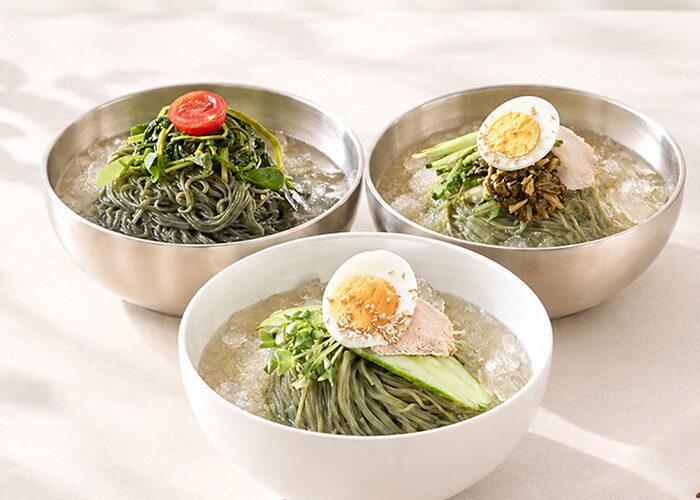
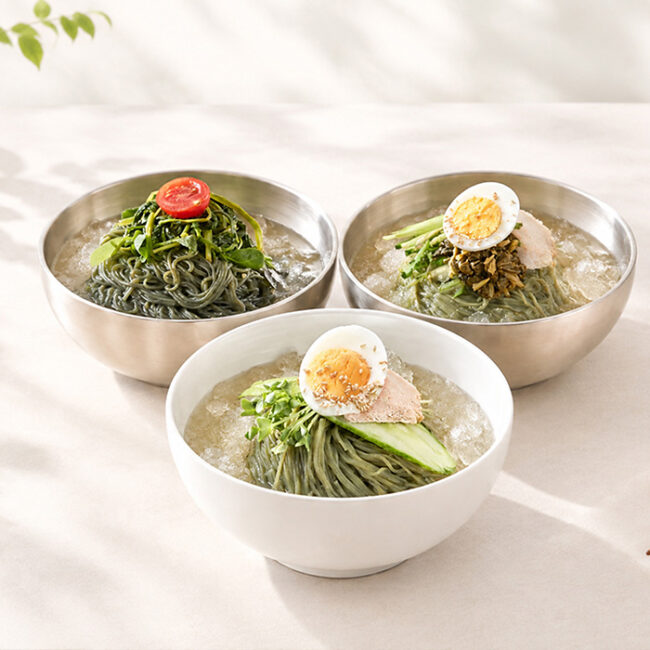
HanAll F&B plans to explore rice pasta and rice naengmyeon, a Korean cold noodle product, as possible extensions of its development programme. The strategy reflects an ambition to use the manufacturing method across different meal formats rather than rely on one product category.
These applications present distinct technical requirements. Pasta may need to maintain firmness and structure during cooking, while naengmyeon is associated with particular textures and preparation methods suited to cold dishes. A manufacturing process suitable for one type of noodle may therefore require adaptation before it can support another.
The company’s goal of improving raw-material flexibility could provide a common foundation for these products. If different rice varieties can be processed more consistently, HanAll F&B may have additional options when developing formulations for different cooking applications.
However, the company has not announced commercially available rice pasta or rice naengmyeon products derived from the patent application. It has also not disclosed prototypes, production trials, retail prices or expected launch dates for either category.
Product diversification could broaden the addressable customer base by appealing to restaurants, foodservice distributors and retail consumers with different preferences. Yet introducing multiple products would also require additional packaging, inventory management and sales activity.
A disciplined commercialization strategy would establish the performance and economics of the initial rice noodle process before committing substantial resources to a wider portfolio. Product extensions would be more credible once the underlying manufacturing method demonstrates consistent output and customer acceptance.
What does the June 2026 patent filing actually protect, and could HanAll F&B license the process to other manufacturers?
HanAll F&B says it submitted a patent application for its rice noodle manufacturing method in June 2026. The October announcement does not disclose a granted patent or confirm that the application has completed substantive examination.
A patent application may eventually provide exclusive rights over specified technical claims if the relevant patent authority determines that the statutory requirements have been satisfied. The scope of protection would depend on the claims ultimately allowed, rather than the company’s general ambition to manufacture noodles from multiple rice varieties.
The company has not disclosed its application number or the precise technical claims. It is therefore not possible to determine independently whether the proposed method covers particular processing steps, ingredient combinations or equipment configurations.
Potential licensing could provide an additional business model if the technology is granted suitable protection and proves commercially useful. Other manufacturers might prefer to use a validated process rather than independently develop comparable production capabilities.
However, HanAll F&B has not announced a licensing programme, royalty rates or discussions resulting in a technology transfer agreement. Its statement that broader adoption could support the Korean rice noodle market should not be interpreted as evidence of existing third-party demand.
The company could choose to manufacture its own products, collaborate with other processors or eventually license selected technology rights. The most commercially attractive structure would depend on the production economics, investment required and enforceability of any resulting intellectual property.
Can HanAll F&B compete with established noodle manufacturers on production cost and consistency?
The potential manufacturing advantage of using multiple rice varieties depends on whether ingredient flexibility produces measurable economic benefits. A broader sourcing base may help a processor manage procurement, but the savings could be reduced if the method requires additional processing time, energy or specialized equipment.
HanAll F&B has not disclosed the machinery required for its proposed process or the capital investment necessary to establish a commercial production line. It has also not provided yield comparisons, labour requirements or the cost per kilogram of finished noodles.
These omissions limit direct financial comparison with established noodle manufacturing methods. A technically successful process may still struggle commercially if production costs are too high or if the finished product does not meet consumer expectations.
The company’s existing food manufacturing experience may provide a foundation for product development. Its operations in Taebaek include processing agricultural products such as wild mountain greens, with attention to hygiene management, washing, ageing and recipe development.
However, producing rice noodles at consistent scale involves different processing and quality requirements from preparing preserved vegetables or regional specialty foods. Manufacturing expansion would need to address the specific characteristics of rice flour and the selected noodle formats.
The competitive test will involve consistent quality, acceptable cooking performance and pricing suited to the intended customer. A process that performs reliably with several varieties while reducing waste or sourcing constraints could offer a practical advantage, but that advantage has not yet been quantified.
How will domestic and international buyer feedback shape HanAll F&B’s future sales channels?
HanAll F&B intends to promote its manufacturing technology and products to buyers in South Korea and overseas. The company plans to use direct discussions to assess demand, understand product requirements and identify potential distribution opportunities.
Buyer engagement could be especially useful because different markets may prefer different noodle textures, preparation formats and package sizes. Foodservice operators may prioritize consistency and bulk supply, while retail distributors may place greater importance on consumer recognition, shelf life and packaging.
The ability to manufacture rice noodles using different Korean varieties could provide a distinctive sourcing proposition. However, overseas buyers would still need evidence of product quality, regulatory compliance and reliable delivery.
The company has not identified confirmed export markets, international distributors or signed purchase agreements associated with the new method. Its outreach should therefore be understood as market development rather than established overseas expansion.
Export economics will also depend on transportation, packaging, shelf life and the landed cost of the finished product. A product with attractive domestic manufacturing characteristics may require different packaging or formulation choices for international distribution.
The most useful commercial evidence would involve repeat orders from qualified buyers, followed by expansion into additional products or markets. Those outcomes would demonstrate whether the technical improvements translate into demand beyond the company’s research programme.
What financial information is needed to assess HanAll F&B’s commercialization potential?
HanAll F&B has provided a physical measure of research activity through its reported six tonnes of rice flour, but it has not disclosed the monetary cost of the development programme. The announcement also does not include revenue, operating profit, cash balances, manufacturing capacity or capital expenditure commitments.
The absence of financial disclosure prevents a reliable estimate of the investment required to commercialize the patented method. Research material consumption alone does not provide a basis for calculating development expenditure or expected production returns.
The company is organized as a farming association corporation and has not identified a publicly traded stock listing in connection with the announcement. Consequently, stock-price performance, market capitalization and institutional ownership analysis are not applicable to this development.
Its commercial position will become clearer if management discloses production investment, sales channels, customer orders and the expected economics of manufacturing rice noodles using different varieties.
There is also a potential distinction between selling finished food products and supplying manufacturing technology to other businesses. The financial profiles of those models differ because one requires direct investment in production and inventory, while the other could depend more heavily on intellectual property and commercial agreements.
The October announcement does not establish which model will dominate HanAll F&B’s future business. Until clearer commercial arrangements emerge, the development should be assessed as a food manufacturing technology initiative with potential agricultural and product diversification benefits rather than a quantified revenue opportunity.
What milestones will determine whether HanAll F&B’s rice noodle patent application creates commercial value?
The most immediate milestone is further validation of the manufacturing process across a wider range of Korean rice varieties. Evidence of consistent noodle quality, improved separation and acceptable production yields would help establish the method’s practical value.
Patent examination will be another measurable development. Publication or approval of the relevant claims would clarify the scope of the intellectual property, although patent protection alone would not establish commercial demand.
The company will also need to determine how its initial rice noodle product will be manufactured, packaged and distributed. Commercial trials could provide information about customer preferences and whether the process performs reliably outside the original research setting.
Subsequent development of rice pasta and naengmyeon could expand the business opportunity if those products meet distinct consumer requirements without disproportionate additional costs.
HanAll F&B’s decision to engage domestic and international buyers offers a route to assessing demand before committing to a larger production programme. Confirmed purchase orders, distribution partnerships and repeat sales would provide stronger financial evidence than expressions of interest.
The patent filing establishes a defined technical development direction after three years of experimentation. Its commercial potential will become more convincing when HanAll F&B demonstrates that multiple domestic rice varieties can be converted into noodles at consistent quality and competitive cost, with customer orders supporting continued production.
What are the key takeaways from HanAll F&B’s rice noodle patent filing and domestic rice processing strategy?
- HanAll F&B Farming Association Corporation announced on October 31, 2026, that it is developing a rice noodle manufacturing method intended to use a wider range of Korean rice varieties.
- The company filed a patent application in June 2026 following three years of research involving approximately six tonnes of rice flour.
- Its principal technical objectives are reducing dependence on specific rice varieties and improving noodle separability.
- The research addresses manufacturing difficulties encountered when domestic rice content reaches 50% or more while using different varieties.
- HanAll F&B has not disclosed a granted patent, commercial-scale production validation or standardized performance data.
- The company is considering rice pasta and rice naengmyeon as additional products, although no confirmed commercial launch dates have been announced.
- South Korean household rice consumption declined to 53.9 kilograms per person in 2025, while revised government statistics show business-sector rice use increasing 22%.
- Greater flexibility in domestic rice sourcing could support manufacturers and regional agricultural suppliers if the technology proves commercially viable.
- HanAll F&B intends to engage domestic and international buyers, but has not disclosed signed distribution agreements, export orders or licensing arrangements.
- The main proof points will be manufacturing consistency, commercial production costs, patent status and repeat customer demand.
Discover more from Business-News-Today.com
Subscribe to get the latest posts sent to your email.