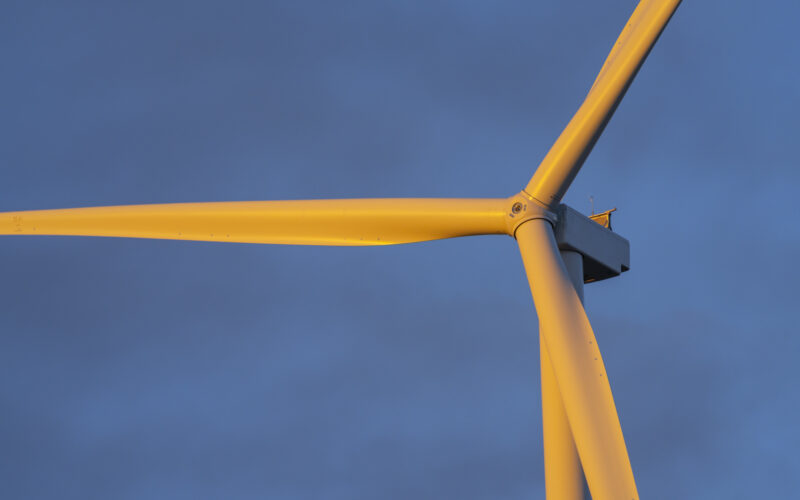
GE Vernova Inc. has signed an agreement with Powerica Limited to supply and install 28 onshore wind turbines for the 106.4MW Botad Wind Farm in Gujarat, marking the India debut of its 3.8MW-154m turbine platform. The New York Stock Exchange-listed energy technology company, traded under the ticker GEV, is using the Powerica Limited order to deepen its onshore wind presence in one of India’s most active renewable energy states. The agreement matters because India’s clean-energy build-out remains heavily associated with solar, while wind power is increasingly needed to balance generation profiles, support hybrid projects and reduce grid stress. For investors, the contract is not large enough to alter GE Vernova Inc.’s valuation by itself, but it strengthens the company’s India growth narrative at a time when the stock remains well above its 52-week low despite trading below its April high.
Why does GE Vernova Inc.’s Powerica Limited wind turbine order matter for India’s renewable energy market?
GE Vernova Inc.’s Powerica Limited order matters because it adds fresh momentum to India’s onshore wind market at a time when the country’s renewable energy story is often dominated by solar capacity additions. Solar remains faster to deploy in many regions, but wind offers a different generation profile that can improve renewable energy balancing, especially when paired with solar and storage. Gujarat, with its strong wind resources and established renewables ecosystem, is one of the natural places for that balancing act to play out.
The Botad Wind Farm order also shows that India’s renewable energy expansion is moving toward larger, more efficient turbine platforms. GE Vernova Inc.’s 3.8MW-154m turbine is being positioned for the Indian market with a larger rotor and higher unit capacity than older onshore fleets. That matters because land, grid access and project economics increasingly reward higher output per turbine rather than simply adding more machines across constrained sites.
For Powerica Limited, the project strengthens its independent power producer portfolio and extends an existing relationship with GE Vernova Inc. in Gujarat. The fourth collaboration between the two companies suggests that Powerica Limited is not treating the turbine supplier relationship as a one-off procurement decision. In renewable energy development, repeat partnerships can reduce execution risk because teams, supply chains and site-level expectations become more familiar. That familiarity is not glamorous, but neither are turbine installation delays, and those can be expensive.

How could the Botad Wind Farm support Gujarat’s position as a renewable energy hub?
The Botad Wind Farm strengthens Gujarat’s renewable energy position because the state already combines strong wind and solar resources with industrial demand, ports, transmission corridors and a policy environment that has attracted clean-energy developers. Gujarat has long been important to India’s renewable energy ambitions, and new wind projects help diversify a power mix that cannot rely on solar alone. Evening demand, seasonal variability and grid-balancing needs all make wind capacity strategically useful.
The 106.4MW scale is not enormous compared with India’s national renewable targets, but project-level additions matter because India’s clean-energy transition is cumulative. A steady flow of mid-sized and large wind projects can help rebuild confidence in a sector that has faced policy uncertainty, auction pricing pressure, land challenges and transmission delays in previous cycles. Every successfully executed project gives lenders and developers more comfort that wind can remain a meaningful part of India’s renewable mix.
There is also an industrial dimension. Gujarat’s renewable energy pipeline supports power demand from manufacturing, ports, chemicals, data infrastructure and emerging green hydrogen plans. Wind projects can improve the state’s ability to offer cleaner power to industrial users, particularly where corporate buyers want round-the-clock renewable procurement rather than daytime solar-heavy supply. Gujarat’s clean-energy story is therefore not just about capacity. It is about whether the state can turn renewable generation into an industrial competitiveness tool.
Why is the 3.8MW-154m turbine platform strategically important for GE Vernova Inc. in India?
The 3.8MW-154m turbine platform is strategically important because India’s wind market needs equipment that can perform across variable wind conditions while keeping project economics attractive. Larger rotor diameters can capture more energy in lower and moderate wind regimes, improving capacity factors and supporting more bankable projects. That is especially relevant in a market where many of the best wind sites are already known and developers need technology that can improve output from available locations.
For GE Vernova Inc., introducing the turbine platform in India allows the company to compete for a larger share of future wind orders as developers seek higher-yield turbines. The company’s ability to manufacture, certify and support equipment locally will matter because India increasingly wants renewable energy supply chains to support domestic industrial activity, not just imported hardware deployment. The Pune manufacturing link referenced in GE Vernova Inc.’s announcement is therefore commercially relevant, because local production can improve delivery confidence and policy alignment.
The risk is that turbine technology alone does not guarantee market share. India’s wind market is competitive, and suppliers must manage pricing pressure, project delays, service quality, grid availability and warranty obligations. The turbine debut gives GE Vernova Inc. a sharper product story, but the long-term test will be operating performance across Indian wind conditions. Developers do not buy turbine brochures. They buy megawatt-hours, availability and a service team that answers the phone when the machine is sulking.
How does the order fit into GE Vernova Inc.’s global wind turnaround story?
The Powerica Limited order fits into GE Vernova Inc.’s global wind story because the company is still working to prove that its wind business can grow with stronger discipline after years of industry-wide margin pressure. The global wind sector has faced inflation, warranty issues, contract repricing, offshore wind impairments and supply-chain stress. Onshore wind has generally been more manageable than offshore wind, but it still requires careful product standardisation, service execution and pricing discipline.
India offers GE Vernova Inc. a growth market, but it is not a market where suppliers can rely on premium pricing alone. Indian developers are cost-sensitive and often operate under competitive tariff structures. That means GE Vernova Inc. must balance volume growth with margin discipline. Winning orders is useful, but winning profitable orders is the part investors care about. The Botad order supports the company’s installed base and India credentials, but it should be read as part of a broader execution campaign rather than a standalone financial inflection point.
For the company’s global wind business, localisation is also important. India can serve both as a domestic market and as a manufacturing and engineering base. If GE Vernova Inc. can expand its platform successfully in India, it may strengthen its ability to compete across other emerging wind markets. The company’s broader challenge is to convert product relevance into dependable earnings, because energy transition demand is strong but wind-equipment profitability has been far less polite.
What does GE Vernova Inc.’s stock performance suggest about investor sentiment?
GE Vernova Inc. shares recently closed around $963.33, compared with a 52-week range of $458.65 to $1,181.95 and a market capitalisation of about $258.87bn. The stock remains more than double its 52-week low, reflecting strong investor enthusiasm around electrification, grid equipment, power generation demand and the company’s position as a standalone energy technology group. At the same time, the stock is still below its April 52-week high, showing that investors are no longer buying every clean-energy and power-infrastructure signal without examining valuation.
The Powerica Limited order is strategically useful but not a major valuation catalyst on its own. Investors are more likely to read it as evidence that GE Vernova Inc. continues to win in international onshore wind markets, particularly in India, where renewable capacity expansion remains a long-term opportunity. The larger equity story remains tied to grid demand, gas power demand, electrification, services revenue, margin expansion and whether the wind segment can avoid becoming the weak sibling at the family dinner.
The sentiment layer is therefore constructive but selective. GE Vernova Inc. has become a market favourite because it sits at the intersection of power demand growth, artificial intelligence-driven grid strain, electrification and energy security. However, high expectations leave less room for execution errors. Small contract wins support the narrative, but investors will keep asking whether wind orders translate into improved profitability rather than just more backlog.
Why does India still need wind power despite rapid solar growth?
India still needs wind power because solar alone cannot provide the generation diversity required for a reliable renewable-heavy grid. Solar generation is concentrated in daylight hours, while wind can provide output at different times depending on regional patterns and seasons. A cleaner Indian grid needs solar, wind, storage, hydro, gas flexibility, transmission expansion and demand management working together. No single technology gets to wear the crown for the whole parade.
Wind is especially relevant for hybrid renewable projects. Developers can combine solar and wind to smooth generation profiles and improve utilisation of transmission infrastructure. That matters because grid connection capacity is becoming one of the biggest constraints in renewable energy deployment. If wind generation can complement solar output, project economics can improve and system operators may face fewer balancing headaches.
India’s policy framework has also shifted toward more complex procurement structures, including hybrid, firm and dispatchable renewable energy tenders. Those structures favour developers that can assemble diversified generation portfolios rather than simply bid the lowest daytime solar tariff. GE Vernova Inc.’s turbine order therefore fits a broader trend: wind is not replacing solar, but it is becoming more important as India moves from capacity addition to system reliability.
What execution risks could affect the Botad Wind Farm and similar Indian wind projects?
The main execution risks are familiar across Indian renewable energy projects: land acquisition, right-of-way access, grid connectivity, equipment logistics, commissioning timelines and payment certainty. Even a well-designed wind project can face delays if transmission infrastructure is not ready or local approvals take longer than expected. Gujarat is one of India’s stronger renewable energy states, but strong does not mean frictionless.
Turbine supply and installation also require disciplined project management. Larger turbine components need specialised transport, site preparation, cranes, civil works and weather-sensitive installation windows. Any delay in the equipment chain can affect commissioning schedules and project returns. GE Vernova Inc. and Powerica Limited have previous experience together in Gujarat, which may reduce some coordination risk, but every site still brings its own complications.
Another risk is operating performance after commissioning. Wind projects are long-life assets, and turbine availability, maintenance cost, spare parts access and grid curtailment all shape returns over time. Developers and lenders increasingly focus on lifecycle economics rather than upfront megawatt capacity. The Botad Wind Farm will therefore be judged not merely by whether turbines are installed, but by whether they deliver stable generation under Indian operating conditions.
Can GE Vernova Inc. use India to strengthen its position in emerging wind markets?
GE Vernova Inc. can use India to strengthen its position if the company proves that its larger onshore turbine platform can deliver reliable performance, competitive economics and service quality in one of the world’s most demanding renewable energy markets. India offers scale, policy support and long-term electricity-demand growth, but it also tests cost discipline, local execution and supplier resilience. Success in India can become a useful reference point for other emerging markets with similar affordability and infrastructure constraints.
The company’s India strategy also fits a broader global shift in energy technology supply chains. Governments want more local manufacturing, developers want reliable delivery, and equipment suppliers want markets large enough to justify platform investment. GE Vernova Inc.’s Pune manufacturing connection and India-specific turbine launch help align with those priorities. If the company can deepen localisation while protecting margins, India could become more than a sales market. It could become a strategic manufacturing and technology base.
A neutral reading suggests the Powerica Limited order is a meaningful India milestone, not a transformational event. It gives GE Vernova Inc. a stronger onshore wind reference, supports Gujarat’s renewable energy pipeline and reinforces the need for wind in India’s solar-heavy transition. The real test will come after commissioning, when performance, availability and project economics decide whether the 3.8MW-154m platform becomes a repeatable India growth engine.
Key takeaways on GE Vernova Inc.’s Powerica Limited turbine order and India’s wind market
- GE Vernova Inc. will supply and install 28 of its 3.8MW-154m onshore wind turbines for Powerica Limited’s Botad Wind Farm in Gujarat.
- The project has total capacity of 106.4MW, giving GE Vernova Inc. a fresh reference point in one of India’s most active renewable energy states.
- The order marks the India debut of GE Vernova Inc.’s 3.8MW-154m turbine platform, which is designed to improve output in Indian wind conditions.
- The Botad Wind Farm is the fourth wind project collaboration between GE Vernova Inc. and Powerica Limited in Gujarat, suggesting a repeat supplier-developer relationship.
- India’s renewable energy market still needs wind power because solar-heavy capacity growth creates balancing, evening supply and grid management challenges.
- Gujarat remains strategically important because it combines renewable resources, industrial demand, port infrastructure and policy support for clean-energy development.
- GE Vernova Inc.’s stock remains far above its 52-week low, but below its April high, showing strong investor interest with valuation discipline returning.
- The order supports GE Vernova Inc.’s global wind story, but investors will want evidence that onshore wind growth can also support margins and services revenue.
- Execution risks include grid connection timing, component logistics, land and right-of-way constraints, turbine availability and lifecycle maintenance performance.
- For India’s energy transition, the project reinforces the case that wind and solar must scale together if renewable growth is to become more reliable and grid-friendly.
Discover more from Business-News-Today.com
Subscribe to get the latest posts sent to your email.