



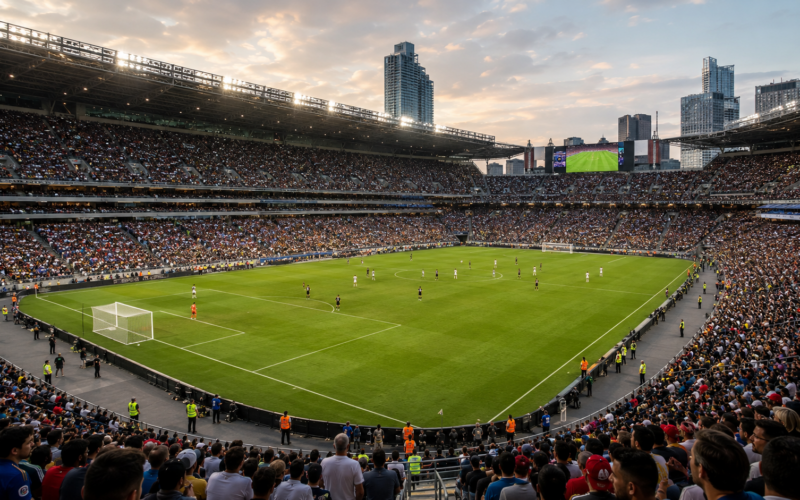
Uruguay were held to a 2-2 draw by Cape Verde at Miami Stadium in Miami Gardens, Florida, on June 21, 2026, with the match concluding early on June 22 in India. Kevin Pina gave the tournament debutants the lead with a spectacular 31-metre free-kick before Maxi Araújo and Agustín Canobbio turned the match around late in the first half.
Hélio Varela equalised for Cape Verde in the 61st minute, only three minutes after entering as a substitute. Varela intercepted Mathías Olivera’s loose pass, moved beyond the advancing Fernando Muslera and finished into the empty goal.
Uruguay pushed for a winner and had a later Araújo effort ruled out for offside. Canobbio also missed a major stoppage-time opportunity, leaving Marcelo Bielsa’s side without a victory after two Group H matches.
The result moved Uruguay and Cape Verde to two points each, two behind group leaders Spain. Uruguay now face Spain in a decisive final fixture, while Cape Verde can strengthen their historic qualification challenge against Saudi Arabia.
Uruguay vs Cape Verde FIFA World Cup 2026 match scorecard
How did Kevin Pina score Cape Verde’s first goal in FIFA World Cup history?
Cape Verde entered the match carrying confidence from their goalless draw against Spain, but Uruguay controlled much of the early possession. The debutants nevertheless demonstrated that they were prepared to attack rather than simply repeat the deep defensive approach used in their opening match.
Telmo Arcanjo created the decisive opening by accelerating through midfield. Rodrigo Bentancur stopped the run illegally, giving Cape Verde a free-kick approximately 31 metres from goal.
Pina stepped forward as Uruguay formed a two-player defensive wall. The wall separated as the midfielder struck the ball, leaving a direct route toward Muslera’s goal.
The low, powerful shot travelled through the gap before the goalkeeper could adjust his feet. Muslera reacted late, and the ball reached the net in the 21st minute.
The goal was Cape Verde’s first in men’s World Cup history. It arrived one match after the team earned its first tournament point against Spain, extending a debut campaign already exceeding expectations.
Pina’s strike also changed the emotional balance of the contest. Uruguay had expected to control the match after drawing 1-1 with Saudi Arabia, but Cape Verde’s lead increased the pressure on Bielsa’s players.
Cape Verde did not immediately retreat after scoring. Garry Rodrigues continued attacking Guillermo Varela’s side of the pitch, while Arcanjo and Ryan Mendes looked for opportunities created by Uruguay’s increasingly aggressive positioning.
The willingness to keep attacking prevented Uruguay from building uninterrupted pressure. Even when Cape Verde did not retain possession for long periods, their direct running created enough uncertainty to keep the match open.
How did Maxi Araújo lead Uruguay’s rapid comeback before half-time?
Uruguay required patience after falling behind, but their response initially lacked precision. Federico Valverde moved forward from midfield, Bentancur searched for passes through the centre and the full-backs attempted to stretch Cape Verde’s defensive structure.
The equaliser finally arrived in the 44th minute following an unusual sequence inside the penalty area. Manuel Ugarte’s header travelled toward goal, took a deflection and struck the post.
The ball rebounded into the six-yard area, where Araújo had remained alert and separated from Cape Verde’s defenders. He stooped forward and converted into the open goal before Vozinha could recover.
The goal was Araújo’s second of the tournament after his late equaliser against Saudi Arabia. His movement and reactions once again rescued Uruguay during a difficult period.
Araújo then helped complete the turnaround during first-half stoppage time. Ugarte delivered an inswinging free-kick into the area, and Araújo redirected the ball with his head toward Canobbio.
Canobbio met the knockdown and finished first time in the sixth minute of added time. Uruguay entered half-time leading 2-1 despite having trailed for much of the opening period.
The six-minute turnaround appeared capable of breaking Cape Verde’s resistance. Vozinha had not conceded against Spain and had protected another clean sheet for 43 minutes against Uruguay before being beaten twice in quick succession.
Uruguay had restored the scoreline, but the comeback did not eliminate the tactical problems visible earlier in the half. Cape Verde continued finding space whenever Bielsa’s side lost possession or played an inaccurate pass across midfield.
Why did Hélio Varela’s introduction immediately change Cape Verde’s position?
Cape Verde coach Bubista introduced Varela and additional fresh legs in the 58th minute as the heat and defensive workload began affecting his players.
Varela needed only three minutes to make an impact. Olivera attempted to play across the defensive area but underhit the pass, leaving the ball exposed in a dangerous central position.
Varela anticipated the error and reached possession before Uruguay could recover. Muslera had moved well outside his goal and attempted to close the attacker.
The substitute used his knee and body control to move the ball beyond the goalkeeper. He then maintained his composure and finished into the unguarded net.
The goal was not simply the product of an individual mistake. Cape Verde’s persistent pressure and willingness to position attackers high enough to punish errors made the opportunity possible.
Muslera’s advanced starting position increased the damage caused by Olivera’s pass. Once Varela reached the ball, the goalkeeper could neither retreat quickly enough nor prevent the attacker from moving around him.
The equaliser transformed the match into an open contest. Uruguay attacked with greater urgency, while Cape Verde continued searching for a third goal rather than protecting the draw immediately.
Varela also contributed defensively during the closing stages, interrupting Uruguay’s transitions and competing aggressively in midfield. His performance demonstrated the value of Bubista’s substitutions in difficult Miami conditions.
Why did Uruguay lose tactical control after moving into a 2-1 lead?
Uruguay appeared to have solved the match by scoring twice before half-time, but their second-half performance became increasingly disorganised.
Bielsa’s team continued committing players forward without consistently protecting the spaces behind midfield. Cape Verde could therefore turn defensive recoveries into direct attacks before Uruguay’s structure was restored.
The defensive mistake for Varela’s goal was the clearest example. Olivera attempted a high-risk pass across an exposed area while Muslera was positioned far from goal.
After the equaliser, Uruguay’s response became more urgent but less controlled. Attacks often relied on rapid crosses, individual runs or hopeful deliveries rather than the structured combinations that had produced the two first-half goals.
Cape Verde nearly exploited the disorder several times. Jamiro Monteiro sent a powerful effort narrowly over the crossbar, while other counterattacks forced Uruguay to defend while moving back toward their own goal.
Bielsa acknowledged that Uruguay could have won but could also have lost. That assessment reflected the final phase, when both teams found space and neither controlled the rhythm.
Uruguay’s attacking talent remained visible. Araújo continued threatening from the left, Valverde pushed closer to the area and Canobbio repeatedly attacked gaps between Cape Verde’s defenders.
However, possession and territorial pressure did not produce sufficient defensive security. Uruguay’s desire to find the winner sometimes increased Cape Verde’s opportunity to score at the opposite end.
The imbalance is a major concern before facing Spain. Luis de la Fuente’s side possess the technical quality to punish the same spaces more efficiently than Cape Verde.
How close did Uruguay come to finding a late winner in Miami?
Uruguay created several opportunities after Cape Verde equalised, but the clearest moments ended through offside decisions or inaccurate finishing.
Araújo appeared to score his second goal after reaching the ball inside the six-yard area. The move continued because the assistant referee delayed raising the flag, but the effort was eventually ruled out for offside.
Valverde later received a free-kick approximately 20 metres from goal. Cape Verde positioned a player behind the defensive wall to prevent a low shot, and Valverde attempted to lift the ball over the group.
The effort travelled narrowly above the crossbar, allowing Cape Verde to retain the draw as the match approached stoppage time.
Canobbio received Uruguay’s final major opportunity. Cape Verde had pushed forward and left space behind the defence, allowing the attacker to break toward Vozinha’s goal.
The recovering defender applied enough pressure to affect the finish, and Canobbio sent his shot wide. The missed chance was particularly painful because it came after he had already scored Uruguay’s second goal.
Vozinha also experienced uncertain moments late in the match, including occasions when he failed to control the ball cleanly. Cape Verde’s defenders recovered quickly enough to prevent Uruguay from converting the rebounds.
The final eight minutes of stoppage time remained open, but neither team produced the winner. Cape Verde celebrated another historic point, while Uruguay were left assessing why two matches against lower-ranked opposition had produced only two points.
What does Cape Verde’s second major result say about the expanded tournament?
Cape Verde entered FIFA World Cup 2026 as one of the tournament’s smallest countries and as a debutant facing former champions Spain and Uruguay in their first two matches.
The team have now avoided defeat against both. The goalless draw with Spain demonstrated defensive organisation and outstanding goalkeeping, while the Uruguay match showed greater attacking ambition.
Cape Verde scored twice, continued threatening during transitions and recovered after conceding two goals shortly before half-time. That response distinguished the performance from a defensive survival exercise.
Bubista’s players also displayed tactical flexibility. They could defend in numbers when Uruguay controlled possession, but quickly moved forward when space appeared.
Pina and Varela became historic goalscorers, while Vozinha again contributed during periods of sustained pressure. The squad’s experienced players and diaspora-based composition have given Cape Verde more quality than their newcomer status might suggest.
The two results validate the competitive value of the expanded 48-team tournament. Cape Verde have not merely participated. They have directly influenced the qualification prospects of two established football nations.
Their campaign now enters a different phase. Against Saudi Arabia, Cape Verde may be expected to attack and pursue victory rather than operate entirely as the underdog.
Managing that change in expectations will be the next challenge. A win would take Cape Verde to five points and create a strong route into the Round of 32.
What does the draw mean for the FIFA World Cup 2026 Group H qualification race?
Spain lead Group H with four points after drawing with Cape Verde and defeating Saudi Arabia 4-0.
Uruguay occupy second place with two points because they have scored three goals. Cape Verde also have two points and a neutral goal difference but have scored twice.
Saudi Arabia remain fourth with one point after drawing with Uruguay and losing heavily to Spain.
FIFA World Cup 2026 Group H points table
| Team | P | W | D | L | GF | GA | GD | Pts |
|---|---|---|---|---|---|---|---|---|
| Spain | 2 | 1 | 1 | 0 | 4 | 0 | +4 | 4 |
| Uruguay | 2 | 0 | 2 | 0 | 3 | 3 | 0 | 2 |
| Cape Verde | 2 | 0 | 2 | 0 | 2 | 2 | 0 | 2 |
| Saudi Arabia | 2 | 0 | 1 | 1 | 1 | 5 | -4 | 1 |
Uruguay will qualify with certainty by defeating Spain and reaching five points. A draw would move them to three points and leave qualification dependent on Cape Verde’s result and the ranking of third-placed teams.
Cape Verde will also reach five points by defeating Saudi Arabia. That total would guarantee a strong qualification position and could secure second place if Uruguay fail to beat Spain.
A draw against Saudi Arabia would take Cape Verde to three points. Advancement would then depend on Uruguay’s result, group tiebreakers and comparisons with other third-placed teams.
Saudi Arabia remain capable of reaching four points by defeating Cape Verde. Group H therefore enters the final round with every team still holding a qualification route.
Why is the Spain match now a severe test of Marcelo Bielsa’s Uruguay project?
Uruguay began the tournament with expectations of challenging Spain for first place. Two draws against Saudi Arabia and Cape Verde have instead left the team under pressure.
The problem is not simply that Uruguay have failed to win. They have conceded three goals, struggled to maintain attacking control and repeatedly exposed themselves during transitions.
Araújo has scored in both matches and remains Uruguay’s most productive attacker. Valverde continues to influence midfield, but the team have not consistently converted their technical advantage into dominance.
Bielsa’s high-risk style depends on coordinated pressing, rapid movement and defensive protection after possession is lost. Cape Verde exposed what happens when those elements become disconnected.
Spain will present an even greater challenge through Lamine Yamal, Mikel Oyarzabal, Pedri, Dani Olmo and Rodri. Uruguay cannot afford the same loose passing or positional disorder seen in Miami.
The final match could become a defining moment for the current team. Victory would erase much of the frustration and send Uruguay into the knockout phase with renewed confidence.
Failure to win would leave their future dependent on other results and could produce another early exit for a country carrying significant World Cup history.
Key takeaways from Uruguay vs Cape Verde at FIFA World Cup 2026
- Uruguay and Cape Verde drew 2-2 at Miami Stadium on June 21, 2026 local time.
- Kevin Pina scored Cape Verde’s first men’s World Cup goal with a 31-metre free-kick in the 21st minute.
- Maxi Araújo equalised in the 44th minute after a header rebounded off the post.
- Araújo then assisted Agustín Canobbio’s goal during first-half stoppage time.
- Hélio Varela scored Cape Verde’s equaliser three minutes after entering as a substitute.
- Varela punished a loose Mathías Olivera pass and Fernando Muslera’s advanced positioning.
- Araújo later had a goal ruled out for offside, while Canobbio missed a major stoppage-time chance.
- Cape Verde remain unbeaten after drawing with both Spain and Uruguay in their first World Cup appearance.
- Spain lead Group H with four points, while Uruguay and Cape Verde have two each.
- Uruguay next face Spain, while Cape Verde meet Saudi Arabia in the decisive final group round.
Discover more from Business-News-Today.com
Subscribe to get the latest posts sent to your email.