




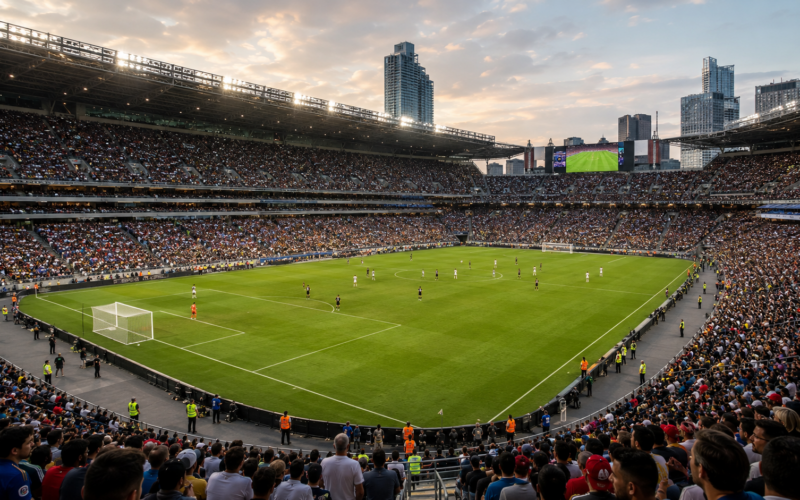
Argentina survived an extraordinary Cape Verde challenge to win 3-2 after extra time in their FIFA World Cup 2026 Round of 32 match at Miami Stadium in Miami Gardens, Florida, on Friday, July 3, 2026. Lionel Messi opened the scoring in the 29th minute before Deroy Duarte equalised for Cape Verde in the 59th.
Lisandro Martínez restored Argentina’s lead two minutes into extra time, striking into the upper corner after Alexis Mac Allister redirected Messi’s corner. Cape Verde responded again through Sidny Lopes Cabral, whose spectacular 103rd-minute finish curled beyond Emiliano Martínez and into the top corner.
Argentina moved ahead for the third time in the 111th minute when Messi delivered another corner and Cristian Romero headed towards goal. The ball took the decisive touch from Diney Borges and was officially recorded as an own goal, ending Cape Verde’s resistance only after Emiliano Martínez made several crucial late saves.
The result sent Argentina into the FIFA World Cup 2026 Round of 16 and eliminated Cape Verde after a historic debut campaign. Lionel Scaloni’s defending champions will face Egypt at Atlanta Stadium on Tuesday, July 7, at noon local time.
FIFA World Cup 2026 Argentina 3-2 Cape Verde full scorecard and key incidents
How did Cape Verde’s compact structure make Argentina uncomfortable for 120 minutes?
Cape Verde began in a disciplined 4-1-4-1 structure, with Kevin Pina positioned directly in front of the central defenders. That role prevented Argentina from passing freely into Messi and Lautaro Martínez between the defensive and midfield lines.
Ryan Mendes and Jovane Cabral dropped alongside Deroy Duarte and Laros Duarte whenever Argentina established possession. The midfield line remained narrow enough to protect the centre while trusting Steven Moreira and Sidny Lopes Cabral to defend wider areas.
Argentina completed passes with exceptional accuracy but often circulated around Cape Verde rather than through them. Enzo Fernández, Mac Allister and De Paul could control possession, yet the next progressive pass was frequently blocked by Pina or one of Cape Verde’s retreating midfielders.
The approach required enormous concentration, particularly as the match moved beyond 90 minutes. Cape Verde maintained enough spacing to prevent Argentina from creating a continuous sequence of close-range opportunities, forcing the champions to depend heavily on Messi and set pieces.
Why did Lionel Messi’s opening goal require individual technique rather than sustained dominance?
Argentina’s breakthrough arrived shortly after the opening hydration interval. Lisandro Martínez recognised Messi’s movement behind Cape Verde’s midfield and supplied a precisely weighted pass towards the right side of the six-yard area.
Messi controlled with the outside of his left foot while adjusting his body away from the nearest defender. He then lifted a powerful finish beyond Vozinha and into the upper part of the net before Cape Verde could close the angle.
The goal was technically exceptional because the pass arrived at speed and Messi had very little space. Most attackers would have needed another touch, giving the goalkeeper and defenders time to intervene.
Argentina had controlled possession before the goal, but the champions had not repeatedly opened Cape Verde’s defensive block. Messi converted one narrow window into a lead, temporarily disguising how difficult the contest had become.
Why did Vozinha’s eight saves transform the match into a historic Cape Verde challenge?
Vozinha became the central figure in Cape Verde’s resistance. The 40-year-old goalkeeper made eight saves and repeatedly prevented Messi from turning Argentina’s territorial pressure into a decisive advantage.
He denied Messi from open play during the first half and reacted quickly when the Argentina captain attempted to catch Cape Verde unprepared with a fast free kick. Vozinha also saved from Fernández, Paredes and Mac Allister as Argentina increased the pressure late in regulation time.
His most important sequence came during stoppage time. Messi’s free kick travelled through the defensive wall and bounced awkwardly, but Vozinha blocked the effort before stopping Fernández’s follow-up header.
The saves gave Cape Verde more than defensive protection. They allowed the players to retain belief that one successful transition could change the contest, even while Argentina accumulated possession and corners.
How did Deroy Duarte’s equaliser expose Argentina’s defensive complacency?
Cape Verde started the second half with greater ambition and produced an early warning when Duarte forced Emiliano Martínez into a low save. Argentina did not respond by tightening the space around Cape Verde’s midfield runners.
The equaliser followed a move down the right in which Mendes was allowed to advance and locate Duarte inside the penalty area. Duarte controlled before driving a right-footed finish across Martínez and into the far corner.
Argentina’s defenders were positioned around the box, but none applied decisive pressure to the passer or scorer. The champions appeared to assume that numerical superiority around the area would be enough to stop the attack.
The goal changed the psychological direction of the match. Cape Verde were no longer merely protecting a respectable scoreline, while Argentina began playing with the anxiety of a favourite facing an unexpected elimination threat.
Why did Argentina’s attacking substitutions increase pressure without restoring control?
Scaloni introduced Álvarez and Nico González shortly after Cape Verde’s equaliser. The changes increased Argentina’s running power and gave Messi more movement around him, but they did not immediately create a balanced attacking structure.
Álvarez pressed more aggressively than Lautaro Martínez and moved into wider areas to combine with Messi. González attacked crosses and supplied an additional aerial target, yet Cape Verde continued defending the central spaces effectively.
Paredes later replaced De Paul as Argentina searched for longer passes and greater control near the edge of the penalty area. Tagliafico entered after Medina’s injury, while Montiel replaced Molina during extra time.
The substitutions helped Argentina generate 22 attempts and 10 shots on target. However, the number of attacks did not prevent Cape Verde from creating dangerous transitions, particularly after Argentina committed more players towards Vozinha’s goal.
Why was Argentina’s late handball appeal correctly rejected before extra time?
Argentina appealed for a penalty near the end of regulation when Mac Allister’s header struck Pico Lopes inside the area. Replays showed the ball making contact with the defender’s head before deflecting onto his arm.
The arm position was influenced by the movement required to challenge for the header, while the deflection occurred from extremely close range. The referee therefore allowed play to continue, and no penalty was awarded.
The incident mattered because Argentina were applying almost continuous pressure during the closing minutes. A penalty would have offered Messi the opportunity to settle the match without extra time.
Cape Verde survived the appeal and another Messi free kick before the regulation whistle. Their defensive discipline had earned the additional 30 minutes, even though fatigue was becoming increasingly visible.
How did Lisandro Martínez turn another Messi corner into Argentina’s second lead?
Argentina began extra time with immediate pressure and won a corner after Cape Verde sliced an attempted clearance. Messi delivered towards the far side, where Mac Allister redirected the ball with his head.
Lisandro Martínez collected the second contact near the right side of the penalty area. Instead of attempting another cross, the defender drove a left-footed finish into the upper near corner.
Vozinha had protected that side throughout the match, but the speed and height of the strike left him little opportunity to react. Argentina appeared to have found the goal that would finally remove Cape Verde’s resistance.
The scorer’s position demonstrated the risks Argentina were prepared to take. Both centre-backs were attacking the set piece while the champions depended on players behind the ball to contain any counterattack.
Why was Sidny Lopes Cabral’s extra-time equaliser more than an isolated wonder goal?
Cape Verde responded to conceding by moving forward rather than accepting elimination. Their substitutions supplied fresh runners, with Yannick Semedo, Willy Semedo, Hélio Varela and Benchimol giving the attack renewed energy.
Yannick Semedo helped move possession towards the left, where Lopes Cabral received outside the penalty area. The defender shifted the ball onto his right foot before curling a remarkable strike into the upper corner.
Emiliano Martínez could only watch as the ball moved away from him. The finish carried very little expected-goals value, but the low probability of the attempt did not make it accidental.
Lopes Cabral had remained willing to advance throughout the match and had already attempted from distance during the first half. His equaliser rewarded Cape Verde’s refusal to abandon its attacking identity, even against the defending champions.
How did Messi’s corner and the Diney Borges own goal finally decide the match?
Argentina’s third goal came from another corner in the second period of extra time. Messi delivered with pace towards Romero, who rose above the defenders and directed his header across goal.
The ball struck Borges and changed direction before crossing the line. Because the original header was travelling away from the goal, the decisive touch was officially recorded as a Borges own goal rather than a Romero goal.
The scoring classification does not reduce the importance of Romero’s movement or Messi’s delivery. Argentina had repeatedly targeted Cape Verde’s defenders through corners, and the cumulative pressure eventually produced the decisive deflection.
For Borges, the moment was exceptionally harsh after more than 110 minutes of disciplined defending. The own goal did not reflect a poor overall performance, but knockout matches are often decided by one involuntary touch inside a crowded penalty area.
Why did Emiliano Martínez become Argentina’s most important player after taking the lead?
Argentina could not control the closing minutes after moving ahead for the third time. Cape Verde continued sending players forward and repeatedly delivered into a penalty area containing tired defenders.
Martínez made an important save from Lopes Cabral’s free kick, moving quickly across his goal to push the curling attempt away. He then rushed forward to deny Benchimol from close range as Cape Verde threatened another extraordinary equaliser.
The goalkeeper’s late interventions were essential because Argentina’s midfield distances had broken down. Cape Verde could collect second balls and return possession into dangerous areas before the champions reorganised.
Argentina’s victory therefore depended on contributions from both ends of the pitch. Messi created the decisive set piece, but Martínez ensured the advantage survived until the final whistle.
Why did Argentina win despite Cape Verde producing the match’s strongest emotional momentum?
Argentina created more chances and finished with a substantial expected-goals advantage. The champions recorded 22 attempts, 10 shots on target and 51 touches inside Cape Verde’s penalty area.
Cape Verde’s two goals came from difficult shooting positions, but both were produced through technical quality rather than defensive accidents. Duarte finished accurately across Martínez, while Lopes Cabral converted an opportunity most players would not attempt successfully.
Argentina’s superior depth became increasingly important as the match extended beyond 90 minutes. Álvarez, González, Paredes, Tagliafico and Montiel gave Scaloni options that Cape Verde could not match across every position.
The decisive difference was Argentina’s set-piece pressure. Two extra-time goals followed Messi corners, allowing the champions to advance despite failing to establish the open-play control expected before kick-off.
What did Cape Verde prove during an extraordinary debut FIFA World Cup campaign?
Cape Verde left FIFA World Cup 2026 without winning a match, yet that statistic does not describe the quality of their campaign. They held Spain, Uruguay and Saudi Arabia during the group stage before taking Argentina into extra time.
Bubista’s team demonstrated defensive organisation without relying entirely on deep protection. Cape Verde pressed selectively, carried possession forward with confidence and continued searching for goals after falling behind three times in Miami.
Vozinha became one of the tournament’s defining figures, while Duarte, Mendes, Pina and Lopes Cabral showed that Cape Verde possessed more than collective discipline. Their technical quality allowed the team to threaten opponents with vastly greater resources.
The next challenge is converting international attention into long-term development. Cape Verde now have evidence that their diaspora, coaching structure and tactical identity can produce a team capable of competing against the world’s strongest nations.
What must Argentina improve before facing Egypt in the FIFA World Cup 2026 Round of 16?
Argentina must restore defensive control before meeting an Egypt team built around Salah, Marmoush and rapid counterattacks. Cape Verde repeatedly found space after Argentina lost possession or committed too many players to the same attacking phase.
Scaloni must also manage the physical consequences of playing 120 minutes in Miami. Messi completed the entire match, several players suffered cramp and Medina left with an injury only four days before the Round of 16.
Egypt are likely to defend compactly and ask Argentina to solve another crowded structure. The champions cannot depend entirely on Messi creating an exceptional finish or delivering repeated set pieces.
Argentina’s possession must become more purposeful, with faster circulation and better movement behind Egypt’s midfield. The defending champions survived Cape Verde, but the performance produced clear warnings about transition defence, finishing and dependence on their captain.
How does Argentina’s victory shape the FIFA World Cup 2026 knockout bracket?
Argentina advanced to face Egypt at Atlanta Stadium on Tuesday, July 7, at noon local time. Egypt reached the Round of 16 by defeating Australia 4-2 on penalties after a 1-1 draw following extra time.
The match will bring together two teams that completed 120-minute Round of 32 contests. Recovery, squad rotation and the management of key players will therefore carry unusual importance.
Cape Verde were eliminated after becoming the only FIFA World Cup 2026 debutants to reach the knockout stage. Their departure completed one of the tournament’s most memorable underdog campaigns.
The winner of Argentina vs Egypt will advance to the quarter-finals and face the winner of Switzerland’s Round of 16 match against Colombia or Ghana.
Key takeaways from Argentina vs Cape Verde at FIFA World Cup 2026
- Argentina defeated Cape Verde 3-2 after extra time and advanced to face Egypt in the Round of 16.
- Lionel Messi opened the scoring in the 29th minute after an outstanding pass from Lisandro Martínez.
- Deroy Duarte equalised in the 59th minute after Ryan Mendes exposed Argentina’s defensive structure.
- Vozinha made eight saves and repeatedly prevented Argentina from establishing a decisive advantage.
- Lisandro Martínez scored two minutes into extra time following an Alexis Mac Allister headed pass.
- Sidny Lopes Cabral produced a spectacular 103rd-minute finish to bring Cape Verde level for the second time.
- Messi’s 111th-minute corner was headed towards goal by Cristian Romero before deflecting off Diney Borges.
- The decisive goal was officially recorded as a Diney Borges own goal.
- Emiliano Martínez denied Lopes Cabral and Gilson Benchimol during Cape Verde’s late attempt to force penalties.
- Cape Verde were eliminated after an historic debut campaign, while Argentina advanced despite major tactical and defensive concerns.
Discover more from Business-News-Today.com
Subscribe to get the latest posts sent to your email.

