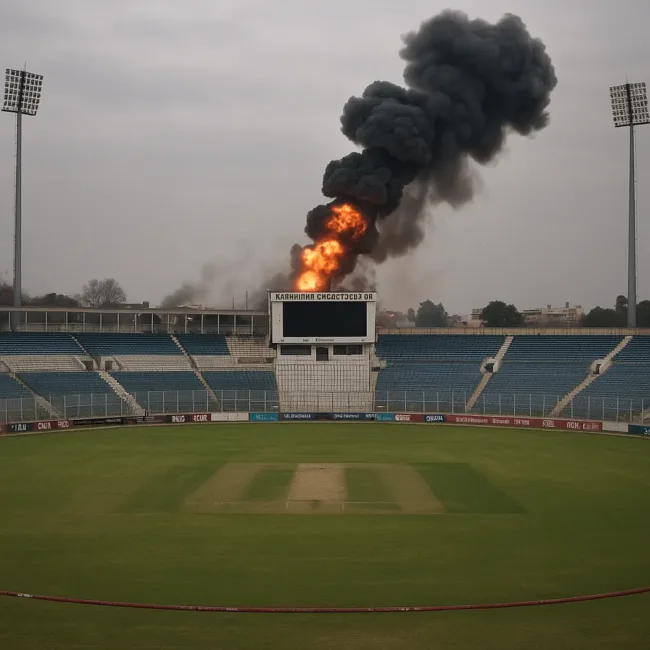
The Federal Bureau of Investigation (FBI) disrupted an alleged plot targeting the UFC event held on White House grounds on June 14, 2026, with authorities saying the plan involved explosive-laden drones, a possible mass evacuation scenario and a second wave aimed at a security checkpoint.
Five people were in custody after a multi-state law enforcement operation, while federal investigators examined communications involving a wider network of individuals who allegedly discussed preoperational planning on encrypted messaging platforms. The event went ahead without an attack.
Federal Bureau of Investigation Director Kash Patel said law enforcement became aware of a potential threat on June 10, four days before the event. The threat involved individuals outside the National Capital Region and prompted rapid action by the Federal Bureau of Investigation, the Department of Justice and partner agencies.
The UFC event was held on the South Lawn of the White House as part of America’s 250th anniversary celebrations and coincided with President Donald Trump’s 80th birthday. Donald Trump attended the event, which drew senior officials, invited guests and spectators in one of the most heavily protected locations in the United States.
The alleged plot is significant because it combines three urgent security concerns: drone-enabled attacks, large public gatherings and symbolic political targets. It also raises fresh questions about how federal law enforcement tracks online radicalisation, encrypted group planning and the growing accessibility of small unmanned aircraft that can be modified for violence.
Why does the alleged White House UFC event drone plot matter for national security?
The alleged White House UFC event drone plot matters because it targeted a major public event held in one of the most sensitive security environments in the United States. The White House is not only the official residence and workplace of the president. It is also a national symbol, a diplomatic space and a high-value target for extremist violence.
The Federal Bureau of Investigation said the threat was identified on June 10, giving law enforcement a short window before the June 14 event. That timeline matters because the case appears to show how fast online discussions, travel planning and physical preparations can converge around a major event.
The alleged use of explosive-laden drones is especially important. Small drones can be cheap, mobile and difficult to detect if launched close to a target. Even a failed or limited drone attack at a crowded event could create panic, force mass movement and overwhelm security personnel.
For federal agencies, the case reinforces the need to treat public events at symbolic venues as layered security problems. Physical checkpoints, airspace control, intelligence monitoring, cyber tracking and crowd evacuation planning now have to operate together.
How did federal authorities say the alleged attack plan was supposed to unfold?
The alleged attack plan involved small unmanned aircraft carrying explosive devices that would target buildings or areas near the UFC event. Investigators described a scenario in which drone explosions could force attendees to evacuate, creating confusion and movement around security-controlled zones.
Sources familiar with the matter said the alleged plot also included a second wave targeting a security checkpoint. Federal court filings described discussions around shooters, possible escape routes and travel to the Washington area before the event.
Some individuals linked to the alleged planning travelled or planned to travel toward Fredericksburg, Virginia, on June 12 or June 13 before moving closer to Washington. Investigators also examined Signal chats and other online communications in which participants allegedly discussed roles and locations.
The operational concern for law enforcement was not only the drone component. The larger concern was the possibility of coordinated violence designed to create panic and then exploit that panic. That is what makes the alleged plan more serious than a routine restricted-airspace violation.
Why are drones becoming a harder problem for White House and event security?
Drones are becoming a harder problem because they give small groups or individuals a way to threaten protected spaces without breaching a traditional fence line. A drone does not need a vehicle gate, a ticketed entrance or a direct path through police lines. It can approach from above, from outside the immediate crowd perimeter or from a nearby launch point.
Federal law already restricts drone flights over the National Capital Region, but restrictions do not physically prevent a determined operator from launching a drone. That is why detection, interdiction and public reporting have become central to drone security around major events.
The White House area is already protected by layered federal security, including the United States Secret Service, the Federal Bureau of Investigation, the Metropolitan Police Department and other agencies during major events. Even so, drones create a moving threat that requires specialised sensors, rapid decision-making and legal clarity on how to neutralise an aircraft.
The alleged UFC event plot shows why drone security is no longer only a military battlefield issue. It is now a domestic public-safety issue, especially for sports events, political rallies, government ceremonies and national celebrations.
How did encrypted messaging and online radicalisation shape the alleged plot?
Encrypted messaging and online radicalisation appear central to the alleged plot because investigators examined communications involving Signal chats and other platforms. Court filings described online discussions that allegedly moved from social media connections into more private channels.
This matters because modern extremist planning often does not begin in a formal organisation. It can emerge from loose digital networks where grievances, ideology, tactical fantasies and event targets are discussed across platforms before moving into private groups.
The alleged use of Signal chats also highlights the investigative challenge. Encrypted platforms can protect legitimate privacy, but they can also make it harder for law enforcement to see threat planning before it becomes operational. In this case, authorities became aware of the threat before the event, allowing a multi-state response.
The broader consequence is that event security is increasingly tied to online threat intelligence. Agencies must track not only known groups but also smaller digital clusters that can form around anti-government sentiment, conspiracy narratives or violent accelerationist ideas.
Why was the White House UFC event considered a symbolic target?
The White House UFC event was considered symbolic because it combined politics, celebrity, national celebration and presidential presence in a single location. The event took place on the South Lawn of the White House and was tied to America’s 250th anniversary celebrations.
The attendance of Donald Trump raised the security stakes further. A presidential event already requires extraordinary protection. A combat-sports event on White House grounds, with public attention and media coverage, created an unusual symbolic and operational environment.
Federal authorities had warned earlier that the event could be an attractive symbolic target, even though no specific credible threat had been listed in that earlier warning. The alleged plot now shows why such assessments matter even when a threat is not yet fully developed or publicly known.
For attackers, symbolic venues can be attractive because the psychological impact of an attempted strike may exceed the physical damage. For law enforcement, that means preventing panic is part of preventing harm.
What does the case reveal about multi-state threat investigations in the United States?
The case reveals that threat investigations can move quickly across state lines when suspects, communications, travel plans and weapons-related activity are spread across multiple jurisdictions. Federal officials described the response as a multi-state operation involving the Federal Bureau of Investigation, the Department of Justice and law enforcement partners.
Five people were charged or held in connection with the alleged scheme, with individuals linked to Ohio, Missouri, Nebraska and California. That geographic spread matters because it shows how online networks can connect people who do not begin in the same city or state.
A multi-state investigation requires coordination across field offices, prosecutors, local police, digital forensic teams and protective agencies. It also requires speed when the alleged target is a fixed-date event.
The successful disruption before the UFC event suggests that family reporting, digital evidence, federal coordination and protective intelligence all played roles. It also underscores why authorities often urge relatives and community members to report concerning behaviour before violent plans mature.
Could the alleged plot change security planning for future national events?
The alleged plot could change security planning for future national events by increasing focus on drones, encrypted planning and layered response scenarios. Events tied to America’s 250th anniversary, major sports gatherings and political ceremonies may now face renewed scrutiny.
Security planners are likely to look more closely at drone launch zones, rooftop access, crowd-flow routes, evacuation choke points and checkpoint vulnerability. The alleged plan’s focus on creating panic before a second wave is particularly important because it tests not only perimeter security but also crowd management.
The case may also influence how federal agencies communicate with the public before major events. Warnings about unauthorised drones, suspicious activity and restricted airspace may become more direct, especially around events involving senior officials.
The broader lesson is that symbolic events now require security plans that assume hybrid threats. A future attack may combine online planning, drone technology, firearms, misinformation and crowd psychology. That is the new public-safety problem exposed by the alleged White House UFC plot.
What are the key takeaways from the alleged White House UFC event drone plot?
- The Federal Bureau of Investigation disrupted an alleged plot targeting the UFC event held on White House grounds on June 14, 2026, before any attack took place at the event.
- Federal Bureau of Investigation Director Kash Patel said law enforcement became aware of the potential threat on June 10, giving agencies four days to respond before the White House event.
- The alleged plot involved explosive-laden drones that were intended to hit buildings or areas near the event and trigger a mass evacuation or wider security disruption.
- Five people were in custody or charged after a multi-state law enforcement operation, while investigators examined a broader network of individuals allegedly connected through encrypted communications.
- Investigators reviewed Signal chats and other online communications that allegedly included preoperational planning, role discussions, travel plans and possible escape routes after an attack.
- The UFC event was held on the South Lawn of the White House as part of America’s 250th anniversary celebrations and coincided with President Donald Trump’s 80th birthday.
- Federal law prohibits unauthorised drones over the National Capital Region, but the alleged plot shows why drone detection and interdiction remain critical around symbolic public events.
- The case could influence future security planning for political events, national celebrations and major sports gatherings by increasing attention on drones, online radicalisation and crowd evacuation risks.
Discover more from Business-News-Today.com
Subscribe to get the latest posts sent to your email.