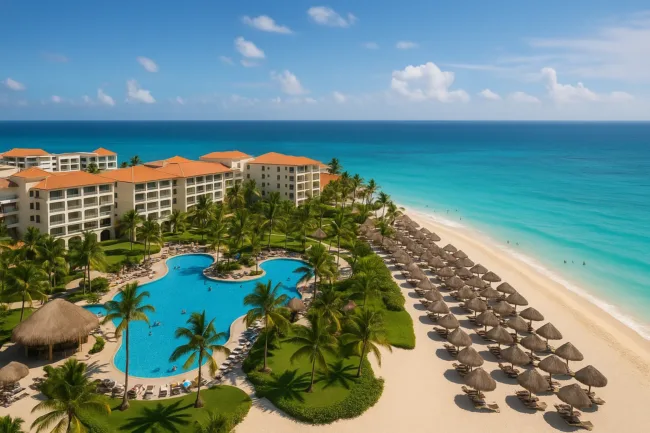




EVT Limited (ASX: EVT), through EVT Hotels & Resorts, is preparing to open the 184-room Atura Oran Park in October 2026 under its longstanding management partnership with the Perich family’s Greenfields Development Company in South West Sydney. The hotel sits within the Oran Park Town precinct approximately 20 minutes by road from Western Sydney International Airport and combines accommodation with an Italian-inspired restaurant and bar, resort-style pool and seven flexible event spaces. Atura Oran Park will become the fifth hotel operating under the Atura brand and is intended to capture not only business and leisure travellers but weddings, conferences and local food-and-beverage demand from a rapidly growing residential catchment. The opening fits EVT Limited’s current strategy of making hotels its primary future growth platform while increasing asset-light management exposure alongside selective owned assets. EVT shares closed at A$15.09 on August 28, up about 7.2% over five sessions and more than 20% over one month after strong fiscal 2026 results, leaving the stock around 6.6% below its 52-week high.
Why is Atura Oran Park strategically important before Western Sydney International Airport matures?
Hotel development near a new airport is fundamentally a timing decision. Opening too early can leave an asset waiting for demand, while opening after aviation activity is fully established can mean paying more for land and competing against already entrenched hotel brands.
Atura Oran Park enters between those extremes. The surrounding community already provides residential, retail and commercial demand, while Western Sydney International Airport creates a future catalyst rather than the hotel’s only reason to exist.
This diversification is important because airport hotels can be vulnerable when they depend excessively on transient passengers. Atura Oran Park is positioned inside a master-planned town centre with events, food and community functions designed to draw customers even when they are not travelling.
The hotel can therefore build an operating base before airport-related corporate and passenger traffic reaches full potential. Conferences, weddings and local dining may stabilise early years while aviation-driven demand grows.
South West Sydney is also experiencing substantial population and infrastructure investment. Hotels often arrive later than residential and logistics development, creating periods when meeting and accommodation supply lags broader economic growth.
The risk is that expected airport-related demand takes longer to materialise than developers anticipate. A 184-room hotel has meaningful fixed costs, so local and event demand must be strong enough to protect utilisation during the ramp-up period.
Why does EVT want Atura Oran Park to function as a neighbourhood venue rather than just a hotel?
Atura Oran Park contains seven event spaces with formats capable of supporting meetings, celebrations, conferences and larger social occasions. This gives EVT Limited revenue opportunities that extend beyond selling rooms to visitors.
Local food and beverage demand is equally important. An Italian-inspired restaurant and bar can attract nearby residents who may never stay overnight, converting the hotel into part of the town centre’s hospitality infrastructure.
This model improves asset utilisation. Meeting rooms, restaurants and bars can generate revenue during periods when guest-room occupancy is softer.
Events can also produce several revenue streams from one customer relationship. A wedding may generate venue fees, catering, alcohol sales and accommodation, while a corporate conference can include meeting space, food and multi-night rooms.
The challenge is operational complexity. A neighbourhood restaurant competes with standalone venues whose sole focus is food, while wedding customers expect a different service model from business travellers.
EVT Hotels & Resorts therefore needs the property to operate simultaneously as a hotel, restaurant and event destination without creating an experience that feels generic in every category.
The benefit is resilience. A property with several genuine demand generators can withstand fluctuations in one segment better than a hotel designed around rooms alone.
How does the Atura management agreement support EVT Limited’s asset-light hotel expansion strategy?
EVT Limited’s current strategic update identifies hotels as its primary future growth platform. The company is expanding through a mixture of owned properties, management arrangements and its Connect Hospitality platform.
Atura Oran Park is particularly relevant because Greenfields Development Company developed the underlying property while EVT Hotels & Resorts provides the brand and operating expertise. This allows EVT Limited to expand its system without funding the entire real-estate development.
Management agreements generate less revenue than owning the hotel outright because the property owner retains the underlying asset economics. They also require substantially less corporate capital, which can improve returns on invested capital when the operator has a scalable brand and management platform.
This matters as EVT Limited simultaneously owns hotel real estate and invests in upgrades at other properties. Asset-light contracts allow growth to continue without every additional room competing for large amounts of balance-sheet capital.
The model also transfers construction and property-market exposure to the owner. EVT Limited remains exposed to operating performance and brand reputation but avoids carrying the full development cost.
The downside is less control over future capital expenditure. Management companies depend on property owners continuing to fund renovations and maintenance necessary to protect brand standards.
Successful asset-light expansion therefore requires disciplined owner selection. A management agreement creates attractive economics only when the property itself remains competitive.
What do EVT Limited’s fiscal 2026 results reveal about the importance of hotels to future earnings?
EVT Limited reported normalised fiscal 2026 revenue of A$1.315 billion, up 6.3%, while normalised EBITDA increased 8.4% to A$174.4 million. Normalised profit after tax increased 41.3% to A$54.3 million and reported net profit rose 51.9% to A$50.7 million.
Hotels already generate the majority of group EBITDA and remain the area management has identified as the principal long-term growth engine. Fiscal 2026 hotel revenue increased despite disruption from property upgrade works.
The company has been expanding both through operating agreements and selective ownership moves, including hotel acquisitions and refurbishments. This creates several ways to generate growth but also makes capital allocation more complicated.
Atura Oran Park contributes primarily to the management-led side of the strategy. One 184-room property will not materially change group results, but repeated additions can increase recurring hotel-management income without equivalent asset growth.
EVT Limited also continues operating cinema, entertainment and alpine businesses, giving the company a broader consumer-experience portfolio. Hotels offer a potential route to a different earnings profile because management contracts can scale more efficiently than property-heavy businesses.
The strategic challenge is proving that expansion adds earnings quality rather than merely organisational breadth. Investors will watch hotel EBITDA, management-fee growth and returns from owned-property capital expenditure.
Why has EVT stock rallied strongly ahead of the Atura Oran Park opening?
EVT shares closed at A$15.09 on August 28 compared with A$14.08 on August 21, a gain of approximately 7.2%. Compared with the July 28 close of A$12.52, the stock has risen about 20.5%.
The 52-week range is A$11.22 to A$16.15, leaving EVT roughly 6.6% below the high. The recent rally followed the fiscal 2026 results and strategic update rather than the Atura announcement alone.
Investors responded positively to stronger earnings, particularly the 41% increase in normalised profit after tax, along with evidence of operating leverage across the group.
The hotel strategy also provides a clearer growth narrative. Asset recycling, management agreements and selective hotel investment can potentially release capital while increasing exposure to a business already producing a large share of EBITDA.
Atura Oran Park is therefore supportive rather than transformative. Its relevance comes from demonstrating that the announced pipeline is turning into operating inventory.
The share-price rise also increases expectations. EVT Limited now needs to convert strategic plans into continued earnings growth rather than relying on multiple expansion after one strong annual result.
What could prevent Atura Oran Park from becoming a successful Western Sydney hotel?
The first risk is timing. Airport-driven business travel may take several years to mature, leaving the hotel more dependent initially on local, corporate and social-event demand.
The second is competition. New infrastructure attracts new hotel projects, and future supply could increase rapidly if developers reach similar conclusions about Western Sydney growth.
The third is transport. Twenty minutes from the airport is attractive when roads move efficiently, but congestion can alter perceived convenience.
The fourth is food and beverage execution. A hotel restaurant positioned as a neighbourhood venue must compete with specialist independent operators rather than relying exclusively on captive guests.
The fifth is events. Seven spaces create substantial capacity but also require strong local sales teams and reliable operational delivery.
The sixth is brand positioning. Atura needs enough pricing power to support full-service economics without drifting into a segment where customers compare it purely on room price.
EVT Limited has the advantage of an existing hotel platform and loyalty infrastructure. The property now needs to demonstrate that Oran Park itself can support the mix of rooms, meetings and local hospitality envisioned during development.
What are the key takeaways from EVT preparing to open Atura Oran Park?
- Atura Oran Park will add 184 rooms to South West Sydney under EVT Hotels & Resorts management.
- The hotel is scheduled to open in October 2026 and will become the fifth Atura property.
- Its location approximately 20 minutes from Western Sydney International Airport creates a long-term aviation-related demand catalyst.
- Seven event spaces diversify revenue toward conferences, weddings and local functions.
- Restaurant and bar operations are intended to attract neighbourhood customers rather than depend entirely on hotel guests.
- The property supports EVT Limited’s strategy of expanding hotel earnings through more asset-light management arrangements.
- Fiscal 2026 normalised EBITDA increased 8.4% and normalised profit after tax rose more than 40%.
- EVT shares have gained more than 20% over one month and trade relatively close to their 52-week high.
- Near-term performance depends on local and events demand while the wider airport economy develops.
- The broader investor test is whether EVT can repeat the asset-light model across multiple properties while maintaining hotel standards.
Discover more from Business-News-Today.com
Subscribe to get the latest posts sent to your email.