


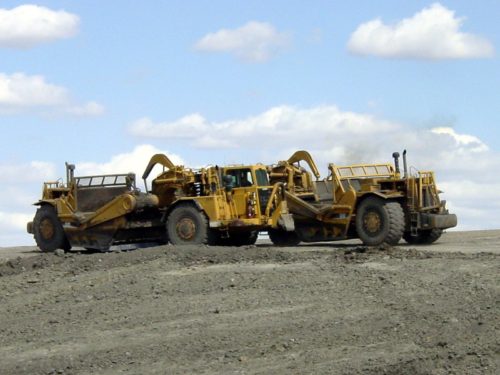
Canada Nickel Company Inc. (TSXV: CNC; OTCQX: CNIKF) has received federal environmental approval for the Crawford Nickel Project in Ontario, clearing one of the most consequential regulatory hurdles facing the proposed mine. The open-pit nickel-cobalt operation and on-site mill is expected to attract approximately C$5 billion of investment, operate for about 41 years and support nickel and chromium supply chains serving stainless steel, batteries, aerospace and defence. The decision is strategically important because Crawford could become one of the Western world’s largest nickel sulphide operations and North America’s only primary source of chromium. Canada Nickel shares nevertheless closed 3.16% lower at C$1.53 on July 31 after opening at C$1.75 and reaching C$1.79, despite trading volume rising to more than five times its recent average. The reaction suggests investors see the approval as a major achievement, but not yet as proof that Canada Nickel can finance and construct a project whose capital needs greatly exceed the company’s current market value.
Why does federal approval move Crawford from permitting risk to financing risk?
The federal decision materially improves Crawford’s development position because it closes the central impact-assessment process that began in 2022. The Canadian government determined that the project’s potential effects within federal jurisdiction were justified when weighed against its economic and strategic benefits, while imposing legally binding environmental and Indigenous-related conditions.
That decision reduces the probability that Crawford will be stopped by the federal assessment process, but it does not provide an unconditional licence to begin construction. Canada Nickel must still obtain remaining provincial and federal authorisations, complete detailed engineering, satisfy the conditions attached to the decision statement and assemble a financeable construction package.
The project has therefore moved from a phase dominated by regulatory uncertainty into one dominated by capital formation and execution. This is an important distinction for investors. Permitting risk can often be resolved through studies, consultations and government decisions, while financing a multi-billion-dollar mine requires lenders, strategic investors, tax-credit structures, equipment providers and potential customers to accept long-term commodity and construction risk.
Canada Nickel is targeting a construction decision in 2027. That timetable leaves the company with a relatively narrow period in which to finalise financing, advance engineering, secure remaining permits and convert existing commercial discussions into binding commitments.
In our view, the approval substantially increases Crawford’s strategic value but does not automatically increase its financial viability by the same amount. A permitted orebody is worth more than an unpermitted one, but the gap between permit value and operating value remains several billion dollars wide.
Can Canada Nickel finance a C$5 billion mine with a sub-C$400 million market value?
The funding challenge is the most important issue now facing Canada Nickel Company. The federal government expects Crawford to attract around C$5 billion in investment, while Canada Nickel’s market capitalisation following the July 31 close remained below C$400 million.
That difference does not mean the company must raise the entire project cost through ordinary equity. Large mines are usually financed through a mixture of senior debt, government-backed lending, tax-credit monetisation, strategic equity, equipment financing, offtake-linked capital and sponsor contributions.
Canada Nickel has already begun assembling elements of that structure. The company appointed SB1 Markets AS to arrange up to US$600 million of debt financing linked to investment tax credits expected to arise from Crawford’s construction. Canada Nickel has said the proposed facility could allow it to monetise tax credits and fund more than half of the equity capital it expects to require for the project.
The company has also previously disclosed potential support from export-credit and government-related institutions. These discussions are strategically useful because government-backed lenders can accept longer repayment periods and policy-linked risk that commercial banks may be less willing to carry alone.
However, none of these financing pathways should be treated as completed funding. The US$600 million facility remains a mandate rather than a closed loan, and its availability will depend on eligibility, documentation, due diligence and the final construction structure.
Canada Nickel’s short-term liquidity position also deserves attention. The company extended the repayment date of a US$32 million Auramet International facility from August 9 to November 9, 2026. The extension required a US$856,288 fee and the proposed issue of 5.5 million warrants exercisable at C$1.52, subject to TSX Venture Exchange approval.
The extension gives Canada Nickel more time to complete financing initiatives, but it also illustrates the cost of maintaining momentum before long-term project capital is secured. Bridge funding is useful when it connects a company to a larger financing event. It becomes more problematic when repeated extensions create fees, warrant dilution and negotiating pressure.
The federal approval should strengthen Canada Nickel’s position in discussions with lenders and strategic partners. It does not remove the need for careful capital discipline, because even modest percentage overruns on a C$5 billion project could exceed the company’s present equity value.
Why could the Crawford Nickel Project matter to Western supply-chain security?
Crawford’s significance extends beyond its projected nickel output. The project is designed as a large nickel sulphide operation with associated cobalt, iron and chromium exposure, giving it relevance across several industrial supply chains.
Nickel remains essential to stainless steel, which accounts for the largest share of global nickel demand. Higher-grade nickel products are also used in selected electric-vehicle battery chemistries, although battery manufacturers continue to evaluate lower-nickel and nickel-free alternatives depending on cost, performance and supply security.
Chromium gives Crawford an additional strategic dimension. North America currently lacks a primary domestic chromium source, leaving defence, aerospace and specialty-alloy manufacturers dependent on imported supply. Chromium is critical for corrosion resistance and high-performance alloys, making secure supply important even when its market receives less attention than lithium, copper or rare earths.
Crawford could therefore serve both established industrial markets and newer energy-transition demand. That diversification may improve the project’s resilience compared with a mine whose economics depend entirely on one battery technology or one commodity price.
Canada and allied governments are also placing greater value on the jurisdiction in which minerals are produced. Nickel from a politically stable country with established infrastructure, enforceable environmental rules and strong trading relationships may attract strategic interest even when lower-cost material is available elsewhere.
The challenge is that Indonesia has transformed the global nickel market through rapid production growth and lower-cost processing capacity. New Canadian production must therefore compete against an industry structure in which scale, state support and integrated processing have already compressed margins for many Western developers.
Crawford’s investment case will depend on whether customers and policymakers are willing to recognise value for lower-carbon production, secure jurisdiction and traceable supply. Strategic importance helps a project attract support, but commercial customers still compare price, quality and reliability. Patriotism is useful in speeches; procurement departments usually ask for a spreadsheet.
What do the Crawford approval conditions mean for construction and community execution?
The federal decision includes legally binding conditions intended to reduce impacts on Indigenous communities, fish and fish habitat, migratory birds, water quality and other areas within federal jurisdiction. Canada Nickel must comply with those requirements throughout the project’s life.
The conditions are not a ceremonial attachment to the permit. They will influence detailed engineering, water management, waste planning, rehabilitation schedules, monitoring costs and construction sequencing. Failure to meet them could delay approvals, increase capital requirements or expose Canada Nickel to enforcement action.
The project’s Indigenous partnerships could provide an important execution advantage. Taykwa Tagamou Nation has committed a C$20 million equity investment, which Canada Nickel has described as the largest known First Nation investment in a Canadian critical-minerals project. Canada Nickel has also developed infrastructure contracting arrangements involving Wabun Tribal Council member First Nations.
These relationships provide more than social validation. Equity participation and contracting opportunities can align local economic interests with the project’s long-term success, create local capacity and reduce the risk that communities receive benefits only after production begins.
However, partnership with one or several communities does not eliminate broader consultation obligations. Different Indigenous Nations may have distinct rights, land uses, cultural concerns and views on development. Canada Nickel must maintain engagement throughout construction and operations rather than treating consultation as a permitting-stage exercise.
The project’s scale also creates practical regional pressures. A mine expected to attract C$5 billion of investment and support thousands of jobs will compete for skilled labour, housing, roads, services and contractors around Timmins. Regional infrastructure planning will therefore be almost as important as mine-site engineering.
Why did Canada Nickel shares fall despite the landmark Crawford approval?
Canada Nickel shares opened sharply higher on July 31, reaching an intraday high of C$1.79 before reversing to close at C$1.53, down 3.16%. Trading volume reached approximately 2.92 million shares, compared with a recent daily average of roughly 526,000.
The pattern resembles a sell-the-news reaction. Investors had already been told that the federal assessment was approaching its final stage, and the stock had gained 3.38% over the preceding five sessions and 6.99% over one month. Some traders may therefore have used the formal approval to take profits.
The reversal may also reflect the difference between regulatory progress and shareholder value creation. Approval removes one risk, but it exposes the next set of questions around financing terms, dilution, construction costs, commodity prices and execution.
The stock’s 52-week range of C$0.77 to C$2.59 shows that investor expectations remain highly volatile. Canada Nickel has gained substantially from its lows, but the shares remain well below the upper end of that range.
Nickel market conditions offer a mixed backdrop. Benchmark nickel traded around US$17,255 per tonne at the end of July, up more than 5% over one month and nearly 15% from a year earlier. That improvement is supportive, but it does not erase the structural pressure created by Indonesian supply and the uncertain pace of electric-vehicle battery demand.
The market reaction should not be interpreted as a rejection of Crawford. It is better understood as a reminder that the approval was partly anticipated and that investors now require evidence on financing. A permit can lift a project’s probability of development, but a signed funding package determines whether contractors actually arrive.
Could Crawford anchor a wider low-carbon metals cluster around Timmins?
Canada Nickel’s strategy extends beyond producing nickel concentrate. The company is exploring a broader industrial model that could include downstream processing, stainless and alloy products, carbon mineralisation and additional deposits across the Timmins Nickel District.
The proposed downstream strategy is being advanced through the company’s Net Zero Metals subsidiary. Canada Nickel has signed a memorandum of understanding with RWE Supply & Trading GmbH to support the commercialisation of low-carbon stainless and alloy products in Europe and North America.
The parties are evaluating customer targeting, sales structures, long-term offtake and carbon-related positioning. They are seeking a definitive agreement during 2026, although the memorandum remains non-binding and should not be treated as guaranteed demand.
This downstream approach could increase the value captured from Crawford’s mineral output. Selling finished or semi-finished metal products may produce stronger margins and longer customer relationships than selling unprocessed concentrate.
It could also allow Canada Nickel to use Ontario’s relatively low-carbon electricity system as a commercial differentiator. European carbon-border rules may increase the cost of importing emissions-intensive metals, potentially improving the competitiveness of lower-carbon Canadian material.
The company is also pursuing carbon-mineralisation technology intended to store carbon dioxide within mine tailings. If the process operates economically at scale, it could reduce the project’s net emissions profile and support premium or policy-linked financing.
The risk is strategic sprawl. Building one of the world’s largest nickel sulphide mines is already a complex undertaking. Adding downstream steel production, carbon storage, multiple regional deposits and export-market development increases both potential value and execution burden.
Canada Nickel will need to decide which elements are essential for the initial Crawford financing and which should follow after the mine reaches stable production. Attempting to finance the entire industrial vision at once could make an already large capital package harder to close.
What milestones will determine whether Crawford reaches a 2027 construction decision?
The next major milestone is the completion of remaining permits and authorisations. Federal approval advances the project, but construction cannot begin until all required provincial and federal approvals are in place and the decision conditions are integrated into engineering.
Detailed engineering will determine whether the 2023 feasibility assumptions remain reliable after several years of inflation, design refinement and regulatory requirements. Investors should pay close attention to updated capital costs, contingency levels and construction schedules.
Project financing will be the decisive test. Canada Nickel must convert mandates, expressions of interest, tax-credit plans and government support into binding commitments with clear drawdown conditions.
A strategic investor or offtake partner could materially strengthen the financing package. Existing shareholders include Agnico Eagle Mines Limited, Samsung SDI and Anglo American plc, which demonstrates industry interest but does not guarantee additional construction capital.
The Auramet facility’s November repayment date creates another near-term marker. Canada Nickel will need sufficient liquidity or replacement financing to avoid a further costly extension.
Nickel and chromium customer agreements will also matter. Binding contracts can provide lenders with evidence that Crawford’s products have a market and may support financing through prepayments or offtake-linked structures.
The federal approval has made Crawford more credible, more valuable and more likely to proceed. The project is still not fully permitted, fully financed or under construction. The next year will determine whether Canada Nickel can convert a landmark government decision into an investable construction package.
Key takeaways on what Crawford approval means for Canada Nickel and critical minerals
- Federal approval removes one of the largest regulatory risks facing the Crawford Nickel Project but does not authorise immediate construction.
- The project’s estimated C$5 billion investment requirement makes financing the central investor issue ahead of the targeted 2027 construction decision.
- Crawford could become one of the Western world’s largest nickel sulphide mines and North America’s only primary chromium source.
- Canada Nickel’s sub-C$400 million market value highlights the need for government debt, tax-credit financing, strategic capital and offtake support.
- The proposed US$600 million tax-credit facility could become an important part of the capital structure, but it has not yet closed.
- The US$32 million Auramet loan extension provides short-term flexibility while adding fees and potential warrant dilution.
- Canada Nickel’s 3.16% share-price decline suggests the approval was partly anticipated and investors are shifting attention toward funding risk.
- Indigenous equity participation and contracting partnerships could improve local alignment, although long-term consultation and compliance remain essential.
- Downstream processing and carbon-mineralisation plans could increase Crawford’s strategic value but also add execution complexity.
- Binding financing, refreshed construction costs, remaining permits and commercial agreements will determine whether Crawford becomes an operating mine.
Discover more from Business-News-Today.com
Subscribe to get the latest posts sent to your email.