Hindustan Zinc Limited (BSE: 500188, NSE: HINDZINC) has appointed former Steel Authority of India Limited chairman Amarendu Prakash as chief executive officer-designate with effect from June 19, 2026. The leadership transition follows the expected movement of incumbent chief executive officer Arun Misra into a wider Vedanta Group role and comes as Hindustan Zinc begins its largest expansion cycle in years. Prakash inherits a financially strong zinc, lead and silver producer that delivered record fiscal 2026 profits, but he must now convert favourable commodity prices and a large project pipeline into durable production growth. His appointment signals that Hindustan Zinc is prioritising industrial execution, operational discipline and complex project delivery over a fundamental strategic reset.
Why has Hindustan Zinc selected Amarendu Prakash during a period of record profitability?
Hindustan Zinc is changing leadership from a position of strength rather than responding to an earnings crisis. The company reported record fiscal 2026 revenue of ₹40,844 crore, EBITDA of ₹22,162 crore and net profit of ₹13,832 crore. Fourth-quarter net profit reached ₹5,033 crore, supported by higher zinc and silver prices, increased production, improved recoveries and a lower cost base.
That financial performance creates both an opportunity and a governance challenge. Strong metal prices can support cash flow even when projects are delayed or operating efficiency weakens. Hindustan Zinc’s board appears to be selecting a leader with extensive plant and project experience to ensure that commodity tailwinds do not conceal execution risks.
The appointment also coincides with the transition from incremental optimisation to large-scale capacity development. Hindustan Zinc has commissioned debottlenecking projects and lowered zinc production costs, but its next phase requires construction management, underground-mine development, smelter expansion, tailings reprocessing and the integration of new mineral businesses.
Amarendu Prakash’s background in large industrial operations therefore appears aligned with what Hindustan Zinc needs now. He is not arriving primarily to repair the balance sheet or redesign the brand portfolio. His job is to take an already profitable mining company and deliver a more complex collection of mines, processing plants and downstream investments without allowing capital costs or schedules to drift.
The strategic logic is straightforward. Hindustan Zinc possesses long-life reserves, a dominant position in India’s primary zinc market and substantial exposure to silver. The next chief executive officer must turn those structural advantages into higher output and stronger per-share value rather than allowing success to depend mainly on external metal prices.
What does Amarendu Prakash’s Steel Authority of India experience bring to Hindustan Zinc?
Amarendu Prakash spent more than three decades at Steel Authority of India Limited after joining the state-controlled steel producer as a management trainee in 1991. A metallurgical engineer from Birsa Institute of Technology Sindri, he held senior operating roles at major industrial facilities before becoming chairman and managing director.
His experience includes leadership of the Bokaro Steel Plant and the Burnpur operations, both large manufacturing complexes where production, maintenance, energy consumption, logistics, workforce management and capital projects must operate as an integrated system. These responsibilities provide a relevant foundation for managing Hindustan Zinc’s mines and smelters, even though steelmaking and zinc production involve different processes.
The strongest strategic fit lies in project execution and operational scale. Steel Authority of India Limited has pursued capacity expansion, plant modernisation, digitalisation and decarbonisation while managing a large workforce and extensive legacy infrastructure. Hindustan Zinc faces a similar need to introduce new technology while preserving reliable output from existing assets.
Prakash also brings experience working within the governance and stakeholder environment of a major public-sector enterprise. Hindustan Zinc is controlled by Vedanta Limited but retains the Government of India as a significant minority shareholder. The company’s decisions attract attention from regulators, state governments, communities, investors and policymakers concerned with mineral security.
Moving from a public-sector steel producer to a Vedanta-controlled listed miner will nevertheless require adjustment. Hindustan Zinc operates with a faster private-sector capital-allocation model and a strong focus on cash generation, dividends and returns on invested capital. Projects will be evaluated not only on national industrial value but also on their ability to create competitive shareholder returns.
Prakash must therefore combine the institutional discipline associated with large public-sector operations with the speed and financial accountability expected inside Vedanta Group. That combination could become an advantage if it improves project governance without introducing additional bureaucracy.
How should investors assess Arun Misra’s performance before the Hindustan Zinc succession?
Arun Misra leaves the Hindustan Zinc chief executive officer role with the company reporting some of its strongest production and financial results. During his tenure, Hindustan Zinc strengthened underground mining performance, expanded reserves, lowered operating costs and increased the strategic importance of silver.
Fiscal 2026 mined-metal production reached a record 1.114 million tonnes, while refined-metal production totalled 1.048 million tonnes. Zinc cost of production excluding royalty declined to $959 per tonne for the full year and reached $903 per tonne during the fourth quarter.
The silver business became particularly important. Hindustan Zinc produced 627 tonnes of silver in fiscal 2026, with silver contributing approximately 45% of overall profitability. This reduced the company’s dependence on zinc alone and gave shareholders additional exposure to precious-metal prices.
Misra also advanced Hindustan Zinc’s critical-mineral and sustainability strategy. The company entered tungsten, potash and rare-earth exploration, increased renewable-energy use and began positioning itself as a broader energy-transition metals business.
The outgoing chief executive officer’s performance means Prakash will not receive the generous expectations usually granted to a turnaround leader. He inherits a business with record profits, low production costs and more than 25 years of mine life. Investors will expect him to maintain those advantages while delivering materially higher capacity.
The succession structure may provide continuity. Misra’s limited extension through July 31 creates an overlap period in which operational priorities, project risks and stakeholder relationships can be transferred. The arrangement also reduces the danger of major decisions being paused while the incoming leader learns the portfolio.
However, a successful handover requires clear authority. Employees, contractors and investors must know when Prakash becomes responsible for operating decisions and when Misra’s role shifts fully to the wider Vedanta organisation. An overlap is useful for knowledge transfer, but two command structures are rarely an operational breakthrough.
Can Amarendu Prakash deliver Hindustan Zinc’s 250,000-tonne capacity expansion on time?
The 250,000-tonne integrated refined-zinc expansion will be one of Prakash’s most visible tests. Site mobilisation has been completed, detailed engineering is underway and mining partners are being deployed, with completion targeted for the second quarter of fiscal 2029.
The project is part of Hindustan Zinc’s first phase of a broader plan to expand production substantially. The company currently operates at more than one million tonnes of annual refined-metal capacity and has articulated ambitions extending toward approximately two million tonnes over the longer term.
Expansion at this scale requires coordination between underground-mine development, ore handling, concentrators, smelting capacity, utilities, water, power and transport. Increasing smelter capacity without securing sufficient mined metal would create underutilised infrastructure. Accelerating mine production without matching processing capacity would generate bottlenecks elsewhere.
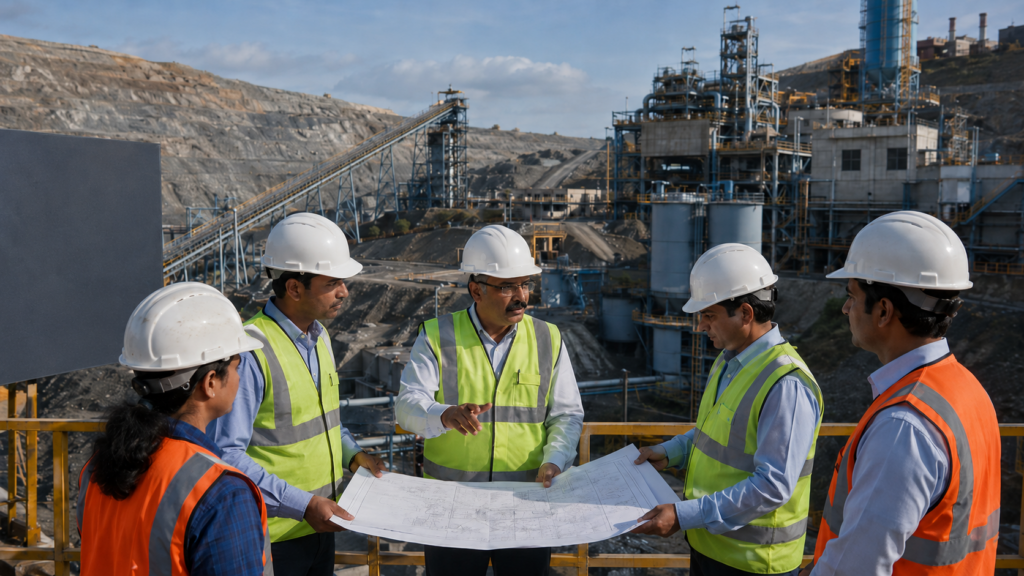
Prakash’s experience in integrated steel plants should be valuable because he understands that capacity is determined by the weakest link in the system, not the largest machine mentioned in an investor presentation. Hindustan Zinc must align mine development and processing schedules rather than treating each construction package as an independent project.
Capital discipline will be equally important. Hindustan Zinc expects growth capital expenditure of approximately $500 million to $600 million in fiscal 2027. Rising equipment, construction and energy costs could increase the eventual investment requirement, particularly if implementation extends across several years.
Management must maintain realistic contingency provisions and avoid advancing projects purely because metal prices are favourable. Mining history is crowded with expansions approved at the top of commodity cycles and completed when prices were less cooperative.
The strongest outcome would be phased development that protects existing cash generation while increasing production. The weakest would involve simultaneous investments competing for engineering expertise, contractors and management attention, producing schedule delays and weaker returns.
Why will silver, tailings recovery and fertiliser become major priorities for the new CEO?
Silver is no longer a minor by-product within Hindustan Zinc’s financial model. Its contribution to profitability means that improving silver recovery can materially influence earnings without requiring the company to discover an entirely new mine.
Hindustan Zinc is installing hot-acid leaching technology to recover additional lead and silver from smelting waste at Dariba. The project is expected to be completed during the second quarter of fiscal 2027 and illustrates how technical improvements can extract more value from material that has already been mined.
The company is also developing India’s first 10-million-tonne-per-year zinc tailings reprocessing plant at Rampura Agucha. Major orders have been placed and site activity has begun, with completion expected during the fourth quarter of fiscal 2028.
Tailings reprocessing combines financial and environmental objectives. It can recover additional metal, reduce the long-term footprint of stored material and improve resource efficiency. The execution challenge involves variable material characteristics, recovery economics and the reliability of processing technology at scale.
A 510,000-tonne-per-year fertiliser plant at Chanderiya introduces another form of downstream integration. The project is intended to use sulphuric acid generated within the zinc-smelting system to produce diammonium phosphate fertiliser, a product India continues to import in significant quantities.
The fertiliser investment could create a new revenue stream and improve utilisation of an industrial by-product. It also exposes Hindustan Zinc to a different market involving agricultural demand, nutrient pricing, distribution and government policy.
Prakash must ensure that diversification remains connected to an operational advantage. Using smelting by-products to manufacture fertiliser has a clearer industrial rationale than entering an unrelated business simply because capital is available.
How could critical-mineral expansion reshape Hindustan Zinc beyond zinc and silver?
Hindustan Zinc has begun building a portfolio beyond its established zinc, lead and silver operations. The company has secured interests in a tungsten block in Andhra Pradesh, a potash block in Rajasthan and a rare-earth block in Uttar Pradesh.
These projects align with India’s effort to reduce dependence on imported critical minerals used in defence equipment, electronics, electric motors, wind turbines, fertilisers and advanced manufacturing. They also give Hindustan Zinc an opportunity to apply its exploration and processing expertise to strategically important commodities.
The financial timelines are long. Exploration at the tungsten block has begun, but initial mining is not expected before the end of the decade. Potash and rare-earth projects also require resource definition, feasibility work, permitting, processing solutions and infrastructure.
Prakash must prevent strategic excitement from outrunning geological evidence. Winning a mineral block creates an option, not an operating mine. Capital should increase only as drilling, metallurgy and market analysis reduce uncertainty.
The company may benefit from partnerships where processing technology is specialised or where international expertise can lower development risk. Rare-earth separation, for example, is technically complex and cannot be treated as a straightforward extension of zinc smelting.
Success could transform Hindustan Zinc into a diversified Indian critical-minerals platform. Failure could leave the company carrying exploration expenditure and management complexity without commercial production.
The correct approach is disciplined experimentation. Hindustan Zinc can build geological knowledge and processing capability while protecting the cash-generating zinc and silver business that finances those ambitions.
What will the new leadership mean for dividends, investment and Vedanta shareholders?
Hindustan Zinc has historically been a significant dividend generator for shareholders, including controlling shareholder Vedanta Limited and the Government of India. Strong distributions have supported investor returns and contributed cash to the wider Vedanta structure.
The next expansion phase will create greater competition for that cash. Hindustan Zinc must fund mine development, refining capacity, renewable energy, tailings reprocessing, fertiliser production and critical-mineral exploration while maintaining a balance sheet capable of absorbing commodity volatility.
Prakash will therefore operate within a sensitive capital-allocation framework. Investors may welcome generous dividends, but excessive distributions could force Hindustan Zinc to borrow or delay projects. Retaining too much cash without delivering growth would create a different concern.
The company ended fiscal 2026 with gross investments and cash equivalents of approximately ₹13,846 crore against borrowings of ₹8,252 crore. This provides flexibility, but the volume of planned expenditure means financial discipline remains essential.
The chief executive officer must also manage expectations within Vedanta Group, particularly as the wider organisation restructures and allocates capital among metals, energy and industrial businesses. Hindustan Zinc’s interests should remain aligned with its own minority shareholders and long-term operating requirements.
A credible policy would rank sustaining expenditure and safety first, high-return growth projects second, and shareholder distributions from remaining cash. The exact payout can vary with commodity prices, but the decision framework should remain consistent.
Why did Hindustan Zinc shares fall on the CEO announcement despite strong results?
Hindustan Zinc shares closed at ₹563.55 on June 19, declining approximately 1.4% during the session in which the appointment was disclosed. The stock nevertheless gained about 3.4% over five sessions but remained down approximately 11.5% over one month.
The 52-week range of ₹413.50 to ₹733 indicates that Hindustan Zinc remains well above its annual low but approximately 23% below its peak. The latest price reflects a mixture of strong earnings, commodity exposure, ownership developments and uncertainty surrounding future capital allocation.
The negative daily movement should not be interpreted as a rejection of Prakash. Indian equity markets were broadly weaker during the session, and chief executive officer appointments rarely create an immediate earnings catalyst when the underlying business is already performing strongly.
The one-month decline carries more significance. Investors have been considering possible government and promoter stake sales, changing silver and zinc prices, and whether record fiscal 2026 profitability can be sustained.
Sentiment can therefore be described as constructive on fundamentals but cautious on near-term catalysts. Hindustan Zinc has high margins, long reserve life and substantial exposure to silver, but its valuation remains sensitive to metal prices and decisions by large shareholders.
Prakash can influence the operational portion of that investment case. Reliable production, controlled capital expenditure and visible project progress would help investors separate long-term value from short-term ownership-related volatility.
What does the Hindustan Zinc leadership change mean for professionals and job seekers?
The appointment is not a direct recruitment announcement, but Hindustan Zinc’s expansion strategy creates potential demand across mining, metallurgy, processing, construction and project management.
Likely roles include mining engineers, geologists, metallurgists, mineral-processing engineers, mechanical and electrical engineers, underground-mine planners, project managers, maintenance specialists, environmental professionals and safety leaders.
The tailings-reprocessing and hot-acid leaching projects could increase demand for professionals with hydrometallurgy, waste recovery, process design and commissioning experience. The fertiliser plant will require chemical-processing, plant-operations, quality and supply-chain capabilities.
Critical-mineral exploration may support roles in geophysics, drilling, resource modelling, mineralogy and metallurgical test work. Rare-earth and tungsten projects could create specialised opportunities that remain relatively uncommon within India’s established mining workforce.
Automation and digitalisation will also be important. Skills in mine-control systems, predictive maintenance, industrial analytics, autonomous equipment, cybersecurity and digital project controls can support productivity as operations expand.
Industry estimates suggest entry-level mining and metallurgical engineering roles in India may offer approximately ₹4 lakh to ₹9 lakh annually, while experienced specialists and managers can earn ₹15 lakh to ₹30 lakh or more. Project-management and highly specialised technical compensation can rise further depending on location, experience, statutory certifications and responsibility.
Compensation varies by geography, roster arrangements, underground experience and technical specialisation. Mine-site roles may include housing, transport, performance incentives and location allowances in addition to base salary.
Job seekers should focus on skills connected directly to the approved project pipeline. A generic engineering qualification may open the door, but experience in underground mining, mineral processing, commissioning, safety and digital operations will determine who moves through it.
What happens if Amarendu Prakash succeeds or fails in Hindustan Zinc’s next phase?
If Prakash succeeds, Hindustan Zinc could expand refined-metal and silver production while preserving its position among the world’s lowest-cost zinc producers. Higher capacity, stronger silver recovery and greater value-added production would reduce dependence on any single commodity or customer segment.
Successful execution could also establish Hindustan Zinc as a credible Indian critical-minerals platform. Tungsten, potash and rare-earth projects would give the company strategic importance beyond its traditional market and create new growth options for the 2030s.
For investors, the strongest outcome would combine production growth, disciplined capital expenditure and sustainable dividends. The company would generate higher cash flow without weakening its balance sheet or relying on permanently elevated commodity prices.
For employees and regional economies, expansion would create engineering, construction, mining and supplier opportunities across Rajasthan and other states. It could also strengthen career pathways in advanced mineral processing and responsible mining.
Failure would become visible through project delays, cost overruns, weaker production reliability or falling returns on capital. Hindustan Zinc might then need to slow expansion, reduce dividends or reconsider diversification projects.
The leadership appointment therefore represents more than a change of name at the top of the organisation. Hindustan Zinc has completed the phase in which operational optimisation and metal prices created record profits. Prakash must now prove that the company can deploy those profits into assets that generate stronger and more diversified returns.
What are the key takeaways from Hindustan Zinc’s appointment of Amarendu Prakash?
- Amarendu Prakash brings more than three decades of metals, manufacturing and project-execution experience from Steel Authority of India Limited.
- The appointment follows Arun Misra’s expected movement into a broader Vedanta Group leadership role.
- Hindustan Zinc is changing chief executive officers after record fiscal 2026 revenue, EBITDA and net profit.
- The incoming leader’s central challenge is delivering a 250,000-tonne integrated zinc expansion without cost or schedule deterioration.
- Silver recovery, tailings reprocessing and fertiliser production could generate additional value from existing operations and by-products.
- Critical-mineral projects in tungsten, potash and rare earths provide long-term growth options but require disciplined exploration spending.
- Hindustan Zinc must balance dividends with growth capital expenditure and protection of its low-cost operating position.
- The stock’s one-month decline reflects ownership and commodity uncertainty despite strong financial fundamentals.
- Mining, metallurgy, processing, project-management and industrial-digital skills could benefit from the expansion pipeline.
- Amarendu Prakash will ultimately be judged on production growth, capital returns, project delivery and whether diversification creates commercial value.
Share this:
Discover more from Business-News-Today.com
Subscribe to get the latest posts sent to your email.