


In a milestone that could redefine the future of corporate energy procurement, Google has signed what is believed to be the first-ever power purchase agreement linked to a carbon capture and sequestration (CCS)–enabled power plant in the United States. The agreement, announced in October 2025, ties Google to Broadwing Energy — a 400-megawatt natural gas-fired cogeneration plant being developed by infrastructure investment firm I Squared Capital and its decarbonization platform Low Carbon Infrastructure. Once completed, the Broadwing Energy facility in Decatur, Illinois, will deliver dispatchable power and industrial steam while capturing more than 90 percent of its carbon dioxide emissions.
This deal could represent a pivotal moment in the clean energy transition. For the first time, a major technology firm is anchoring a fossil-fueled power project not by default, but by design — specifically because it includes CCS to make the power low-carbon and firm. The implications for the future of clean energy procurement, investor strategies, and the role of CCS in climate-aligned infrastructure are significant. In a market long dominated by wind and solar, Broadwing Energy could open a new lane: low-emissions baseload power with the scale, predictability, and regulatory structure to meet 24/7 corporate energy targets.
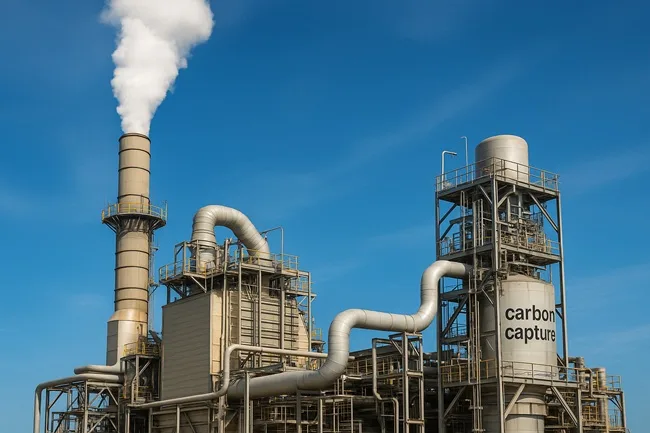
Why corporate clean energy procurement has relied on wind and solar—and where that model faces limits
For the past decade, corporate renewable energy deals have surged, led by power purchase agreements tied to utility-scale wind and solar farms. According to industry data, U.S. corporations had contracted more than 77 gigawatts of clean power by the end of 2022, with large buyers such as Amazon, Meta, Microsoft, and Google dominating this space. These deals have helped corporations meet sustainability goals, hedge electricity costs, and increase access to green financing.
However, this wind-and-solar-heavy model is showing cracks as companies pursue more ambitious targets like 24/7 carbon-free energy. The problem lies in intermittency: solar power is unavailable at night, and wind output is variable. While battery storage helps, it does not always scale economically or reliably to provide round-the-clock firming. As companies add energy-intensive operations like data centers, the need for “clean firm” power — emissions-free electricity that is always available — has grown sharply.
This is where technologies like CCS are beginning to enter the conversation. By equipping traditional fossil generation with carbon capture and deep geologic storage, developers are offering a low-carbon dispatchable power source that operates independently of weather patterns. Until recently, this was more theoretical than practical. But with Broadwing Energy, the model is now being tested under commercial conditions.
How the Broadwing Energy facility is structured—and why it represents a new procurement model
The Broadwing Energy facility is not a typical gas plant. It is a highly integrated cogeneration facility that will produce over 400 megawatts of electricity and 1.5 million pounds of steam per hour for industrial use, making it valuable for grid support and process industries. It will deploy Mitsubishi Power’s advanced M501JAC gas turbine and incorporate a full-chain carbon capture system that sends captured CO₂ into underground wells for permanent sequestration.
What makes this site unique is its location. Broadwing Energy is being built at Archer Daniels Midland’s industrial complex in Decatur, Illinois. Archer Daniels Midland already operates U.S. Environmental Protection Agency–approved Class VI wells on-site and has over a decade of experience in CCS through earlier Department of Energy–funded pilot programs. This gives the project a head start in regulatory compliance, infrastructure availability, and operational readiness. Captured carbon will be injected more than a mile underground and monitored under federal guidelines.
From a corporate procurement standpoint, this model offers something new. Unlike traditional power purchase agreements with solar or wind projects, Broadwing Energy provides clean firm power — electricity that is both low-emissions and available on demand. For Google, which aims to operate entirely on carbon-free energy 24/7 by 2030, the plant offers a way to meet baseload requirements without relying on carbon offsets or unbundled renewable energy certificates.
Why the Broadwing Energy facility may mark a turning point in clean firm power economics and investor strategy
The broader strategic implications of the Broadwing Energy project extend well beyond a single power plant. For institutional investors, this marks the commercialization of a previously unbankable energy infrastructure model. I Squared Capital, which manages more than USD 37 billion in global assets, is positioning Broadwing Energy as the first in a series of CCS-integrated power facilities across North America. Low Carbon Infrastructure, its decarbonization-focused platform, aims to replicate the model in other regions using similar project finance structures and industrial integration.
The timing is critical. Expanded tax credits under the Inflation Reduction Act, particularly the 45Q provision, now offer up to USD 85 per metric ton of CO₂ captured and stored, dramatically improving the financial viability of CCS projects. For private equity and pension funds, this opens up a new asset class that combines long-term power offtake revenue with regulatory-aligned climate impact.
Moreover, the risk profile of CCS is improving. Technologies for CO₂ separation, compression, and injection have matured, and a regulatory framework for well permitting and monitoring is in place. Projects like Broadwing also benefit from siting advantages by leveraging brownfield industrial locations with existing CO₂ storage infrastructure. This derisks development timelines and mitigates permitting delays — often the Achilles heel of large-scale CCS proposals.
What barriers still remain for CCS in corporate procurement strategies—and why this may be a complement, not a replacement
Despite the promise, there are still significant challenges. First, the cost of CCS-equipped power remains higher than that of solar or wind in most markets. Even with tax credits, the capital intensity of carbon capture systems, CO₂ transportation, and injection wells is substantial. Developers need long-term contracts, regulatory certainty, and premium offtake prices to make projects financially viable.
Second, reputation and policy risks remain. Some environmental groups argue that CCS is a license to extend fossil fuel use rather than reduce emissions. Companies buying power from such plants may face scrutiny unless they can demonstrate strong monitoring, reporting, and verification (MRV) standards. Additionally, the permitting process for new Class VI wells can still take years, although Broadwing sidesteps this by using Archer Daniels Midland’s existing infrastructure.
Third, corporate buyers may not be ready to pivot en masse. Most procurement teams are familiar with renewable PPAs and have structured their climate strategies around them. CCS requires new risk frameworks, legal models, and potentially more complex financing and compliance arrangements.
That said, CCS is not likely to replace renewables — but rather to complement them. A diversified clean energy portfolio could include solar during the day, wind at night, batteries for short-term smoothing, and CCS-based generation for firm capacity. For companies with continuous power demand, like data center operators, semiconductor fabs, or chemical manufacturers, this layered approach could become the new standard.
What happens next if Broadwing Energy succeeds—and how corporate energy strategies could evolve
If Broadwing Energy achieves commercial operations on schedule by 2030 and meets its emissions targets while delivering reliable power, it could validate CCS as a scalable solution for clean firm electricity. More importantly, it could unlock broader adoption of CCS in corporate energy procurement — especially among companies with high load factors and limited access to firm renewables.
Developers and infrastructure investors are already watching closely. A successful Broadwing project could lead to replication in other carbon storage–friendly regions such as Texas, Louisiana, Alberta, and parts of the Midwest. Future projects may target heavy industry clusters or co-locate with hydrogen hubs and carbon removal infrastructure.
On the corporate side, Broadwing could shift how sustainability officers and procurement teams evaluate clean power. Instead of chasing ever-larger wind or solar PPAs, the strategy may evolve toward sourcing the right mix of technologies to deliver true round-the-clock carbon-free power. That includes CCS, nuclear, long-duration storage, and geothermal.
The Google–Broadwing partnership is ultimately more than a procurement deal. It is a signal — that the frontier of clean energy is moving beyond wind and solar, and into the complex, capital-intensive world of industrial-scale decarbonization.
Discover more from Business-News-Today.com
Subscribe to get the latest posts sent to your email.