


Bridger Aerospace Group Holdings has entered into a long-term aircraft services agreement with Metatek Group that could generate approximately $58 million in gross revenue from the first aircraft over an assumed ten-year period, marking a significant expansion beyond the company’s core aerial firefighting business. The agreement covers three Basler BT-67 aircraft that Bridger will modify, operate and maintain for Metatek’s international geophysical surveying activities. Each aircraft has an initial five-year contractual term, with an automatic five-year extension unless either party provides notice of non-renewal. The first aircraft is expected to enter service in 2027, subject to modifications and regulatory certification.
The agreement advances Bridger’s strategy of developing more predictable revenue streams by applying its aviation capabilities to specialised missions outside wildfire suppression. Metatek, which provides geophysical surveying services for mineral and energy exploration, will gain access to dedicated aircraft without having to build an equivalent aviation operation internally. For investors, the opportunity lies in longer-term aircraft utilisation, recurring service payments and international expansion, although the headline revenue estimate remains conditional on operational and contractual assumptions.
How Bridger Aerospace’s Metatek agreement could establish recurring revenue beyond wildfire seasons
Bridger Aerospace will provide dedicated aircraft availability, modification, maintenance and operational services under its agreement with Metatek. The arrangement represents a departure from a business model primarily associated with seasonal wildfire activity and government emergency response requirements.
Aerial firefighting revenue can vary with wildfire severity, aircraft deployment schedules and government contracting decisions. Although standby arrangements provide a degree of predictability, the timing and intensity of fire seasons influence operational activity. Expanding into geophysical surveying could help Bridger generate revenue from aircraft services throughout the year.
The Metatek agreement covers three Basler BT-67 aircraft, each intended to support airborne surveying operations. Bridger will be responsible for modifying the aircraft to accommodate specialised equipment and maintaining them throughout their operational assignments.
The contractual structure includes an initial five-year term for each aircraft and an automatic five-year extension unless either party gives timely notice of non-renewal. This arrangement provides a potential framework for sustained commercial activity, but it does not guarantee that all three aircraft will operate for ten years.
Management has described the agreement as an important milestone in its diversification strategy. The commercial significance will depend on aircraft deployment, operational reliability and the amount of revenue generated under the contractual payment arrangements.
For shareholders, the agreement introduces a potentially more consistent source of business alongside Bridger’s established wildfire operations. Whether it materially reduces earnings seasonality will become clearer once the aircraft enter service and contribute to reported results.
Why the estimated $58 million revenue opportunity depends on aircraft deployment and contract extensions
Bridger estimates that the first aircraft could generate approximately $58 million in aggregate gross revenue over its initial five-year term and an assumed five-year extension. The estimate is based on contractual terms applicable to that aircraft and includes several sources of payment.
The projected revenue comprises aircraft modification fees, fixed monthly availability payments and flight-hour charges calculated using contractually committed minimum utilisation levels. This structure combines upfront technical work with recurring payments associated with aircraft availability and operations.
The distinction between estimated gross revenue and guaranteed revenue is essential. Bridger’s calculation assumes that the first aircraft is inducted on schedule, the contractual commitments are fulfilled and the agreement continues through the extension period.
If the extension does not occur, or if aircraft deployment is delayed, the actual revenue generated could be lower than the estimate. Operational interruptions, contract changes and other factors could also influence financial performance.
The company has not disclosed an equivalent aggregate revenue estimate for the second and third aircraft. Investors should therefore avoid multiplying the $58 million figure by three and treating the result as the total contract value.
The estimate also represents gross revenue rather than profit or cash flow. Aircraft modifications, maintenance, crews, fuel and other operating requirements will generate costs that must be deducted before assessing the agreement’s financial contribution.
The potential opportunity is meaningful relative to Bridger’s existing business, but the financial outcome will depend on execution. Future disclosures concerning aircraft induction, recognised revenue and operating profitability will provide a more reliable measure of the contract’s value.
How Basler BT-67 aircraft modifications will support Metatek’s international geophysical surveying operations
The agreement centres on three Basler BT-67 aircraft, a turbine-powered conversion of the Douglas DC-3 designed for specialised aviation operations. These aircraft are used in environments where durability, payload capability and operational flexibility are important.
Bridger will modify the aircraft to accommodate Metatek’s geophysical sensors and mission equipment. The work will involve engineering, systems integration and certification before the aircraft can begin their intended assignments.
The company will also provide ongoing maintenance and operational support. These responsibilities extend beyond delivering aircraft and create a continuing service relationship throughout the contractual period.
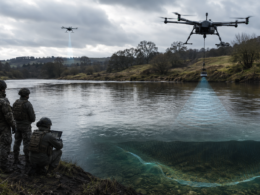
Geophysical surveying requires aircraft to fly carefully planned routes while specialised instruments collect information about geological structures beneath the Earth’s surface. Reliable aircraft performance is important because interruptions can affect survey schedules and the consistency of collected data.
The aircraft will be configured for cold-weather operations, allowing Metatek to pursue projects in environments that have been difficult to access with its existing fleet. This capability could expand the geographic range of its commercial activities.
However, adapting aircraft for specialised missions requires technical and regulatory work. Bridger must complete the necessary modifications and obtain relevant certifications before commercial operations can begin.
The first aircraft is expected to enter service in 2027, making the coming year an important execution period. The timetable for the remaining aircraft has not been specified in the announcement.
Why Metatek’s mineral and energy exploration customers create a new market for Bridger Aerospace
Metatek provides geophysical surveying services used to investigate subsurface resources, including minerals, hydrocarbons, helium, hydrogen and geothermal energy. Its customers use specialised survey data to support exploration and development decisions.
Demand for such services can be influenced by investment in energy security, mineral exploration and resource development. Governments and private companies increasingly require geological information when evaluating prospective projects and planning exploration programmes.
The agreement gives Bridger exposure to these activities through aviation services rather than direct participation in commodity exploration. Bridger will provide the aircraft and operating infrastructure, while Metatek will focus on its surveying technology and customer relationships.
This distinction may help diversify Bridger’s customer base and sources of revenue. Instead of relying exclusively on emergency response requirements, the company could benefit from commercial surveying activity across different regions and industries.
However, exploration spending is cyclical. Mining and energy companies may reduce budgets when commodity prices weaken, financing becomes more difficult or project economics deteriorate.
Metatek’s ability to secure surveying assignments will therefore influence the utilisation of its aircraft and the broader commercial success of the programme. Although the agreement includes minimum utilisation provisions, future growth opportunities will depend on customer demand.
For Bridger, the strategic opportunity is to establish itself as an aviation partner for technically demanding commercial missions. Successful execution could support similar arrangements with other customers, but no additional contracts have been announced.
How Lockheed Martin sensor technology could support Metatek’s survey capacity and utilisation targets
Metatek uses advanced geophysical surveying systems to collect information about subsurface geological structures. Its technology portfolio includes enhanced full tensor gradiometry, or eFTG, systems associated with Lockheed Martin.
The company has additional eFTG systems on order and expects the dedicated aircraft arrangement to support its next phase of growth. Access to appropriately configured aircraft is important because specialised sensors cannot generate revenue unless they can be deployed efficiently.
Metatek has identified a target of 70% operational utilisation. Improving utilisation could allow the company to generate more revenue from its surveying instruments by reducing the time they remain unavailable for productive work.
The Bridger agreement is intended to support that objective through dedicated aircraft capacity, maintenance and operational services. Metatek expects the arrangement to improve reliability and simplify mobilisation for international assignments.
However, the 70% utilisation figure is a target rather than a confirmed operating result. Actual performance will depend on customer demand, aircraft availability, weather conditions and the ability to complete surveys as scheduled.
The arrangement also allows Metatek to avoid developing a larger internal aviation organisation. Outsourcing aircraft operations may reduce the complexity of managing maintenance, crews and certification requirements, allowing management to concentrate on geophysical technology.
For Bridger, this creates an opportunity to monetise capabilities it already uses in specialised aviation. The economic benefits will depend on whether it can deliver the required service levels at attractive operating margins.
Why the agreement could reduce Bridger Aerospace’s exposure to seasonal wildfire revenue fluctuations
Bridger’s primary business involves aerial firefighting and wildfire management services for government agencies. These operations can generate substantial revenue during active fire seasons but are influenced by seasonal deployment patterns.
The company has sought to improve revenue visibility through longer government contracts and expanded aircraft services. The Metatek agreement represents another step in that strategy by introducing commercial work that is not directly dependent on wildfire activity.
Geophysical surveying projects may operate at different times of the year and in different geographic regions. This could provide opportunities to utilise aviation personnel and technical capabilities outside periods of peak firefighting demand.
However, the agreement does not eliminate seasonality across Bridger’s existing operations. Wildfire suppression will remain an important part of the company’s business, and overall results will continue to reflect the performance of its firefighting fleet.
The diversification benefit will also depend on the timing of aircraft deployment. Because the first BT-67 is expected to enter service in 2027, the agreement is unlikely to represent a full-year revenue contribution during 2026.
Over time, recurring aircraft availability payments could help improve revenue visibility. Nevertheless, investors will need evidence of actual operating performance before concluding that the agreement has materially stabilised the company’s earnings.
The strategic significance lies in demonstrating that Bridger’s aviation expertise can support multiple industries. If the model proves successful, it could broaden the company’s commercial opportunities beyond emergency response services.
What Bridger Aerospace’s recent financial results reveal about the importance of new revenue streams
Bridger reported second-quarter 2026 revenue of $30.5 million, compared with $30.8 million in the corresponding period of 2025. The company attributed the modest reported decline primarily to lower non-recurring aircraft return-to-service revenue.
Excluding that activity, revenue increased approximately 16% year over year. The comparison suggests that underlying flight operations and other services were expanding despite the relatively flat headline result.
Adjusted EBITDA declined to $8.1 million from $10.8 million, while the company recorded a net loss of approximately $0.5 million. These results demonstrate that revenue growth does not automatically translate into higher profitability when operating costs and business mix change.
Management maintained its full-year 2026 revenue guidance of $135 million to $145 million and adjusted EBITDA expectations of $55 million to $60 million. The outlook provides context for evaluating the potential size of future contributions from the Metatek agreement.
The estimated $58 million in gross revenue from the first aircraft would be spread across an assumed ten-year period rather than recognised immediately. It should therefore not be compared directly with a single year’s revenue guidance as though the entire amount were available in one reporting period.
The company has also secured additional government aviation contracts, including a $58 million agreement with Texas A&M Forest Service to develop a wildfire aviation surveillance programme. That contract is separate from the Metatek agreement and involves different aircraft and deliverables.
Together, these developments illustrate Bridger’s efforts to expand beyond conventional firefighting missions. The financial challenge is converting a growing portfolio of aviation assignments into sustainable earnings and cash flow.
How aircraft investment and financing requirements could affect the economics of the Metatek contract
Specialised aviation services require substantial investment in aircraft, maintenance facilities, engineering and personnel. The Metatek programme will involve modifying three aircraft to accommodate complex sensor systems and operational requirements.
The company has not disclosed the total capital expenditure required for the programme or the expected profit margin associated with the agreement. As a result, the potential $58 million revenue estimate cannot be used to calculate the contract’s expected return on investment.
Bridger ended June with approximately $7.2 million in cash and cash equivalents, compared with $31.4 million at the end of 2025. The decline reflected seasonal working capital requirements and the timing of customer receipts.
The company also reported substantial long-term debt, making financing costs and liquidity important considerations. Interest expense reached approximately $6.6 million during the second quarter.
These figures provide context for assessing the company’s ability to support additional aircraft programmes. The financial requirements of the Metatek agreement will depend on equipment acquisition, modification costs, payment timing and other contractual arrangements.
Fixed monthly availability fees may provide a more predictable source of cash receipts once aircraft enter service. However, upfront investment and the timing of modification payments could influence working capital before the programme reaches normal operations.
Investors will therefore monitor how Bridger finances the aircraft, manages project costs and converts contractual revenue into operating cash flow. The agreement’s commercial value will depend on profitability as well as gross revenue.
Why aircraft certification and international deployment remain critical execution risks
The first BT-67 aircraft is expected to enter service in 2027, subject to completing modifications and obtaining required certifications. These milestones are central to the programme because the aircraft must be approved for their specialised configurations before conducting commercial survey operations.
Integrating geophysical sensors can involve structural, electrical and operational modifications. The aircraft must support the equipment’s technical requirements while meeting applicable aviation safety standards.
Bridger’s experience in aircraft modification and specialised missions may provide an advantage. Nevertheless, certification timelines can be affected by engineering challenges, testing requirements and regulatory reviews.
International operations introduce additional complexity. Aircraft may need to operate in different jurisdictions, comply with local requirements and support projects in remote environments.
Weather conditions, maintenance availability and logistics can also affect operational reliability. These factors are particularly relevant for geophysical surveying, where customers may require precise flight patterns and consistent data collection.
Delays in aircraft induction could postpone revenue recognition and affect the programme’s economics. The agreement’s estimated financial contribution assumes timely deployment and continued contractual performance.
Investors should therefore treat the expected 2027 service entry as a milestone rather than a guaranteed date. Progress on modifications, certification and aircraft availability will provide important evidence of execution.
What the Metatek partnership means for Bridger Aerospace’s long-term investment outlook
The Metatek agreement represents a strategic expansion into a market where Bridger can apply its aviation, engineering and maintenance capabilities to commercial surveying operations. The arrangement combines dedicated aircraft services with a long-term contractual structure intended to support recurring revenue.
The potential $58 million gross revenue opportunity from the first aircraft provides a measurable indication of the programme’s possible scale. However, the estimate depends on the assumed ten-year duration, timely deployment and fulfilment of contractual conditions.
The agreement also introduces exposure to geophysical exploration markets, including critical minerals, hydrocarbons and geothermal resources. These industries may provide opportunities that are not directly correlated with wildfire activity.
For investors, the most important development is the potential to diversify Bridger’s revenue base while improving aircraft utilisation and commercial visibility. A successful programme could demonstrate the company’s ability to serve specialised aviation customers beyond government firefighting agencies.
However, the financial contribution remains uncertain until aircraft are modified, certified and placed into service. Capital requirements, operating costs and contract performance will determine whether the programme generates attractive returns.
The company’s existing financial obligations also remain relevant. New contracts can support growth, but the associated investment must be managed carefully to protect liquidity and profitability.
Bridger’s latest agreement strengthens its strategic growth narrative by establishing a long-term commercial relationship with a specialised surveying company. Its ultimate significance will depend on execution, recurring revenue generation and the ability to convert the opportunity into sustainable shareholder value.
Key takeaways on Bridger Aerospace’s Metatek aircraft agreement and $58 million revenue opportunity
- Bridger Aerospace signed a long-term aircraft services agreement with Metatek Group for global geophysical surveying operations.
- The agreement covers three Basler BT-67 aircraft that Bridger will modify, operate and maintain.
- Each aircraft has an initial five-year term and a potential automatic five-year extension.
- Bridger estimates approximately $58 million in potential gross revenue from the first aircraft over an assumed ten years.
- The estimate includes modification fees, monthly availability payments and minimum flight-hour charges.
- The $58 million figure is conditional and should not be treated as guaranteed revenue or profit.
- The first modified aircraft is expected to enter service in 2027, subject to certification.
- Metatek intends to expand surveying activity across minerals, hydrocarbons, hydrogen and geothermal markets.
- The agreement could help Bridger diversify beyond seasonal wildfire operations and develop recurring commercial revenue.
- Investors will monitor aircraft deployment, capital requirements, operating margins and actual contract revenue.
Discover more from Business-News-Today.com
Subscribe to get the latest posts sent to your email.