



Axogen, Inc. (NASDAQ: AXGN) has agreed to acquire BioCircuit Technologies, Inc. for a base cash purchase price of $200 million and is funding substantially the entire transaction through a newly priced $208.7 million public equity offering. The peripheral-nerve specialist will issue 4.91 million shares at $42.50 each, generating approximately $195.5 million of estimated net proceeds after underwriting discounts and expenses, with underwriters holding an option for another 736,500 shares. BioCircuit brings NerveTape, which Axogen describes as the first FDA-approved device for sutureless peripheral nerve repair, along with ConformaWrap and related nerve-repair technology. The strategic logic is straightforward, but the financing exposes existing shareholders directly to dilution and explains why AXGN shares fell 11.47% on September 10 as investors evaluated whether the acquired growth can compensate for the larger share count.
The transaction is expected to close in the fourth quarter after customary conditions, including conversion of BioCircuit’s outstanding convertible notes and separation of an unrelated electronics research and development business. Axogen says the acquisition should be accretive to revenue growth, adjusted EBITDA margin and adjusted earnings per share during the first full year after closing while allowing the company to remain free-cash-flow positive. Those claims give investors measurable benchmarks for judging the deal because management is not asking shareholders to tolerate years of earnings dilution before expecting a financial benefit.
How much dilution does Axogen’s $208.7 million offering create?
Axogen had approximately 53.66 million shares outstanding before the offering and is issuing another 4.91 million shares in the base deal. That increases the share count by roughly 9.1% before considering the underwriters’ option, while full exercise of the additional 736,500-share option would take the increase to about 10.5%. The offering price of $42.50 was also roughly 10% below the $47.27 closing price on September 9, immediately before pricing.
The equity financing means the $200 million acquisition is economically being paid for largely by new shareholders rather than by emptying Axogen’s existing cash balance or taking on substantial acquisition debt. That preserves financial flexibility and lowers interest expense, but it transfers part of future per-share earnings to the new investors who provide the capital. Whether the transaction ultimately creates or destroys value therefore depends on NerveTape and BioCircuit producing enough incremental growth and margin to overcome that dilution.
Axogen expects about $195.5 million of net proceeds from the base offering and as much as $224.8 million if the underwriters exercise their option in full. Substantially all proceeds will fund the BioCircuit cash consideration and associated transaction expenses, with any remainder available for general corporate purposes. The offering itself is not conditional on the acquisition closing, meaning Axogen would retain and redeploy the capital if the BioCircuit transaction unexpectedly fails.
What does NerveTape add that Axogen could not already offer surgeons?
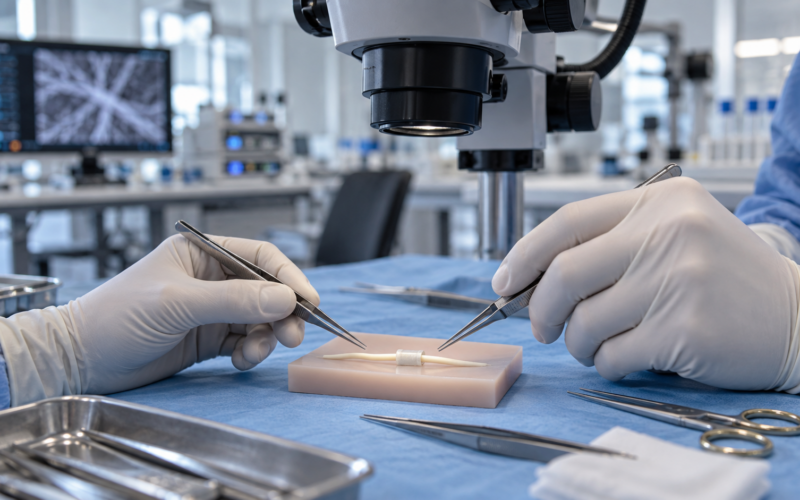
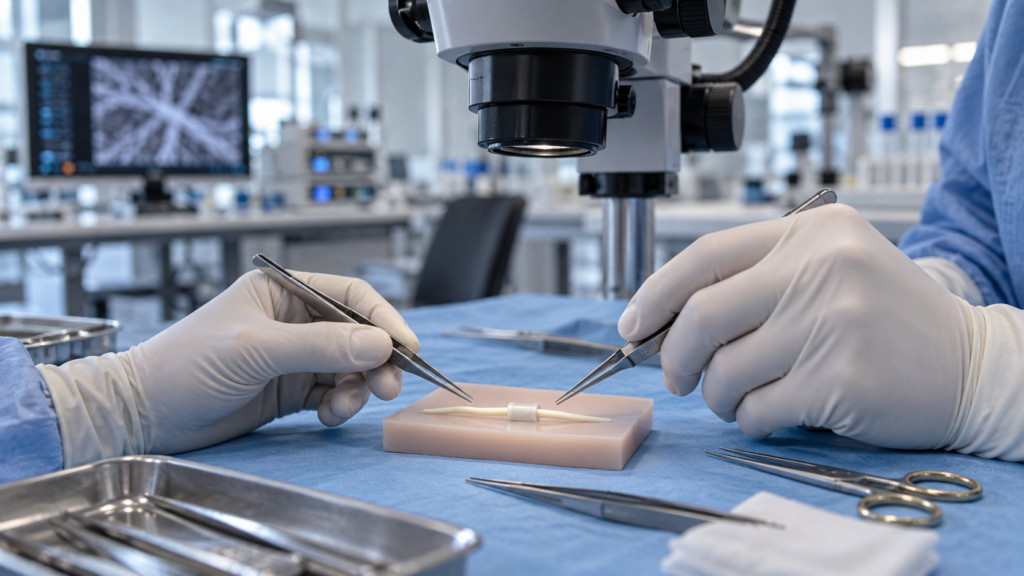
Axogen has built its franchise around products used to repair damaged peripheral nerves, including nerve grafts, connectors and protective wraps. Traditional nerve repair can require technically demanding microsutures to align and join nerve ends, which takes time and may limit the number of surgeons comfortable performing complex procedures. NerveTape is designed to align, connect and protect transected peripheral nerves without microsutures, potentially simplifying repair and widening the number of procedures or surgeons capable of adopting Axogen’s broader nerve-repair approach.
That makes the acquisition strategically complementary rather than a diversification into an unrelated device category. Axogen already sells to surgeons treating extremity trauma, breast reconstruction, oral and maxillofacial injury and other peripheral nerve problems, giving it an existing field organization that can introduce NerveTape without building an entirely new customer base. Management specifically expects its commercial infrastructure, surgeon relationships and hospital contracting capabilities to accelerate NerveTape adoption.
BioCircuit’s product can also increase Axogen’s share of a procedure even when the company already sells another nerve product. Instead of choosing only between graft materials or protective devices, surgeons could use a broader portfolio spanning repair, connection and protection. That portfolio strategy is common in medtech because selling multiple products into the same procedure can increase revenue per customer while making the supplier more difficult to replace.
Why does Axogen believe the addressable nerve-repair market can support a $200m acquisition?
Axogen estimates a roughly $5.6 billion U.S. opportunity across its focus markets and cites more than 1.5 million peripheral nerve injuries annually requiring treatment within those categories. Its investor materials break that opportunity across extremities, breast reconstruction, oral and maxillofacial procedures and prostate surgery, where nerve damage can produce chronic pain, numbness or functional impairment. Those market-size estimates are company calculations rather than independently guaranteed revenue pools, but they explain why Axogen is willing to deploy substantial capital to broaden its repair toolkit.
The existing business is already growing rapidly. Second-quarter revenue reached $69.7 million, up 23.1% year on year, while Axogen had $113.4 million of cash, restricted cash and investments and reported adjusted EBITDA of $8.4 million. Management has been targeting sustained 15% to 20% revenue growth over the longer term and expects at least approximately $279 million of revenue during 2026.
BioCircuit therefore does not need to rescue a stagnant company. The acquisition is intended to accelerate an already expanding nerve-repair platform, which raises the standard by which the deal should be judged. A $200 million purchase needs to produce incremental growth above what investors might otherwise have received from Axogen’s existing portfolio, particularly because shareholders are accepting immediate dilution to fund it.
Why did AXGN shares fall 11% despite management forecasting first-year accretion?
Axogen shares fell from $47.27 on September 9 to $41.85 on September 10, an 11.47% decline on volume approaching 3.8 million shares. The stock recovered only 0.74% to $42.16 on September 11, leaving it roughly 11% below the pre-deal closing level. The offering price of $42.50 effectively created a new reference point for the shares and immediately reset the market’s valuation around the capital raise.
Investors may be reacting to several issues simultaneously rather than rejecting BioCircuit’s technology. The new equity increases the share count materially, the acquisition price is large relative to Axogen’s existing revenue base, and BioCircuit’s standalone revenue and profitability were not publicly disclosed in the transaction announcement. Without those figures, investors cannot independently determine the purchase multiple or precisely model how management arrives at expected first-year earnings accretion.
The pressure also demonstrates why equity-financed M&A can create a harsher immediate market response than acquisitions funded from excess cash. Axogen is asking shareholders to accept dilution now in exchange for faster future growth that still has to be delivered. NerveTape gives the company an interesting new product. Whether the $200 million deal becomes attractive will depend on how rapidly Axogen can move that product through its existing surgeon network and turn strategic fit into per-share earnings.
Discover more from Business-News-Today.com
Subscribe to get the latest posts sent to your email.